
Unpaid Wage Penalties: Rights, Remedies, and Risks
Learn what happens when employers don’t pay wages on time, what penalties apply, and how workers can enforce their rights under wage laws.
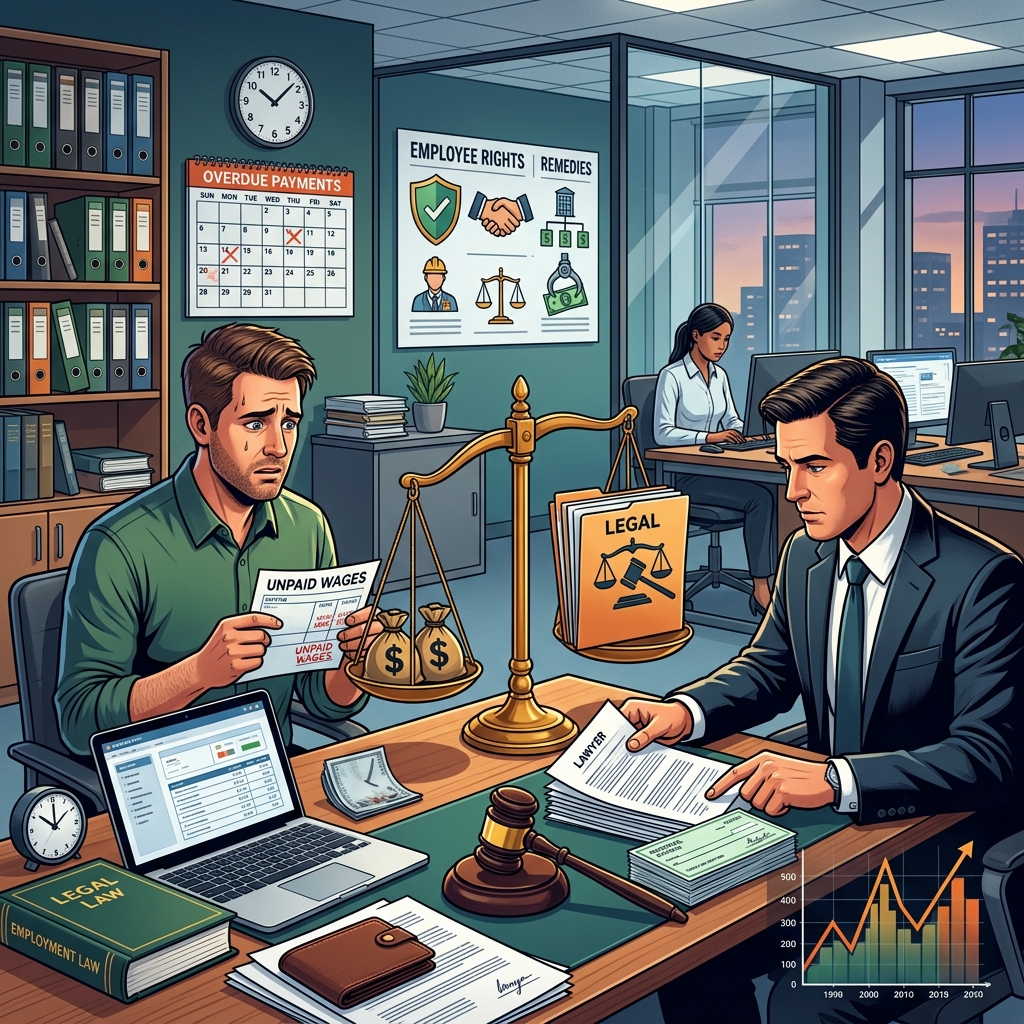
When an employer fails to pay wages in full or on time, the consequences extend far beyond a single missed paycheck. Across the United States, wage and hour laws impose financial penalties, potential civil liability, and, in serious cases, criminal sanctions on employers who do not comply with their obligations to pay workers what they are owed. These rules are designed both to compensate employees and to discourage employers from using unpaid wages as a source of interest-free funding.
This article explains how unpaid wage penalties work, what workers can do to recover their pay, and the different kinds of exposure employers face when they fail to pay on time. While every state has its own rules, there are common themes in how penalties are structured and enforced.
Understanding Unpaid Wages and Late Paychecks
Unpaid wages occur whenever an employee is not paid all compensation legally due, including regular pay, overtime, minimum wage, commissions, bonuses, and, in some jurisdictions, wage supplements such as vacation or benefits that were promised by contract.
In many states, a paycheck that is issued late is treated as unpaid wages, meaning the same enforcement tools and penalties apply. From a legal perspective, the problem is not just lateness; it is the failure to comply with statutes governing the timing and method of wage payments.
- Regular wages – Compensation for hours worked at the agreed rate.
- Minimum wage – Statutory floor for hourly pay; failure to meet it is a separate violation.
- Overtime pay – Premium pay for hours above legal thresholds (often 40 in a week), required by federal and state law.
- Final wages – Amounts due on termination or resignation, which often must be paid within a specific deadline.
- Wage supplements – Contractual benefits such as vacation pay or fringe benefits, treated as wages in some states.
Whether the problem is a missed overtime payment or complete failure to issue a final paycheck, unpaid wage penalties are triggered by the underlying legal obligation to pay on time and in full.
Core Types of Penalties for Unpaid Wages
Penalty structures vary by jurisdiction, but most frameworks combine compensatory remedies (designed to make the worker whole) with punitive or deterrent measures that increase the cost of noncompliance.
Compensatory Remedies
Compensatory remedies aim to restore the employee to the position they would have been in if wages had been paid correctly and on time.
- Back pay – The full amount of unpaid wages owed to the employee, including any minimum wage or overtime shortfalls.
- Liquidated damages – An additional sum, often equal to the unpaid wages, awarded unless the employer proves good-faith compliance efforts.
- Interest – Statutory interest accruing from the date wages were due, reflecting the time value of money and the harm caused by delayed payment.
Under federal law, employees can often recover both back pay and an equal amount in liquidated damages for minimum wage and overtime violations, effectively doubling the financial impact on the employer. Several states adopt similar approaches in their own statutes.
Deterrent and Punitive Penalties
Deterrent penalties increase the cost of violations to discourage employers from treating wage obligations casually. These penalties may be owed to the employee, the state, or both.
- Civil money penalties – Fines assessed per violation or per affected worker, often imposed by labor agencies for willful or repeated noncompliance.
- Daily or monthly penalty accruals – Extra amounts calculated as a percentage of the underpayment, per day or per month, continuing until wages are paid.
- Administrative fees – Non-waivable fees collected by labor departments when they process wage claims or issue orders.
- Criminal exposure – Misdemeanor or felony charges in serious cases, particularly when wage theft is intentional or involves large amounts.
The combination of back pay, doubled damages, interest, and separate civil penalties means that the ultimate cost of withholding wages can be multiple times the original amount owed.
Federal Framework: Penalties Under the FLSA
The Fair Labor Standards Act (FLSA)
| Type of Consequence | Who Enforces | What It Involves |
|---|---|---|
| Supervised back wage payment | U.S. Department of Labor | Labor officials oversee payment of owed wages to employees. |
| Liquidated damages | Court or DOL action | Additional amount equal to unpaid wages, unless employer shows good faith. |
| Civil money penalties | U.S. Department of Labor | Up to a statutory limit per willful or repeated minimum wage or overtime violation. |
| Private lawsuit | Employee in court | Recovery of wages, liquidated damages, attorney fees, and court costs. |
| Criminal prosecution | Federal authorities | Fines and potential imprisonment for willful violations, especially repeat offenses. |
The FLSA also imposes a statute of limitations for recovering back wages: typically two years, or three years if the violation is willful. This limits how far back employees can claim unpaid wages in federal actions, although state law may allow different timeframes.
Illustrative State Approaches to Unpaid Wage Penalties
States build on federal standards with their own wage payment and collection laws, often adding stricter deadlines, specific penalty formulas, and broader definitions of what counts as wages.
Illinois: Escalating Monetary Penalties and Personal Liability
Illinois provides a clear example of how unpaid wage penalties can escalate over time. Employers found to have violated wage payment rules are liable not only for the unpaid wages, but also for additional damages and administrative costs.
- Monthly damages – A percentage of the underpayment is added for each month wages remain unpaid, continuing until the debt is cleared.
- Administrative fees – Fixed fees are owed to the state labor department, with higher amounts applying to larger claims.
- Late compliance penalties – If employers do not promptly comply with orders to pay, they can owe a percentage of the underpayment to the state plus daily penalties to the employee.
- Personal liability – Corporate officers or agents who knowingly permit violations can be held personally responsible for unpaid wages and related penalties.
This approach underscores that unpaid wage obligations are not easily avoided by corporate structure or delay; penalties increase and can reach individuals in management roles.
Virginia: Double or Triple Damages for Knowing Violations
Virginia law illustrates how states use liquidated damages to deter wage nonpayment. Employers who fail to pay wages can be liable for the full amount owed, an equal amount as liquidated damages, interest, and additional penalties when the failure is knowing.
- Basic remedy – Wages owed, plus an equal amount as liquidated damages, and statutory interest.
- Knowing violations – Courts must award triple the amount of wages due in cases where the employer knowingly failed to pay.
- Civil penalties – Additional fines per violation, up to a specified cap, for nonpayment.
Recent provisions also allow courts to withhold additional damages or penalties when employers demonstrate good faith and reasonable grounds for believing they were in compliance, balancing deterrence with fairness for genuine mistakes.
California: Late Payment Penalties and Wage Theft
California combines strong civil penalties with the possibility of criminal treatment of wage theft. Wage violations can trigger penalties not only for minimum wage underpayments, but also for late payment and intentional withholding.[10]
- Late payment penalties – Statutory penalties apply when wages are not paid on time, with higher amounts for repeated or willful violations and a percentage of withheld wages.
- Minimum wage remedies – Employees can recover back pay, liquidated damages equal to unpaid wages, interest, and waiting time penalties when final wages are delayed.
- Wage theft – Intentional failure to pay lawful wages may be treated as wage theft and, in some circumstances, prosecuted as grand theft when amounts withheld exceed statutory thresholds.[10]
Because of this layered structure, employers in California can face substantial combined exposure for failing to pay minimum wage, overtime, or final wages, especially when the conduct is part of a pattern.[10]
New York: Wage Supplements and Criminal Misdemeanor
New York treats certain promised benefits as wage supplements, and failure to provide these agreed benefits can lead to misdemeanor charges. Workers may file claims with the state labor department to seek recovery and enforcement.
Employers operating in New York must be mindful that their obligations extend beyond cash wages to encompass agreed-upon benefits, further broadening potential liability.
How Employees Can Enforce Their Rights
Workers confronted with unpaid wages typically have several pathways to enforcement. The best approach depends on the amount at issue, the nature of the violation, and whether the problem affects a group of employees.
Administrative Claims
Many wage and hour disputes are resolved through administrative processes. Employees can file complaints with federal or state agencies that oversee wage laws.
- Submitting a wage claim to a state labor commissioner or department of labor for investigation and potential order of payment.
- Filing a report of labor law violations where a pattern affects multiple workers, enabling civil penalties that go to the state.
- Requesting that federal Wage and Hour officials supervise payment of back wages under the FLSA.
Administrative routes can be particularly useful for employees who cannot easily afford private litigation, as agencies often investigate at no direct cost to the worker.
Civil Lawsuits
Employees may also bring civil actions in court to recover unpaid wages and associated penalties. These suits can be filed individually or, where permitted, as collective or class actions.
- Recovery of wages owed, plus liquidated damages where statutes provide for doubling or tripling amounts.
- Attorney fees and court costs, which are often awarded to prevailing employees under wage statutes.
- Additional state-specific penalties, such as waiting time penalties or statutory fines.
Because many wage laws provide for attorney fee recovery, workers can often secure representation despite limited resources, and employers face added financial risk if they lose.
Risks and Obligations for Employers
For employers, the legal landscape around unpaid wages underscores the importance of robust payroll compliance. The cost of mistakes can quickly compound, particularly when payroll systems fail to track hours accurately or apply overtime and minimum wage requirements.
Common Compliance Pitfalls
- Improper classification – Treating employees as exempt from overtime or as independent contractors without a legal basis.
- Inaccurate timekeeping – Failing to record all hours worked, including pre-shift and post-shift tasks.
- Ignoring final pay deadlines – Not issuing final paychecks within the timeframe required after resignation or termination.
- Withholding agreed benefits – Not providing wage supplements or benefits promised in contracts or policies.
Employers who knowingly permit wage violations may expose not only the business but also individual managers or officers to liability in some jurisdictions.
Preventive Measures
- Maintaining accurate and contemporaneous records of hours worked and wages paid.
- Regularly reviewing payroll systems to ensure compliance with federal and state law.
- Training managers on wage and hour requirements, including overtime rules and final pay obligations.
- Responding promptly to agency inquiries or employee complaints to avoid additional penalties for late compliance.
Proactive compliance reduces the likelihood of unpaid wage claims and limits exposure to liquidated damages, civil penalties, and criminal consequences.
FAQs About Unpaid Wage Penalties
Do unpaid wage penalties always double the amount owed?
No. In some laws, penalties take the form of liquidated damages equal to unpaid wages, effectively doubling the total recovery, but other statutes use daily or monthly percentage penalties, fixed fines, or triple damages for knowing violations.
Can an employer avoid penalties by claiming a payroll mistake?
Many statutes allow reduction or avoidance of additional damages when an employer shows good faith and reasonable grounds for believing it was in compliance. However, the wages themselves still must be paid, and agencies or courts may scrutinize repeated or systemic errors closely.
Is late payment treated the same as complete nonpayment?
Often yes. Numerous states treat late paychecks as unpaid wage violations, meaning employees may recover both the delayed wages and applicable penalties for late payment.
How far back can employees claim unpaid wages?
Under federal law, back pay is generally limited to two years, or three years for willful violations. State law may set different limitation periods, so workers should consult applicable statutes or legal counsel for precise timeframes.
Can unpaid wage issues lead to criminal charges?
Yes. In certain jurisdictions, intentional or large-scale wage theft can be prosecuted as a misdemeanor or felony, especially when statutory thresholds for unpaid amounts are met or when employers persistently ignore wage obligations.[10]
References
- Fair Labor Standards Act Advisor — U.S. Department of Labor. 2023-01-01. https://webapps.dol.gov/elaws/whd/flsa/screen74.asp
- Wage Payment and Collection Act Penalties — Illinois Department of Labor. 2021-08-01. https://labor.illinois.gov/laws-rules/fls/wpca-penalties.html
- Time and Medium of Payment; Withholding Wages (Va. Code § 40.1-29) — Commonwealth of Virginia. 2024-07-01. https://law.lis.virginia.gov/vacode/title40.1/chapter3/section40.1-29/
- FAQs – Late Payment of Wages — California Department of Industrial Relations. 2022-06-15. https://www.dir.ca.gov/dlse/Late-Payment-of-Wages.htm
- Minimum Wage Penalties — Schneider Wallace Cottrell Konecky LLP. 2023-05-01. https://www.schneiderwallace.com/practice-areas/failure-to-pay-wages-overtime-commissions/minimum-wage/
- Unpaid/Withheld Wages and Wage Supplements — New York State Department of Labor. 2021-10-01. https://dol.ny.gov/unpaidwithheld-wages-and-wage-supplements
- What Penalties Can Employers Face for Wage Theft in California? — Justice Law Corporation. 2022-09-01. https://justicelawcorp.com/blog/what-penalties-can-employers-face-for-wage-theft-in-california/
Similar Articles








Read full bio of Sneha Tete




