
The Supreme Court Abortion Leak and the Post-Roe Landscape
Unpacking the Supreme Court leak that ended Roe v. Wade.
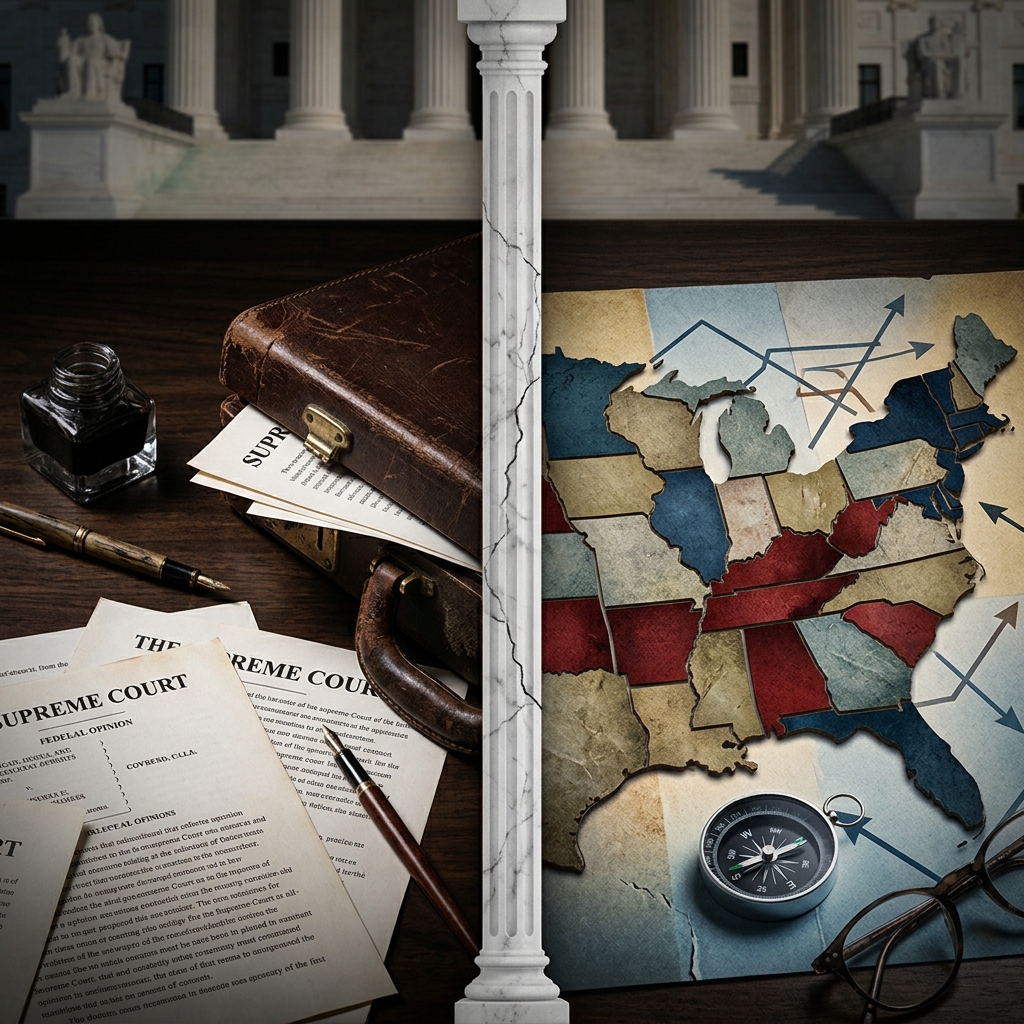
Introduction to an Unprecedented Legal Earthquake
In early May 2022, the American political and legal landscape was shaken by an extraordinary and historically unprecedented event: the unauthorized public release of a draft majority opinion from the Supreme Court of the United States. Authored by Justice Samuel Alito in the case of Dobbs v. Jackson Women’s Health Organization, the document outlined a clear and decisive judicial intent to overturn Roe v. Wade, the landmark 1973 ruling that had established a constitutional right to abortion. The publication of this draft not only breached the notoriously secretive walls of the nation’s highest court but also sent shockwaves across the country, signaling the imminent collapse of nearly fifty years of established legal precedent.
This article delves into the intricacies of the leaked draft, the immediate and long-term ramifications for healthcare access, the legal vulnerabilities introduced for other fundamental rights, and the shifting responsibilities of voters and advocates in a post-Roe era. By examining the structural shifts in state-level policies and the disproportionate burdens placed on marginalized communities, we can better understand the full scope of this seismic judicial shift and what it means for the future of civil liberties in the United States.
The Anatomy of an Unprecedented Judicial Breach
Historically, the Supreme Court has operated behind a veil of strict confidentiality. The internal deliberations, the circulation of draft opinions among the justices’ chambers, and the ongoing negotiations are closely guarded secrets, released to the public only when a final decision is officially handed down. The leak of the Dobbs draft shattered this institutional norm, creating a firestorm of political speculation, immediate grassroots mobilization, and internal chaos at the Court.
The draft itself, which closely mirrored the final opinion released in June 2022, argued that Roe v. Wade was “egregiously wrong from the start.” It contended that the right to an abortion is not expressly mentioned in the Constitution and is not deeply rooted in the nation’s history and traditions. This strict originalist interpretation fundamentally challenged the doctrine of stare decisis—the legal principle of determining points in litigation according to precedent. For decades, stare decisis had shielded Roe from numerous conservative challenges, most notably during the 1992 case Planned Parenthood v. Casey, which reaffirmed the core holdings of Roe.
Chief Justice John Roberts quickly confirmed the authenticity of the leaked document while simultaneously launching an internal investigation into the source of the breach. In his statement, he emphasized that the leak was a singular and egregious breach of trust intended to undermine the integrity of the Court’s operations. Despite the intense scrutiny and internal probe, the ultimate source of the Politico leak remained a subject of intense public debate for months. This institutional crisis added an entirely new layer of complexity to the already polarized environment surrounding the Court.
In the weeks immediately following the leak, reproductive rights organizations and civil liberties advocates scrambled to clarify a crucial point to the public: abortion remained legal in the immediate aftermath of the leak. The draft was not a final ruling, but rather a preliminary glimpse into the Court’s internal trajectory. Nonetheless, the writing was on the wall, and the transition into a fundamentally altered legal reality had begun.
The Mechanics of Trigger Laws and State-Level Bans
The realization that Roe v. Wade was on the precipice of being overturned activated a complex web of state-level legislation known as “trigger laws.” These statutes were designed specifically to take effect automatically, or through swift state-level certification, the moment the federal constitutional protection for abortion was removed.
For years leading up to the Dobbs decision, conservative state legislatures had been passing these conditional bans, anticipating the eventual shift in the Supreme Court’s ideological composition. When the final ruling was issued in June 2022, confirming the contents of the leaked draft, a fragmented map of reproductive healthcare emerged almost instantaneously. According to the Guttmacher Institute, an authoritative reproductive health research organization, the fall of Roe precipitated a chaotic and rapidly changing policy landscape, with numerous states enforcing total bans or severe restrictions within months.
This fracturing of the legal landscape meant that a person’s bodily autonomy and access to medical care were no longer guaranteed by federal law, but rather dictated by their geographic location. States in the South and Midwest moved quickly to criminalize abortion procedures, often with limited to no exceptions for rape or incest. This left millions of individuals navigating a complex, expensive, and legally perilous journey to secure out-of-state care.
Categorization of State Abortion Policies Post-Roe
| Policy Category | Description | Primary Geographic Regions |
|---|---|---|
| Total Ban | Abortion is completely prohibited, often with narrow exceptions only to save the life of the pregnant person. Providers face severe criminal penalties. | Deep South, parts of the Midwest and Southwest. |
| Gestational Restriction | Abortion is banned after a specific gestational age (e.g., 6, 15, or 20 weeks), severely limiting access before many know they are pregnant. | Southeast, Midwest. |
| Protected / Shielded | Abortion rights are codified in state law or the state constitution. Laws actively protect providers treating out-of-state patients from prosecution. | West Coast, Northeast, specific Midwestern states. |
Disproportionate Impacts on Marginalized Communities
The cessation of federal abortion protections does not affect all demographics equally. Public health data consistently illustrates that the burden of abortion restrictions falls disproportionately on low-income individuals, people of color, and rural residents. These populations already face systemic barriers to healthcare access, including lack of insurance, maternal mortality crises, and geographic medical deserts.
Data from the Centers for Disease Control and Prevention (CDC) abortion surveillance reports highlight that marginalized communities account for a significant percentage of those seeking abortion care. When states enforce total bans, individuals with financial means can often absorb the costs of traveling to a state where abortion remains legal—paying for flights, gas, lodging, childcare, and time off work. Conversely, those without disposable income or flexible employment are frequently forced to carry unwanted pregnancies to term, exacerbating cycles of poverty and increasing health risks.
Furthermore, the intersection of systemic racism and healthcare access heavily shapes the post-Roe reality. Black and Indigenous women already experience significantly higher maternal mortality rates compared to white women. Forcing individuals in these demographics to carry high-risk or unwanted pregnancies to term essentially compounds existing public health crises, transforming an already strained medical environment into a punitive system where marginalized patients are denied the ability to mitigate their own medical risks.
The Ripple Effect: Threats to Fundamental Privacy Rights
One of the most alarming aspects of the Dobbs draft—and the subsequent final opinion—was its underlying legal reasoning and what it portended for other established civil rights. Roe v. Wade was built upon the constitutional right to privacy, rooted in the Due Process Clause of the 14th Amendment. This same legal foundation supports a constellation of other fundamental rights that protect intimate, personal decisions from arbitrary government interference.
If the right to abortion could be revoked because it is not explicitly mentioned in the Constitution and allegedly not “deeply rooted” in American history, legal scholars and civil rights advocates quickly pointed out that other precedents were suddenly vulnerable. These include:
- Griswold v. Connecticut (1965): The right of married couples to use contraception without state prohibition.
- Lawrence v. Texas (2003): The right to engage in private, consensual same-sex sexual activity, striking down sodomy laws.
- Obergefell v. Hodges (2015): The right to same-sex marriage nationwide.
Although Justice Alito’s draft attempted to isolate abortion from these other rights by arguing that abortion uniquely involves the “critical moral question” of a “potential life,” the legal framework used to dismantle Roe undeniably weakened the scaffolding supporting these other privacy rights. Justice Clarence Thomas, in his concurring opinion in the final Dobbs ruling, explicitly stated that the Court should reconsider all of its substantive due process precedents, confirming the very fears ignited by the initial leak.
Shifting the Battleground: Electoral and Legislative Responses
The realization that the Supreme Court would no longer protect reproductive freedom fundamentally shifted the battleground from federal courts to state legislatures and the ballot box. In the wake of the leak and the eventual overturning of Roe, civic engagement surrounding reproductive rights reached unprecedented levels.
Voters across the country mobilized with remarkable speed. In the immediate electoral cycles following the Dobbs decision, several states—even those leaning historically conservative—saw voters explicitly reject ballot measures aimed at restricting abortion or successfully pass amendments to enshrine reproductive rights into their state constitutions. This grassroots mobilization demonstrated a stark disconnect between the Supreme Court’s ruling and the broader public consensus, which consistently shows that a clear majority of Americans support access to legal abortion.
Advocacy organizations also pivoted their strategies. Instead of solely relying on impact litigation in federal courts, resources were heavily redirected toward abortion funds and practical support networks. These mutual aid organizations became the critical infrastructure for the post-Roe reality, helping individuals navigate the logistical nightmares of interstate travel for essential healthcare.
What Citizens Can Do to Protect Reproductive Freedom
The leaked opinion served as an urgent call to action. For individuals wondering how to navigate and respond to this restrictive landscape, several avenues of civic engagement remain crucial:
- Understand Local Laws: The legal status of abortion is highly localized and constantly shifting. Citizens must familiarize themselves with the specific regulations, gestational limits, and available clinics within their own state and neighboring regions.
- Support Abortion Funds: Financial support for grassroots organizations that provide direct assistance—covering travel, lodging, and procedure costs—is more critical than ever. Organizations on the ground are the primary lifeline for individuals trapped in restricted states.
- Engage in Local Elections: Because abortion access is now determined at the state level, local elections (state representatives, governors, attorneys general, and even local judges) carry immense weight. Voting for candidates who champion bodily autonomy is a primary mechanism for change.
- Advocate for Comprehensive Healthcare: Pushing for state-level constitutional amendments and proactive “shield laws” can help create sanctuary regions for those seeking and providing care.
Conclusion: Navigating a Permanently Altered Landscape
The leak of the Dobbs draft was not just a dramatic breach of Supreme Court protocol; it was the harbinger of a profound public health and legal crisis. By stripping away a half-century of constitutional protection, the Court fundamentally altered the relationship between the individual and the state, delegating the authority over deeply personal medical decisions to partisan legislatures. As the legal dust continues to settle, the fallout from this judicial reversal serves as a stark reminder of the fragility of established civil rights. The battle for reproductive freedom has not ended; it has simply evolved, demanding localized vigilance, sustained grassroots support, and a renewed commitment to securing bodily autonomy for all individuals, regardless of their zip code.
Frequently Asked Questions (FAQs)
What exactly was the leaked Supreme Court document?
In May 2022, an initial draft majority opinion for the case Dobbs v. Jackson Women’s Health Organization was leaked to the press. Authored by Justice Samuel Alito, the draft explicitly detailed the Court’s intention to strike down Roe v. Wade and Planned Parenthood v. Casey, returning the authority to regulate or ban abortion to individual states.
Did the leaked draft immediately make abortion illegal?
No. The leaked document was a draft, not a final ruling. Abortion remained legal nationwide until the Supreme Court officially released its final decision in June 2022.
What are “trigger laws”?
Trigger laws are state-level bans or severe restrictions on abortion that were written to take effect automatically (or with a quick certification by state officials) the moment the Supreme Court overturned Roe v. Wade.
How does the overturning of Roe affect other rights?
The legal reasoning used to overturn Roe dismantled the substantive due process protections for the “right to privacy.” Legal experts warn that this same originalist reasoning could be weaponized to challenge other privacy-based rights, including the right to contraception and same-sex marriage.
How do “shield laws” operate in the current landscape?
Shield laws are state-level protections enacted by states where abortion remains legal. They are designed to protect local healthcare providers from civil or criminal investigations initiated by states that have banned abortion, particularly when treating out-of-state patients who have traveled to receive care.
References
- 19-1392 Dobbs v. Jackson Women’s Health Organization (06/24/2022) — Supreme Court of the United States. 2022-06-24. https://www.supremecourt.gov/opinions/21pdf/19-1392_6j37.pdf
- State Policy Trends 2023: In the First Full Year Since Roe Fell, a Tumultuous Year for Abortion and Other Reproductive Health Care — Guttmacher Institute. 2023-12-19. https://www.guttmacher.org/article/2023/12/state-policy-trends-2023-first-full-year-roe-fell-tumultuous-year-abortion-and
- Abortion Surveillance — United States, 2021 — Centers for Disease Control and Prevention (CDC). 2023-11-24. https://www.cdc.gov/mmwr/volumes/72/ss/ss7209a1.htm
Similar Articles








Read full bio of Sneha Tete


