
Strict Liability Crimes: 10 Essential Rules For Businesses 2025
Understand how strict liability crimes impose criminal responsibility even when prosecutors cannot prove intent or knowledge.
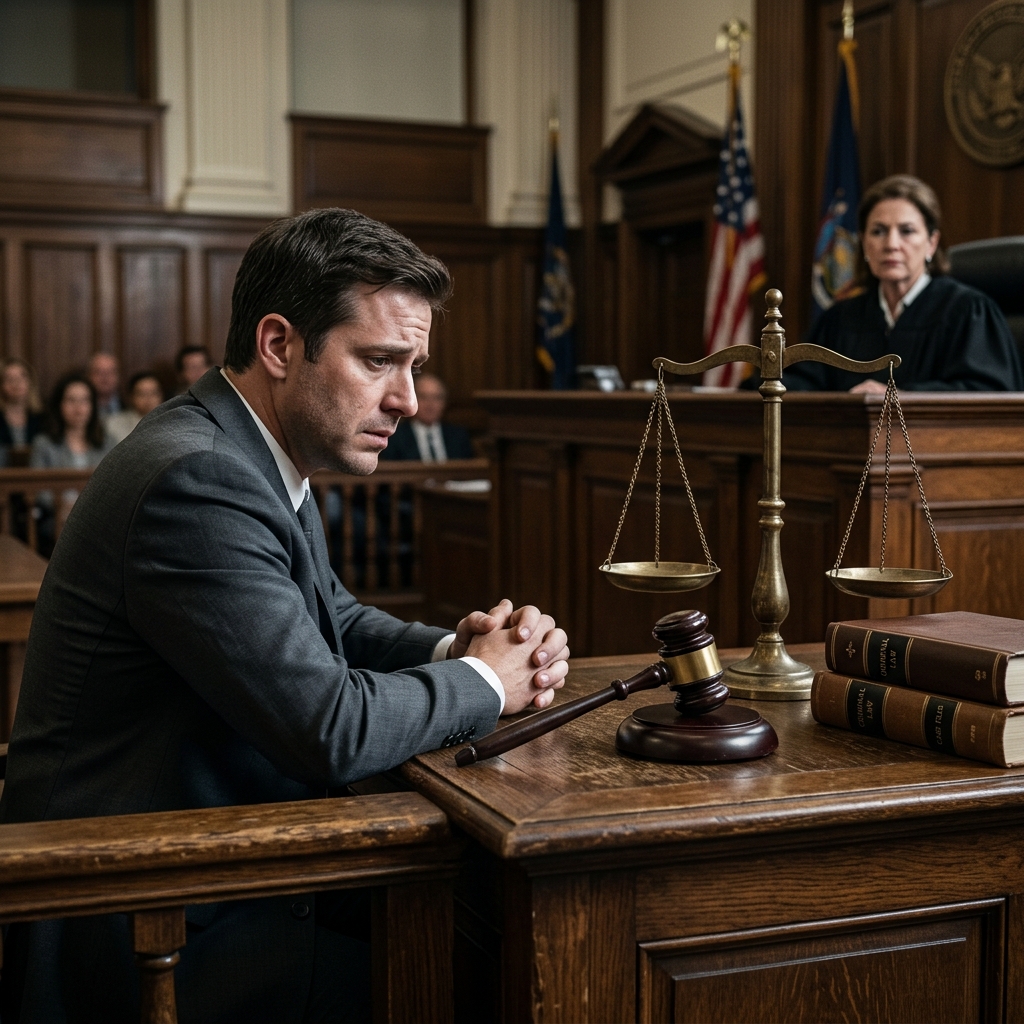
In most criminal cases, prosecutors must show not only that a defendant committed a prohibited act, but also that they had a guilty state of mind. Strict liability crimes break from this traditional rule by allowing conviction without proof of intent, knowledge, or recklessness for at least one key element of the offense.
This approach is controversial but plays a major role in modern regulatory and public welfare law, where legislatures prioritize safety, health, and compliance over individual blameworthiness.
1. Core Idea: Guilt Without Proving a Guilty Mind
Strict liability in criminal law describes offenses where the prosecution can secure a conviction by proving the act itself (the actus reus) without having to prove a culpable mental state (mens rea) for one or more elements of the crime. The defendant may be punished even if they:
- Did not intend to break the law
- Were unaware of a crucial fact that made their conduct illegal
- Took reasonable care to comply with the law
- Acted honestly and in good faith
In other words, fault is not the central issue; what matters is that the prohibited situation occurred and the defendant was the responsible actor.
2. How Strict Liability Differs from Other Crimes
To understand strict liability, it helps to compare it with the usual mental-state requirements found in criminal law.
| Type of Crime | Mens Rea Requirement | Typical Example | Key Feature |
|---|---|---|---|
| Intentional | Purposeful conduct aimed at a prohibited result | Premeditated murder | Prosecution must show deliberate intent |
| Reckless / Negligent | Conscious or careless disregard of substantial risk | Vehicular manslaughter due to drunk driving | Proof of risky mental attitude or carelessness |
| Strict Liability | No mens rea needed for at least one element | Selling alcohol to a minor; statutory rape | Liability based on the act and circumstances alone |
With strict liability crimes, the law effectively treats certain factual circumstances as so important that ignorance, mistake, or reasonable care will not excuse the defendant.
3. Legal Foundations: Actus Reus Without Mens Rea
Traditional criminal law theory revolves around two pillars:
- Actus reus: the prohibited conduct, result, or omission
- Mens rea: the mental attitude accompanying the conduct (intent, knowledge, recklessness, or negligence)
Strict liability offenses keep the requirement of a wrongful act but either:
- Completely remove the mens rea requirement for the offense, or
- Eliminate mens rea only for one specific element (for example, the age of the victim), while still requiring some mental state for other parts of the crime.
Because of this, courts frequently describe strict liability as an exception to the usual presumption that criminal statutes require a guilty mind.
4. Why Lawmakers Use Strict Liability
Legislatures adopt strict liability primarily in areas where public safety and regulatory compliance are paramount. Common justifications include:
- Protecting vulnerable groups: such as minors or consumers who cannot easily protect themselves.
- Managing widespread risks: including environmental hazards, food and drug safety, and traffic dangers.
- Encouraging high levels of diligence: by forcing businesses and individuals to implement robust compliance systems.
- Simplifying enforcement: reducing the evidentiary burden on prosecutors who would otherwise struggle to prove internal mental states.
Public welfare offenses—like certain health, safety, and environmental rules—are especially likely to be drafted as strict liability crimes so that regulators can enforce standards effectively.
5. Typical Areas Where Strict Liability Appears
Strict liability offenses are more common in some subject areas than others. Frequently cited categories include:
- Age-based offenses
Offenses built around the age of the victim are classic examples, especially when minors are involved. - Possession crimes
Certain possession offenses, where the law focuses on the fact of possession rather than the possessor’s detailed knowledge. - Traffic and transportation
Speeding and some parking or equipment violations can be treated as strict liability in many jurisdictions. - Regulated businesses
Licensing violations, mislabeled products, and non-compliance with technical safety standards may be enforced without proving mens rea.
Representative Examples
Exact definitions differ by jurisdiction, but commonly cited strict liability crimes include:
- Having sexual intercourse with a person below the statutory age of consent, even if the defendant reasonably believed the person was older (often called statutory rape).
- Selling alcohol or tobacco to an underage customer, despite careful but mistaken ID checks.
- Certain traffic infractions, such as driving over the posted speed limit, regardless of the driver’s awareness of their speed.
- Possession of certain contraband where the prosecution must prove possession, but not detailed knowledge of every feature that makes it unlawful.
6. How Courts Decide Whether a Crime Is Strict Liability
Because strict liability can be harsh, courts often start from the assumption that a criminal statute requires some form of mens rea unless the legislature clearly indicates otherwise. When deciding if an offense is strict liability, courts typically look at factors such as:
- Statutory language
If the law omits terms like “intentionally,” “knowingly,” or “recklessly,” that may suggest strict liability—but the absence is not always conclusive. - Legislative purpose
Courts consider whether the statute is directed at public welfare or regulatory compliance, where strict liability is more common. - Severity of penalties
Strict liability is more acceptable when penalties are relatively modest (such as fines, license consequences, or minor jail terms). - Historical treatment
Some categories of offenses, like certain public nuisance or regulatory crimes, have a longstanding tradition of strict liability treatment.
The more severe the punishment, the more reluctant courts tend to be in reading a statute as strict liability without a clear legislative statement.
7. Policy Benefits and Criticisms
7.1 Potential Benefits
Supporters of strict liability offenses emphasize several advantages:
- Stronger deterrence: Knowing that a violation can lead to liability even without intent encourages extra care and investment in compliance systems.
- Administrative efficiency: Prosecutors and regulators can enforce standards more easily when they do not have to probe a defendant’s internal mindset.
- Protection of public welfare: Society benefits when the law aggressively targets conduct that poses serious risks to health, safety, or the environment.
7.2 Major Criticisms
At the same time, strict liability raises rule-of-law and fairness concerns:
- Weakening moral blameworthiness: Punishing someone who took reasonable care and had no wrongful intent clashes with traditional concepts of criminal guilt.
- Risk of over-criminalization: Broad or technical strict liability laws can expose ordinary people and small businesses to criminal sanctions for minor or unavoidable violations.
- Due process questions: Heavy penalties imposed without proof of fault may raise constitutional worries, especially if the defendant had no realistic way to avoid the violation.
Because of these concerns, many legal scholars and courts favor limiting strict liability to modest penalties and clear regulatory contexts.
8. Defenses and Limitations in Strict Liability Cases
Strict liability dramatically narrows the available defenses, yet some strategies and limits still exist:
- Challenging the actus reus
Defendants can still argue that they did not in fact commit the prohibited act, or that the required circumstances were not present (for example, the supposed minor was actually of legal age). - Questioning the statute’s interpretation
Defense counsel may argue that the legislature intended some mental state requirement and that the offense should not be read as strict liability at all. - Constitutional arguments
In extreme cases, defendants may argue that imposing severe criminal punishment without fault violates due process or other constitutional protections, especially when imprisonment is substantial. - Proving compliance measures
Even if strict liability applies, showing robust compliance efforts can influence prosecutorial discretion, plea negotiations, and sentencing outcomes.
While classic defenses like mistake of fact or reasonable care often fail as formal legal defenses in strict liability cases, they may still matter practically when prosecutors and judges decide how to handle the case.
9. Practical Implications for Individuals and Businesses
Strict liability has different real-world consequences depending on who is involved:
- Individuals
People may face criminal liability for acts they did not realize were wrongful, such as unknowingly speeding or misjudging another person’s age. This underscores the importance of understanding local laws and taking conservative precautions. - Businesses and employers
Companies operating in regulated industries—such as food production, pharmaceuticals, transportation, or environmental services—must treat compliance as a core risk-management function. Strict liability means that even honest errors can lead to criminal enforcement. - Compliance professionals
Legal and compliance teams must design systems to minimize violations, monitor ongoing adherence, and document the steps taken to obey the law, recognizing that lack of intent may not shield their organization from liability.
10. Frequently Asked Questions About Strict Liability Crimes
What is the simplest definition of a strict liability crime?
A strict liability crime is an offense where a person can be convicted by proving that they committed a prohibited act, without needing to show that they intended to break the law or acted with any particular guilty mindset.
Are all regulatory violations strict liability offenses?
No. Many regulatory crimes still require some mental state, such as knowingly violating a rule. Courts typically examine statutory language and legislative purpose before deciding that an offense is strict liability.
Can I defend myself by saying I didn’t know I was breaking the law?
Generally, ignorance of the law is not a defense in criminal cases, and this is especially true for strict liability offenses. The law often imposes liability even when the defendant reasonably believed they were acting lawfully.
Do strict liability crimes always carry light penalties?
Many strict liability offenses are designed with relatively modest penalties, especially in the traffic and regulatory context, to soften the impact of removing the intent requirement. However, some strict liability crimes—particularly those involving minors—can carry serious consequences, so it is crucial to consult local law.
How can businesses reduce the risk of strict liability prosecution?
Businesses should implement strong compliance programs, provide regular training, maintain thorough records, and monitor changes in the law. While these steps may not defeat strict liability in court, they can prevent violations and mitigate enforcement or sentencing if a violation occurs.
References
- Strict liability — Legal Information Institute, Cornell Law School. 2023-05-01. https://www.law.cornell.edu/wex/strict_liability
- Strict liability offenses — EBSCO Research Starters. 2022-09-15. https://www.ebsco.com/research-starters/law/strict-liability-offenses
- Strict liability (criminal) — Oxford University Press via public legal summary. 2021-11-10. https://www.law.ox.ac.uk/strict-liability-criminal-law
- What Are Some Common “Strict Liability” Crimes? — Nolo. 2023-02-20. https://www.nolo.com/legal-encyclopedia/what-common-strict-liability-crimes.html
- Strict Liability in Criminal Law — Teach Law. 2024-01-05. https://www.teachlaw.net/post/strict-liability-in-criminal-law
Similar Articles








Read full bio of medha deb




