
Refusing Field Sobriety Tests: Lawyer Advice, Risks, And Rights
Understanding when refusing DUI field sobriety and chemical tests may protect you, and when it can make your situation far worse.
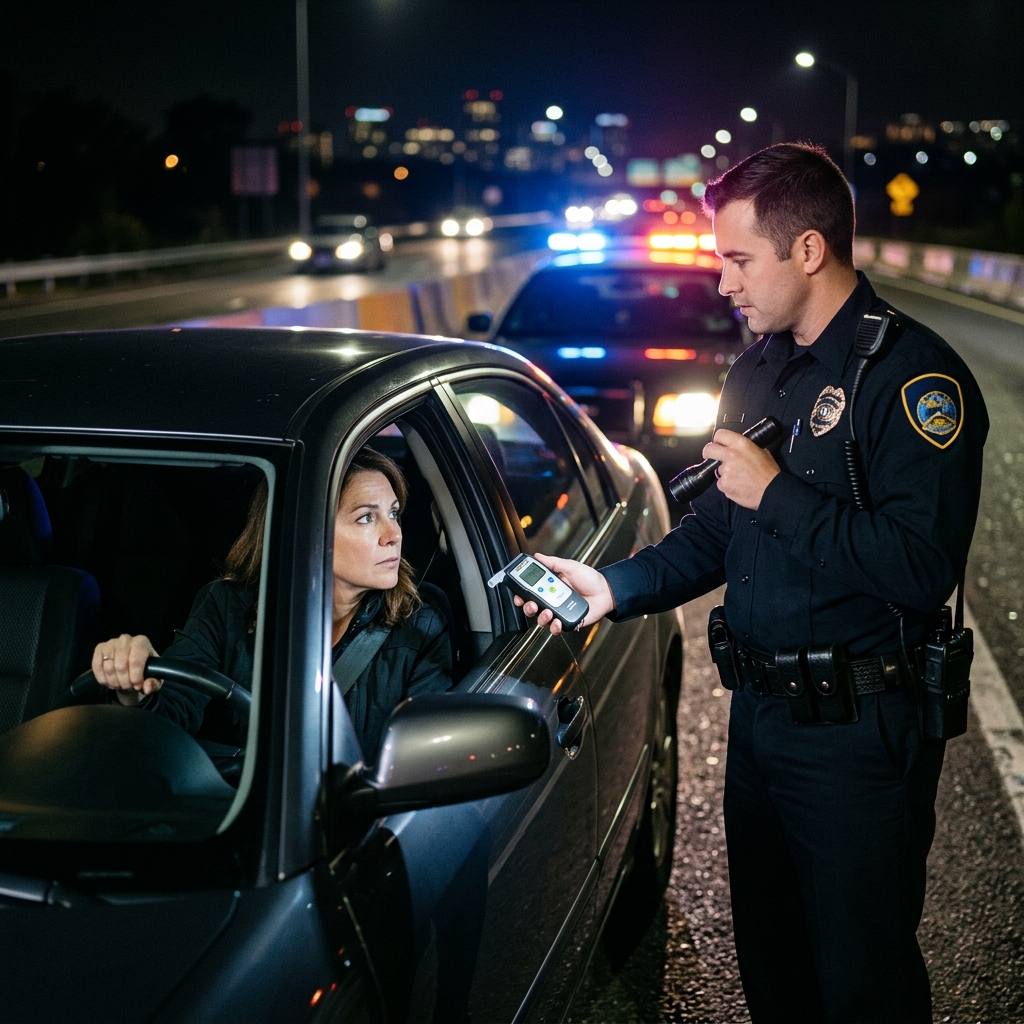
Being pulled over on suspicion of drunk driving is stressful, and decisions made in those few minutes can have long-lasting legal and personal consequences. One of the most confusing choices motorists face is whether to cooperate with sobriety testing — including both roadside field sobriety exercises and chemical tests such as breath or blood analysis.
This article explains what these tests are, when you may refuse them, and how refusal can help or hurt you, depending on the circumstances and the laws in your state.
Field Sobriety Tests vs. Chemical Tests
Police typically use two broad categories of tests during impaired driving investigations:
- Field Sobriety Tests (FSTs) — physical and observational tasks performed at the roadside.
- Chemical Tests — breath, blood, or urine analysis to measure blood alcohol concentration (BAC) or the presence of drugs.
Understanding the difference is crucial because the law usually treats refusal of each category very differently.
What Are Field Sobriety Tests?
Field sobriety tests are a series of standardized tasks administered during a traffic stop to help the officer assess possible impairment. In the United States, many agencies use the three-test battery developed and promoted by the National Highway Traffic Safety Administration (NHTSA):
- Walk-and-Turn – The driver is asked to walk heel-to-toe along a line, turn, and walk back, while the officer watches for balance problems, incorrect steps, or stepping off the line.
- One-Leg Stand – The driver must stand on one leg and hold the other a few inches off the ground while counting, with the officer noting swaying, hopping, or putting the raised foot down.
- Horizontal Gaze Nystagmus (HGN) – The officer moves a pen or small light horizontally and asks the driver to follow it with their eyes, looking for involuntary eye movements that can be associated with alcohol use.
These tests are designed as divided attention tasks — requiring both mental focus and physical coordination — similar to what is required for safe driving. However, performance can be affected by age, medical conditions, injuries, nervousness, or even uneven pavement, not just alcohol or drugs.
What Are Chemical Tests?
Chemical tests analyze breath, blood, or sometimes urine to estimate a driver’s BAC or detect drugs in the system. The most common are:
- Breath tests (often called breathalyzers) performed at the roadside or at a station.
- Blood tests taken at a clinic, hospital, or jail.
- Urine tests in some jurisdictions or specific circumstances.
Results from these tests are often more persuasive evidence in court than an officer’s observations alone, which is why states have enacted implied consent laws to encourage cooperation.
Are Field Sobriety Tests Mandatory?
In most U.S. jurisdictions, field sobriety tests are voluntary. Drivers generally have the right to politely decline these roadside exercises.
| Type of Test | Voluntary? | Immediate Legal Penalties for Refusal? |
|---|---|---|
| Field Sobriety Test | Generally voluntary | Often no direct license penalty, but may still lead to arrest |
| Chemical Test (Breath/Blood) | Not voluntary under implied consent | License suspension and other sanctions in many states for refusal |
Examples from State Law
- Indiana: Drivers may refuse field sobriety tests without direct legal penalties, but refusal of a certified chemical test under implied consent law leads to automatic driver’s license suspension.
- Arizona: Field sobriety tests are not required by statute, and drivers may decline them. However, refusing chemical tests can carry serious consequences, including license suspension.
Although the details vary by state, a recurring theme is that declining field sobriety tests does not typically trigger automatic license or criminal penalties by itself, whereas refusing chemical tests often does.
Why Many Lawyers Discourage Field Sobriety Tests
Criminal defense attorneys often advise sober and impaired drivers alike to be cautious about agreeing to field sobriety tests. The tests may appear neutral or even protective, but several features make them risky.
They Are Primarily Evidence-Gathering Tools
Field sobriety tests are framed as a way to determine whether a driver is safe to continue driving, but practically, they serve as a structured method for officers to collect evidence supporting an arrest and eventual prosecution.
- Performance issues — even minor ones — are documented as “clues” or indicators of impairment.
- Officers will rarely interpret test performance as proof of sobriety; instead, they use any misstep to build probable cause.
In other words, field sobriety tests typically function as a one-way street: they help the state, not the driver.
Subjectivity and Potential Inaccuracy
Although NHTSA has standardized certain testing protocols, many aspects of field sobriety testing remain subjective:
- Officers use their own judgment in deciding whether the driver displayed enough “clues” to suggest impairment.
- Factors like fatigue, anxiety, age, footwear, and medical issues can produce poor performance, regardless of sobriety.
- Uneven surfaces, poor lighting, or bad weather can make tests harder, especially the walk-and-turn and one-leg stand.
Defense attorneys frequently point out that these tests can be difficult even for people who are not impaired, and that many drivers fail them for reasons unrelated to alcohol or drugs.
Refusal Can Sometimes Be the Safer Choice
Because poor performance will be documented and later described in court, some lawyers argue that refusing field sobriety tests can avoid creating additional evidence against you.
However, refusal is a strategic choice, not a guarantee of avoiding arrest. Officers can still rely on other observations — such as driving behavior, the smell of alcohol, or slurred speech — to establish probable cause.
Implied Consent and Chemical Test Refusal
Implied consent laws are a key reason refusing chemical tests is much riskier than refusing field sobriety tests. Every state has some form of implied consent statutes that say, in essence: by driving on public roads, you agree in advance to chemical testing if lawfully arrested for DUI.
Typical Consequences of Refusing a Chemical Test
If you refuse a legally requested breath or blood test after a DUI arrest, your state’s implied consent law may impose:
- Immediate license suspension, often for a longer period than a first-time DUI conviction.
- Use of your refusal as evidence of consciousness of guilt in court in some jurisdictions.
- Mandatory installation of an ignition interlock device or additional administrative fees upon reinstatement in certain states.
- Possible court-ordered chemical testing via warrant, meaning the state may obtain your blood anyway.
In Indiana, for example, refusing a certified chemical test triggers automatic suspension of the driver’s license, and the driver may still be compelled by search warrant to submit to testing.
Why Legislatures Adopt Implied Consent
Implied consent statutes were enacted to support enforcement of per se drunk driving laws (such as driving with BAC of 0.08% or higher) by ensuring that chemical evidence is obtained consistently. The idea is that driving is a privilege, and states can condition that privilege on agreeing to chemical testing under specific circumstances.
What Happens If You Refuse Tests During a DUI Stop?
Refusal can play out differently depending on which test you decline and the facts of the stop. Below is a general overview of what may happen.
Refusing Field Sobriety Tests
If you tell an officer that you do not wish to perform field sobriety tests:
- You usually will not face direct license penalties solely for that refusal.
- The officer may still arrest you if other observations provide probable cause (erratic driving, odor of alcohol, admissions, etc.).
- You will likely be asked to submit to a chemical test — breath or blood — once arrested.
- Prosecutors may argue that your refusal suggests you anticipated failing the tests, though this is only one piece of evidence among many.
Refusing Chemical Tests
Refusal of chemical tests usually carries stronger consequences:
- You may face immediate administrative penalties, such as license suspension under implied consent.
- A judge may consider your refusal when evaluating guilt or appropriate sentencing.
- In some cases, officers can seek a warrant to obtain a blood sample without your consent.
The exact outcome depends on state law and the specific facts of your case, making professional legal advice important.
Practical Tips During a Suspected DUI Stop
While every situation is unique, some practical principles can help you navigate a DUI stop more safely.
Stay Calm and Polite
- Keep your hands visible and follow basic safety instructions.
- Avoid arguing, raising your voice, or making sudden movements.
- Hostility may escalate the encounter and be noted in the police report.
Know Your Right to Decline Field Sobriety Tests
- In many states, you may say, “I do not wish to perform any balancing or coordination tests” or similar, calmly and respectfully.
- You can ask if the tests are mandatory and if you will face additional legal penalties for declining.
Be Cautious About Chemical Test Refusal
- Understand that declining a breath or blood test after arrest often leads to automatic license suspension.
- In some situations, taking the test and later contesting its accuracy or legality may be more advantageous.
- Whenever possible, consult a lawyer (even by phone) before refusing a chemical test.
Ask for Legal Counsel
- You may ask if you are under arrest and request the opportunity to speak with an attorney.
- While you cannot usually delay chemical testing indefinitely, early contact with counsel can help you avoid unnecessary mistakes.
Frequently Asked Questions (FAQs)
1. Is refusing a field sobriety test the same as refusing a breathalyzer?
No. Refusing a field sobriety test typically does not trigger implied consent penalties, whereas refusing a post-arrest chemical test like a breathalyzer often results in automatic license suspension under state law.
2. Can I be arrested even if I refuse all tests?
Yes. An officer may base an arrest on driving behavior, physical appearance, odor of alcohol, admissions, or other observations. Refusing tests does not guarantee avoiding arrest.
3. Do officers have to tell me that field sobriety tests are voluntary?
Not always. In practice, some officers speak as if the tests are required, even though in many states they are not. You are generally allowed to ask whether the tests are mandatory or voluntary.
4. If I pass field sobriety tests, will I be released?
Not necessarily. Officers may still decide to arrest based on other observations or preliminary breath test results. Moreover, “passing” is not a formal legal category; officers simply record whether they observed certain clues.
5. Should I always refuse field sobriety tests?
There is no universal rule. Many defense lawyers believe refusal often protects drivers from creating damaging evidence, but the best decision depends on your state’s laws, your condition, and the specific circumstances. Consulting an attorney familiar with local DUI practice is strongly recommended.
Key Takeaways
- Field sobriety tests are usually voluntary, and refusal often avoids creating additional evidence of impairment.
- Chemical tests are governed by implied consent laws; refusal frequently leads to automatic license suspension and other penalties.
- Refusal of any test does not guarantee avoiding arrest; officers may rely on other observations to establish probable cause.
- The consequences of refusal vary by state, making local legal advice crucial when facing DUI allegations.
Disclaimer: This article provides general information about DUI sobriety testing and does not constitute legal advice. Laws vary by jurisdiction, and you should consult a licensed attorney in your area for guidance on your specific situation.
References
- Refusing a Field Sobriety Test in a DUI Stop & Your Legal Rights — Justia. 2023-05-01. https://www.justia.com/criminal/drunk-driving-dui-dwi/handling-a-dui-stop/refusing-to-perform-a-field-sobriety-test/
- Can You Refuse a Field Sobriety Test in Indiana? — Indy Justice Law Firm. 2022-09-15. https://www.indyjustice.com/blog/field-sobriety-test-indiana/
- Can You Refuse Field Sobriety Tests? — Law Offices of Brian D. Sloan. 2022-03-10. https://arizdui.com/dui-field-sobriety-tests-and-how-to-refuse-them-in-arizona/
- Field Sobriety Testing — National Highway Traffic Safety Administration (summarized via public sources). 2021-01-01. https://www.nhtsa.gov/road-safety/drunk-driving
- Field Sobriety Tests — Knowles Law Firm, PLC. 2021-06-20. https://www.knowleslaw.org/phoenix-dui-lawyer/field-sobriety-tests/
Similar Articles








Read full bio of medha deb




