
Email Privacy and Warrants: What Law Enforcement Can Access
Understand when police need a warrant for your emails, how U.S. law treats stored messages, and what this means for your privacy rights.
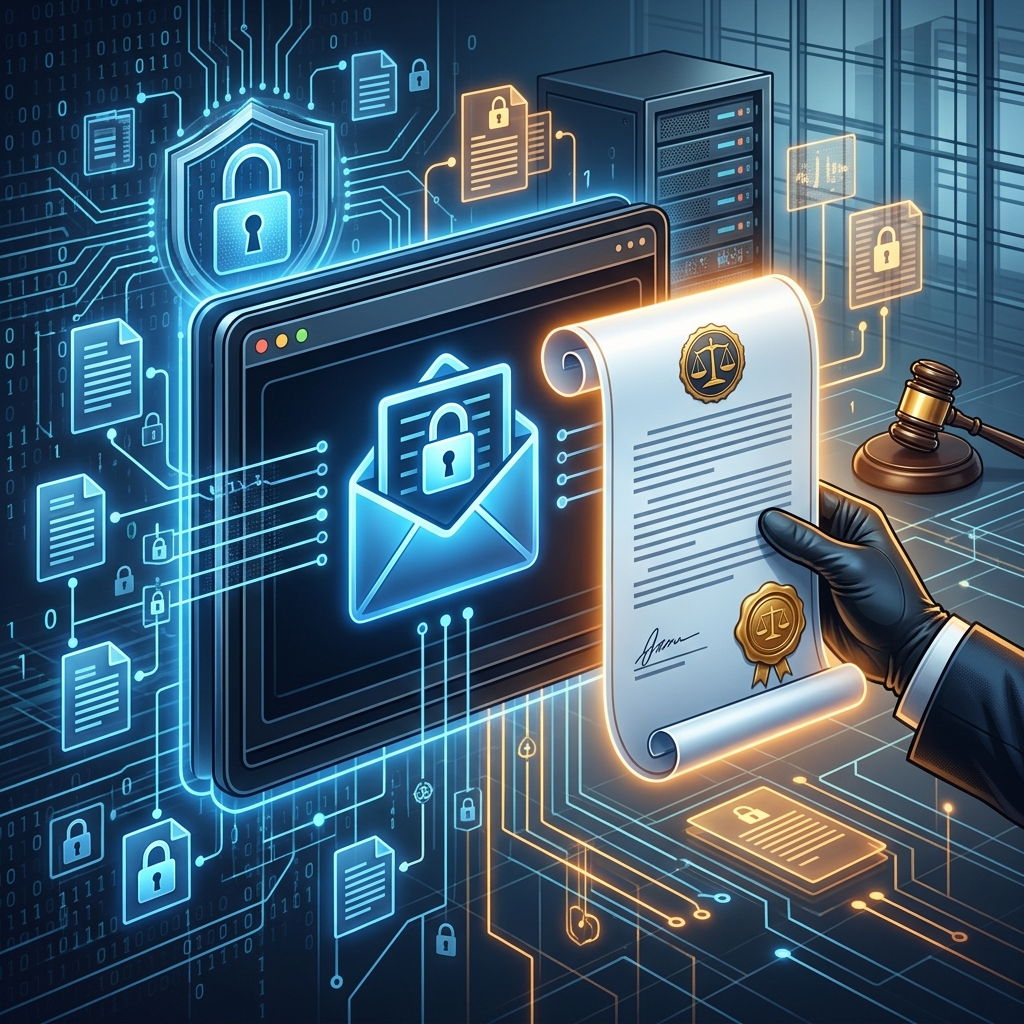
Electronic mail has become a primary way that people communicate at home, at work, and across borders. As a result, email now holds the same kind of sensitive information once found only in physical letters, paper files, and diaries. This raises a critical legal question: when can the government or law enforcement authorities read your emails, and what kind of court order must they obtain first?
This article explains how U.S. law regulates government access to email, focusing on the Electronic Communications Privacy Act (ECPA), the related Stored Communications Act (SCA)warrant supported by probable cause before accessing the content of stored electronic communications. It also explores how older rules about the age of emails have been challenged, and what practical steps you can take to protect your privacy.
Why Email Privacy Matters in Criminal Investigations
Email accounts often contain years of conversations, financial records, health information, location data, and personal opinions. For investigators, this can be a treasure trove of evidence; for individuals, it raises serious concerns about government overreach and surveillance.
- Volume of data: A single email account may store thousands of messages, attachments, and contact lists.
- Sensitivity: Emails frequently reveal relationships, political beliefs, legal strategies, and medical details.
- Longevity: Messages are often retained indefinitely on third-party servers, even after users forget they exist.
Because of these characteristics, courts and legislatures have grappled with whether email should be treated like traditional mail, telephone calls, or something entirely new. The answer affects what type of legal authorization—warrant, subpoena, or other court order—is required before authorities can compel providers to disclose email content.
Core Legal Framework: ECPA and the Stored Communications Act
The main federal statute governing email privacy in the United States is the Electronic Communications Privacy Act of 1986. ECPA updated earlier wiretap laws to address emerging technologies like email and computer networks.
ECPA is divided into multiple titles, but two are especially important for email:
- Wiretap Act (Title I): Regulates real-time interception of communications such as live phone calls or data transmissions.
- Stored Communications Act (Title II): Governs access to stored electronic communications, including emails that reside on servers after they have been sent or received.
Under the Stored Communications Act, email stored on a provider’s system is protected from unauthorized access. However, the statute historically distinguished between recent and older emails, which had a major effect on whether police needed a warrant or could rely on less demanding legal tools.
Warrants, Subpoenas, and Court Orders: Key Differences
To understand email privacy, it helps to distinguish the main types of legal process that government entities use to obtain information:
| Type of Legal Process | Who Issues It | Standard Required | Typical Use in Email Context |
|---|---|---|---|
| Search warrant | Judge or magistrate | Probable cause that evidence of a crime will be found | Accessing the content of emails or other private communications |
| Subpoena | Grand jury, prosecutor, or agency (depending on law) | Generally lower threshold; does not always require probable cause | Obtaining non-content records like subscriber information, or older stored communications under earlier interpretations of ECPA |
| Court order (SCA-specific) | Judge | Showing specific facts and relevance; less than full probable cause | Accessing certain communications or records when statute allows an intermediate standard |
Content refers to what you actually say in an email, while non-content information includes metadata such as sender, recipient, time stamp, and IP addresses. Courts generally view content as more sensitive and therefore more strongly protected.
The 180-Day Rule: How Age Used to Affect Email Protection
One of the most controversial features of the original Stored Communications Act was its treatment of emails based on how long they had been stored. Under the statute, messages kept on a third-party server for more than 180 days were considered to have a reduced expectation of privacy.
As a result:
- Emails stored for 180 days or less: Government generally needed a warrant to obtain their content from a provider.
- Emails stored for more than 180 days: Authorities could often use a subpoena or a different type of court order, rather than a full warrant supported by probable cause.
This distinction made some sense in the 1980s, when email systems were more short-term and users regularly downloaded or deleted messages. Today, however, email providers routinely store messages for years or indefinitely, making the 180-day rule increasingly disconnected from modern technology and user behavior.
Privacy advocates and courts have therefore questioned whether age alone should determine the level of protection. Some judicial decisions have required warrants for email content regardless of how long the messages have been stored, citing constitutional privacy interests.
Push for Reform: The Email Privacy Act and Modern Expectations
Recognizing the outdated nature of the 180-day rule, lawmakers introduced the Email Privacy Act, a proposal to amend ECPA and strengthen protections for stored communications. The bill sought to remove statutory authority allowing government entities to obtain email content from providers without a warrant.
Key features of the Email Privacy Act included:
- Clarifying that government must obtain a warrant to compel providers to disclose the contents of communications, regardless of how long they had been stored.
- Eliminating language that permitted access to stored communications with less demanding court orders or subpoenas when messages were older.
- Updating technical provisions to align ECPA with contemporary email storage practices and privacy expectations.
Even where statutory reform has been incomplete, judicial and executive practices increasingly reflect the view that law enforcement should secure a warrant before demanding access to email content from third-party providers. This trend is grounded in the notion that users reasonably expect the confidentiality of their emails, even when stored on remote servers.
Work Email, Personal Accounts, and Employer Access
Email privacy questions are more complex when messages involve workplace systems. Employers often have policies allowing monitoring of company accounts and equipment, and those policies can affect both private and government access.
From a government perspective, however, email hosted on corporate servers and accessed through employer accounts may still be protected under ECPA and constitutional case law. Whether a warrant is required can depend on.
- Ownership of the account: Company-issued addresses and devices versus personal email used at work.
- Written policies: Explicit statements about monitoring and employee expectations of privacy.
- Actual practices: How frequently employers review messages and whether employees are notified.
Courts have sometimes recognized privacy expectations even for personal email accessed through workplace devices, especially where employees were not clearly warned of routine monitoring. However, because workplace policies vary widely, individuals should not assume that communications sent from a work account will enjoy the same level of protection as purely personal messages.
Metadata, Non-Content Records, and Reduced Protection
While the content of emails generally receives the strongest legal protection, non-content information—such as to/from fields, time stamps, routing data, and IP addresses—is often available under less demanding standards.
Under ECPA and related statutes:
- Real-time interception of non-content dialing or routing information is regulated by laws such as the Pen Register Act.
- Stored non-content records held by providers can sometimes be obtained through subpoenas or specialized court orders rather than full warrants.
Although metadata may appear less sensitive, it can be used to infer patterns of communication, social networks, and geographic movements. For this reason, debates continue about whether existing legal standards adequately protect non-content email records.
Practical Steps to Strengthen Your Email Privacy
Legal protections form only part of the privacy picture. Users can take several practical measures to reduce the risk that their emails will be accessed, whether by unauthorized actors or pursuant to legal process.
- Use strong authentication: Password-protected accounts combined with two-factor authentication help prevent account compromise by third parties.
- Limit use of work devices for personal mail: Accessing personal accounts on employer-issued hardware can blur the line between private and monitored communications.
- Encrypt sensitive messages: End-to-end encryption can make the content unreadable to anyone except the intended recipient, even if providers receive legal requests.
- Review retention settings: Consider whether your provider offers tools to limit how long emails are stored, reducing the volume of data that could be subject to legal process.
- Protect physical devices: Securing laptops and phones against theft or loss reduces opportunities for direct access to email accounts.
While none of these steps can make email entirely immune from lawful investigation, they can raise the threshold for access and encourage responsible data handling.
How Email Privacy Interacts with Other Laws
Email privacy does not exist in isolation. Other statutes address related issues such as marketing messages, consumer protection, and data security. For example:
- The CAN-SPAM Act regulates commercial emails, requiring accurate header information, non-deceptive subject lines, clear identification of ads, and functional unsubscribe mechanisms.
- Data protection laws such as the General Data Protection Regulation (GDPR) in the European Union require organizations to protect personal data, obtain valid consent, and provide mechanisms for individuals to access or erase their information, which affects how email marketing is conducted.
Although these laws focus primarily on business communications and data practices rather than criminal investigations, they reflect a broader commitment to privacy and transparency in electronic messaging.
Frequently Asked Questions About Email Warrants
Do police always need a warrant to read my emails?
In modern practice, law enforcement typically must obtain a warrant supported by probable cause to access the content of emails stored by providers, especially when seeking messages from personal accounts. However, non-content records and certain business-related emails may sometimes be obtained under different standards, depending on the governing statute and court rulings.
Can older emails be accessed more easily than recent ones?
Historically, the Stored Communications Act treated emails stored for more than 180 days as less protected, allowing access via subpoena or other court orders rather than a warrant. Many courts and legislators now regard this distinction as outdated, and proposed reforms such as the Email Privacy Act aim to ensure that all email content, regardless of age, is available to government only with a warrant.
Does using a work account affect my privacy rights?
Using employer-provided email or devices can reduce your expectation of privacy, especially if the company has written policies allowing monitoring. While constitutional and statutory protections still apply, courts may weigh workplace policies and practices when deciding whether a particular search was reasonable. For highly personal communications, using a private account on personal hardware generally offers stronger privacy expectations.
Can law enforcement get my email metadata without a warrant?
Non-content information, such as to/from data and time stamps, is sometimes accessible under less demanding legal standards than the message content itself. Investigators may use subpoenas or specialized orders to obtain these records, although the exact requirements depend on the statute and the nature of the information requested.
Does encryption prevent government access to my email?
Encryption can make email content technically unreadable to anyone who does not possess the decryption key, including providers. However, encryption does not eliminate legal authority; if law enforcement obtains a valid warrant, they may still compel disclosure from parties who hold the keys or access decrypted versions of messages. Encryption primarily protects against unauthorized third-party access and some forms of bulk data collection.
References
- Email Privacy Law Concerns — FindLaw. 2023-05-01. https://www.findlaw.com/consumer/online-scams/email-privacy-concerns.html
- Email Privacy Act (H.R. 699, 114th Congress) — U.S. Congress. 2015-02-04. https://www.congress.gov/bill/114th-congress/house-bill/699
- Email privacy — Overview of ECPA and stored communications. 2024-01-10. https://en.wikipedia.org/wiki/Email_privacy
- How does the GDPR affect email? — GDPR.eu. 2020-06-15. https://gdpr.eu/email-encryption/
- CAN-SPAM Act: A Compliance Guide for Business — Federal Trade Commission. 2009-09-01. https://www.ftc.gov/business-guidance/resources/can-spam-act-compliance-guide-business
- Foundations of Data Privacy in Email Marketing — Litmus. 2022-01-20. https://www.litmus.com/blog/foundations-of-data-privacy-in-email-marketing
Similar Articles








Read full bio of Sneha Tete




