
Salary History Bans: Reshaping Hiring Practices
Discover how salary history bans across states are transforming recruitment, promoting pay equity, and what employers must do to comply.
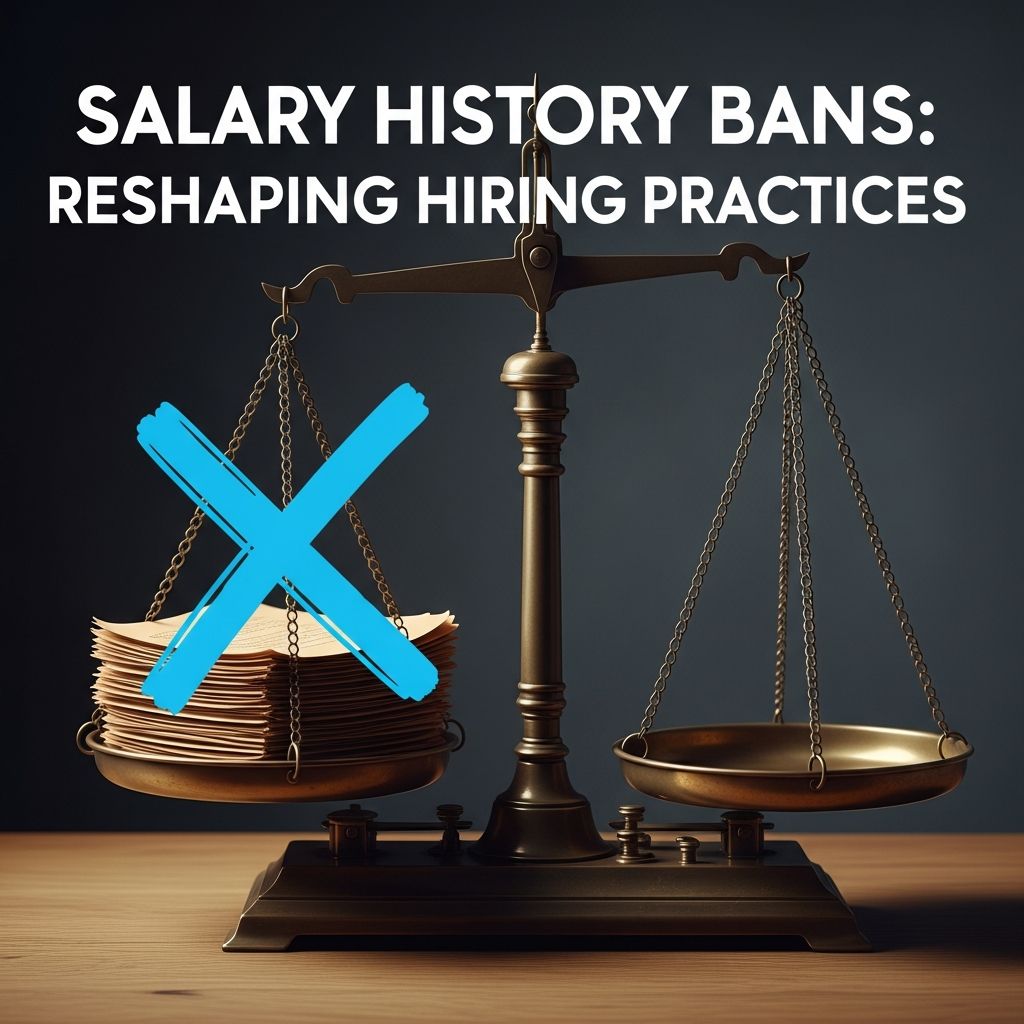
Salary history bans have become a cornerstone of modern employment law, aiming to dismantle systemic pay disparities by preventing employers from basing new job offers on candidates’ past earnings. These laws, now enacted in numerous states and localities, shift the focus from historical wages to the value of skills, experience, and market rates. By prohibiting inquiries into prior compensation, legislators seek to foster greater wage transparency and equity in the workplace.
The Push for Wage Equity in America
The rationale behind salary history bans stems from decades of evidence showing how wage gaps perpetuate inequality. When employers anchor offers to previous salaries—often lower for women, minorities, and other underrepresented groups—disparities compound over careers. For instance, studies indicate that initial pay sets a trajectory affecting future negotiations and lifetime earnings. These bans compel companies to evaluate candidates based on qualifications rather than historical pay, potentially narrowing gender and racial pay gaps.
Enacted starting around 2017, these policies gained momentum amid broader movements for workplace fairness. Today, they influence hiring in public and private sectors alike, requiring HR professionals to adapt recruitment strategies. Employers must now provide pay ranges upon request in some jurisdictions, further promoting transparency.
Nationwide Landscape of Salary History Restrictions
As of 2026, salary history bans cover a significant portion of the U.S. workforce, with variations by state and city. At the federal level, no comprehensive ban exists, but state laws fill the gap, affecting employers differently based on location.
Key states with statewide prohibitions include:
- California: Bans all employers from seeking or using prior pay history, even if volunteered. Pay scales must be disclosed on request.
- New York: Prohibits inquiries into salary history for hiring, promotions, or salary decisions, effective since 2020.
- Colorado: Forbids using pay history to set salaries and protects against retaliation for non-disclosure.
- Illinois: Bars requests for wage history as a condition of employment consideration.
Localities add layers of complexity. San Francisco extends bans to considering prior compensation and restricts disclosing employee salaries without consent. Pittsburgh and Philadelphia impose similar rules on city employers, while Atlanta avoids salary questions in applications and interviews.
| State/Locality | Scope | Key Prohibition | Effective Date |
|---|---|---|---|
| California (Statewide) | All employers | No seeking or using pay history | Jan 1, 2018 |
| New York (Statewide) | All employers | No salary history requests | Jan 6, 2020 |
| San Francisco, CA | All including contractors | No asking or considering prior pay | Jul 1, 2018 |
| Colorado (Statewide) | All employers | No use of pay history for offers | Recent (post-2020) |
| Pittsburgh, PA | City agencies | No prior pay inquiries | Varies |
This table highlights major examples; employers operating across borders must track jurisdiction-specific rules to avoid violations.
What Employers Cannot Do Under These Laws
Restrictions are clear and multifaceted. Employers are generally barred from:
- Directly asking applicants about past salaries, bonuses, or benefits.
- Contacting former employers or colleagues for wage details.
- Searching public records or databases for compensation history.
- Using any obtained salary information—even if volunteered—to justify new offers.
- Retaliating against candidates who refuse to disclose prior pay.
In California, for example, even incidental knowledge of pay history cannot influence decisions. New York’s law extends to current employees seeking promotions, ensuring internal equity. Violations can lead to fines, lawsuits, or reputational damage, making compliance training essential.
Permitted Practices: Navigating Compliance
Not all compensation discussions are off-limits. Employers may:
- Ask about expected salary or desired range for the role.
- Confirm volunteered pay history after a job offer, in limited cases.
- Discuss total compensation packages, including non-wage benefits.
- Provide pay scale info proactively, as required in places like California.
Proactive transparency helps. Many companies now include salary ranges in job postings, aligning with emerging pay transparency laws in states like Colorado and New York. This builds trust and attracts diverse talent.
Business Impacts: Challenges and Opportunities
Adapting to bans requires rethinking hiring. Challenges include determining fair market pay without historical benchmarks, potentially increasing offers initially. However, benefits emerge: reduced legal risks, broader applicant pools, and stronger diversity. Companies report improved candidate experiences when focusing on skills over past pay.
For multi-state employers, compliance demands robust HR policies, such as standardized interview guides and market salary data tools. Investing in compensation audits ensures internal equity, preventing pay disparity claims under equal pay laws.
Applicant Perspectives: Empowering Job Seekers
Candidates gain leverage. Without salary history anchoring offers low, negotiations center on role value. Job seekers should research market rates via tools like government labor statistics or industry surveys, armed with data on skills-based worth. In banned areas, refusing past pay questions is protected, shifting power dynamics.
Volunteering history remains optional but risky if below market. Instead, emphasize achievements and future expectations to maximize offers.
Future Directions and Evolving Legislation
By 2026, more states like Nevada and Rhode Island have joined, with federal proposals simmering. Pay transparency mandates—requiring posted ranges—are expanding, complementing bans. Expect continued growth, especially in tech and finance sectors facing scrutiny.
Employers should monitor updates via state labor departments, as non-compliance grows costlier amid heightened enforcement.
Frequently Asked Questions (FAQs)
What if an applicant volunteers their salary history?
Even volunteered info generally cannot be used to set pay in banned jurisdictions, like California and New York.
Can employers ask about salary expectations?
Yes, inquiring about desired pay for the position is typically allowed.
Do these laws apply to internal promotions?
In many states, yes, such as New York, prohibiting history use for promotions.
What penalties face violating employers?
Fines, back pay awards, and lawsuits; specifics vary by state.
How do bans affect multi-state companies?
Follow the strictest applicable law for each job’s location.
Are benefits like bonuses included in ‘salary history’?
Yes, most laws cover total compensation and benefits.
References
- Salary History Ban: What Potential Employers Are & Aren’t Allowed — Badame Law Group. 2022-03. https://www.badamelawgroup.com/blog/2022/march/salary-history-ban-what-potential-employers-are-
- Employers Now Banned from Asking Prospective Hires About Salary History — LeadingAge NY. Recent. https://www.leadingageny.org/topics/workforce-issues-and-regulations/laws-and-regulations/employers-now-banned-from-asking-prospective-hires-about-salary-history/
- Salary History Ban – What You Need To Know — State of New York. Recent. https://www.ny.gov/salary-history-ban/salary-history-ban-what-you-need-know
- States with Salary History Bans: Employer’s Guide — Paycor. Recent. https://www.paycor.com/resource-center/articles/states-with-salary-history-bans/
- Salary history bans: A running list of states and localities — Dynamic HR. Recent. https://www.dynamichr.com/salary-history-bans-a-running-list-of-states-and-localities-that-have-outlawed-pay-history-questions/
- A running list of states and localities that have outlawed pay history — HR Dive. Recent. https://www.hrdive.com/news/salary-history-ban-states-list/516662/
- State by State: Salary History Bans and Pay Transparency Laws — SHRM. Recent. https://www.shrm.org/topics-tools/news/talent-acquisition/state-state-salary-history-bans-pay-transparency-laws
Similar Articles








Read full bio of Sneha Tete




