
Roommate Drug Dealing: Your Legal Risk Exposed
Discover if your roommate's drug sales can land you in jail under constructive possession laws and how to shield yourself legally.
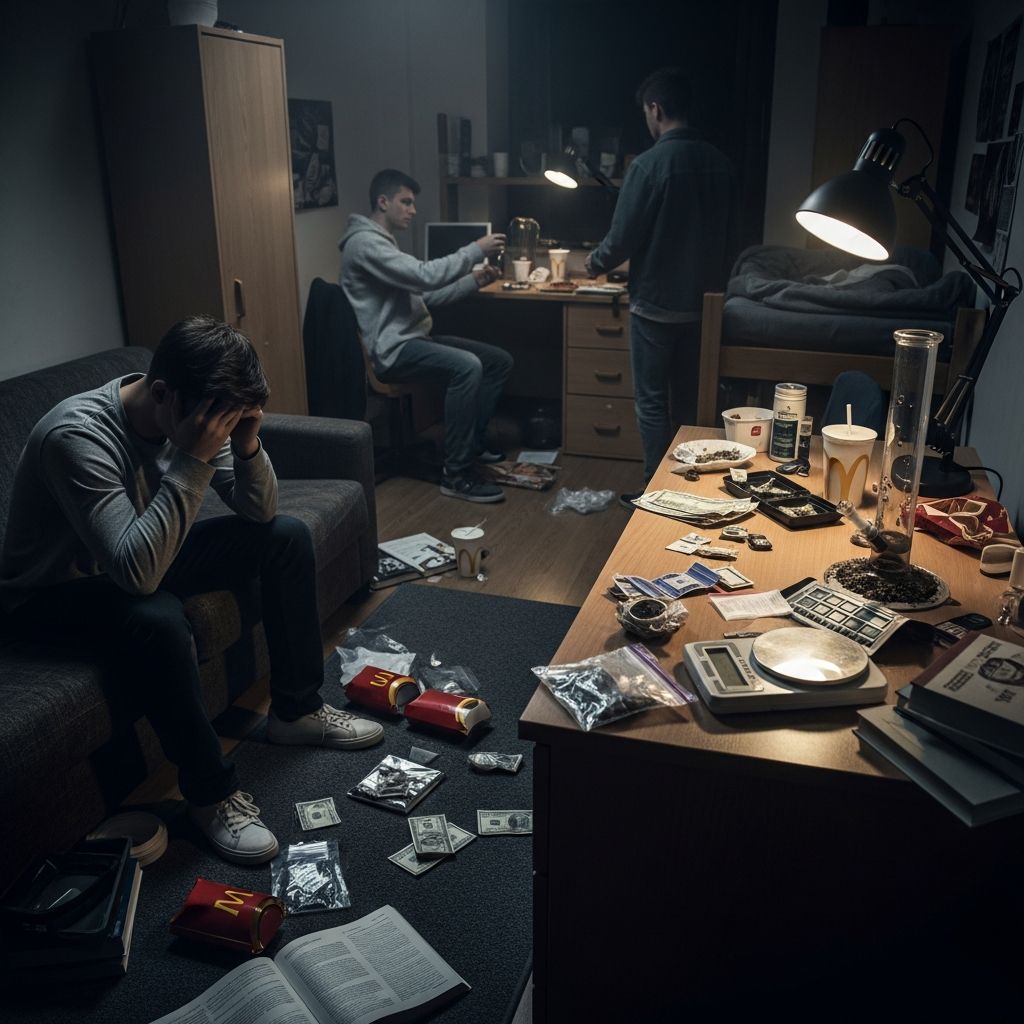
Living with someone who sells illegal drugs from your shared home can turn your everyday rental into a potential crime scene, even if you play no active role. Prosecutors often rely on the doctrine of constructive possession to charge innocent roommates, arguing that shared access to common areas implies knowledge and control over contraband. This article breaks down the mechanisms of liability, real-world scenarios, penalties across jurisdictions, protective measures, and pathways to defense.
Understanding Constructive Possession in Shared Living Spaces
Constructive possession is a legal principle that allows authorities to hold individuals accountable for drugs they do not physically touch, provided they demonstrate awareness of the substances and dominion over the location. In roommate situations, this becomes particularly hazardous because leases typically grant equal access to kitchens, living rooms, and bathrooms—spaces where drugs are frequently stashed.
For conviction, two core elements must be proven beyond reasonable doubt: (1) the accused knew the drugs existed, and (2) they exercised control over the drugs or the area containing them. Prosecutors build cases using circumstantial evidence like residency duration, fingerprints on packaging, or digital communications referencing suspicious activities. In shared homes, drugs discovered in communal zones lead to arrests for all occupants in approximately 80% of cases at the state level, as equal access is presumed to equate to joint responsibility.
- Knowledge Indicators: Text messages about ‘packages’ or cash, witness accounts of transactions in your presence, or paraphernalia like scales in personal areas.
- Control Factors: Long-term residency (e.g., over six months), failure to evict the dealer despite awareness, or utility bills in your name tying you to the property.
- Mitigating Evidence: Prior complaints to landlords or authorities documenting your opposition to the behavior.
Federal cases differ markedly; agencies like the DEA focus on primary traffickers with extensive surveillance, often dismissing charges against peripheral roommates lacking direct sales evidence. State and local task forces, however, cast wider nets due to lower evidentiary bars.
Common Scenarios: Where Drugs Are Found Matters
The discovery location dramatically influences charging decisions. Private bedrooms offer stronger defenses, as exclusive access undermines joint control claims. Conversely, communal areas expose everyone to scrutiny.
| Drug Location | Arrest Likelihood for Innocent Roommate | Key Prosecution Argument | Best Defense Angle |
|---|---|---|---|
| Roommate’s Private Bedroom | Low (20-30%) | Limited access proof needed | Exclusive domain, no fingerprints/texts |
| Common Areas (Kitchen/Living Room) | High (80%+) | Shared access equals joint control | Prove lack of knowledge via prior complaints |
| Your Personal Space | Very High (90%+) | Direct control presumed | Challenge chain of custody, plant theory |
| Vehicle or Mailbox (Shared) | Medium (50-60%) | Proximity to home | Non-residency ties, alibis |
Consider a scenario where police raid under a warrant targeting your roommate: officers search everywhere, seizing items from pantries or couches. Even disclaiming ownership on-site can backfire, as statements like ‘I suspected but never touched’ confess the knowledge prong.
Potential Charges and Harsh Penalties
Charges range from simple possession to intent to distribute, escalating with quantity and substance type. Innocent roommates often face possession counts via constructive possession, while aiding—even passively like driving—invites conspiracy accusations.
In California, post-Proposition 47, small amounts of most controlled substances (excluding marijuana excesses) are misdemeanors punishable by up to one year in jail. Felony possession with intent carries multi-year sentences. Marijuana limits (1 oz flower, 8g concentrate for adults 21+) mean exceeding triggers misdemeanors with six months jail and $500 fines; distribution amplifies to felonies.
Florida imposes minimum three-year terms for certain possessions, scaling with drug schedules. Convictions stain records, jeopardizing employment, housing, custody, and immigration status. Collateral consequences persist years post-sentence.
- Misdemeanor Possession: Up to 1 year jail, fines.
- Felony Distribution Intent: 3+ years prison, lifetime registries in some states.
- Conspiracy: Matches underlying offense penalties.
Proactive Steps: Evict the Risk Before Raid
Awareness demands action; passivity signals complicity. Document concerns immediately: email landlords citing lease violations (illegal activity clauses abound), request interventions, or notify local nuisance abatement units anonymously.
Options include:
- Landlord Notification: Written demands for eviction protect you, proving dissociation.
- Relocation: Break lease citing safety; courts often side with tenants fleeing crimes.
- Anonymous Tips: Use crime stoppers lines to prompt investigations without self-incrimination.
- Avoid Confrontation: Direct warnings risk retaliation; route through professionals.
College dorms amplify risks—administrators evict swiftly, but police charge under identical doctrines.
Post-Arrest Survival Guide: From Custody to Court
Arrests occur unpredictably, often at odd hours. Bail promptly if possible, then secure counsel versed in drug defenses—federal and state. Disclose all: drug site, statements made, communications.
- Invoke Silence: ‘I want a lawyer’ halts questioning; cooperation confesses elements.
- Gather Exculpatories: Lease copies, complaint logs, alibis.
- Motions Practice: Suppress fruits of illegal searches, challenge warrants.
- Plea Negotiations: Diversions for first-timers sans priors.
Roommate confessions exonerating you are hearsay, inadmissible unless they testify—unlikely given mutual self-incrimination risks.
Frequently Asked Questions (FAQs)
Can I be arrested if drugs are only in my roommate’s room?
Possibly, but less likely. Prosecutors need proof of your knowledge/control; private spaces weaken cases unless ties like texts exist.
What if I complain to the landlord—does that help?
Yes, contemporaneous records prove lack of acquiescence, undermining knowledge claims.
Marijuana is legal—am I safe?
No, excesses or sales violate limits, exposing you via constructive possession.
Federal vs. state charges: big difference?
Federal targets kingpins, drops peripherals; states charge broadly.
Should I talk to police?
Never without counsel; even innocent explanations prove elements.
Building a Bulletproof Defense Strategy
Expert attorneys dissect cases: motion to suppress tainted evidence, expert witnesses on possession standards, jury instructions clarifying joint access ≠ guilt. Success rates soar with specialists; generalists falter on nuances.
Long-term, expungements erase records post-acquittal, restoring opportunities. Prevention trumps cure—vet roommates rigorously, scrutinize behaviors early.
This 1678-word guide equips you against unseen perils of shared housing. Knowledge averts catastrophe.
References
- Roommate Selling Drugs: Can You Be Liable? Constructive Possession Explained — NYC Criminal Attorneys. 2023. https://www.nyccriminalattorneys.com/roommate-selling-drugs-am-i-liable/
- You Can Get in Trouble if Your Roommate Keeps Drugs in The House — GDD Law. 2016-12-23. https://www.gddlaw.com/2016/12/23/can-get-trouble-roommate-sells-drugs-drugs-keeps-drugs-house-personal-use/
- My Roommate is Selling Drugs From Our Apartment — Smith & Weer. N/A. https://smithandweer.com/my-roommate-is-selling-drugs/
- The Penalties for Drug Possession in Florida — Armando Hernandez Law. 2022-02. https://www.armandohernandezlaw.com/blog/2022/february/the-penalties-for-drug-possession-in-florida/
- College Roommates and Constructive Possession — Gambone Law. N/A. https://gambonelaw.com/college-roommates-and-constructive-possession-how-a-school-housing-situation-could-create-a-criminal-problem-for-a-college-or-graduate-student/
Similar Articles








Read full bio of Sneha Tete




