
Rethinking Security: Civil Liberties in the Border Zone
Analyzing the profound impact of the 100-mile border zone on civil liberties.
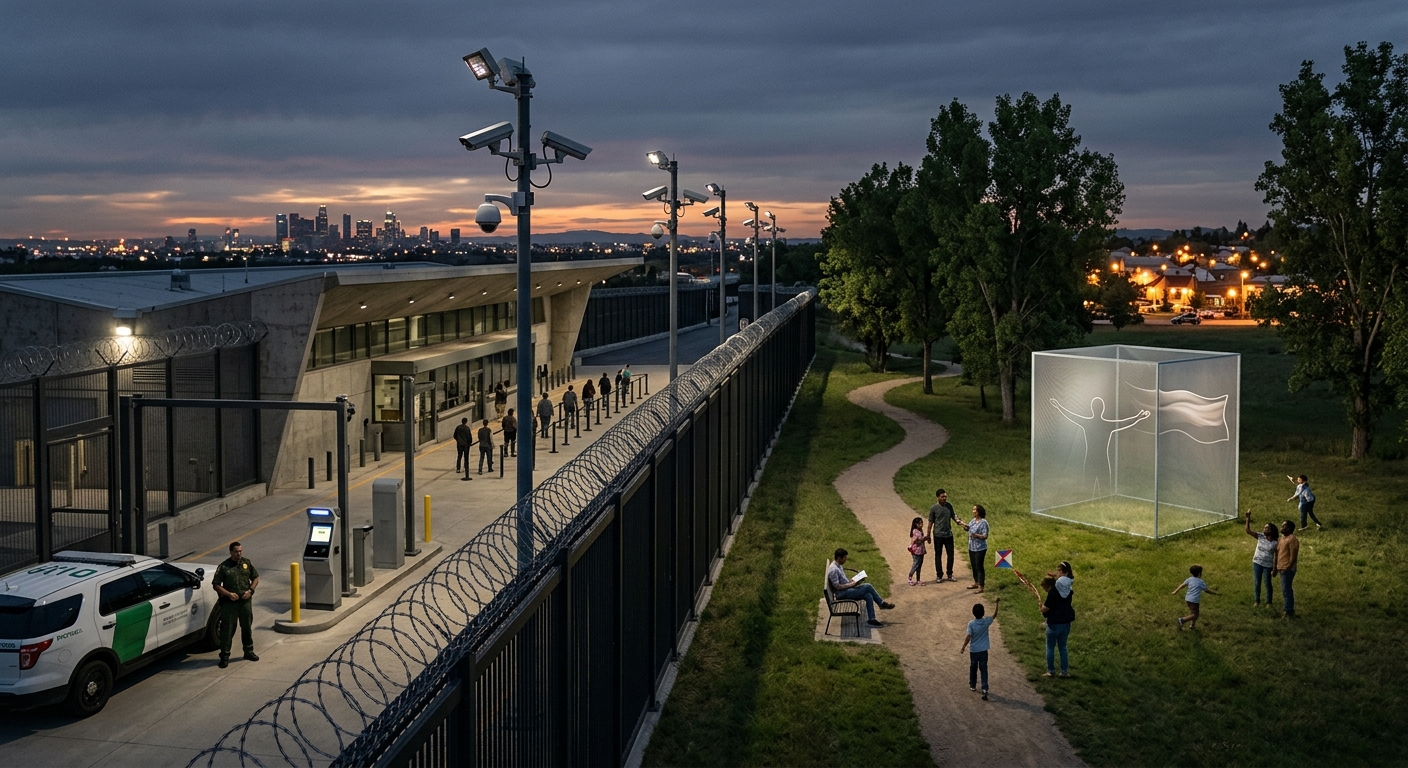
Introduction: The Hidden Border Within
When most Americans imagine the national border, they picture a distinct physical boundary separating the United States from Mexico or Canada. They envision ports of entry, international bridges, and demarcated lines on a map. However, from a legal and law enforcement perspective, the concept of the “border” is not merely a thin line—it is a vast, expansive region that stretches deep into the interior of the country. This hidden perimeter drastically alters the everyday lives and constitutional protections of millions of people who have never crossed an international boundary.
Under a unique framework of federal regulations, immigration enforcement agencies possess extraordinary authority to operate far inland. This overlapping jurisdiction creates profound friction between the government’s interest in national security and the fundamental civil liberties promised to all individuals residing within the United States. As communities grapple with the realities of interior policing, an ongoing national debate questions whether the current strategies of border security are effective, equitable, and aligned with constitutional values .
The Legal Architecture: Decoding the 100-Mile Rule
The foundation of this expansive interior jurisdiction lies in the Immigration and Nationality Act (INA) of 1952. Congress granted immigration officers the authority to search vessels, railway cars, aircraft, and other vehicles within a “reasonable distance” from any external boundary of the United States. Shortly thereafter, the Department of Justice formalized this “reasonable distance” in the Code of Federal Regulations, defining it as 100 air miles from any external boundary .
This regulation, found at 8 C.F.R. § 287.1, establishes what is commonly known as the 100-mile border zone. Because this zone applies not just to the land borders with Mexico and Canada, but also to the coastlines along the Atlantic, Pacific, and Gulf of Mexico, its geographic footprint is immense. It encompasses entire states—such as Florida, Hawaii, Maine, Massachusetts, and Michigan—as well as some of the most densely populated metropolitan areas in the nation, including New York City, Los Angeles, Philadelphia, and Chicago.
As a result of this broad definition, it is estimated that nearly two-thirds of the entire United States population—roughly 200 million people—resides within this jurisdiction. For these individuals, the legal standards governing encounters with federal law enforcement are distinct from those in the rest of the country, leading to a complex web of constitutional challenges.
The Fourth Amendment on Trial: Balancing Security and Privacy
The Fourth Amendment to the United States Constitution guarantees the right of the people to be secure in their persons, houses, papers, and effects against unreasonable searches and seizures. In standard domestic policing, this means an officer generally needs “probable cause” or at least a “reasonable, articulable suspicion” of criminal activity to initiate a traffic stop.
However, within the 100-mile border zone, the Supreme Court has carved out significant exceptions to these standard constitutional protections. The most critical legal precedent in this arena is the 1976 case United States v. Martinez-Fuerte . In this landmark ruling, the Supreme Court determined that Border Patrol agents could operate fixed, permanent immigration checkpoints inland and briefly stop vehicles to question the occupants about their citizenship status without requiring any individualized suspicion.
The Court’s majority argued that the intrusion on the motoring public was “minimal” and was outweighed by the government’s substantial interest in preventing illegal immigration. However, the ruling was not unanimous. Dissenting justices, notably Justice Thurgood Marshall, warned that the decision would subject law-abiding citizens to arbitrary detentions and open the door to widespread discrimination—a warning that resonates deeply with civil rights advocates today .
The Limits of Checkpoint Authority
While Martinez-Fuerte allows for brief, suspicionless stops, it does not provide federal agents with carte blanche to violate other constitutional protections. Crucially, the Supreme Court maintained that agents cannot conduct a physical search of a vehicle or its occupants without probable cause or explicit, voluntary consent. Additionally, any questioning or detention must be limited strictly to the purpose of verifying immigration status unless a new, independent suspicion arises during the brief encounter.
Roving Patrols vs. Fixed Checkpoints
Understanding the impact of interior enforcement requires distinguishing between the two primary methods utilized by federal agents: fixed checkpoints and roving patrols.
- Fixed Checkpoints: These are stationary facilities set up on major highways and secondary roads leading away from the physical border. Because their location is permanent and known to the public, the courts have deemed the “psychological intrusion” on drivers to be lower, allowing for suspicionless stops .
- Roving Patrols: Unlike fixed checkpoints, roving patrols involve agents driving in marked or unmarked vehicles, pulling over motorists in transit. Because of the inherent surprise and higher potential for arbitrary enforcement, the Supreme Court ruled in United States v. Brignoni-Ponce (1975) that agents conducting roving patrols must have “reasonable suspicion” that a specific vehicle contains undocumented immigrants before initiating a stop.
Despite these legal distinctions, the lived reality for individuals navigating the border zone often blurs these lines. Civil liberties organizations frequently document incidents where the boundaries of “reasonable suspicion” are stretched, transforming routine commutes into intimidating interrogations.
The Daily Reality for Border Communities
For residents of places like South Texas, southern Arizona, and upstate New York, interior checkpoints are not an abstract legal concept; they are a persistent and inescapable element of daily life. The presence of heavily armed federal agents, canine units, and surveillance infrastructure creates an environment that many locals describe as heavily militarized.
The practical disruptions are profound. Traveling to buy groceries, commuting to a workplace, attending a university, or seeking specialized medical care often requires passing through one or more federal checkpoints. For individuals who live and work entirely within the United States, being repeatedly interrogated about their right to be in the country breeds a deep sense of alienation and secondary citizenship.
Furthermore, the economic impact on local communities is non-trivial. Commercial transport and local supply chains face delays as freight is subjected to secondary inspections. The overarching presence of federal enforcement can also suppress local tourism and commerce, as visitors may be deterred by the prospect of navigating checkpoint infrastructure.
Systemic Bias and the Erosion of Public Trust
Perhaps the most severe criticism of the 100-mile zone is its vulnerability to systemic bias and racial profiling. When law enforcement officers are granted broad discretionary power to stop and question motorists, implicit and explicit biases inevitably influence who is targeted for further scrutiny.
Data and historical patterns indicate that communities of color—particularly Hispanic and Latino Americans, as well as Indigenous populations whose ancestral lands straddle the border—bear the brunt of these enforcement tactics. Civil rights watchdogs regularly collect testimonies from U.S. citizens and lawful permanent residents who are disproportionately selected for secondary inspections, prolonged questioning, or vehicle searches based largely on their physical appearance or the language they speak.
This perceived targeting deeply fractures the relationship between the community and law enforcement. When an entire demographic feels criminalized by federal agents, it creates a chilling effect on local public safety. Individuals in mixed-status families become fearful of interacting with any government official, leading to a reluctance to report crimes to local police, enroll children in public services, or seek emergency medical care, ultimately making communities more vulnerable.
Assessing Effectiveness: A Look at the Data
Given the significant constitutional compromises and community disruptions associated with interior checkpoints, it is vital to evaluate whether these operations effectively achieve their stated national security objectives. Recent government oversight suggests that the narrative of checkpoints as a critical defense against transnational smuggling may be overstated.
In June 2022, the U.S. Government Accountability Office (GAO) published a comprehensive audit of Border Patrol checkpoint operations (Report GAO-22-104568) . The findings highlighted critical deficiencies in data collection, oversight, and overall effectiveness.
Key Findings from the GAO Audit
The GAO report analyzed checkpoint activity data spanning fiscal years 2016 through 2020. The audit revealed that agents inconsistently documented vital information, such as apprehensions of smuggled individuals and instances where canine units assisted in drug seizures. This unreliability in data collection makes independent oversight and performance measurement exceedingly difficult.
More revealingly, the data that was reliably captured contradicted the primary justification for interior checkpoints. Rather than intercepting large-scale international smuggling operations, the vast majority of enforcement actions involved minor, domestic infractions.
| Metric | Percentage / Volume |
|---|---|
| Total Drug Seizure Events | Approx. 17,970 events |
| Seizures Involving ONLY U.S. Citizens | 91% |
| Seizures Involving ONLY Marijuana (from U.S. Citizens) | 75% |
The fact that 91 percent of drug seizures involved only U.S. citizens, with the overwhelming majority being minor marijuana possession, suggests that these checkpoints largely function as domestic law enforcement dragnets rather than critical border security infrastructure . This reality raises profound questions regarding the allocation of federal resources and the justification for bypassing standard Fourth Amendment protections.
A Roadmap for Meaningful Policy Reform
Reconciling the legitimate needs of national security with the imperative to protect civil liberties requires a significant paradigm shift. Advocates, policymakers, and legal scholars have proposed a comprehensive roadmap to reform interior immigration enforcement:
- Shrinking the 100-Mile Limit: Because the 100-mile zone was established by regulatory action rather than statutory mandate, executive branch agencies have the authority to amend 8 C.F.R. § 287.1. Reducing the “reasonable distance” to 10 or 25 miles would more accurately target immediate border transit areas while restoring standard constitutional protections to millions of Americans.
- Ending Suspicionless Roving Patrols: Implementing stricter guidelines that require clear, articulable, and individualized suspicion before any federal agent can initiate a vehicle stop away from a fixed location.
- Enhancing Data Transparency: As recommended by the GAO, immigration agencies must overhaul their data collection methodologies. Mandating rigorous, standardized reporting on the demographic makeup of individuals stopped, the duration of detentions, and the specific outcomes of secondary inspections is essential for accountability.
- Implementing Body-Worn Cameras: Widespread deployment and mandatory activation of body-worn cameras for all agents operating at interior checkpoints would provide an objective record of encounters, deterring abuses of power and protecting both citizens and agents.
- Demilitarizing Community Policing: Reallocating federal resources away from interior communities and redirecting them toward the physical borders and official ports of entry, where specialized screening technologies can be utilized more effectively and appropriately.
Conclusion
The existence of the 100-mile border zone forces a critical examination of the trade-offs a society makes between security and freedom. While border management is an undeniably vital federal responsibility, policies that subject millions of domestic residents to pervasive surveillance, routine interrogations, and the ongoing threat of racial profiling run counter to foundational democratic principles. The data suggests that current interior enforcement strategies yield diminishing returns for national security while exacting a heavy toll on community trust and civil liberties. Reassessing outdated regulations and establishing rigorous oversight mechanisms are crucial steps toward forging a homeland security strategy that respects both the physical borders of the nation and the constitutional boundaries of the government.
Frequently Asked Questions (FAQs)
What is the 100-mile border zone?
It is a geographic area defined by federal regulations (8 C.F.R. § 287.1) extending 100 air miles inland from any external land or coastal boundary of the United States. Within this zone, federal immigration agents have expanded legal authorities to conduct certain types of searches and detentions without a warrant.
Do I have the right to remain silent at an immigration checkpoint?
Yes. The Fifth Amendment gives you the right to remain silent. You can refuse to answer questions about your citizenship or immigration status. However, refusing to answer basic questions at a fixed checkpoint may result in you being directed to a secondary inspection area for further delay, though you cannot be legally detained indefinitely without probable cause.
Can Border Patrol agents search my vehicle without a warrant?
Generally, no. While agents can stop you briefly at a fixed checkpoint without individualized suspicion to ask about your citizenship, they cannot legally search the interior compartments of your vehicle (like the trunk or glove box) without your explicit consent or “probable cause” to believe a crime has been committed.
Why do these checkpoints catch U.S. citizens with drugs?
Because these checkpoints operate on major interior highways, they intercept local, domestic traffic. According to GAO data, the vast majority of drug enforcement actions at these checkpoints involve U.S. citizens possessing small amounts of marijuana, rather than transnational cartels .
References
- 8 CFR § 287.1 – Definitions — Legal Information Institute (LII), Cornell Law School. https://www.law.cornell.edu/cfr/text/8/287.1
- United States v. Martinez-Fuerte, 428 U.S. 543 — Supreme Court of the United States. 1976. https://supreme.justia.com/cases/federal/us/428/543/
- Border Patrol: Actions Needed to Improve Checkpoint Oversight and Data (GAO-22-104568) — U.S. Government Accountability Office. 2022-06-06. https://www.gao.gov/products/gao-22-104568
Similar Articles








Read full bio of Sneha Tete


