
Probation Violations and Their Legal Consequences
Learn what happens when probation rules are broken, the penalties you may face, and how the violation process works in different courts.
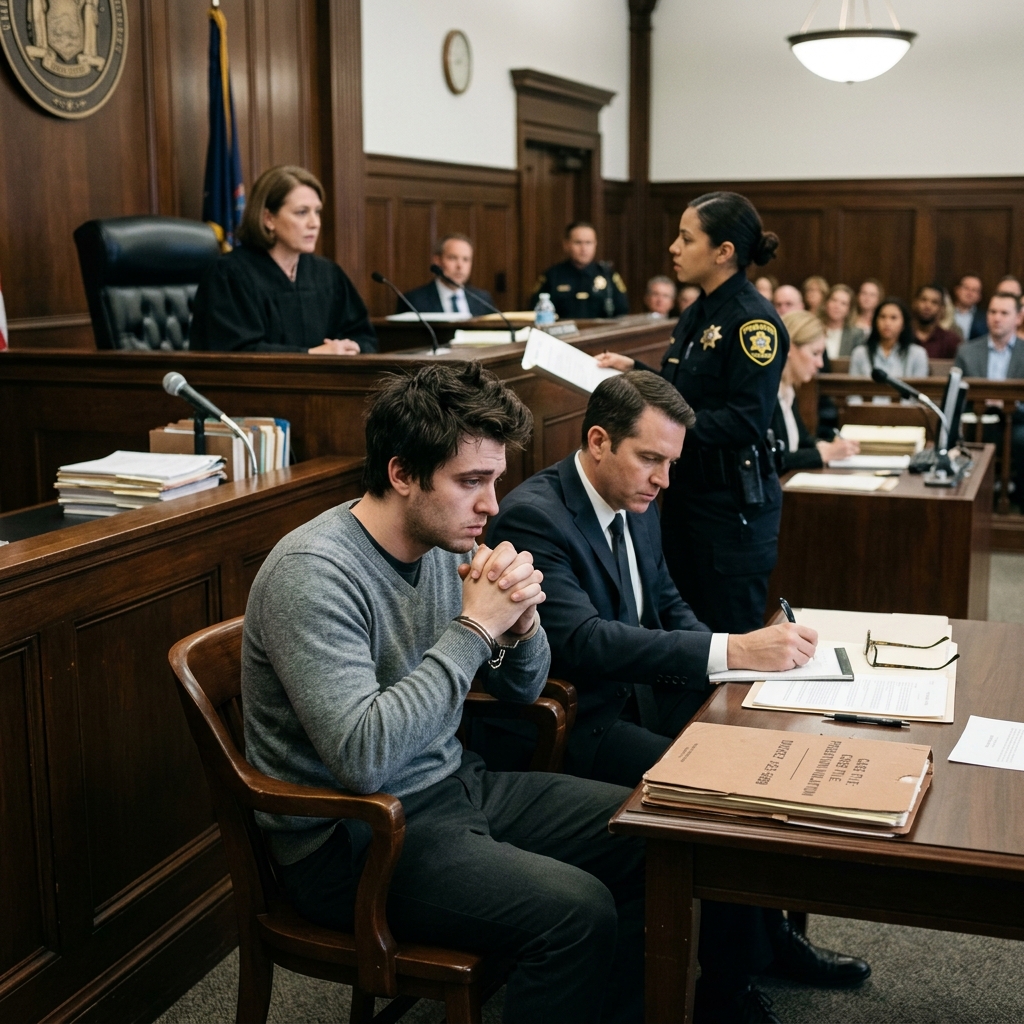
Probation is meant to give people convicted of crimes a chance to remain in the community while under supervision instead of serving all of their time in jail or prison. When those court-ordered rules are broken, the results can range from a simple warning to complete revocation of probation and incarceration. Understanding how probation violations are defined, investigated, and punished can help you make informed decisions and protect your rights if you ever face an alleged violation.
What Probation Is and How It Works
Probation is a criminal sentence that allows a person to live in the community under specific conditions instead of, or in addition to, time behind bars. Courts use probation for misdemeanors and felonies, and it is supervised by probation officers or community supervision departments. The precise terms will differ by state and case, but they share common features.
Typical Conditions of Probation
When a judge places someone on probation, they issue a written order listing rules that must be followed. Common conditions include:
- Regular reporting to a probation officer, in person or by phone.
- Obey all laws and avoid new criminal charges.
- Drug and alcohol testing, including random urinalysis when substance use is a concern.
- Community service hours, often tied to the seriousness of the offense.
- Payment of fines, fees, and restitution to victims or the court.
- Attendance in treatment or educational programs, such as counseling or DUI classes.
- Restrictions on travel and residence, like not leaving the state without permission.
Probation terms are legally enforceable court orders. Failing to comply with any of them, even if no new crime is committed, can be treated as a probation violation.
Why Courts Use Probation
Courts often prefer probation over full incarceration because it aims to balance public safety, accountability, and rehabilitation. Probation can:
- Reduce jail and prison populations while maintaining supervision.
- Provide access to treatment and support instead of only punishment.
- Allow people to keep jobs, housing, and family connections.
- Still impose consequences if supervision rules are broken.
What Counts as a Probation Violation?
A probation violation occurs when a person on probation fails to comply with one or more of the conditions set out in the sentencing order. The violation can be intentional or the result of neglect, but what matters legally is whether the state can prove the rules were broken.
Technical vs. Substantive Violations
Probation violations are often grouped into two broad categories that influence how seriously courts treat them:
| Type of violation | Description | Examples |
|---|---|---|
| Technical violation | Breaking a rule of probation without committing a new crime. | Missing appointments, failed drug test, late payment of fines, not completing community service on time. |
| Substantive violation | Committing a new criminal offense while on probation. | Arrest for theft, assault, DUI, or other offenses during the probation period. |
Technical violations may sometimes lead to warnings or added conditions, whereas substantive violations regularly result in more severe consequences, including revocation and sentencing for both the original and new crime.
Common Examples of Probation Violations
Across many states, the same kinds of missteps frequently lead to violation proceedings.
- Failing to attend scheduled meetings with a probation officer.
- Missing required court hearings or check-ins.
- Testing positive for illegal drugs or alcohol when abstinence is ordered.
- Failing to complete community service within the required timeframe.
- Not paying fines, fees, or restitution as directed.
- Leaving the county or state without permission or changing address without notice.
- Contacting victims or co-defendants when contact is forbidden.
- Being arrested or charged for new criminal conduct.
Every probation order is different, so it is critical for a person on supervision to understand the exact requirements in their case and ask questions before assuming a behavior is permitted.
How Probation Violations Are Reported and Initiated
Probation officers and prosecutors are responsible for bringing alleged violations to the court’s attention. The process usually begins with a formal report describing the conduct that is claimed to violate probation.
The Role of the Probation Officer
Probation officers monitor compliance and decide how to respond to apparent violations. Depending on state law and office policies, they may:
- Issue a verbal or written warning for minor first-time technical issues.
- Impose administrative sanctions such as extra reporting, more community service, or added classes where allowed by law.
- Request a violation hearing by notifying the prosecutor or filing a report with the court.
- Ask the court to issue a warrant or summons requiring the probationer to appear.
In some systems, officers have broad discretion to manage low-level violations informally, while serious or repeated violations are more likely to be sent to court.
Filing a Motion or Statement of Violations
To formally begin court proceedings, the state typically files a document such as a motion to revoke probation or a statement of violations. This filing outlines:
- The original case information and probation terms.
- Each alleged violation and the date it occurred.
- Any supporting evidence, such as test results, police reports, or officer notes.
- A request that the court set a hearing and consider penalties.
Once filed, the court will schedule a hearing and issue a summons for the probationer to attend, or a warrant if authorities believe they may not appear voluntarily.
The Probation Violation Hearing
A probation violation hearing is a court proceeding where a judge decides whether a violation occurred and what consequences should follow. It is less formal than a criminal trial but still includes important due process protections.
Burden of Proof and Evidence Standards
Unlike at trial, where guilt must be proved beyond a reasonable doubt, probation violation hearings usually apply a lower evidence standard, such as a preponderance of the evidence. This means the judge must be convinced that it is more likely than not that the violation occurred, based on:
- Testimony from probation officers or witnesses.
- Documents such as attendance records, payment logs, and lab reports.
- Police reports or court records of new charges.
The lower burden of proof makes it easier for the state to establish a violation compared with proving a new criminal offense at trial.
Your Rights at a Violation Hearing
Probationers retain key procedural rights during violation proceedings, although they vary somewhat by jurisdiction. Common protections include:
- The right to receive notice of the alleged violations.
- The right to be represented by a defense attorney, and to request appointed counsel if indigent.
- The right to present evidence and witnesses on your behalf.
- The right to cross-examine adverse witnesses when permitted.
- The right to a record and decision by the court explaining the outcome.
Because a violation can lead to imprisonment or extended supervision, legal advice is often crucial before admitting or contesting the allegations.
Two-Phase Hearings in Some States
Certain jurisdictions, such as Ohio, split probation revocation proceedings into two phases: a probable cause hearing and a final revocation hearing. In that model:
- The probable cause phase determines whether there is enough evidence to proceed.
- The final revocation phase decides if a violation actually occurred and what sanctions are appropriate.
This structure is designed to protect the probationer’s rights while allowing the court to handle allegations efficiently.
Possible Consequences of a Probation Violation
Judges have broad discretion when deciding how to respond to confirmed violations. The outcome depends on factors such as the severity of the violation, prior compliance, and the seriousness of the underlying offense.
Range of Sanctions a Court May Impose
Courts typically have multiple options instead of a single automatic penalty. Common consequences include:
- Warning and continuation of probation with no major changes, especially for a first minor violation.
- Modification of probation conditions, such as adding curfews, more frequent reporting, or treatment requirements.
- Extension of the probation term up to the maximum allowed by statute, giving more time under supervision.
- Administrative sanctions like extra community service or house arrest, where permitted by law.
- Brief jail time, sometimes a weekend or short stay, used as a wake-up call.
- Revocation of probation and imprisonment, requiring the person to serve the original jail or prison sentence.
For federal probation and many state systems, a judge who revokes probation can impose any sentence that was available for the original crime, up to the statutory maximum.
Felony vs. Misdemeanor Violations
Violations of felony probation tend to carry more serious risks than violations of misdemeanor probation. For felony probation:
- Courts may be more likely to impose prison time after repeated or serious violations.
- The maximum possible sentence is often several years or more, depending on the felony class.
- New felony charges during probation can lead to punishment for both the original and new crimes.
Misdemeanor violations may still lead to jail, but the maximum terms are shorter and courts may favor alternatives like extended supervision or additional community-based sanctions.
State Law Variations
Each state sets its own legal rules governing probation and violations. For example, some states limit how much prison time can be imposed for technical violations of certain felony community control sentences, emphasizing rehabilitation for non-criminal rule-breaking. Others allow revocation and full sentencing even for non-criminal violations if the court finds that supervision has failed.
How a Violation Affects Your Criminal Record and Future
Probation violations can have lasting consequences beyond the immediate penalty. They may influence future sentencing decisions, employment, housing, and eligibility for other forms of supervised release.
Impact on Sentencing and Supervision
Courts reviewing new charges often consider past probation performance. A history of violations can:
- Lead judges to impose stricter sentences in later cases.
- Reduce chances of receiving probation again.
- Increase supervision requirements, such as more intense monitoring or specialized programs.
Collateral Consequences
Violations and revocations can also affect areas outside the criminal court:
- Employment, as some employers may refuse to hire people with recent violations or revocations.
- Housing, particularly for public or subsidized programs that consider criminal history.
- Immigration status for non-citizens, especially when violations involve new convictions.
- Access to benefits or professional licenses that require a clean record.
Practical Steps if You Are Accused of Violating Probation
Facing a probation violation can be intimidating, but taking proactive steps can improve your chances of a better outcome.
Immediate Actions to Consider
- Contact a defense attorney quickly to understand the allegations and possible penalties.
- Gather documentation that may support your case, such as work records, payment receipts, or medical notes.
- Continue complying with all other probation conditions to show ongoing effort and responsibility.
- Prepare explanations for any missed obligations, including transportation issues, illness, or misunderstandings, backed by evidence when possible.
Possible Strategies at the Hearing
Your lawyer may pursue different strategies depending on the facts:
- Argue that no violation occurred or that the evidence is insufficient under the applicable standard.
- Show positive compliance history to persuade the court to use warnings or minor sanctions.
- Propose alternative sanctions such as treatment, community service, or increased reporting instead of jail.
- Negotiate with the prosecutor and probation officer for an agreed resolution.
Frequently Asked Questions About Probation Violations
Do I automatically go to jail if I violate probation?
No. In most jurisdictions, a violation does not automatically result in jail or prison. A judge decides the outcome at a hearing, and options can include warnings, modified conditions, extended probation, or incarceration, depending on the circumstances.
Can probation be revoked for a technical violation?
Yes. Courts generally have authority to revoke probation for technical violations, although some states place limits on prison time for certain technical community control violations and encourage rehabilitative responses instead.
Can I be punished for both the violation and a new crime?
Yes. If a probation violation involves breaking another law, the person can be punished for the violation (such as revocation and imprisonment) and separately for the new criminal offense.
What standard of proof applies at a probation violation hearing?
Courts typically use a lower standard than in a criminal trial, often requiring proof by a preponderance of the evidence rather than beyond a reasonable doubt. This makes it easier for the state to prove a violation.
Should I have a lawyer for a probation violation case?
Because the consequences can include imprisonment, extended supervision, and long-term collateral effects, many legal aid organizations and defense attorneys strongly recommend seeking representation for probation violation hearings.
References
- Violating Probation & Potential Legal Consequences — Justia. 2024-01-15. https://www.justia.com/criminal/parole-and-probation/probation-violations/
- Understanding Ohio Probation Violation Laws — The Meade Law Group. 2023-06-12. https://themeadelawgroup.com/blog/understanding-ohio-probation-violation-laws/
- Probation Violation Attorney | Central Illinois Courts — Heart of Illinois Criminal Defense. 2023-09-05. https://heartofillinoiscriminaldefense.com/probation-violations
- Violating Probation — Illinois Legal Aid Online (Understanding criminal charges, pleas, and sentences). 2022-11-30. https://www.illinoislegalaid.org/legal-information/understanding-criminal-charges-pleas-and-sentences
- What Happens If You Violate Federal Probation? — Law Offices of Hal M. Garfinkel LLC. 2026-01-10. https://www.garfinkelcriminallaw.com/chicagocriminalblog/happens-violate-federal-probation
- Penalties for Violating Probation — Law Offices of Andrew M. Weisberg. 2024-03-21. https://www.criminallawyer-chicago.com/rights-penalties-for-violating-probation/
- Felony Probation Violation Consequences — JK Sanchez Law. 2023-08-17. https://jksanchezlaw.com/blog/felony-probation-violation-consequences/
Similar Articles








Read full bio of Sneha Tete




