
The Indivisible Rights: Why Free Speech Requires Uncompromised Privacy
Discover the symbiotic relationship between freedom of expression and the right to remain private in a surveillance state.
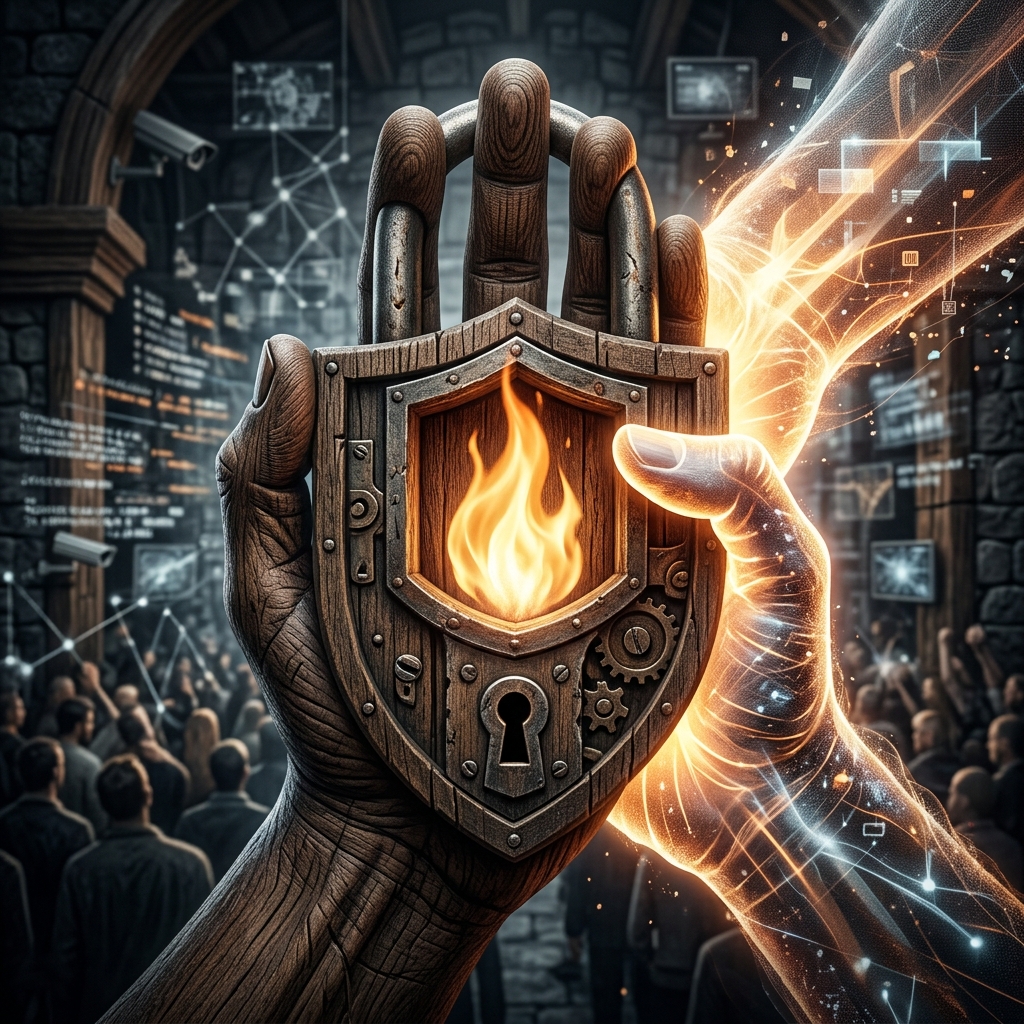
The foundation of any democratic society rests on a delicate, interwoven equilibrium of civil liberties. Among these fundamental rights, the freedom of expression and the right to privacy are frequently championed as distinct, separate pillars of freedom. Legal scholars, activists, and policymakers often compartmentalize them, treating the fight against warrantless wiretaps as a wholly separate arena from the battle against censorship. However, treating these rights as isolated concepts ignores the profound, symbiotic relationship they share. They are the twin engines of libertyas inseparable as the breath that forms a word and the voice that speaks it. One cannot exist in a robust state without the absolute protection of the other.
When we consider the right to free speech, we often picture a vibrant public square, passionate protests, or fiery opinion columns. We visualize the outward manifestation of our thoughts and beliefs. Yet, what we rarely consider is the invisible incubator where those thoughts are initially formed. Privacy serves as that vital incubator. It is the sanctuary where individuals can read, research, experiment, make mistakes, and debate without the paralyzing fear of judgment, societal backlash, or government reprisal. When the walls of that private sanctuary are breached by pervasive surveillance or corporate data harvesting, the public square inevitably begins to quiet down.
The Architecture of Liberty: Two Sides of the Same Coin
In the United States, this dynamic relationship is encoded directly into the constitutional framework. The First Amendment boldly guarantees the right to speak, assemble, practice religion, and petition the government for a redress of grievances. The Fourth Amendment, conversely, protects citizens from unreasonable searches and seizures, securing the absolute sanctity of their “persons, houses, papers, and effects.” While courts have historically analyzed these amendments through separate legal doctrines and precedents, their functional realities are deeply, inextricably intertwined in the daily lives of citizens.
The Fourth Amendment operates as a defensive shield, creating a distinct zone of autonomy around the individual. It dictates that the state cannot intrude into a citizen’s personal life without demonstrating probable cause and obtaining a judicial warrant. This boundary is not just about keeping physical belongings safe from the clutches of law enforcement; it is about protecting the sanctity of the mind. Before the American Revolution, British authorities utilized “writs of assistance”aseneral, open-ended search warrantsato arbitrarily search colonists’ homes and businesses. The framers of the Constitution understood that a government possessing the unchecked power to rummage through a citizen’s private life inherently possesses the power to suppress their political opposition. The First Amendment is the offensive tool of liberty, allowing the individual to project their beliefs into the world, but it relies entirely on the Fourth Amendment’s defensive perimeter to function.
When the state erodes these privacy protections through warrantless wiretapping, mass data collection, or aggressive digital surveillance, it fundamentally compromises expressive rights. An individual who knows their private communications, search histories, and physical movements are being swept up in a government dragnet is an individual who will inevitably hesitate before expressing a controversial opinion or associating with a marginalized group. The destruction of the private sphere is always the precursor to the censorship of the public sphere.
The Chilling Effect: When Surveillance Silences Society
This phenomenon of self-censorship is known in legal, academic, and sociological circles as the “chilling effect.” It describes the subtle, pervasive, and often unquantifiable ways in which individuals alter their behavior when they believe they are being watched. The chilling effect demonstrates that a government does not need to actively ban books, shut down newspapers, or arrest journalists to suppress speech; it merely needs to establish an omnipresent architecture of persistent observation.
The psychological impact of this architecture is profound. It echoes the concept of the “Panopticon,” a theoretical prison designed by the 18th-century philosopher Jeremy Bentham, where inmates could be observed by a single central watchman at any given moment. Because the inmates never knew exactly when they were being watched, they were forced to constantly regulate and police their own behavior. Modern mass surveillance applies this exact psychological pressure to the entire populace, transforming citizens into self-censoring subjects.
Empirical data bears this out with alarming clarity. A landmark 2013 survey conducted by PEN America, following the explosive revelations of widespread National Security Agency (NSA) surveillance programs, revealed a stark reality for writers and journalists in the United States. The study found that a staggering 85 percent of responding writers were worried about government surveillance. More alarmingly, a significant portion admitted to actively engaging in self-censorship as a direct result of this fear. They reported curtailing their social media activities, avoiding controversial research topics, and hesitating to communicate with sensitive sources or friends abroad. When the intellectual vanguard of a society begins to police its own thoughts, the democratic discourse is vastly impoverished. We lose the boundary-pushing ideas, the aggressive investigative journalism, and the rigorous dissent that hold power accountable.
Mass Surveillance and the Digital Panopticon: The Case of Section 702
The modern digital landscape has dramatically amplified the state’s capacity to monitor its citizens, permanently blurring the lines between targeted criminal investigations and mass societal surveillance. A primary example of this constitutional tension is Section 702 of the Foreign Intelligence Surveillance Act (FISA), a law that has generated immense controversy regarding its impact on both privacy and free expression.
Enacted as part of the FISA Amendments Act of 2008, Section 702 authorizes the U.S. government to conduct targeted surveillance of foreign persons located outside the United States to acquire foreign intelligence information. The stated goal is to protect the nation from international terrorism and hostile foreign adversaries. According to the intelligence community, Section 702 is a vital tool for national security, and requiring a warrant for every query would severely hinder their operational capabilities.
However, the architecture of the modern internet means that digital communications are rarely isolated geographically. When the intelligence community monitors the communications of foreign targets, it inevitably sweeps up millions of communications involving American citizens who are interacting with those targetsabor even merely discussing them. This broad net is known as “incidental collection.”
The dire threat to civil liberties arises because government agencies, including domestic law enforcement, can search this massive database of intercepted communications using the identifiers of U.S. citizensasuch as email addresses or phone numbersawithout ever obtaining a traditional, probable-cause warrant. Imagine a domestic investigative journalist communicating with a foreign human rights advocate. If that advocate is targeted by U.S. intelligence, the journalist’s confidential communications are swept into government databases. This “backdoor search” loophole effectively allows authorities to bypass the Fourth Amendment. When the digital lives of ordinary citizens are subjected to warrantless queries, it sends a clear signal to the public that their associations are an open book to the state, thereby suppressing their willingness to engage in the robust, uninhibited exchange of ideas.
Anonymity and Encryption: The Shields of Modern Democracy
If privacy is the essential incubator of free speech, then anonymity and encryption are the heavy locks on the door that keep the incubator safe. Throughout American history, anonymous speech has played a pivotal, respected role in political discourse. The Federalist Papers, which were instrumental in the ratification of the U.S. Constitution, were famously published under the pseudonym “Publius” to ensure the arguments were judged on their merits rather than the authors’ identities. During the civil rights era, the Supreme Court repeatedly upheld the right of organizations to keep their membership lists private, recognizing that forced disclosure would inevitably lead to harassment and successfully suppress the freedom of association.
In the 21st century, the tools required for maintaining this vital anonymity are cryptographic. End-to-end encryption ensures that a digital message is turned into an unreadable cipher that can only be unlocked by the intended recipient. Tech companies, internet service providers, and government agencies cannot intercept and read the contents of these communications.
Government entities frequently argue that strong encryption hinders criminal investigations and consistently demand “backdoor” access to secure messaging platforms. However, civil liberties advocates and international human rights experts argue forcefully that compromising encryption inherently compromises basic human rights. In a comprehensive report submitted to the United Nations Human Rights Council, the Special Rapporteur on the promotion and protection of the right to freedom of opinion and expression, David Kaye, emphasized that encryption and anonymity provide the essential “zone of privacy” required to protect opinions and beliefs. The report concluded that these digital tools are not merely technical features, but absolute necessities to empower individuals to search for, receive, and impart information freely in the modern age.
Weakening encryption does not just expose criminals; it endangers dissidents living under authoritarian regimes, whistleblowers trying to expose corporate fraud, journalists protecting their confidential sources, and marginalized communities seeking safe spaces to communicate. Without the mathematical guarantee of privacy provided by strong encryption, the right to free expression becomes a fragile privilege reserved only for those who have nothing to lose by speaking publicly.
The Intersection Matrix: How Privacy Powers Speech
To fully grasp the depth of this relationship, it is helpful to examine the specific, practical ways in which privacy directly enables expressive rights across various sectors of society:
- Intellectual Exploration: Before an individual can articulate an opinion, they must first form it. Privacy allows citizens to browse controversial websites, read dissenting literature, and ask unpopular questions online without the fear of ending up on a government watchlist or being flagged by an algorithm.
- Journalistic Integrity: The press cannot function effectively as a watchdog without the protection of confidential sources. Pervasive surveillance deters insiders from blowing the whistle on corruption, thereby starving the public of essential information necessary for a functioning democracy.
- Freedom of Association: Powerful political movements are often built in private spaces. Activists and organizers must be able to strategize, debate, and communicate without infiltration or monitoring by state actors who may wish to disrupt their efforts before they ever reach the public square.
- Personal Autonomy: The psychological burden of constant surveillance strips individuals of their autonomy, transforming them from independent democratic actors into compliant subjects who subconsciously conform to the perceived norms of the watcher.
Reclaiming the Public Square Through Policy
Addressing this constitutional crisis requires a fundamental shift in how lawmakers, the judiciary, and the public approach civil liberties in the digital era. It requires acknowledging that data collection is not a passive, harmless administrative act, but an aggressive intrusion that directly dictates societal behavior.
First, comprehensive surveillance reform is an absolute necessity. Loopholes that allow for the warrantless searching of incidentally collected data under FISA Section 702 must be permanently closed. The constitutional standard of probable cause must be rigorously applied to digital communications just as it is applied to physical property and sealed letters.
Second, the right to utilize robust, uncompromised encryption must be legally protected. Legislative attempts to mandate digital backdoors or weaken cryptographic standards should be recognized not merely as cybersecurity vulnerabilities, but as direct, devastating assaults on the First Amendment.
Finally, there must be a cultural reclamation of the inherent value of privacy. For too long, the public narrative has been dominated by the dangerous fallacy that “if you have nothing to hide, you have nothing to fear.” This fundamentally misunderstands the nature of liberty. Privacy is not about hiding criminality; it is about preserving the breathing room necessary to be human, to be flawed, to evolve, and to dissent.
Conclusion
The ongoing battle for free speech is inextricably linked to the battle against mass surveillance. We cannot construct a society that values the loud, vibrant clatter of the democratic public square while simultaneously accepting the silent, invisible, and oppressive machinery of the digital panopticon. Protecting our right to express ourselves demands that we relentlessly defend our right to remain unobserved when we choose to be. Free speech and privacy are the twin pillars of a free society, and if we allow the structural foundation of privacy to crumble under the weight of technological overreach, the towering edifice of free speech will inevitably collapse alongside it.
Frequently Asked Questions
- Why is privacy considered an essential prerequisite for free speech?
- Privacy provides a necessary safe space for individuals to explore controversial ideas, read dissenting literature, and formulate their thoughts without fear of societal judgment, harassment, or government reprisal. Without this private incubation period, individuals are far less likely to express non-conformist views, homogenizing public discourse.
- What exactly is the “chilling effect” in relation to digital surveillance?
- The chilling effect occurs when individuals subconsciously or consciously alter their behavior and censor their own speech because they know or suspect they are being surveilled. Even if the government does not explicitly ban a topic, the mere presence of surveillance makes people afraid to research or discuss it.
- How does FISA Section 702 impact ordinary, law-abiding citizens?
- While FISA Section 702 is intended to target foreign persons overseas, it incidentally collects vast amounts of communications from domestic citizens who interact with those targets. Critics and civil rights organizations argue that allowing domestic law enforcement to search this massive data pool without a warrant violates Fourth Amendment protections and chills First Amendment activities.
- Why do international human rights experts passionately defend end-to-end encryption?
- Encryption mathematically ensures that only the sender and the intended recipient can read a digital message. Human rights experts view encryption as a vital, non-negotiable tool that protects journalists, political dissidents, whistleblowers, and everyday citizens from unwarranted mass surveillance, thereby physically safeguarding their freedom of expression in the digital age.
References
- NSA Surveillance Drives U.S. Writers to Self-Censor https://www.regulations.gov/document/PRC-2014-0010-0019
- Foreign Intelligence Surveillance Act (FISA) and Section 702 https://www.fbi.gov/investigate/national-security-and-fisa/fisa-and-section-702
- FISA Section 702 Fact Sheet https://www.intelligence.gov/assets/documents/702%20Documents/declassified/FISA_Section_702_Fact_Sheet.pdf
- Report of the Special Rapporteur on the promotion and protection of the right to freedom of opinion and expression, David Kaye (A/HRC/29/32) https://digitallibrary.un.org/record/798305
Similar Articles








Read full bio of Sneha Tete


