
The Evolution of Presidential Power and Lethal Force: Transparency and Drone Warfare
The struggle for transparency and accountability in remote drone warfare.
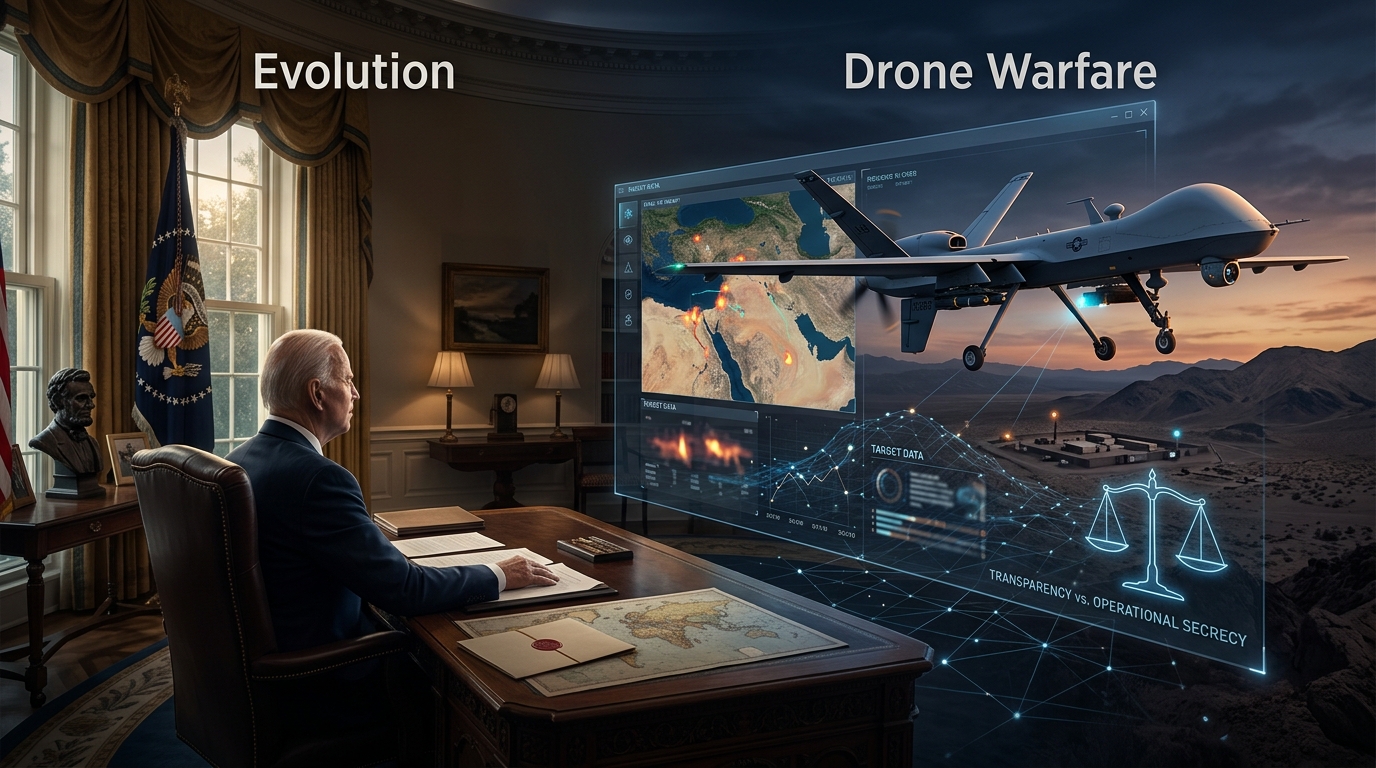
The Expansion of Executive War Powers
The aftermath of the September 11, 2001, terrorist attacks dramatically reshaped the United States’ approach to national security, giving rise to an era of remote warfare that heavily relies on unmanned aerial vehicles. At the center of this transformation is the exponential expansion of executive war powers. Successive presidents have asserted broad authority to order lethal force, often bypassing traditional congressional authorization and judicial oversight. This shift has normalized the use of targeted killings across the globe, fundamentally altering the nature of modern armed conflict.
Historically, the U.S. Constitution divided war powers between the legislative and executive branches, granting Congress the power to declare war while designating the President as the Commander-in-Chief. However, modern executive branch interpretations have stretched this constitutional framework. Unilateral legal memos have paved the way for presidents to authorize lethal drone strikes in sovereign nations where the United States is not officially at war. The reliance on overarching authorizations, such as the 2001 Authorization for Use of Military Force (AUMF), has effectively granted the executive branch a continuous mandate to pursue perceived threats worldwide. This foundational law, originally intended to target the perpetrators of the 9/11 attacks, has been continuously reinterpreted by executive branch lawyers to justify strikes against groups that did not even exist at the turn of the century.
This unchecked license to employ lethal force across disparate geographical regions has sparked intense debate among legal scholars, human rights advocates, and lawmakers regarding the limits of presidential power. As the executive branch consolidated this authority, it effectively sidelined the legislative branch, stripping the public of their democratic right to debate military engagements.
The Pendulum of Lethal Force Policies
The rules governing the use of lethal force outside recognized battlefields have historically fluctuated with each changing administration, behaving much like a policy pendulum. During certain periods, the White House might implement stringent procedural frameworks aimed at reducing collateral damage and restricting the military’s autonomy. For instance, past policies were introduced that required “near certainty” that the intended target was present and that no civilians would be injured or killed in the strike.
These guidelines, while heavily criticized by some for being self-policed and inadequately enforced, represented a formal acknowledgment of the need to constrain remote warfare. Furthermore, they centralized the decision-making process, often requiring high-level cabinet or even presidential approval before a strike could be launched against a high-value target. Conversely, subsequent administrations have often dismantled these safeguards in favor of granting military commanders and intelligence agencies greater operational flexibility.
Such policy rollbacks fundamentally lower the threshold for who can be targeted. When the rules of engagement are loosened, the decision-making power is delegated further down the chain of command, significantly expanding the scope of who is deemed a lawful target. In these relaxed operational environments, the definition of an “imminent threat” is frequently diluted, allowing for preemptive strikes based on broader intelligence assessments rather than immediate, actionable danger. This shifting landscape means that the United States’ legal and ethical commitments regarding lethal force are not rooted in permanent, statutory law, but rather in the transient policy preferences of the sitting president. This variability creates a volatile environment where the standards for employing lethal force can change overnight, entirely out of the public eye.
Secrecy, Transparency, and Democratic Accountability
A defining characteristic of remote warfare has been its pervasive secrecy. The legal justifications, operational procedures, and post-strike assessments surrounding drone programs are overwhelmingly classified, shielding them from public scrutiny and democratic accountability. This “shadow war” approach undermines the foundational principles of a transparent democracy. When the executive branch operates under secret rules to conduct lethal operations, it denies the public and the legislature the opportunity to debate the legality, morality, and strategic efficacy of these actions.
The struggle for transparency has largely been fought in the courtroom. Civil liberties organizations and investigative journalists frequently rely on the Freedom of Information Act (FOIA) to force the government to disclose its rules of engagement. These protracted legal battles have been instrumental in shedding light on how the executive branch justifies the use of lethal force against individuals, including citizens, without due process. The release of redacted legal memos has occasionally exposed the controversial legal arguments used to bypass constitutional protections.
However, the reliance on FOIA litigation as a primary mechanism for oversight is inherently flawed. It is a slow, adversarial process that often results in heavily redacted documents, offering only fragmented glimpses into the government’s targeted killing operations. True democratic accountability requires proactive transparency, where the government willingly explains its legal frameworks and openly reports the outcomes of its military engagements. Without such transparency, the executive branch operates as a self-regulating entity, insulated from the checks and balances designed to prevent the abuse of state power.
The Human Toll: Civilian Casualties and International Law
Beyond the constitutional concerns of executive overreach, the most profound impact of secret lethal force policies is the human toll. Despite the narrative of “surgical precision” and advanced targeting technology, drone strikes have repeatedly resulted in devastating civilian casualties. In numerous regions, remote warfare has terrorized entire communities, causing immense psychological trauma and loss of innocent life. The secrecy surrounding the targeting criteria makes it nearly impossible for victims and their families to seek justice or even secure official acknowledgment of their suffering.
Some controversial tactics, such as “signature strikes”—where individuals are targeted based on behavioral patterns or demographic profiles rather than known identities—drastically increase the risk of killing innocent non-combatants. From the perspective of international law, the use of armed drones outside active hostilities raises grave concerns. International Humanitarian Law (IHL)—or the laws of war—is built upon the foundational principles of distinction, proportionality, and necessity.
The principle of distinction mandates that armed forces must distinguish between combatants and civilians, directing attacks only against legitimate military targets. However, when the parameters defining a “threat” are broadened and shrouded in secrecy, the lines between civilian and combatant become perilously blurred. Furthermore, the principle of proportionality forbids attacks in which the expected incidental loss of civilian life is excessive in relation to the anticipated military advantage. The practice of investigating and reporting these casualties is often left to the very agencies executing the strikes, leading to widely disputed casualty figures. Without independent, transparent investigations into post-strike casualties, the government’s claims of adhering to IHL remain unverifiable, leaving a vacuum of accountability.
The Role of Congress and the Judiciary
The alarming expansion of executive war powers necessitates a robust response from the other branches of government. Congress, as the constitutional body entrusted with the power to declare war, has a vital role in reining in the unilateral use of lethal force. For too long, the legislative branch has largely abdicated its oversight responsibilities, acquiescing to the executive’s broad interpretations of conflict authorizations.
To restore the constitutional equilibrium, lawmakers must assert their authority by enacting legislation that imposes strict, statutory boundaries on when and how the president can deploy remote lethal force. This includes repealing or drastically revising outdated authorizations for the use of military force, mandating rigorous reporting requirements on civilian casualties, and legally codifying the threshold for targeted killings. The legislature has the power of the purse and the constitutional duty to oversee military operations, tools that must be utilized to enforce compliance with democratic norms.
Similarly, the judiciary must not defer entirely to the executive branch on matters of national security. While courts have historically been reluctant to intervene in military and foreign policy decisions, the unprecedented nature of global targeted killing programs demands judicial scrutiny. When the executive claims the authority to act as judge, jury, and executioner, the courts must serve as a critical check to ensure that constitutional rights and international legal obligations are not discarded in the name of national security. Establishing independent judicial review mechanisms for targeting decisions could provide a necessary safeguard against executive overreach and arbitrary deprivation of life.
The Future of Remote Warfare and Systemic Reform
As drone technology continues to proliferate and autonomous weapons systems emerge on the horizon, the urgency for systemic reform has never been greater. The current paradigm, wherein the executive branch wields an unchecked license to authorize lethal force based on secret rulebooks, is unsustainable and dangerous. It sets a perilous precedent not only for future domestic administrations but for the international community as a whole.
If powerful nations claim the legal right to conduct targeted killings globally without public accountability, it invites other state actors to adopt similar practices, leading to a breakdown of the international rule of law. The normalization of cross-border lethal strikes threatens global stability, as more nations acquire sophisticated drone capabilities. Moving forward, the focus must shift from temporary policy guidance to enduring legal reform.
Governments must establish a clear, publicly articulated framework that aligns with both domestic constitutional limits and international human rights law. This framework should prioritize the protection of civilian life, mandate independent investigations into all allegations of wrongful deaths, and provide meaningful avenues for redress for the victims of erroneous strikes. Ultimately, curbing unilateral power to order lethal force is essential to preserving democratic values, upholding human rights, and ensuring that the devastating consequences of war are subjected to the rigorous scrutiny they demand.
Frequently Asked Questions (FAQs)
- What is a targeted killing?
Targeted killing refers to the premeditated use of lethal force by a state against a specific individual who is not in physical custody. In modern asymmetric warfare, this is frequently carried out using unmanned aerial vehicles equipped with precision-guided missiles. - Why are the executive rules for drone strikes often kept secret?
Administrations typically cite national security, the protection of sensitive intelligence sources, and the need for operational security as the primary reasons for classifying their lethal force protocols. However, legal scholars and transparency advocates argue this secrecy is often leveraged to avoid public backlash, circumvent congressional oversight, and escape international legal accountability. - What is a ‘signature strike’?
A signature strike is a controversial tactic where individuals are targeted with lethal force based on observed behavioral patterns, location, or demographic profiles (such as groups of military-aged males in a specific region) rather than their verified identities. This practice has been heavily criticized for increasing the likelihood of civilian casualties. - How does international law view remote drone strikes?
International Humanitarian Law requires strict adherence to the core principles of distinction and proportionality. Drone strikes executed outside recognized zones of armed conflict are highly controversial. Many legal scholars argue they violate international human rights law, which strictly limits the use of lethal force to situations of imminent, unavoidable threat where no alternative measures are feasible. - Can Congress stop the unilateral launch of drone strikes?
Constitutionally, Congress has the power to declare war and the “power of the purse.” By passing specific legislation, revoking or revising broad military authorizations, and cutting off funding for certain military operations, Congress possesses the mechanisms to restrict unilateral drone strikes, though exercising these powers requires significant political consensus.
References
- Durbin, Leahy Urge President Biden to End Lethal Force Outside of War Zones, Revise Nation’s Counterterrorism Policies — United States Senate Committee on the Judiciary. 2021-09-27. https://www.judiciary.senate.gov/press/dem/releases/durbin-leahy-urge-president-biden-to-end-lethal-force-outside-of-war-zones-revise-nations-counterterrorism-policies
- Drone Strikes, Military Advantage, and Armed Conflict — Lieber Institute – West Point. 2022-07-18. https://lieber.westpoint.edu/drone-strikes-military-advantage-armed-conflict/
- Authority for Use of Military Force to Combat Terrorist Activities within the United States — Department of Justice. 2001-10-23. https://www.justice.gov/file/20706/download
Similar Articles








Read full bio of medha deb


