
Preserving the Voice of the People: Assembly and Dissent
Defending First Amendment rights from modern surveillance and police overreach.
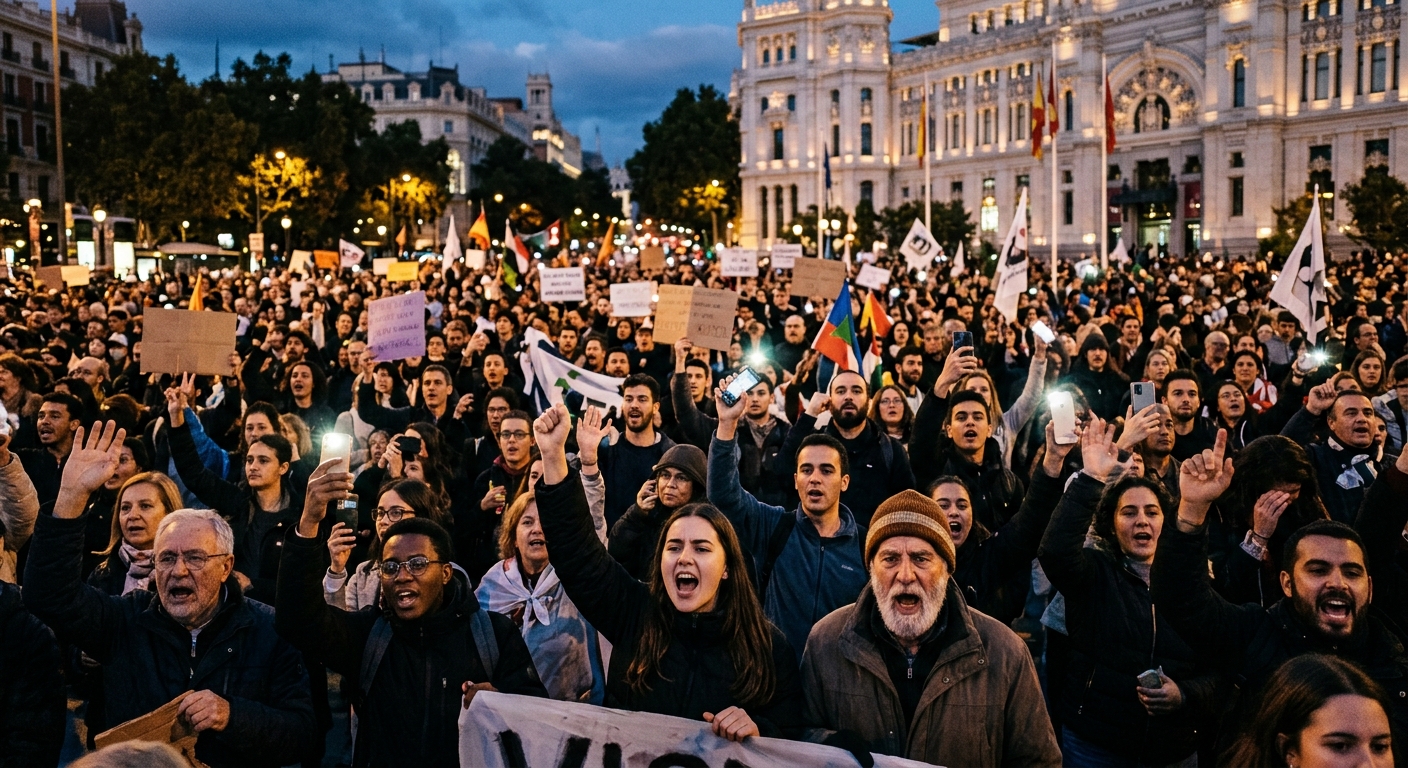
In a functioning democracy, the ability of citizens to gather in public spaces to express their grievances is not merely a privilege; it is a fundamental pillar of civic life. The right to peaceful dissent allows individuals to aggregate their voices, turning solitary whispers into a collective roar that cannot be easily ignored by those in power. Throughout history, marginalized groups, labor movements, and civil rights advocates have utilized public demonstrations as their primary tool for instigating societal change. When people take to the streets, they are actively participating in the democratic process, holding elected officials accountable and demanding justice.
However, this foundational right is frequently contested. Law enforcement agencies and government entities often attempt to balance public safety with civil liberties, but history shows that this balance often tips toward suppression. Whether through the guise of national security, the implementation of draconian surveillance technologies, or the geographic isolation of demonstrators, the right to assemble is under constant threat. Understanding these rights and the tactics used to diminish them is crucial for preserving the voice of the people.
The Bedrock of Democracy: First Amendment Protections
The United States Constitution explicitly safeguards the right of the people to peaceably assemble and petition the government for a redress of grievances . This constitutional guarantee, enshrined in the First Amendment, recognizes that free speech is most potent when it is collective. Assembly provides a critical mechanism for individuals who may lack political influence or financial resources to amplify their concerns on a public stage.
However, the legal interpretation of this right is highly nuanced. The government is permitted to impose reasonable time, place, and manner restrictions on public gatherings. For these restrictions to be considered constitutional, they must be strictly content-neutral. This means they cannot be applied differently depending on the specific message, ideology, or political affiliation of the protesters. Furthermore, these regulations must be narrowly tailored to serve a significant governmental interest—such as preventing severe traffic blockages or maintaining public safety—and they must leave open ample alternative channels for communication. Unfortunately, these legal caveats are frequently exploited by local authorities. Municipalities sometimes use convoluted permit requirements, excessive noise ordinances, or restrictive traffic laws to stifle protests before they even begin. Protecting the First Amendment requires constant legal vigilance to ensure that administrative procedures do not become a backdoor for unconstitutional censorship.
The Geography of Dissent: Why Proximity Matters
A protest’s political effectiveness is intrinsically linked to its physical location. Demonstrations are explicitly designed to disrupt the comfortable status quo, draw widespread public attention, and confront decision-makers directly with the consequences of their policies. Consequently, the physical proximity of protesters to the targets of their grievances—whether that is a government legislative building, a corporate headquarters, or an international political summit—is absolutely essential.
In recent decades, however, authorities have increasingly utilized the controversial concept of free speech zones. These are designated areas, often fenced off and located miles away from the actual event or institution being protested, where demonstrators are permitted to gather legally. Relegating dissenters to these isolated zones strips the protest of its visual and auditory impact. The very essence of public dissent is visibility. Courts have repeatedly scrutinized the use of distant free speech zones, frequently noting that removing protesters from the direct sightlines of their intended audience essentially acts as a prior restraint on speech. A true commitment to civil liberties requires allowing citizens to occupy traditional public forums—such as parks, sidewalks, and plazas—where their messages will be seen and heard by those who most need to engage with them.
Global Standards on Peaceful Assembly
The right to gather and express collective dissent is not just a domestic constitutional issue; it is recognized globally as a universal human right. The United Nations Human Rights Committee has articulated comprehensive standards regarding this fundamental freedom, most notably in General Comment No. 37 on Article 21 of the International Covenant on Civil and Political Rights . This authoritative international document underscores that states have a positive obligation not only to merely tolerate peaceful assemblies but to actively facilitate and protect them.
According to these international human rights standards, governments must not use bureaucratic hurdles, such as overly burdensome or expensive notification procedures, to deter gatherings. Furthermore, the UN explicitly states that isolated acts of violence or property damage by a few rogue individuals do not strip an entire assembly of its peaceful status or deprive the remaining peaceful participants of their fundamental rights.
The Chilling Effect of Modern Surveillance
As technology rapidly evolves, so do the sophisticated methods used by the state to monitor and manage public gatherings. Today, participating in a public protest often means subjecting oneself to an unprecedented and highly intrusive level of government surveillance. Law enforcement agencies increasingly deploy a vast array of digital tools, including facial recognition software, automated license plate readers, social media monitoring algorithms, and cell site simulators, to track the movements, networks, and identities of political activists.
This pervasive digital surveillance creates what legal scholars commonly refer to as a chilling effect. When average citizens know that attending a weekend rally might result in their faces being scanned, their identities permanently cataloged in opaque government databases, and their digital footprints traced, many will understandably choose to stay home to protect their privacy and livelihoods.
Furthermore, the use of facial recognition technology in crowd settings is notoriously flawed. Studies have repeatedly shown that these systems suffer from high error rates, frequently misidentifying individuals—particularly women and people of color. This technological bias leads to false arrests, wrongful detentions, and unwarranted harassment of innocent citizens. Balancing technological advancement with foundational civil liberties requires strict independent oversight, complete operational transparency, and clear legislative boundaries to prevent the gradual transformation of a free society into a pervasive surveillance state.
The Weaponization of National Security
One of the most common and historically repetitive justifications for suppressing protests is the invocation of national security or public safety. While the government undeniably has a legitimate and necessary interest in preventing catastrophic violence and protecting critical infrastructure, these broad, ambiguous terms are frequently weaponized to quell inconvenient or embarrassing political dissent.
Following major geopolitical events, highly publicized international summits, or periods of intense domestic unrest, authorities often dramatically expand their security apparatus and operating budgets. In these heightened environments, peaceful demonstrators and community organizers are sometimes preemptively labeled as potential security threats or domestic terrorists. This linguistic framing is immensely dangerous. By categorizing standard political dissent as a severe security threat, authorities justify the use of extreme, militarized policing tactics, the temporary suspension of normal civil liberties, and the aggressive, politically motivated prosecution of activists. True national security should protect the democratic institutions and freedoms that define a free nation, rather than sacrificing those very constitutional freedoms in the name of temporary order. A secure society is one that is resilient and confident enough to withstand sharp criticism and public demonstration without resorting to authoritarian crackdowns.
Militarized Policing and Crowd Management
The visual landscape of American protests has shifted dramatically over the past few decades, with local police forces frequently appearing in military-grade riot gear, armed with heavily armored vehicles, chemical irritants like tear gas, and kinetic impact projectiles such as rubber bullets. When police arrive at a constitutionally protected peaceful demonstration outfitted for a warzone, it inherently escalates tensions, creates an atmosphere of hostility, and often provokes the very violence they are ostensibly deployed to prevent.
The Bureau of Justice Assistance, a key component of the U.S. Department of Justice, has explicitly outlined specific, evidence-based recommendations for handling First Amendment-protected events . These comprehensive guidelines emphasize the critical importance of communication, active de-escalation techniques, and proportionate law enforcement responses. Effective crowd management relies on establishing open, good-faith lines of communication with protest organizers long before the event begins, and prioritizing the protection of constitutional rights throughout the demonstration. When police shift their focus toward facilitating the successful execution of the event rather than forcefully dominating the crowd, incidents of violence and property damage decrease significantly. Law enforcement agencies must pivot away from an adversarial warrior mentality and return to a community guardian mindset, where the primary objective is to protect the public’s inherent right to speak freely and assemble safely.
Moving Forward: Safeguarding Dissent in the 21st Century
To definitively protect the future of public dissent and democratic assembly, a comprehensive, multi-faceted approach is urgently required from all levels of society. Legislators at the local, state, and federal levels must enact strict, enforceable prohibitions against the deployment of discriminatory surveillance technologies at peaceful gatherings. The judicial system must continue to rigorously strike down overly broad geographic restrictions that isolate protesters from their intended audiences and dilute their political messaging.
Furthermore, local communities must demand unprecedented transparency and structural accountability from their police departments, ensuring that tactical crowd control strategies align perfectly with constitutional mandates and focus relentlessly on de-escalation rather than violent intimidation. The right to assemble is not a permanent guarantee; it is a fragile civic commodity that requires continuous, active defense from every generation.
Frequently Asked Questions (FAQs)
Do I need a government permit to protest in public spaces?
Generally, you do not need a permit to protest on traditional public forums such as public sidewalks or city parks, provided that you are not actively blocking pedestrian traffic or violating reasonable, content-neutral noise ordinances. However, if your planned event involves marching directly in the street, intentionally blocking vehicle traffic, or utilizing exceptionally heavy sound amplification equipment, local governments usually require a permit to coordinate logistics and ensure public safety.
Can the police legally disperse a peaceful protest?
Police can issue a dispersal order if an assembly becomes violent, poses a clear danger to public safety, or disrupts major traffic without a permit. Orders must be clearly communicated, and individuals must be given adequate time and a safe route to leave without fear of immediate arrest.
Are designated free speech zones constitutional?
The constitutionality of free speech zones is debated. Courts uphold them if deemed strictly necessary for immediate security but frequently strike them down if placed arbitrarily far away, acting as an unconstitutional prior restraint on speech.
Can the government restrict what I say at a protest?
Under the First Amendment, the government absolutely cannot restrict speech based on its content, message, or viewpoint. You have the right to express highly unpopular or critical opinions. However, the First Amendment does not protect speech that actively incites immediate, lawless violence or constitutes a genuine, direct physical threat to another individual.
How does international law protect the right to assemble?
International frameworks, like the UN Human Rights Committee guidelines, dictate that nations must actively protect and facilitate protests. This includes avoiding undue bureaucratic restrictions and refraining from using mass surveillance to track participants.
Conclusion
Protests are not an annoying disruption of the democratic process; they are a vital, indispensable component of it. By vigorously safeguarding the First Amendment, pushing back relentlessly against unwarranted government surveillance, and demanding strict accountability in law enforcement crowd management, society can ensure that the diverse voices of the people remain visible, audible, and powerful for generations to come. The right to be seen and heard is the heartbeat of freedom.
References
- U.S. Constitution – First Amendment — Library of Congress. 1791-12-15. https://constitution.congress.gov/constitution/amendment-1/
- General Comment No. 37 on Article 21 (Right of peaceful assembly) — UN Human Rights Committee (OHCHR). 2020-07-27. https://www.ohchr.org/en/documents/general-comments-and-recommendations/general-comment-no-37-article-21-right-peaceful
- Recommendations for First Amendment-Protected Events for State and Local Law Enforcement Agencies — Bureau of Justice Assistance, U.S. Department of Justice. 2011-12-01. https://bja.ojp.gov/library/publications/recommendations-first-amendment-protected-events-state-and-local-law
Similar Articles








Read full bio of medha deb


