
Pregnant and Parenting Students: Education Rights Guide
A practical, rights-based guide to help pregnant and parenting students stay in school, stay safe, and succeed academically.
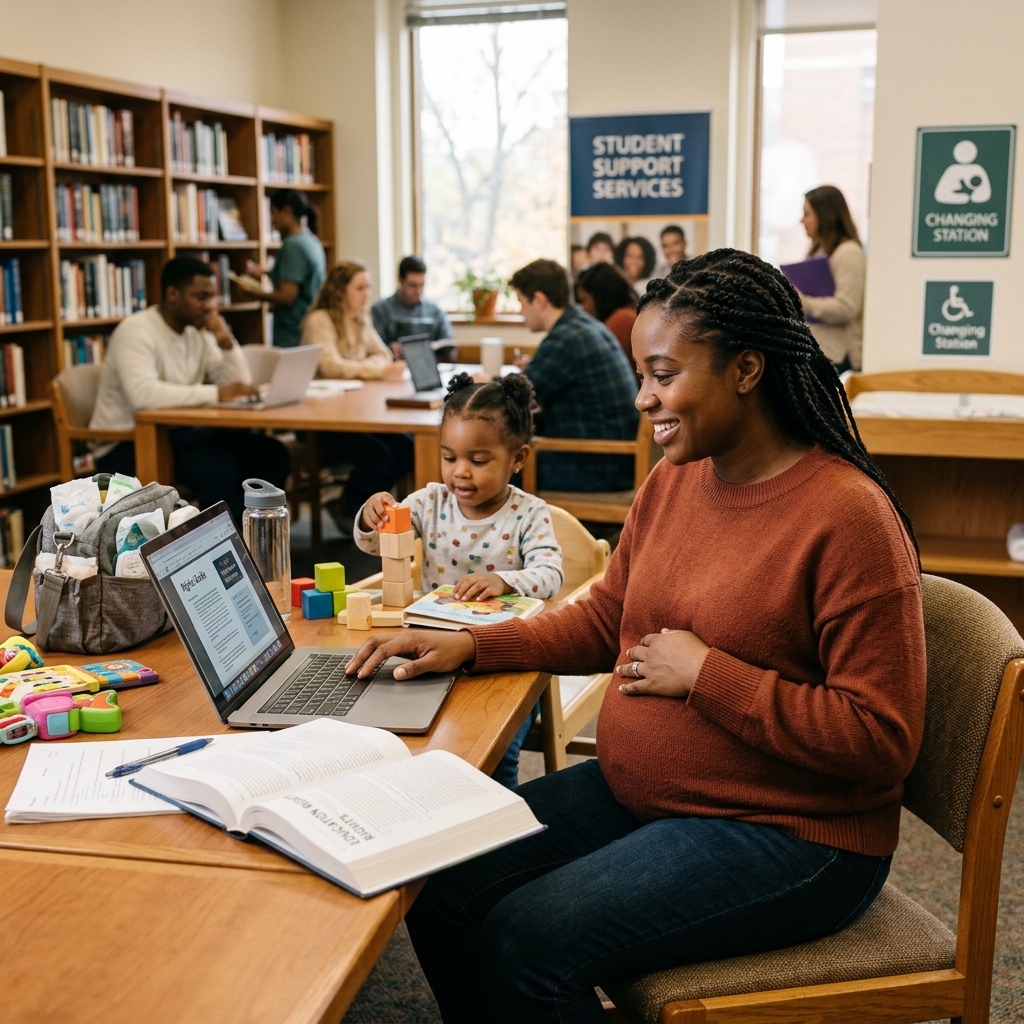
Pregnant and parenting students in the United States are protected by Title IX, a federal civil rights law that prohibits sex discrimination in educational programs and activities that receive federal funding. These protections cover pregnancy, childbirth, abortion, miscarriage, lactation, and parental status, ensuring that students can continue their education without being pushed out or treated unfairly because they are pregnant or caring for a child.
This guide explains the core legal protections, common forms of discrimination, and practical steps you can take to assert your rights and remain in school. It is designed for students in high school, college, and other educational programs, as well as for educators and advocates who support them.
Understanding Title IX Protection for Pregnancy and Parenting
Title IX of the Education Amendments of 1972 states that no person in the United States shall, on the basis of sex, be excluded from participation in, denied the benefits of, or subjected to discrimination under any education program or activity receiving federal financial assistance. The U.S. Department of Education and federal courts have made clear that this prohibition on sex discrimination includes discrimination based on pregnancy and parental status.
In practice, this means that schools must treat pregnant and parenting students at least as well as they treat other students with comparable medical or personal needs, and cannot single them out for stricter rules or lower-quality educational options.
Key Legal Principles
- Equal access: Pregnant and parenting students must have equal access to classes, programs, and extracurricular activities.
- Non-discrimination: Schools cannot exclude, penalize, or limit students because of pregnancy, childbirth, abortion, miscarriage, or parental status.
- Comparable treatment: Special services given to other students with temporary medical conditions must also be offered to pregnant students.
- Voluntary alternative programs: Any separate program for pregnant or parenting students must be truly optional and must provide equal educational opportunities.
- Protection from harassment: Schools must prevent and address sex-based harassment, including harassment related to pregnancy or parenting.
Your Core Rights as a Pregnant or Parenting Student
Although specific school policies may vary, Title IX establishes several baseline rights that pregnant and parenting students can rely on across most educational settings.
1. The Right to Stay Enrolled and Participate Fully
Schools may not remove you from classes, prevent you from graduating on time, or block you from participating in clubs, sports, or other activities because you are pregnant or parenting.
- You have the right to continue attending your regular school or program, even if your school offers a separate program for pregnant or parenting students.
- Your school cannot require a doctor’s note as a condition for staying in class or joining activities unless it requires the same documentation from all students with comparable health conditions.
- If you temporarily leave for pregnancy-related medical reasons, you have the right to return to the same academic and extracurricular status you held before the leave.
2. The Right to Pregnancy-Related Leave and Excused Absences
Title IX requires schools to excuse absences when they are medically necessary due to pregnancy or related conditions, as long as this is consistent with the treatment of other temporary medical issues.
- Absences for prenatal appointments, childbirth, recovery, abortion care, or pregnancy-related complications should be excused when supported by medical advice.
- Schools must allow you to make up missed work or provide equivalent opportunities, in the same way they do for other students with medically necessary absences.
- Policies that penalize attendance or participation cannot be applied more harshly to pregnancy-related absences than to other health-related absences.
3. The Right to Reasonable Modifications and Academic Support
When pregnancy or childbirth affects your ability to participate in school on the usual schedule, Title IX obligates schools to provide reasonable adjustments that keep you engaged in your education.
Examples of modifications may include:
- Access to larger desks or seating that accommodates pregnancy.
- Permission to eat snacks or drink water in class if medically necessary.
- Extra time to get between classes or use elevators when needed.
- Temporary homebound instruction, tutoring, or independent study when you cannot attend in person.
- Flexible deadlines or alternative assignments, consistent with how the school treats students with short-term illnesses or injuries.
4. The Right to Lactation Support and Parenting Accommodations
Although Title IX does not list specific lactation requirements, federal guidance and advocacy materials interpret sex-based discrimination protections to cover needs related to breastfeeding and pumping milk.
- Schools should allow reasonable breaks for pumping or breastfeeding and a clean, private space that is not a bathroom.
- You may need temporary flexibility around class schedules or clinical placements to manage lactation and child-care responsibilities.
- Schools cannot penalize you for responsible parenting tasks when comparable flexibility is given to other students with significant family or medical responsibilities.
5. Protection from Harassment and Hostile Environment
Title IX requires schools to take measures to stop and address sex-based harassment, including derogatory comments, bullying, or hostile treatment based on pregnancy, abortion, childbirth, miscarriage, lactation, or parental status.
- Harassment by peers, faculty, staff, or administrators that interferes with your ability to learn must be taken seriously and investigated.
- Schools must provide remedies to stop the harassment and prevent it from recurring, which may include changes to class schedules, disciplinary actions, or other interventions.
- Retaliation against you for reporting harassment or discrimination—such as giving lower grades, cutting financial aid, or social exclusion orchestrated by staff—is prohibited.
Common Forms of Discrimination Pregnant and Parenting Students Face
Despite clear legal protections, many students still encounter explicit and subtle discrimination. Recognizing these patterns can help you identify when your rights may be at risk.
| Type of Problem | What It Looks Like | Why It May Violate Title IX |
|---|---|---|
| Forced school transfer | Being told you must switch to an alternative or “pregnant students” school. | Separate programs must be voluntary and equal in quality. |
| Exclusion from activities | Barred from gym class, labs, or sports solely because you are pregnant. | Schools cannot exclude pregnant students if they are otherwise able to participate. |
| Unexcused absences | Pregnancy-related absences counted as truancy or cause for failing grades. | Medically necessary absences must be excused and treated like other medical leave. |
| Harassment or shaming | Peers or staff make derogatory comments or pressure you to drop out. | Sex-based harassment tied to pregnancy triggers Title IX obligations. |
| Denial of accommodations | Refusal to grant basic adjustments routinely given to injured students. | Special services must be comparable to those for other temporary conditions. |
| Retaliation | Negative actions after you complain, such as losing leadership roles or aid. | Retaliation for asserting Title IX rights is illegal. |
How to Assert Your Rights and Get Help
Knowing your rights is only the first step. Title IX also provides mechanisms you can use to seek help and enforcement when schools fail to comply.
Step-by-Step Approach
- Document events carefully
Keep a written record of pregnancy-related absences, requests for accommodations, school responses, and any incidents of harassment. Save emails, text messages, medical notes, and policy documents. - Review school policies
Check your student handbook, code of conduct, and any Title IX or non-discrimination policies to understand what your school has promised to do. - Contact the Title IX Coordinator
Every school or district that receives federal funds must designate a Title IX Coordinator, whose role is to oversee compliance and respond to complaints. - Request a meeting and propose solutions
Explain your situation, outline the barriers you face, and suggest reasonable modifications based on your medical needs and academic requirements. - Use internal grievance procedures
Most institutions have formal complaint processes; filing through these channels creates a record of your concerns and triggers official review. - File a complaint with the Office for Civil Rights (OCR)
If internal efforts fail, you can submit a complaint to the U.S. Department of Education’s Office for Civil Rights, typically within 180 days of the discrimination. - Consider legal action
In some cases, students may file lawsuits in state or federal court alleging Title IX violations.
External Support and Advocacy
In addition to school officials and OCR, there are advocacy organizations and legal services that specialize in pregnancy and parenting discrimination in education. These groups can help you interpret your rights, draft complaint letters, and decide which options fit your situation.
Building Supportive School Environments
Beyond minimum legal compliance, schools can adopt policies and practices that affirm pregnant and parenting students as full members of the learning community.
- Clear, widely shared non-discrimination policies that explicitly include pregnancy, childbirth, abortion, miscarriage, lactation, and parental status.
- Training for staff and faculty on Title IX requirements, inclusive language, and how to respond to disclosures of pregnancy or parenting status.
- Accessible lactation rooms and family-friendly spaces on campus, including private areas for pumping and child-friendly study zones.
- Flexible academic structures, such as online options, condensed schedules, or modified attendance policies that help students manage caregiving responsibilities while maintaining progress toward a credential.
- Dedicated support offices for student parents that connect them to child care, financial aid, housing, and health services.
Frequently Asked Questions (FAQ)
Can my school make me switch to a different program because I am pregnant?
No. Under Title IX, your school cannot force you to attend a separate program or school due to pregnancy or parenting status. Any alternative program must be voluntary and provide opportunities equal in quality to those offered to non-pregnant students.
Can I be removed from sports or physical education classes for being pregnant?
Generally, schools may not exclude you from sports or physical education solely because you are pregnant. A doctor’s note can only be required if the same standard applies to all students with medical conditions, and any removal must be based on medical advice rather than stereotypes about pregnancy.
What happens if I miss school due to pregnancy or childbirth?
If your absences are medically necessary, your school must excuse them and allow you to make up missed work or receive equivalent opportunities, consistent with how it treats other students with temporary medical conditions.
Does Title IX cover abortion-related care?
Federal guidance and advocacy materials indicate that Title IX protections extend to pregnancy-related conditions, including abortion and recovery from abortion, meaning schools must treat related medical needs in the same way as other pregnancy-related issues.
How long do I have to file a complaint with the Office for Civil Rights?
In most cases, complaints to the U.S. Department of Education’s Office for Civil Rights must be filed within 180 days of the discriminatory act, though the agency may extend the deadline for good cause in some circumstances.
Can I be punished for reporting discrimination?
No. Retaliation against a student for asserting Title IX rights, filing a complaint, or participating in an investigation is prohibited. Schools can face additional liability if they respond to reports of discrimination with punitive action instead of remediation.
References
- Know Your Rights: Pregnant or Parenting? Title IX Protects You from Discrimination at School — U.S. Department of Education, Office for Civil Rights. 2013-06-25. https://www.ed.gov/laws-and-policy/civil-rights-laws/title-ix-and-sex-discrimination/title-ix-key-issues/know-your-rights-pregnant-or-parenting-title-ix-protects-you-discrimination-school
- Pregnant & Parenting College Students’ Rights — Massasoit Community College, Civil Rights Compliance Office. 2021-09-01 (approx.). https://massasoit.edu/about/offices-priorities/civil-rights-compliance/know-title-ix/pregnant-and-parenting-college-students-rights.html
- Title IX Protections for Pregnant and Parenting Students — National Women’s Law Center. 2015-08-01. https://nwlc.org/wp-content/uploads/2015/08/ProtectionsforPregnantandParentingStudents.pdf
- Pregnant or Parenting at School? Know Your Rights — A Better Balance. 2020-01-01 (approx.). https://www.abetterbalance.org/resources/pregnant-or-parenting-at-school-know-your-rights/
- Pregnant & Parenting Students’ Rights Toolkit — National Women’s Law Center. 2016-08-01. https://nwlc.org/wp-content/uploads/2016/08/Final_Aug2016_nwlc_PPToolkit.pdf
- Title IX Basics — The Pregnant Scholar (U.C. Berkeley). 2017-05-01 (approx.). https://thepregnantscholar.org/title-ix-basics/
- Know Your Title IX Rights: Pregnant and Parenting Students — Legal Momentum. 2014-01-01 (approx.). https://www.legalmomentum.org/library/know-your-title-ix-rights-pregnant-and-parenting-students
Similar Articles








Read full bio of Sneha Tete


