
Practical Guide to Child Support Modification
Understand when and how to legally change child support orders, what courts look for, and how to prepare a strong modification request.
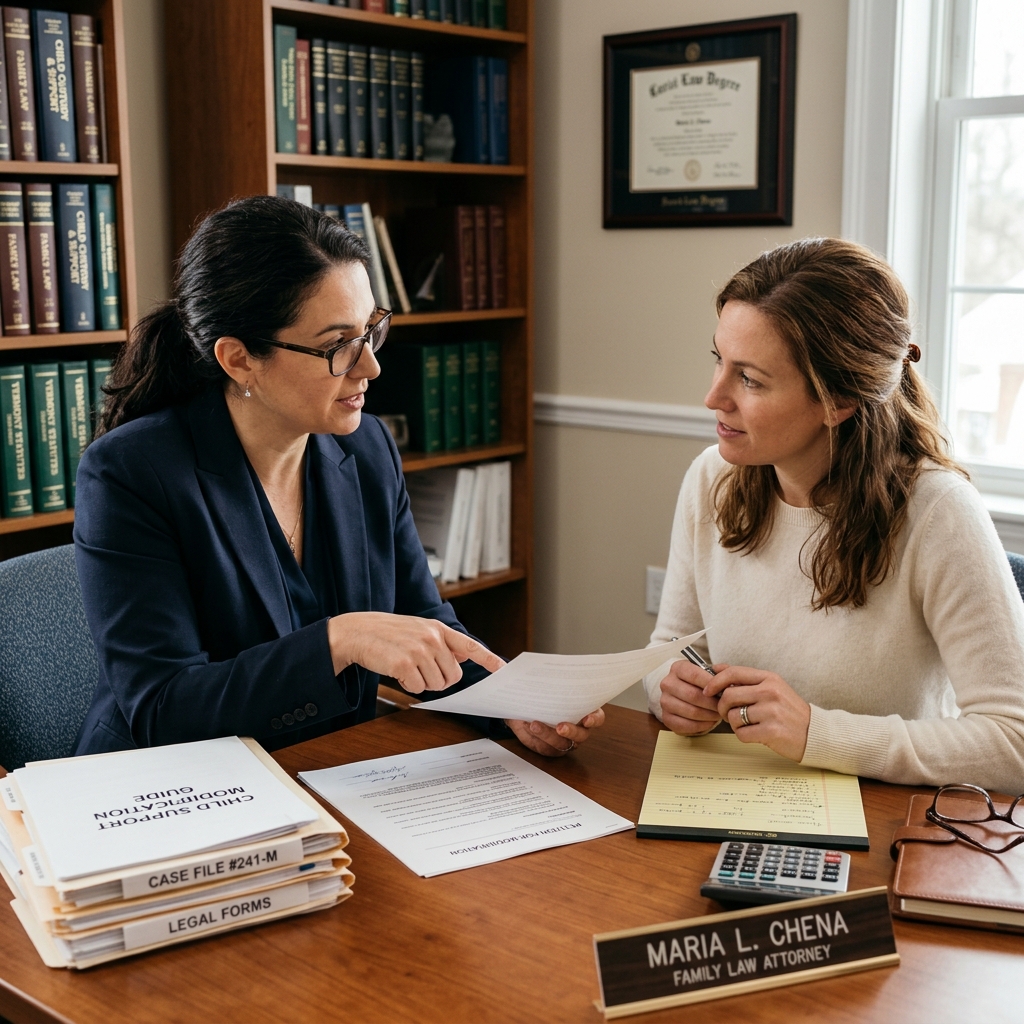
Child support orders are not frozen in time. As parents’ lives change and children’s needs evolve, the original support amount can become unfair or unworkable. Most legal systems allow a child support modification when certain conditions are met, but courts and agencies require clear proof and following a defined process.
This guide explains when a modification is possible, what legal standards usually apply, how to prepare and file a request, and practical strategies to protect your family and your rights.
1. What Child Support Modification Really Means
Child support modification is the formal process of changing an existing court or administrative order that sets how much one parent must pay for a child’s financial support.
Only a court or authorized child support agency can change the order; private agreements without approval generally are not enough.
- Upward modification – increases the amount when a child’s needs or a parent’s income have grown.
- Downward modification – decreases the amount when paying the original sum is no longer realistic or equitable.
- Non-monetary changes – adjustments to payment schedules, health insurance responsibilities, or allocation of extraordinary expenses.
Importantly, modification is about aligning the order with current facts, not rewriting the past. In nearly all jurisdictions, support that has already come due cannot be changed retroactively.
2. When You Can Ask to Change Child Support
You cannot request modification simply because you dislike the existing amount. Courts and agencies typically require either:
- A material and substantial change in circumstances, or
- Meeting a specific time and variance threshold in the guidelines.
2.1 Material and Substantial Change
A material and substantial change is a significant shift in financial or family circumstances since the order was last set.
Common examples include:
- Job loss or major reduction in income not caused by voluntary underemployment.
- Significant increase in income of either parent.
- Major changes in custody or parenting time.
- New, ongoing medical, educational, or special‑needs expenses for the child.
- Changes in childcare or health insurance costs.
Agencies often review whether these changes would meaningfully alter the guideline support amount before pursuing modification.
2.2 Guideline-Based Eligibility Rules
Some jurisdictions use numerical thresholds to decide if a modification review is warranted. For example:
| Sample Rule Type | Typical Requirement | Purpose |
|---|---|---|
| Time since last order | More than 3 years since the order was established or last modified | Prevents constant re-litigation of minor changes. |
| Percentage variance | Support under current facts would differ by 20% or more from the existing order | Ensures modification only for significant financial impact. |
| Dollar variance | Support would differ by at least a fixed sum (e.g., $100 per month) | Provides a clear minimum threshold for change. |
States that use these rules often allow modification either when the thresholds are met or when there is an independent material and substantial change.
3. Official Ways to Modify Child Support
Most systems recognize two primary pathways to change a support order:
- Court-based modification – filing a petition or complaint in the court that issued the existing order.
- Administrative review – requesting a review through the child support enforcement agency, which may negotiate or pursue a court change.
3.1 Court Petitions and Motions
Court-based modification is handled much like any other civil case. Key features include:
- Filing a petition or complaint to modify child support in the same court that issued the current order.
- Using the original case number and naming all parties (such as the other parent and sometimes the child support agency).
- Paying filing fees or requesting a waiver if you cannot afford them.
- Serving the other parent or respondent with the papers according to procedural rules.
After filing, the court may schedule hearings, require financial disclosures, and ultimately issue a new order if modification is justified.
3.2 Agency Review and Adjustment
Many jurisdictions allow parents to request a review from the child support enforcement agency instead of immediately going to court.
Typical options include:
- Submitting a written or online request for review to the agency.
- Contacting a customer service or caseworker hotline to initiate review.
- Providing detailed documentation of income, childcare, health, and other child-related expenses within a specified timeframe.
The agency then evaluates whether the case meets modification criteria. If it does, they may negotiate a new amount, initiate a streamlined review process, or file a motion with the court to change the order.
4. Preparing Strong Evidence for a Modification Request
Successful modification almost always depends on solid documentation. Courts and agencies rely on financial and factual evidence rather than informal explanations.
4.1 Core Financial Documents
Expect to gather and submit:
- Recent pay stubs or proof of wages, often covering the prior 6–12 months.
- Most recent income tax returns, including W‑2 or 1099 forms.
- Statements of other income (bonuses, commissions, self-employment, benefits).
- Proof of health insurance premiums for the child.
- Receipts or invoices for childcare costs and other necessary expenses.
Organizing these documents early makes the process smoother and reduces the risk of delay.
4.2 Evidence of Changed Circumstances
Beyond basic finances, you must explain and prove why the current order no longer fits reality. Helpful materials include:
- Layoff notices or letters from employers documenting job loss or reduced hours.
- Medical records and bills showing new or ongoing health needs for the child.
- School records or statements reflecting special educational costs.
- Updated parenting schedules or agreements demonstrating a shift in custody or time-sharing.
Agencies may require these materials within a specific deadline to proceed with the review.
5. Step-by-Step Overview of the Modification Process
While details vary by jurisdiction, many modification procedures follow similar steps.
- Assess eligibility.
Compare your current situation to when the order was set. Check for guideline thresholds (variance percentage, time since last order) and major changes in income, custody, or child expenses. - Gather information.
Collect pay records, tax returns, expense documentation, and any proof of changed circumstances. Use your existing parenting plan to see what financial information you and the other parent must exchange. - Choose the modification path.
Decide whether to file directly in court or request review through the child support agency. In some places, the agency may first review eligibility and then file in court if a change is warranted. - Complete required forms.
Courts often require a petition or complaint to modify child support, verification forms, and sometimes financial affidavits. Agencies may have standardized “Request for Review” forms. - File and serve.
File your documents with the appropriate clerk or agency, pay filing fees (or seek a waiver), and ensure the other parent is properly served with the paperwork. - Participate in review or hearing.
You may attend an in-office negotiation or Child Support Review Process (CSRP) with the agency, or one or more court hearings. Both parents can present evidence and arguments. - Receive the new order.
If modification is granted, the court or agency issues a new support order. This replaces the previous order for future payments; it typically does not change amounts already due or unpaid.
6. Factors That Can Limit or Block Modification
Even when circumstances have changed, certain issues can complicate or prevent a modification.
6.1 Past-Due Support and Arrears
Existing arrears (past-due support) are usually treated as a judgment that cannot be erased retroactively. While future payments may be changed, back amounts often remain owed.
Courts may also closely scrutinize modification requests from parents who intentionally failed to pay under the previous order.
6.2 Voluntary Income Changes
If a paying parent voluntarily reduces income—by quitting a job without good cause or under-reporting earnings—courts may decline to lower support or may impute income based on earning capacity.
6.3 Incomplete Documentation
Failure to provide required financial records and proof of changed circumstances can lead to delays or denial of the request. Agencies often specify a deadline and expect full documentation.
7. Practical Tips for Parents Considering Modification
Careful planning can make the modification process more efficient and improve your chances of a fair result.
- Act promptly when circumstances change.
Because modification usually affects only future obligations, waiting months or years can mean paying an outdated amount longer than necessary. - Maintain open communication.
While you still must obtain formal approval, discussing the situation with the other parent may help you reach a mutually acceptable figure that the court or agency can approve. - Use written records.
Keep written records of job changes, medical diagnoses, and parenting schedule adjustments. These documents may be crucial in establishing a material change. - Stay current on payments when possible.
Continuing to pay as ordered while your modification request is pending can demonstrate good faith and reduce arrears problems. - Consider legal advice.
Family law attorneys and legal aid organizations can explain local standards, help you prepare documents, and represent you at hearings, especially in complex cases.
8. Frequently Asked Questions (FAQs)
8.1 Can I change child support without going to court or the agency?
No. Private agreements between parents typically do not change a legally binding order. You must use the court or authorized child support agency process to modify support.
8.2 How often can I request a modification?
There is no universal rule, but many systems discourage frequent requests. Some place time limits (such as three years between reviews) or require a significant change in circumstances or guideline variance before reconsidering the order.
8.3 Will the court review all aspects of the parenting plan?
It depends. Some modification cases focus only on support numbers, while others include custody or visitation changes. You may need separate filings or combined petitions, depending on local law.
8.4 What if the other parent refuses to share income information?
Courts can order production of financial documents and may subpoena employers or agencies if necessary. Even if you lack full information, you can file and ask the court to compel disclosure.
8.5 Does a modification affect unpaid support from the past?
Generally, no. Past-due amounts are treated like judgments and are usually not reduced by a later modification. The new order governs payments going forward.
References
- Support Modification Process — Office of the Attorney General, Texas. 2023-05-01. https://www.texasattorneygeneral.gov/child-support/paying-and-receiving-child-support/get-back-track/modify-child-support/support-modification-process
- Child Support Modification Process — Louisiana Department of Children & Family Services. 2022-11-10. https://dcfs.louisiana.gov/page/child-support-modification-process
- Review and Adjustment — Tennessee Department of Human Services, Child Support Services. 2023-04-15. https://www.tn.gov/humanservices/for-families/child-support-services/review-and-adjustment.html
- Changing a Custody, Visitation, or Child Support Order — TexasLawHelp.org. 2022-08-30. https://texaslawhelp.org/article/changing-a-custody-visitation-or-child-support-order
- Instructions for Filing Your Modification of Child Support — Southern Judicial Circuit, Georgia (Self-Help Packet). 2021-01-01. https://www.southernjudicialcircuit.com/selfhelp/childsupport/instructforchildsuppmod.pdf
- Child Support Modification in Tennessee — MemphisDivorce.com. 2020-03-10. https://memphisdivorce.com/child-support-modification/
- Navigating the Child Support Modification Process — MHPS Law. 2022-09-12. https://www.mhpslaw.com/blog/family-law-litigation/child-support-modificiation/
Similar Articles








Read full bio of Sneha Tete


