
Silent Fraud: 7 Elements To Prove Fraud By Omission Quick Guide
How nondisclosure can become actionable fraud in contract formation.
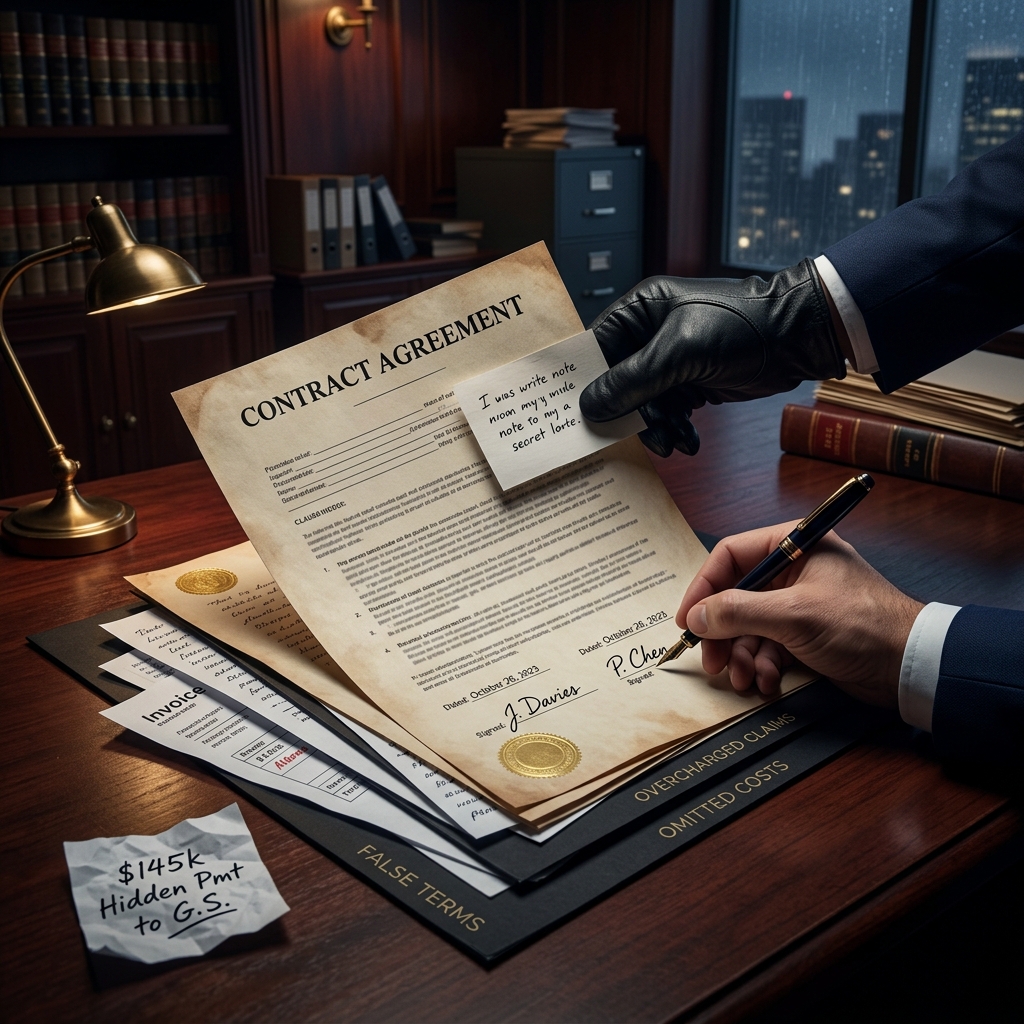
Not every fraud claim depends on a bold lie. In contract disputes, a party can sometimes be liable for what it failed to say, especially when silence hid a material fact that should have been disclosed.
This issue is often called silent fraud, fraud by omission, or fraudulent concealment. The core idea is simple: when a person has a legal duty to speak, staying quiet can be just as misleading as making an outright false statement.
When Silence Can Count as Fraud
The general rule is that contract parties do not have to volunteer every fact they know. In ordinary negotiations, each side is expected to investigate and protect its own interests.
That rule changes when silence creates a false impression. Courts commonly treat nondisclosure as actionable when one of the following is present:
- A party had a duty to disclose a material fact.
- A party made a statement that was only partly true.
- A party actively hid information instead of remaining passively silent.
- A relationship of trust or confidence created a stronger disclosure obligation.
In other words, the law focuses less on whether words were spoken and more on whether the overall conduct misled the other side into signing the agreement.
The Duty to Disclose Is the Turning Point
A claim for silent fraud usually rises or falls on the existence of a duty to disclose. Without that duty, silence alone is often not enough.
That duty may arise in several ways. A fiduciary or confidential relationship can create one, such as in some partnership, agency, or trust-based dealings. A duty can also appear when a party chooses to speak but leaves out a key fact that makes the statement misleading.
Another common source is active concealment. If someone takes steps to hide a defect, block access to important information, or make inspection difficult, the law may treat that conduct as fraud rather than mere silence.
What Makes the Omitted Fact Important
Silent fraud does not apply to every missing detail. The undisclosed information must be material, meaning a reasonable person would consider it important when deciding whether to enter the contract.
Examples of material facts may include information that affects value, safety, usability, legality, or profitability. If the fact would likely change the other party’s decision-making, a court is more likely to view nondisclosure as significant.
That requirement matters because fraud law is meant to protect genuine consent. A contract formed through deceptive withholding is not based on an informed meeting of the minds.
Common Situations That Lead to Silent Fraud Claims
Silent fraud often appears during pre-contract negotiations, when one side knows something critical and the other side does not.
- Real estate transactions: hiding structural defects, water intrusion, environmental contamination, or zoning problems.
- Business sales: failing to reveal declining revenues, pending lawsuits, or hidden liabilities.
- Asset transfers: omitting defects, defects in title, or information that affects market value.
- Employment or partnership agreements: withholding conflicts of interest, misconduct, or financial instability.
These disputes often involve the same basic pattern: one party knows the truth, withholds it, and the other party enters the deal while relying on an incomplete picture.
How Courts Usually Analyze the Claim
Although the wording varies by jurisdiction, a silent fraud claim commonly includes several elements. A plaintiff generally must show that:
- The defendant concealed or failed to disclose a fact.
- The defendant had a duty to disclose that fact.
- The fact was material.
- The defendant knew the other party was unaware of the fact or lacked equal access to it.
- The defendant remained silent with the intent to induce action or inaction.
- The plaintiff relied on the nondisclosure.
- The plaintiff suffered harm as a result.
These elements closely track general fraud principles, but with a special focus on omission rather than an express falsehood.
Silent Fraud Versus Simple Breach of Contract
Not every bad transaction is fraud. Sometimes the problem is only that a party failed to perform as promised, which is a breach of contract rather than deception.
The distinction matters because fraud claims can open the door to different remedies and different legal theories. A breach claim usually centers on the contract terms themselves, while a silent fraud claim attacks the integrity of the negotiation process.
| Issue | Breach of Contract | Silent Fraud |
|---|---|---|
| Core problem | Failure to perform a contractual duty | Failure to disclose a material fact |
| Main focus | Contract obligations | Deceptive negotiation or concealment |
| Key question | Was the promise broken? | Was there a duty to speak and a harmful omission? |
| Typical remedy | Damages or enforcement | Damages, rescission, and sometimes additional fraud-based relief |
Why Partial Truths Can Be Dangerous
One of the most common mistakes in contract negotiations is telling only part of the story. A statement that is technically true can still be deceptive if it omits a fact that changes its meaning.
For example, a seller might say a property “has no current water problems” while leaving out repeated flooding that was repaired temporarily. The sentence may be narrowly accurate at the moment it is spoken, but the overall impression may be misleading.
Courts are especially attentive to these half-truths because they can create a false sense of security while hiding the real risk.
What Defendants Often Argue in Response
Defendants in silent fraud cases commonly raise several defenses. One of the strongest is that no duty to disclose existed.
They may also argue that the information was already available to the other party, that the other side could have discovered the truth through ordinary diligence, or that the alleged fact was not material enough to matter.
In addition, some contracts include reliance disclaimers or integration clauses designed to limit claims based on extra-contractual statements or omissions. Those provisions do not always eliminate fraud claims, but they can make the plaintiff’s burden harder.
What Remedies May Be Available
If a plaintiff proves silent fraud, the court may provide remedies intended to undo the harm or compensate for losses. Depending on the jurisdiction and the facts, those remedies may include:
- Rescission of the contract, which cancels the deal.
- Compensatory damages for financial losses caused by the omission.
- Punitive damages in cases involving especially serious misconduct, where allowed by law.
Rescission is often especially important because it addresses the problem at its source: the contract was formed through a distorted or incomplete exchange of information.
Practical Lessons for Businesses and Individuals
Silent fraud claims are often avoidable with careful communication. Parties should think carefully about what they know, what they say, and what they must disclose under the circumstances.
- Do not give a partial answer if the missing part would change the meaning.
- Disclose material facts when the law, the relationship, or fairness requires it.
- Document disclosures during negotiations.
- Review contract language closely, including reliance and disclosure clauses.
- When in doubt, seek legal advice before signing or finalizing the agreement.
These steps are especially important in transactions where one side has superior knowledge and the other is depending on truthful, complete information.
Frequently Asked Questions
Is silence always fraud?
No. Silence becomes fraudulent only when there is a legal or equitable duty to disclose, or when the silence is paired with a misleading partial disclosure or active concealment.
Can fraud happen without a false statement?
Yes. Courts recognize that nondisclosure can function like a false statement when the omitted fact is material and the speaker had a duty to reveal it.
What makes a fact material?
A fact is generally material if a reasonable person would consider it important when deciding whether to enter into the contract.
How is silent fraud different from puffery?
Puffery refers to vague sales talk or exaggerated opinion, which is usually not actionable. Silent fraud, by contrast, involves hiding or omitting concrete facts that should have been disclosed.
Can a fraud claim exist alongside a contract claim?
Yes. In many disputes, a plaintiff may allege both a contract breach and a fraud-based theory if the facts support both the broken promise and the deceptive nondisclosure.
Why Silent Fraud Matters in Contract Law
Contracts depend on informed agreement. If one side withholds a fact that the other side reasonably needed in order to decide whether to proceed, the fairness of the bargain is compromised.
For that reason, silent fraud is more than a technical doctrine. It is a safeguard against strategic concealment in negotiations, especially where trust, expertise, or unequal access to information shapes the deal.
References
- Contract Law- Silent fraud requires a duty to disclose — Michigan Lawyers Weekly. 2017-04-20. https://milawyersweekly.com/news/2017/04/20/contract-law-silent-fraud-requires-a-duty-to-disclose/
- 10.2: Misrepresentation — Business LibreTexts. n.d. https://biz.libretexts.org/Courses/Citrus_College/Business_Law_I/10:_Defenses_to_Contract_Formation/10.02:_Misrepresentation
- When Does Silence Become Fraud? Omissions and Concealment in New Jersey Business Deals — P.J. Lesq. n.d. https://www.pjlesq.com/post/when-does-silence-become-fraud-omissions-and-concealment-in-new-jersey-business-deals
- Fraud by Non-Disclosure: The Common Claim and Defense — Guerra LLP. n.d. https://guerrallp.com/blog/fraud-by-non-disclosure-the-common-claim-and-defense
- fraud in the inducement — Cornell Law School, Legal Information Institute. n.d. https://www.law.cornell.edu/wex/fraud_in_the_inducement
- STATE OF MICHIGAN COURT OF APPEALS — Michigan Court of Appeals. 2004-02-24. http://www.michbar.org/opinions/appeals/2004/022404/22246.pdf
Similar Articles








Read full bio of medha deb


