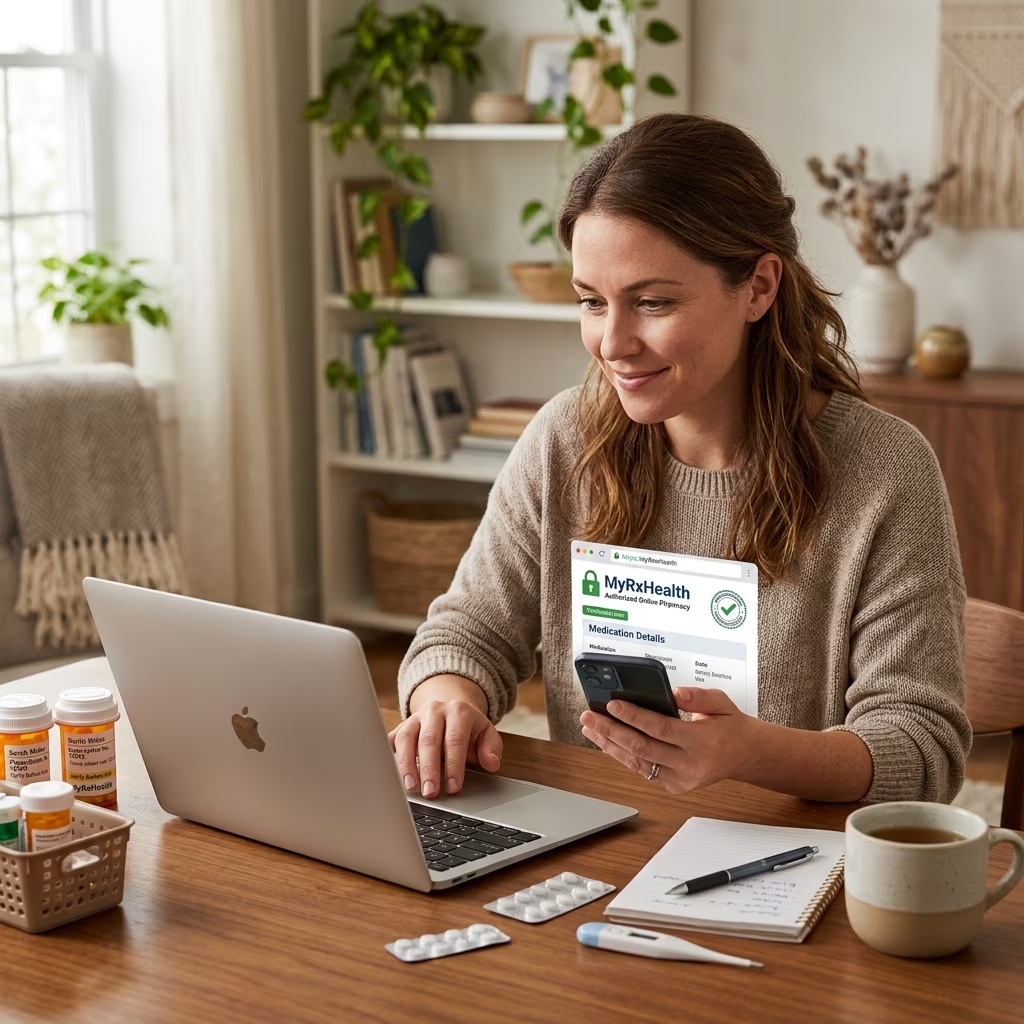
Ordering medicine from an online pharmacy can be convenient, affordable, and sometimes necessary, especially for people with limited mobility or those living far from a traditional pharmacy. At the same time, online medicine sales are one of the riskiest corners of the internet: many sites operate outside the law, sell unsafe products, or misuse personal data. Knowing how to separate legitimate pharmacies from illegal or dangerous sites is critical to protecting both your health and your legal rights.
Why Online Pharmacies Are Both Useful and Risky
Online pharmacies are not inherently bad. Many are fully licensed, follow strict professional standards, and provide safe access to needed medications. However, regulators have repeatedly found that a large majority of websites selling prescription-only medicines operate illegally, often ignoring licensing rules, prescription requirements, and safety checks.
Common reasons people turn to online pharmacies include:
- Difficulty traveling to a physical pharmacy or doctor
- Need for privacy or discretion for certain medications
- Searching for lower prices or discounts
- Limited local availability of specific medicines
These benefits can quickly disappear if the site is unregulated. Illegal pharmacies may supply counterfeit, expired, or incorrect medicines, or medicines stored in unsafe conditions, which can lead to treatment failure or serious side effects.
Understanding Legal and Regulatory Basics
Every country has its own rules for online pharmacies, but most legitimate operations share a few key features. In the United States, for example, an online pharmacy must be licensed in the state where it is located and where it ships medicines, usually requires a valid prescription, and must have a licensed pharmacist available to answer questions. In the United Kingdom, pharmacies selling medicines online must be registered with the General Pharmaceutical Council (GPhC), and patients can check that registration on the official pharmacy register.
Regulators and professional bodies have created tools and guidelines to help the public verify online pharmacies, such as:
- FDA’s BeSafeRx campaign and state board of pharmacy license lookup tools in the U.S.
- The GPhC online register for UK pharmacies providing distance and online services.
- Verification tools from the National Association of Boards of Pharmacy (NABP) to identify safe pharmacy websites.
Using these official resources is one of the most reliable ways to confirm that an online pharmacy is operating legally.
Checklist: How to Recognize a Legitimate Online Pharmacy
Before sharing personal information or placing an order, use this checklist to evaluate an online pharmacy.
Essential signs of a safe pharmacy
- Requires a valid prescription from a licensed healthcare provider for prescription-only medicines.
- Displays a physical street address and phone number you can verify, not just a contact form or email.
- Has a licensed pharmacist available to answer questions by phone, chat, or email.
- Is licensed or registered with the appropriate regulator (state boards of pharmacy, GPhC, or equivalent).
- Provides clear information on privacy, refunds, shipping, and complaint procedures.
Red flags that suggest an illegal or unsafe site
- Offers prescription medicines without requiring a prescription or after only a few questions.
- Advertises prices that are dramatically lower than other pharmacies, suggesting counterfeit or diverted products.
- Does not list any licensing information or registration number.
- Ships medicine in damaged packaging, with labels in a foreign language, no expiration date, or missing patient information.
- Fails to protect your data with secure connection indicators (for example, “https” and lock icons in your browser).
- Spams you with unsolicited messages or appears after clicking on suspicious ads.
| Feature | Legitimate Pharmacy | Risky/Illegal Site |
|---|---|---|
| Prescription requirement | Always requires valid prescription for prescription drugs | Will sell prescription drugs without any prescription |
| Licensing and registration | Lists license details; appears in regulator or state board databases | No license information or unverifiable claims |
| Pharmacist access | Offers contact with a licensed pharmacist for advice | No professional contact; only sales support |
| Pricing | Competitive but within normal ranges | Extremely low “too good to be true” prices |
| Product quality | Proper packaging, clear labels, correct dosage | Damaged packaging, foreign labels, missing expiry dates |
| Privacy and security | Clear privacy policies; secure website connection | Unclear policies; may sell or share your data |
Health Risks of Buying from Illegal Online Pharmacies
Unregulated pharmacies can threaten your health in several ways. Studies and regulators have documented problems such as counterfeit medicines, wrong dosages, and products that were stored improperly or past their expiration date.
Specific health risks include:
- Wrong active ingredient or no active ingredient at all, leading to no treatment effect or unpredictable reactions.
- Too much or too little medicine, which can cause overdoses, toxicity, or treatment failure.
- Contamination or harmful additives in counterfeit drugs, including potentially toxic substances.
- Unsupervised self-medication, increasing the risk of drug interactions, misdiagnosis, or ignoring serious symptoms.
- Inappropriate antibiotic use, contributing to antimicrobial resistance and public health risks.
Because there is often no face-to-face contact, patients may skip important discussions about allergies, other medications, liver or kidney problems, or pregnancy status, all of which can change what is safe for them to take.
Protecting Your Personal and Financial Information
Beyond health risks, unsafe sites may also misuse your personal details. Some illegal pharmacies sell or share customer lists with other marketers or fraudulent operators, or fail to secure payment information, increasing the risk of identity theft.
Protect yourself by:
- Using only sites with clear privacy policies and secure payment processing.
- Avoiding pharmacies that request unnecessary sensitive details (such as full medical records) without explaining how they will be used.
- Regularly reviewing your bank and card statements for unauthorized charges.
- Keeping copies of emails, order confirmations, and chat transcripts in case of disputes.
Practical Steps Before You Place an Order
Taking a few minutes to verify a pharmacy before you buy can prevent serious problems later. Use this step-by-step approach the first time you use any new online pharmacy.
Step 1: Verify the pharmacy’s license
- Find the pharmacy’s legal name, physical address, and license number on its website.
- Check the license using official tools, such as state board of pharmacy databases or the BeSafeRx resources in the U.S., or the GPhC register in the UK.
- If the pharmacy does not appear in official registers, do not use it.
Step 2: Confirm prescription and consultation practices
- Be wary of any site that will ship prescription drugs without a valid prescription or with only a superficial questionnaire.
- Expect to be asked detailed questions about your medical history, other medicines, and allergies.
- Look for opportunities to ask questions directly to a licensed pharmacist.
Step 3: Review safety, shipping, and returns information
- Read the pharmacy’s policies on shipping times, temperature control for sensitive medicines, and what happens if a package is lost or damaged.
- Check whether they clearly explain what you should do if you experience side effects.
- Ensure you understand how they will handle prescription refills or changes in dosage.
Step 4: Inspect your medicine when it arrives
- Confirm that the name, strength, and appearance of the medicine match what your doctor prescribed or what you have previously received from a trusted pharmacy.
- Check the packaging for manufacturer information, batch number, and expiration date.
- If anything looks unusual or damaged, contact the pharmacy and your healthcare provider before taking the medicine.
Legal Issues and Your Rights as a Consumer
Ordering from an illegitimate online pharmacy can raise legal questions as well as health concerns. Laws differ by country and state, but common legal issues include:
- Importing unapproved medicines or prescription drugs without a valid prescription, which may violate drug and customs laws.
- Receiving counterfeit or misbranded drugs, which are often illegal to sell or distribute under food and drug statutes.
- Misuse of personal health information, potentially violating privacy or data protection laws.
In some jurisdictions, laws such as the federal Food, Drug, and Cosmetic Act in the U.S. have been amended to address internet pharmacy safety specifically, imposing stricter rules on how medicines can be offered and shipped online. While regulators usually focus enforcement on the sellers rather than individual patients, consumers can still face problems if they are found importing controlled substances or large quantities of prescription medicines without proper documentation.
If you suffer harm because of an online pharmacy—such as serious side effects from a counterfeit drug, financial loss due to fraud, or privacy violations—you may have options that include:
- Reporting the incident to drug regulators or consumer protection agencies (for example, the FDA’s MedWatch program in the U.S.).
- Filing complaints with professional regulators like state pharmacy boards or the GPhC.
- Consulting a lawyer about possible claims for negligence, product liability, fraud, or breach of contract, depending on the facts.
Working With Healthcare Professionals While Using Online Pharmacies
Online access to medicines should complement, not replace, professional medical care. When online pharmacies are used in isolation, without your regular doctor or pharmacist knowing, important safety information can be missed.
To reduce risk:
- Tell your primary care physician and any specialists about all medicines you order online.
- Allow your prescriber and pharmacy to share relevant information, where local law and consent rules permit, to coordinate your care.
- Use the opportunity to review your entire medication list periodically with a healthcare professional, especially if you take multiple medicines.
Some regulators have issued guidance encouraging or requiring online services to verify patient identity more rigorously and to communicate with a patient’s regular doctor when appropriate, to improve safety. This kind of coordination helps reduce duplicated prescriptions, unsafe combinations, and misuse.
Frequently Asked Questions About Online Pharmacy Safety
Can I legally buy prescription medicine online?
In many countries you can legally buy prescription medicines online, but only from pharmacies that are properly licensed and that require a valid prescription from a qualified healthcare professional. Buying from unlicensed websites or importing prescription drugs without authorization may be illegal and unsafe.
Is it safe to use an online consultation instead of seeing my doctor in person?
Online consultations can be safe for certain conditions, especially when they are provided by licensed healthcare professionals who follow regulatory guidance and clinical standards. However, complex or serious symptoms usually require in-person evaluation, and good online services will refer you for face-to-face care when needed.
What should I do if my online medicine looks different from what I usually get?
Do not take the medicine until you have checked with a pharmacist or your prescribing doctor. Packaging or color differences may be due to a different manufacturer, but they can also signal a wrong product, counterfeit medicine, or an error. When in doubt, seek professional advice.
Who can I report a suspicious online pharmacy to?
Report concerns to your national or regional drug regulator, such as the FDA in the U.S., as well as the relevant pharmacy regulator or state board. Many of these agencies maintain online complaint forms and hotlines specifically for unsafe or illegal pharmacies.
Can I get in trouble for accidentally buying from an illegal online pharmacy?
Regulators generally focus on shutting down illegal sellers rather than prosecuting ordinary consumers who unknowingly use them. However, you may still face consequences if you import controlled substances or restricted medicines, or if you ignore clear warning signs of illegality. If you are worried about your legal exposure, consider consulting a lawyer familiar with health and drug law in your jurisdiction.
References
- Online pharmacies: a double-edged sword — The Lancet. 2025-01-31. https://pmc.ncbi.nlm.nih.gov/articles/PMC11934860/
- How to Buy Medicines Safely From an Online Pharmacy — U.S. Food and Drug Administration (FDA). 2023-09-27. https://www.fda.gov/consumers/consumer-updates/how-buy-medicines-safely-online-pharmacy
- BeSafeRx: Your Source for Online Pharmacy Information — U.S. Food and Drug Administration (FDA). 2022-10-05. https://www.fda.gov/drugs/buying-using-medicine-safely/besaferx-your-source-online-pharmacy-information
- Buying medicines safely online — General Pharmaceutical Council (GPhC). 2023-07-20. https://www.pharmacyregulation.org/patients-and-public/standards-you-can-expect-using-pharmacy-services/buying-medicines-safely-online
- GPhC publish updated guidance for online pharmacy services — General Pharmaceutical Council (GPhC). 2025-02-01. https://cpe.org.uk/our-news/gphc-publish-updated-guidance-for-online-pharmacy-services/
- Safe Pharmacy Resources — National Association of Boards of Pharmacy (NABP). 2024-05-15. https://nabp.pharmacy/initiatives/safe-pharmacy-resources/
- Online Pharmacy Safety — Script Your Future / National Consumers League. 2022-11-10. https://scriptyourfuture.org/online-pharmacy-safety/