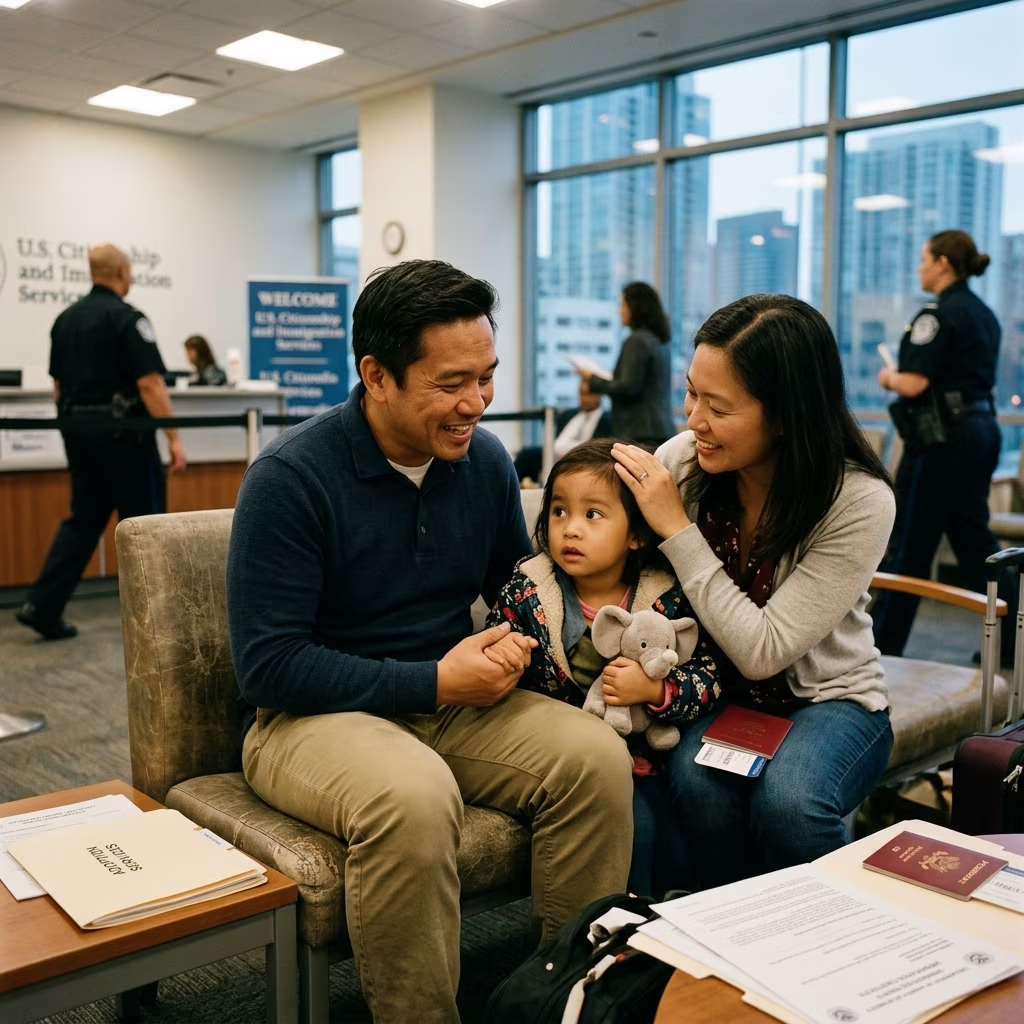
Adopting a child from another country can involve both family law and immigration law. In the United States, the child’s ability to enter and remain in the country depends on meeting specific legal standards, filing the correct petitions, and completing the adoption or custody process in the proper order. The rules are designed to confirm that the child qualifies under U.S. immigration law and that the adoptive parent is legally eligible to bring the child to the United States.
For many families, the most important question is not just whether the adoption is valid where it takes place, but whether the child can be classified as an orphan for immigration purposes. That classification affects the type of visa, the agency filings, and the timing of the child’s arrival in the United States.
How Orphan Adoption Fits Into U.S. Immigration Law
U.S. immigration law recognizes a special process for children who meet the legal definition of an orphan and are being adopted by a U.S. citizen. This process is separate from ordinary family-based immigration and is handled through U.S. Citizenship and Immigration Services and the Department of State.
The law generally requires proof that the child has no parents, or that the child’s sole or surviving parent is unable to provide proper care and has validly released the child for adoption and emigration. The law also limits the child’s age and requires the adoptive parent to meet citizenship and age requirements.
Who Can Be Adopted Under the Orphan Process?
Not every child who needs a home qualifies for the orphan process. Under U.S. rules, the child must satisfy several requirements at the time the immigration petition is filed.
- The child must generally be under 16 years old when the petition is filed.
- If the child is being adopted with a sibling, one sibling may be under 16 while the other may be under 18, if the sibling exception applies.
- The child must have no parents because of death, disappearance, abandonment, desertion, or similar circumstances, or must have a sole surviving parent who cannot care for the child and has given proper written consent for adoption and emigration.
- The child must either have a final adoption abroad or legal custody for the purpose of emigration and adoption in the United States.
These requirements matter because U.S. immigration authorities do not treat every foreign adoption as an orphan case. The child must fit the statutory definition, and the evidence must support that classification.
Eligibility of the Adoptive Parent
The adoptive parent must also meet legal conditions. For orphan cases, the petitioner must be a U.S. citizen.
When a married couple files jointly, only one spouse must be a U.S. citizen, but the petition is still filed together. A single adoptive parent must usually be at least 25 years old.
In addition to citizenship and age, the parent must show that they are suitable to provide proper care and that they satisfy any applicable home study and preadoption requirements. USCIS uses these safeguards to evaluate whether the placement is appropriate.
Main Forms and Government Filings
The orphan process uses a series of forms that establish the parent’s suitability and the child’s eligibility. The exact filing path depends on whether the family has already identified a child.
| Form | Purpose |
|---|---|
| Form I-600A | Used for advance processing to show the prospective parent is eligible and suitable before identifying a specific child. |
| Form I-600 | Used for a specific child to ask USCIS to classify that child as an immediate relative under the orphan rules. |
| Form I-601 | May be used to seek a waiver if the child is found inadmissible under immigration law. |
USCIS states that a family may begin the orphan process before choosing a particular child by filing Form I-600A and submitting the home study with that application. If USCIS approves the form, it can reduce the need to repeat the suitability review later when the family files for a specific child.
What the Home Study Must Show
The home study is a key document in adoption-related immigration cases. It helps determine whether the prospective parent can provide a safe and stable home and whether the legal and social circumstances support the adoption.
USCIS requires the home study to be current when submitted. One source notes that the home study must be less than six months old when provided to USCIS. Families should also make sure the study reflects all state-level preadoption requirements, because immigration approval does not replace state law compliance.
- It should describe the family’s home environment.
- It should address the parent’s ability to meet the child’s physical, emotional, and financial needs.
- It should be prepared in a form that satisfies both immigration and state adoption rules.
From Adoption Abroad to U.S. Entry
Once the child has been identified and the adoption or custody requirements are satisfied, the next stage is immigration processing. The child cannot simply travel to the United States without a visa or other authorization.
In a non-Convention orphan case, the visa process is tied to the Form I-600 petition. In Convention-country cases, a different process applies, but the same general goal remains: to confirm that the child is legally eligible to immigrate and that the parent-child relationship will be recognized for U.S. immigration purposes.
Department of State officials review whether the child is admissible under immigration law. If a ground of inadmissibility applies, the family may need to seek a waiver before the child can receive a visa.
Possible Immigration Outcomes After Arrival
The child’s status after arrival depends on the type of visa issued and whether the adoption was completed abroad or will be completed in the United States. The visa category can affect whether the child becomes a lawful permanent resident immediately and whether additional steps are needed after arrival.
In some cases, children enter the United States with a visa that supports automatic permanent residence. In others, further adoption or readoption steps are needed once the child is in the United States.
State Law Still Matters
Even when the federal immigration process is successful, state law may still require action. The parent must comply with any preadoption requirements of the state where the family will live, and the state may require readoption or recognition of the foreign adoption.
This is important because immigration approval does not always mean the foreign adoption is automatically treated the same way as a domestic adoption under state law. Families often need both federal immigration clearance and state recognition to fully secure the child’s legal status.
Common Challenges in Orphan Adoption Cases
Orphan adoption cases can become complicated when documents are incomplete, the child’s legal history is unclear, or the country of origin has its own adoption restrictions. The child’s home country must allow adoption by foreign nationals, and the family must comply with that country’s procedures as well as U.S. law.
- Missing proof of abandonment, death, or parental unavailability can delay or block the case.
- Age issues can prevent classification if the petition is filed too late.
- Problems with the home study or state requirements can create additional delays.
- Inadmissibility findings may require a waiver before the child can enter the United States.
Why Legal Guidance Is Often Important
Because orphan adoption involves immigration, adoption procedure, and often foreign law, many families choose to work with legal counsel. A lawyer can help identify the correct filing path, organize documentation, and spot issues that may affect the child’s eligibility or visa classification.
Legal assistance can also be useful when a case involves a sibling exception, a sole surviving parent, or evidence that must be translated and presented in a format accepted by U.S. authorities.
Frequently Asked Questions
Can a child adopted abroad always immigrate to the United States?
No. The child must qualify under U.S. immigration law, and the adoption must satisfy both the foreign country’s rules and the applicable U.S. immigration requirements.
Does a U.S. citizen need to be the adoptive parent?
Yes, for the orphan process the adoptive parent must be a U.S. citizen. If the adoption is filed by a married couple, only one spouse must hold U.S. citizenship.
What if the child is older than 16?
Most children must be under 16 when the petition is filed, but a sibling exception may allow a child under 18 to qualify when the legal conditions are met.
Is a home study required?
Yes. USCIS requires a home study as part of the process, and it must be current when submitted.
Can a child be denied admission even after approval of the adoption paperwork?
Yes. The Department of State still reviews whether the child is admissible under immigration law, and some cases require a waiver of inadmissibility.
References
- Adoption or Orphan Status — Joseph & Hall P.C. n.d. https://www.immigrationissues.com/practice-area/family-citizenship/adoption-or-orphan-status/
- Who Can Be Adopted — U.S. Department of State. n.d. https://travel.state.gov/content/travel/en/Intercountry-Adoption/Adoption-Process/before-you-adopt/who-can-be-adopted.html
- Orphan Process — U.S. Citizenship and Immigration Services. n.d. https://www.uscis.gov/adoption/immigration-through-adoption/orphan-process
- International Adoption and U.S. Immigration Law — Murray Osorio PLLC. n.d. https://www.murrayosorio.com/news/2013/september/international-adoption-and-u-s-immigration-law/
- Immigration through Adoption — U.S. Citizenship and Immigration Services. n.d. https://www.uscis.gov/adoption/immigration-through-adoption
- Navigating Immigration and Adoption: A Guide for US Citizens — Metcalf Law Group. n.d. https://www.metcalflawgroup.com/blog/family-based-immigration-legal-steps-for-reuniting-with-adopted-children/