
The Impact of Postal Logistics on Modern Electoral Integrity
How shifting mail delivery systems shape voter turnout, election security, and democratic participation.
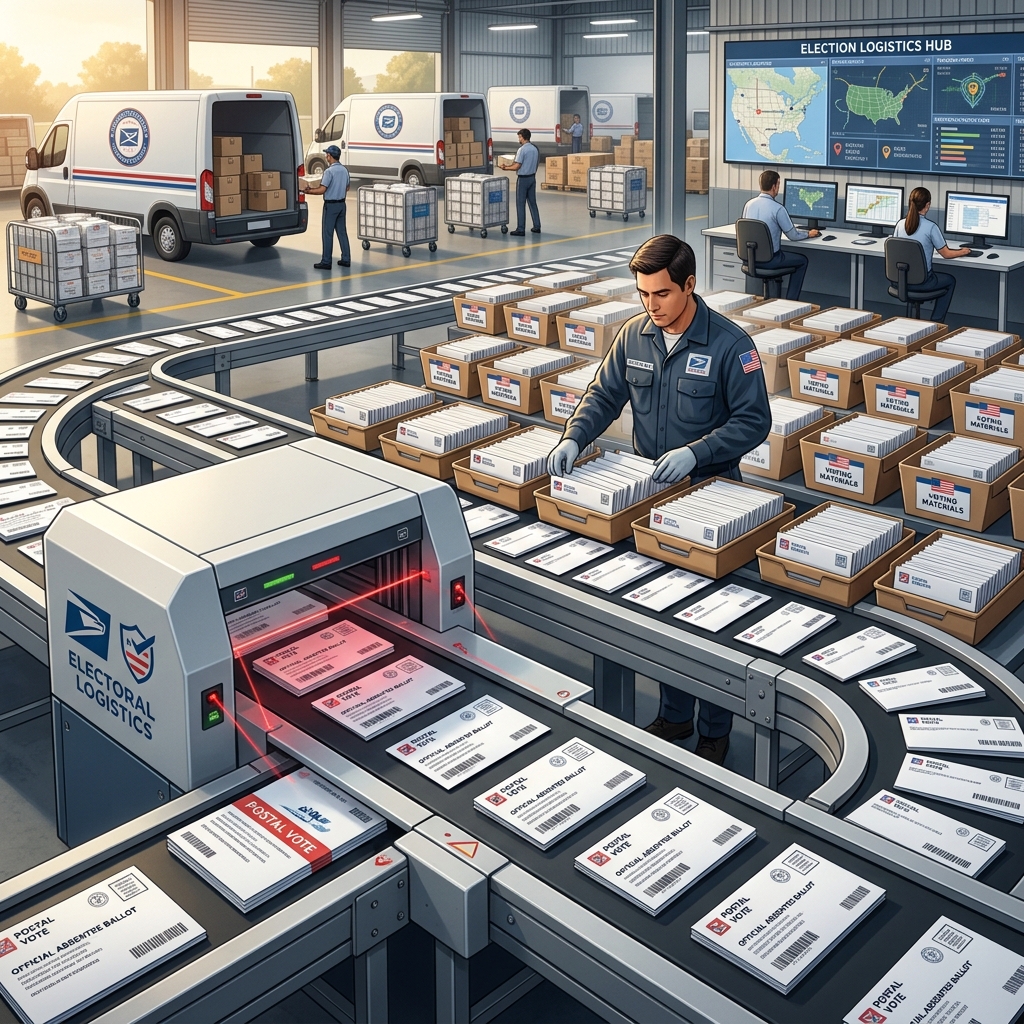
Voting is the fundamental mechanism through which citizens in a democracy express their will, hold leaders accountable, and shape the future of their communities. Over the past decade, the methods by which Americans cast their ballots have evolved significantly. While traditional in-person voting remains a staple of election day, an unprecedented number of voters now rely on remote voting methods. This shift has inexorably linked the foundational right to vote with the logistical efficiency of national mail delivery systems. Consequently, any operational changes, funding shifts, or processing delays within the postal infrastructure are no longer just administrative issues; they are profound matters of electoral integrity.
As election infrastructure adapts to this new reality, understanding the intricate relationship between postal logistics and ballot processing is essential. This comprehensive analysis explores how changes in postal service operations impact voting access, the security measures safeguarding mailed ballots, the demographic groups most vulnerable to delivery disruptions, and the legislative responses aimed at protecting democratic participation.
The Rise and Mechanics of Remote Voting
The transition toward widespread remote voting was accelerated by global public health crises, but the trend has permanent roots in the ongoing pursuit of voter convenience and accessibility. For decades, select states relied entirely on vote-by-mail systems, proving that elections could be conducted securely and efficiently without physical polling places. However, as more jurisdictions adopted no-excuse absentee voting, the volume of election mail surged. Historical analyses of primary and general elections reveal varying levels of reliance on mail-in ballots, with some regions seeing mail-in participation jump significantly over short periods .
The mechanics of remote voting rely on a precise chronological pipeline. A voter must first request a ballot (unless they reside in a universal mail-in state), wait for its arrival, complete it accurately, and inject it back into the mail stream with enough time for it to reach local election officials before statutory deadlines. Every step of this process is entirely dependent on the predictability and speed of postal delivery standards. When mail processing centers are consolidated, or delivery timelines are officially extended, the window of opportunity for a voter to successfully cast a ballot shrinks considerably.
Security Protocols Safeguarding Mailed Ballots
A common topic of public discourse regarding remote voting is the security of ballots in transit. Election systems utilize overlapping, highly sophisticated safeguards to ensure the integrity of every mailed vote. Contrary to narratives suggesting systemic vulnerabilities, election administration officials and regulatory commissions consistently affirm the robustness of these protocols .
- Intelligent Mail Barcodes (IMb): Modern election mail utilizes unique, trackable barcodes. These allow both the voter and the election administrator to trace the ballot’s journey through the postal network, much like a tracked package, ensuring a secure chain of custody.
- Signature Verification: Upon receipt, the signature on the exterior envelope is rigorously compared against the voter’s signature on file (often from a DMV record or voter registration form). If discrepancies arise, voters are typically given a “cure period” to verify their identity.
- Bipartisan Processing Teams: Once a ballot is verified, it is processed by bipartisan teams of election workers in highly secure, often surveilled environments. Ballots are separated from their identifying envelopes before counting to maintain ballot secrecy .
- Duplicate Voting Prevention: Election databases instantly update when a mail-in ballot is received and accepted. If that same voter attempts to vote in person, the electronic poll book will flag that their remote ballot has already been processed.
The Logistical Reality: How Operational Shifts Threaten Timelines
The core challenge at the intersection of postal service and elections lies in the physical logistics of mail routing. National postal networks periodically undergo restructuring to reduce costs and improve long-term financial viability. These restructurings often involve the decommissioning of older sorting machines, the consolidation of local processing facilities into massive regional hubs, and the adjustment of targeted delivery windows for First-Class Mail.
While these changes may make sense from a corporate efficiency standpoint, they introduce critical vulnerabilities into the election timeline. For example, if a local processing plant is closed, mail collected in a specific county might have to travel hundreds of miles to a regional hub just to be sorted, before being transported back to the same county’s election office. This added transit time can turn a reliable two-day delivery into a five- or six-day journey.
In the context of an election, a 48-hour delay is not a mere inconvenience—it can be the difference between a vote being counted and a vote being discarded. The strict nature of election deadlines means that the postal network must operate flawlessly during peak ballot return periods. Any localized bottleneck, whether caused by staffing shortages, transportation failures, or systemic restructuring, directly suppresses voter turnout by invalidating late-arriving ballots.
Demographic Disparities: Who is Most Vulnerable?
The impact of postal delays on elections is not distributed equally across the electorate. Specific demographic groups bear a disproportionate risk of disenfranchisement when mail systems falter.
Rural Communities: Voters living in remote or rural areas often face significant geographical barriers to in-person voting. Polling places may be located tens of miles away, and public transportation is frequently non-existent. For these citizens, the postal worker is the primary link to the ballot box. Furthermore, rural post offices are often the first to face reduced hours or localized processing cuts during systemic restructuring, compounding the delay for rural ballots.
Elderly and Disabled Voters: For many elderly individuals and voters with physical disabilities, voting in person is physically prohibitive or entirely impossible. The mail-in ballot is an essential accommodation that allows them to participate in civic life. Testimonies before state election commissions have highlighted that restricting mail-in voting, or complicating it through unreliable delivery, disproportionately harms these populations, severing their access to the democratic process .
Young and Transient Voters: College students, active-duty military personnel, and young professionals who move frequently heavily utilize absentee voting. Because their ballots often cross state lines, they are subject to the broader national mail network’s efficiency, rather than just local delivery routes. Interstate mail delays can easily push their ballots past critical deadlines.
State-by-State Discrepancies in Ballot Deadlines
The risk posed by postal delays is heavily dictated by state law. In the United States, election administration is decentralized, leading to a patchwork of deadlines that interact differently with mail delivery speeds. These laws generally fall into two categories: “Postmarked-By” and “Received-By.”
| Deadline Policy | Mechanism | Vulnerability to Postal Delays |
|---|---|---|
| Postmarked-By | The ballot must be postmarked by Election Day (or a specified date prior) and received within a statutory grace period (e.g., 3 to 14 days post-election). | Low to Moderate. As long as the USPS cancels the stamp on time, the voter is protected against downstream transit delays, provided the ballot arrives within the grace period. |
| Received-By | The ballot must be physically in the possession of local election officials by a specific time on Election Day, regardless of when it was mailed. | Extremely High. The voter bears the entire risk of any postal service delay. A ballot mailed a week early but delayed in transit will be summarily rejected. |
In “Received-By” states, postal restructuring that adds a day or two to delivery times silently shifts the effective voting deadline backward. Voters operating on historical assumptions about mail speed may inadvertently disenfranchise themselves.
Legislative and Regulatory Responses
The tension between postal operations and voting rights has sparked intense legislative and regulatory scrutiny. Policymakers are increasingly aware that protecting election infrastructure requires protecting the mail. At the federal level, lawmakers frequently issue oversight demands and condemnations of postal rules that could radically crack down or complicate voting by mail, viewing them as threats to democratic participation .
Concurrently, state legislatures are actively debating the future of election mail. Some states have attempted to pass restrictive election bills that would limit remote voting, though many such efforts have failed as broad coalitions defend current practices. Instead, lawmakers have allocated funding to study mail-in voting security and improve the integration between local election offices and regional postal hubs . This includes creating specialized election mail coordinators within postal facilities to ensure ballots are easily identified, expedited, and isolated from routine mail bottlenecks.
Actionable Strategies for Voters
Given the variables involved in postal logistics, voters must adopt proactive strategies to ensure their voices are heard:
- Understand Local Deadlines: Voters must know whether their state uses a “postmark” or “received-by” deadline and plan their mailing date accordingly.
- Request Ballots Early: Applying for an absentee ballot at the earliest possible date allows ample time for outbound delivery, completion, and return transit.
- Utilize Official Drop Boxes: When available, utilizing a county-authorized secure drop box bypasses the outbound postal network entirely, guaranteeing immediate receipt by election officials.
- Track the Ballot: Utilizing state-provided online tracking portals allows voters to verify when their ballot has been mailed, received, and accepted.
- Respond to Cure Notices: Voters should monitor their mail and email closely after returning a ballot. If a signature discrepancy is flagged, responding immediately to the cure notice is essential to save the vote.
Frequently Asked Questions (FAQs)
Can the postal service prioritize election mail over regular mail?
Yes. The postal service has long-standing protocols to prioritize election mail. Facilities utilize special green tags to identify trays of ballots, instructing workers to expedite their processing. However, systemic issues like transportation shortages or facility consolidations can still impact overall speed, despite these priority tags.
What happens if my ballot is missing a postmark?
In states with “postmarked-by” rules, a missing or illegible postmark can cause legal ambiguities. Some states allow election officials to use the date the voter signed the envelope as a substitute, while others have strict rules that may lead to rejection. Utilizing a drop box or mailing the ballot well in advance minimizes this risk.
Are mail-in ballots counted on Election Night?
This varies entirely by state. Some jurisdictions allow election workers to begin processing and scanning (but not tabulating) mail-in ballots weeks before Election Day, leading to rapid results. Other states legally forbid the opening of mail-in envelopes until Election Day itself, which often results in slower vote tallies and the phenomenon known as the “blue shift” or “red shift” as late-counted mail ballots are added to the totals.
Is mail-in voter fraud a widespread issue?
Extensive studies, audits, and judicial reviews have consistently demonstrated that widespread mail-in voter fraud is virtually nonexistent. The layered security measures, including barcode tracking and stringent signature verification by trained bipartisan teams, create a highly secure environment for remote voting .
Can I change my mind and vote in person after requesting a mail ballot?
In most states, yes. You can usually bring your blank mail-in ballot to your polling place, surrender it to the poll workers (who will void it), and then vote on a regular machine. If you forget to bring the blank ballot, you may be required to vote using a provisional ballot, which will only be counted after officials confirm your mail-in ballot was never returned.
Conclusion
The modernization of the democratic process relies heavily on an efficient, fully functioning postal system. As logistical standards shift and sorting networks evolve, the downstream effects on voter enfranchisement are profound. Ensuring that every eligible citizen has equitable access to the ballot box requires ongoing vigilance, continuous adaptation by election administrators, and proactive engagement from the voters themselves. Protecting the postal pipeline is no longer just about reliable communication; it is a fundamental prerequisite for a healthy, accessible democracy.
References
- Texas Primary Election Analysis — MIT Election Data and Science Lab. 2020-09-14. https://healthyelections.org/sites/default/files/2020-10/Texas_Primary_Election_Analysis.pdf
- Minutes of the Regular Meeting of the Elections Commission — State of Hawaii Office of Elections. 2025-10-29. https://elections.hawaii.gov
- Minutes of the Millcreek City Council — Utah.gov. 2026-03-09. https://www.utah.gov
- Leader Schumer Statement Condemning Proposed USPS Mail-In Voting Rule That Threatens Democracy — The Senate Democratic Caucus. 2026-05-29. https://www.democrats.senate.gov/newsroom/press-releases/leader-schumer-statement-condemning-proposed-usps-mail-in-voting-rule-that-threatens-democracy
Similar Articles








Read full bio of Sneha Tete


