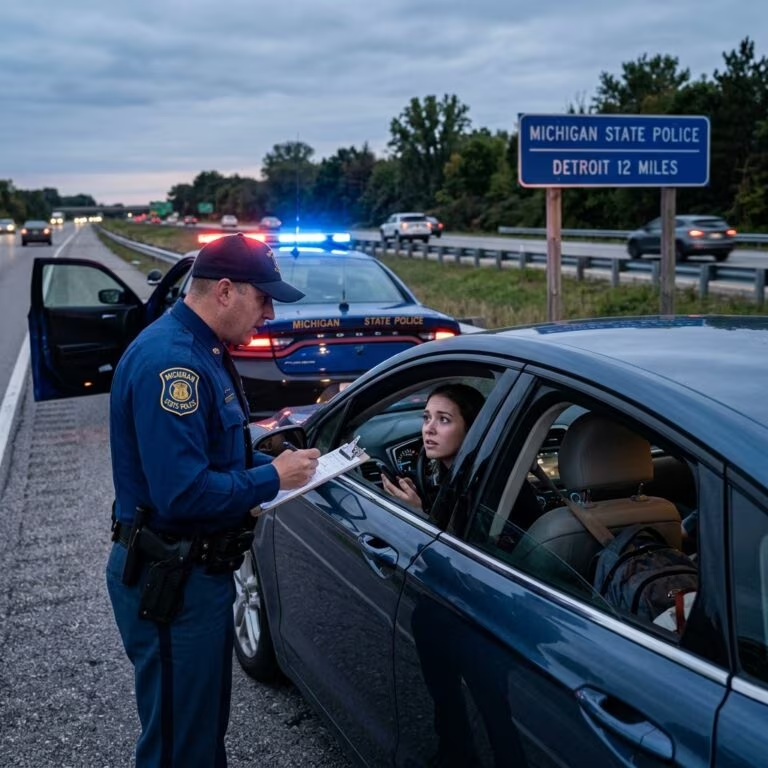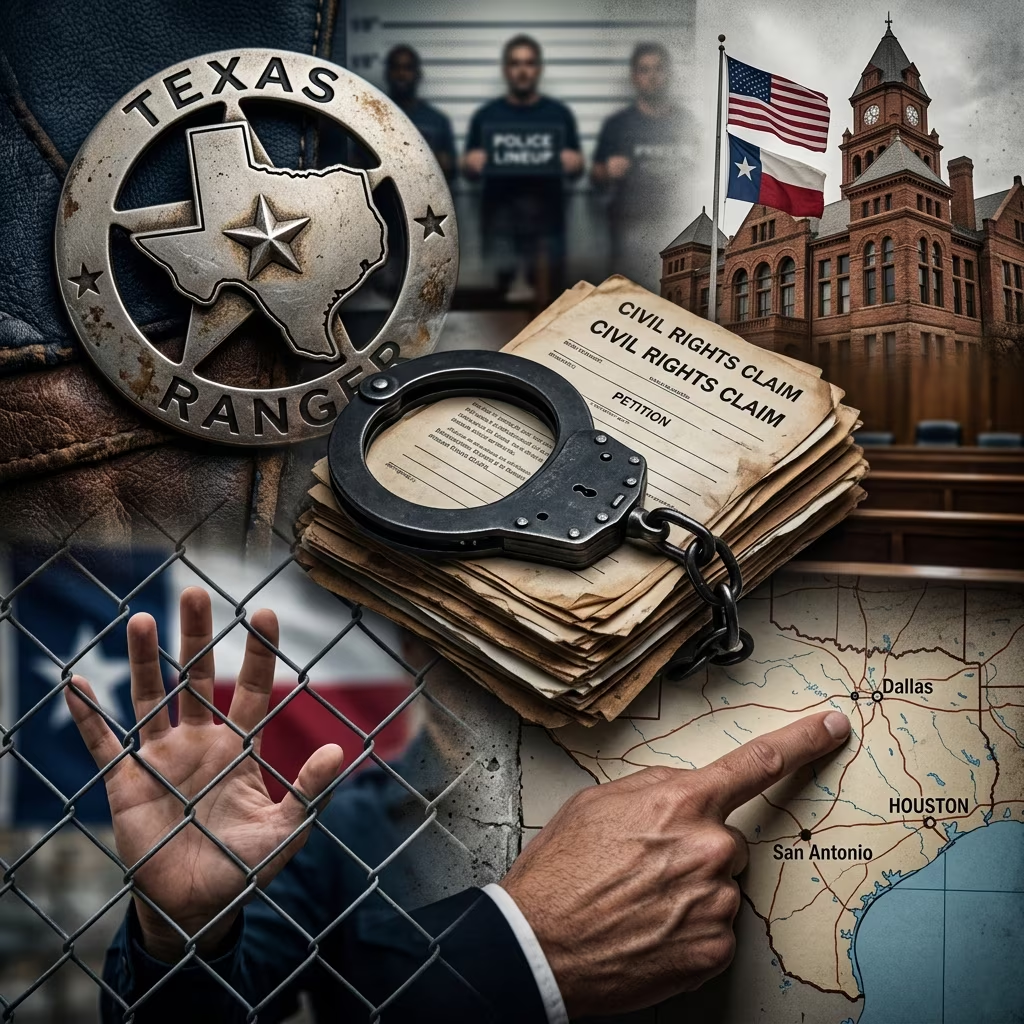
Police officers play a critical role in keeping communities safe, but their authority is limited by the United States Constitution and state law. When officers cross those legal boundaries, their actions can amount to police misconduct and give rise to civil rights claims. In Texas, victims of misconduct may seek remedies under both federal and state law, including the powerful civil rights statute commonly known as Section 1983.
This guide explains what police misconduct is, how civil rights protections apply in Texas, what legal options victims have, and the practical steps involved in building and pursuing a case. It is an informational overview, not legal advice, and anyone affected by potential misconduct should consult a qualified attorney.
Understanding Police Misconduct and Civil Rights
Police misconduct occurs when an officer, or another government actor, violates a person’s constitutional or legal rights while acting in an official capacity. Federal civil rights laws exist to protect individuals from abuses by government officials, including law enforcement.
- Police misconduct: Any unlawful or abusive action by an officer that infringes on protected rights.
- Civil rights: Freedoms and protections guaranteed by the U.S. Constitution and federal statutes, such as freedom from unreasonable searches, excessive force, and discrimination.
- Government accountability: Civil rights laws are designed to ensure that government actors can be held liable when they violate those protections.
In practice, police misconduct can be subtle or obvious. Some actions, such as the use of clearly excessive force, are easier to identify. Others, such as false arrest or malicious prosecution, may only become apparent as a case unfolds.
Common Forms of Police Misconduct in Texas
Civil rights claims related to police misconduct usually fall into a set of well-recognized categories. Understanding these categories helps victims and attorneys analyze which rights may have been violated.
| Type of Misconduct | Typical Legal Issue | Examples |
|---|---|---|
| False Arrest / False Imprisonment | Lack of probable cause to detain or arrest a person. | Arresting someone without evidence that a crime occurred; detaining a person merely for questioning without a lawful basis. |
| Malicious Prosecution | Initiating criminal charges without justification, often for improper purposes. | Pursuing charges based on fabricated evidence or discriminatory motives. |
| Excessive Force / Police Brutality | Using more force than reasonably necessary under the circumstances. | Physical beatings, unnecessary use of deadly force, severe injuries during routine stops. |
| Unreasonable Search and Seizure | Violating Fourth Amendment protections by searching or seizing property or persons without legal justification. | Entering a home without a warrant or exception, rummaging through belongings without consent or probable cause. |
These categories often overlap. For example, an incident involving excessive force might also involve an unreasonable search, or a false arrest could be followed by a malicious prosecution. Each type of misconduct is evaluated against constitutional standards, such as probable cause for arrest and reasonableness for use of force.
Federal Civil Rights Claims: Section 1983
The primary federal tool for addressing police misconduct is 42 U.S.C. § 1983, commonly referred to as Section 1983. This statute is part of the Civil Rights Act of 1871 and allows individuals to sue state and local officials, including police officers, for violating their constitutional rights.
Section 1983 applies when a person acting under color of state law—meaning using their governmental authority—deprives someone of rights secured by the Constitution or federal law.
- It is unlawful for anyone acting under color of state law to deprive another person of constitutional rights.
- Victims may file claims in either state or federal court, depending on the specifics of the case.
- The statute is frequently used against local police departments and individual officers for misconduct such as false arrest, excessive force, and malicious prosecution.
Section 1983 claims can also be brought against local governments if an official policy or longstanding custom caused the constitutional violation. Proving such a claim often requires showing that the misconduct was not an isolated incident but tied to how the department operates.
Key Elements of a Civil Rights Claim Based on Misconduct
While each case is unique, certain elements are central to most civil rights claims involving police misconduct. To succeed, a plaintiff typically must show:
- Actions exceeded reasonable bounds: The officer’s conduct went beyond what a reasonable officer would have done under similar circumstances.
- Constitutional rights were infringed: A specific right—such as the right to be free from unreasonable searches, seizures, or excessive force—was violated.
- Actual injury or damage occurred: Physical injury, emotional harm, property damage, or wrongful death resulted from the misconduct.
For false arrest claims, it is particularly important to show that the officer lacked probable cause, which is a reasonable belief, based on facts, that a crime has been committed. Without probable cause, detaining or arresting a person is unlawful.
Evidence Needed to Support Police Misconduct Claims
Civil rights suits involving police misconduct are often fact-intensive and can be expensive to pursue. Strong evidence is critical.
Common types of evidence include:
- Official records: Police reports, dispatch logs, arrest records, and internal memoranda.
- Statements from law enforcement: Testimony or written statements from officers involved in or witnessing the incident.
- Witness accounts: Statements from bystanders, passengers, neighbors, or other witnesses.
- Documentation of prior complaints: Evidence that the officer or department has a history of similar complaints.
- Physical evidence: Photographs of injuries, damaged property, clothing or objects stained with blood or torn during the incident.
Because memories fade and physical evidence can be lost, victims are encouraged to document incidents as quickly as possible. Thorough documentation may also help demonstrate patterns of misconduct within a department.
Reporting Misconduct and Non-Litigation Options
Legal action is not the only response to police misconduct. Many victims also pursue administrative or criminal avenues. In Texas, complaints can be directed to a variety of entities.
- Internal affairs or police oversight: Most departments have an internal process for investigating complaints against officers. Some cities also maintain an Office of Police Oversight.
- Local prosecutors: Misconduct can be reported to the county or district attorney, who may decide to pursue criminal charges.
- Federal authorities: The U.S. Department of Justice and the Federal Bureau of Investigation can investigate civil rights violations, especially when there are systemic issues.
These processes may lead to disciplinary action, policy changes, or criminal prosecution, even when a civil lawsuit is not filed or is unsuccessful. However, many complaints result in limited consequences, which is why civil litigation remains an important tool for accountability.
Choosing Between State and Federal Court
Victims of police misconduct can often choose to bring civil rights claims in either state or federal court. The decision depends on the nature of the claim, the relief sought, and strategic considerations that a lawyer can evaluate.
Key factors include:
- Type of claim: Some claims are primarily federal (such as Section 1983 actions), while others involve state tort law or state constitutional rights.
- Judicial expertise: Federal courts regularly handle complex civil rights issues and may be better equipped for cases involving federal statutes.
- Procedural rules: Differences in procedural rules, timelines, and jury pools may influence where a case is filed.
The U.S. Department of Justice also has authority to bring its own lawsuits against police departments for alleged misconduct. Such actions focus on institutional reforms rather than individual damages.
Practical Steps for Victims After an Incident
Anyone who believes they have experienced police misconduct should prioritize personal safety and then take steps to protect their legal interests. While every situation is different, the following practical measures are commonly recommended:
- Seek medical care if injured, and ensure that injuries are documented by medical professionals.
- Photograph injuries and damage, including bruises, cuts, broken property, and any visible signs of force.
- Preserve clothing and objects torn or stained during the incident, as they may serve as physical evidence.
- Collect witness information, including names, phone numbers, and addresses of people who saw or heard what happened.
- Write down details as soon as possible: date, time, location, officers’ names or badge numbers if known, and a chronological account of events.
- Consult a civil rights attorney experienced in police misconduct cases to evaluate possible claims and deadlines.
In Texas, victims retain rights even if they were ultimately found guilty of a crime; a criminal conviction does not automatically excuse excessive force or other constitutional violations.
Challenges in Suing for Police Misconduct
Civil rights cases involving police misconduct can be complex and difficult. Several legal and practical challenges may arise:
- Qualified immunity: Many officers assert qualified immunity, a legal doctrine that can protect government officials from liability unless they violated clearly established rights. Overcoming this defense often requires specific factual and legal arguments.
- Cost and duration: Gathering evidence, hiring experts, and litigating in court can be expensive and time-consuming.
- Burden of proof: The plaintiff must prove the violation and causation, often against a backdrop of conflicting testimony and limited documentation.
- Emotional toll: Reliving traumatic events and navigating litigation can be difficult for victims and their families.
Despite these obstacles, successful claims can result in monetary compensation and, in some cases, reforms that change how departments train and supervise officers.
Frequently Asked Questions (FAQs)
Can someone file a civil rights claim even if they were convicted of a crime?
Yes. A criminal conviction does not erase a person’s civil rights. Individuals retain protections against excessive force and other misconduct, and they may have valid claims if officers violated those rights during arrest, detention, or prosecution.
What is the difference between an internal complaint and a civil lawsuit?
An internal complaint is filed with the officer’s department or oversight body and may result in disciplinary action, policy changes, or nothing at all. A civil lawsuit, by contrast, is filed in court and seeks legal remedies such as damages, injunctions, or declaratory relief. Both approaches can be used together.
Do victims have to report misconduct to the police department before suing?
Not necessarily. Administrative complaints are often encouraged, but many civil rights claims can be filed without prior internal reporting. However, some jurisdictions or types of claims may have notice requirements, so victims should consult counsel about deadlines and procedural rules.
Who can be sued under Section 1983?
Section 1983 allows lawsuits against individuals acting under color of state law, including police officers, jail officials, and other government employees. Local governments can also be sued when an official policy or custom caused the constitutional violation.
What kinds of damages are available in police misconduct cases?
Potential damages can include compensation for medical expenses, lost wages, pain and suffering, emotional distress, and property loss. In some cases, punitive damages may be awarded to deter particularly egregious conduct. Injunctive relief or court-ordered reforms may also be sought, especially in systemic cases.
Key Takeaways for Texans Facing Police Misconduct
For Texas residents, understanding both federal and state pathways is essential. Police misconduct is more than a breach of public trust; it can be a direct violation of constitutional rights. Section 1983 and related laws exist to provide victims with access to the courts and hold officers and departments accountable.
- Recognize common forms of misconduct, such as false arrest, excessive force, and unreasonable searches.
- Know that rights remain intact even when criminal charges are involved.
- Document incidents thoroughly and promptly to preserve evidence.
- Consider both administrative complaints and civil litigation as complementary tools.
- Seek experienced legal counsel to navigate complex doctrines like qualified immunity and municipal liability.
Ultimately, civil rights laws are only effective when they are actively invoked. Texans who believe they have experienced police misconduct should act quickly to understand their options, protect their evidence, and pursue appropriate remedies.
References
- Police Misconduct and Civil Rights — FindLaw. 2023-02-15. https://www.findlaw.com/civilrights/civil-rights-overview/police-misconduct-and-civil-rights.html
- Civil Rights & Police Misconduct San Antonio Attorneys — Barton Law Firm. 2022-09-01. https://www.bartonlawoffice.com/personal-injury/san-antonio/intentional-complex-torts/civil-rights-police-misconduct/
- Protest Rights in Texas: Interactions with Police — Texas State Law Library. 2023-06-20. https://guides.sll.texas.gov/protest-rights/police
- Police Brutality Compensation Claims — Mack Injury Attorneys. 2022-08-10. https://www.333mack.com/civil-rights/police-brutality-and-excessive-force/
- Dallas Police Brutality Attorney — Palmer Perlstein. 2022-11-05. https://www.scottpalmerlaw.com/civil-rights-claims/police-brutality/