
Police Deception and Fake Lie Detectors in Interrogations
How U.S. police use real and fake lie detector tests, what the law allows, and how these tactics can shape confessions and criminal trials.
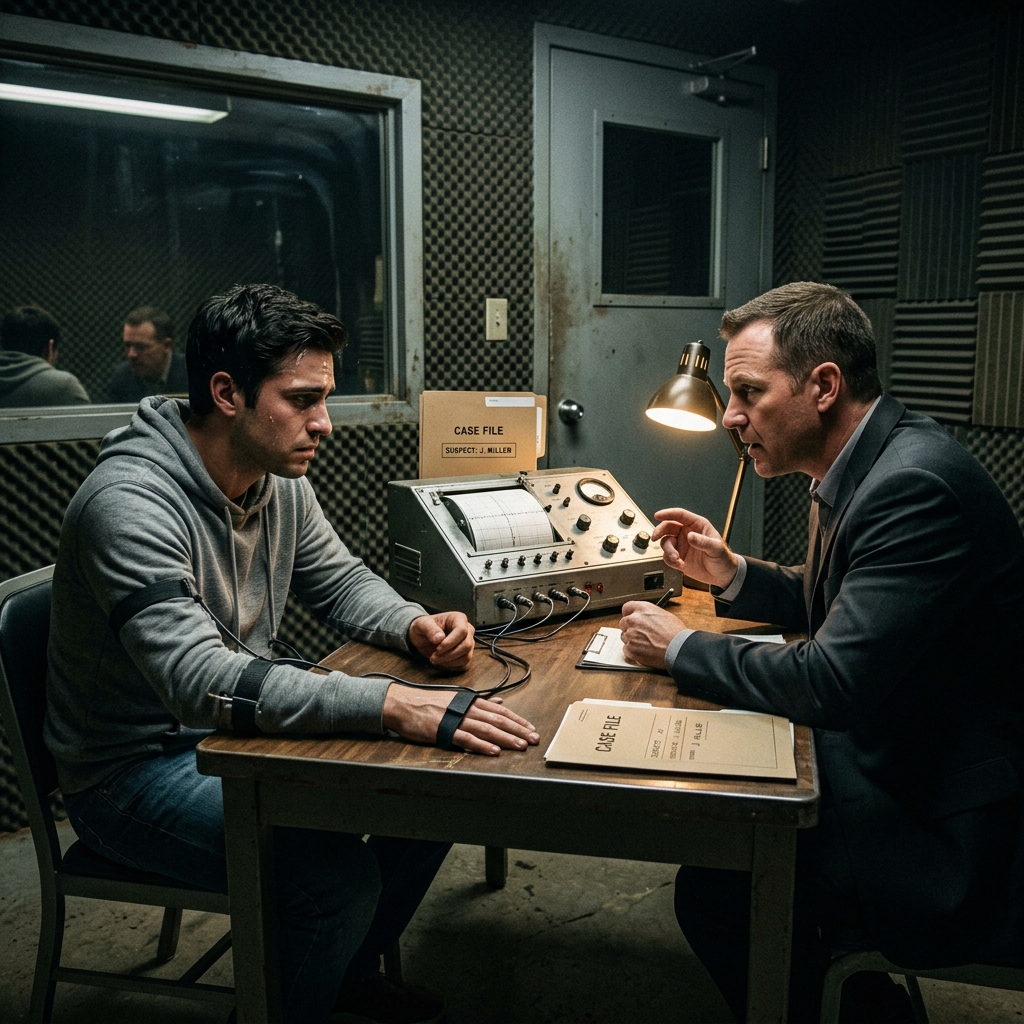
In the United States, police officers may legally use a surprising range of deceptive tactics to obtain statements from suspects, including bluffing about lie detector tests or even using fake testing setups during interrogations. At the same time, courts generally treat polygraph evidence with skepticism and often exclude lie detector results from criminal trials. This tension between courtroom rules and interrogation practices raises important questions about fairness, reliability, and the risk of false confessions.
This article explains how lie detectors are used in criminal investigations, why some officers resort to fake or misleading tests, what courts say about polygraph evidence, and how these tactics can impact both guilty and innocent suspects.
Understanding Lie Detectors: What Polygraphs Actually Measure
A modern lie detector, usually a polygraph, does not directly detect lies or truth. Instead, it records physiological responses that might be associated with stress or arousal when a person answers questions.
- Typical measurements: heart rate, blood pressure, breathing rate, and skin conductance.
- Underlying assumption: deceptive answers trigger stronger physiological responses than honest ones.
- Reality: anxiety, fear, confusion, and many other emotions can produce similar changes, whether or not someone is lying.
Because of this, most psychologists and many courts reject the idea that polygraphs can reliably determine who is lying in individual cases. Research has repeatedly shown significant error rates, including both false positives (truthful people labeled deceptive) and false negatives (deceptive people labeled truthful).
| Aspect | What Polygraphs Do | Limitations |
|---|---|---|
| Measurement | Record physiological signals like heart rate and breathing. | Signals can be elevated for many reasons unrelated to lying. |
| Interpretation | Compare responses to different types of questions to infer possible deception. | Requires subjective judgment; no universally accepted thresholds. |
| Accuracy | More accurate than random guessing in some tightly controlled scenarios. | Still produces substantial false positives and false negatives; real-world reliability is limited. |
| Legal status | Frequently used in investigations and screening for sensitive positions. | Often excluded as evidence at trial because of unreliability. |
Where and Why Police Use Polygraph Tests
Despite concerns about accuracy, polygraphs remain common in non-courtroom settings.
- Criminal investigations: police may invite or pressure suspects to take a polygraph during serious case investigations, particularly in violent crimes or high-profile incidents.
- Interrogation leverage: officers sometimes use the “pass” or “fail” messages from a polygraph—whether real or misleading—to encourage suspects to confess or change their story.
- Post-conviction monitoring: polygraphs are used in some jurisdictions to monitor sex offenders on probation or parole.
- Security clearance and hiring: certain federal positions and sensitive roles use polygraph screening to identify potential risks.
One key factor is not technical accuracy but psychological impact. Individuals who believe the machine can infallibly detect lies may become more anxious and more likely to disclose incriminating information, whether or not the results are scientifically reliable.
Fake Lie Detectors and Deceptive Interrogation Tactics
In some cases, police do not rely on a genuine polygraph device but instead set up a fake lie detector or misrepresent ordinary equipment as a sophisticated truth-verification tool. Officers may also lie outright about test results, claiming a suspect “failed” even when no reliable basis exists for that conclusion.
Common forms of deception can include:
- Mock equipment: wiring a suspect to a machine that does not actually measure anything relevant, or using prop devices to simulate testing.
- Invented feedback: announcing that the suspect’s bodily responses prove dishonesty, regardless of actual readings.
- False scientific claims: describing the device as nearly perfect or endorsed by courts, even though courts widely reject polygraph evidence as unreliable.
- Overstating consequences: warning that “failing” the test guarantees conviction or harsh sentencing, which is not how evidence rules operate.
While this may sound extreme, U.S. law largely permits police to mislead suspects about the existence, nature, and results of forensic tools during questioning, as long as the conduct does not cross certain constitutional boundaries.
Legal Rules on Polygraphs and Courtroom Evidence
Turning from the interrogation room to the courtroom, the legal status of lie detectors changes dramatically. The U.S. Supreme Court and many lower courts have emphasized that polygraph evidence is not reliable enough to be routinely admitted as proof of guilt or innocence.
Important legal points include:
- General inadmissibility: In many jurisdictions, polygraph results are either completely banned or admitted only under narrow circumstances.
- State-by-state variation: Some states allow polygraph evidence if both the prosecution and defense consent, or in specific limited proceedings, but trial judges often retain discretion to exclude it.
- Supreme Court stance: The Court has left admissibility largely to the states, while noting there is no consensus that polygraph evidence is reliable.
For example, less than half of U.S. states permit polygraph results to be considered in criminal trials at all, and even in those states, strict conditions usually apply. Courts recognize the danger that jurors might give undue weight to technological-looking evidence, even when the underlying science is contested.
Police Deception: What the Constitution Allows
U.S. courts draw a distinction between voluntary confessions and statements obtained through coercion or tactics that “shock the conscience.” Within that framework, the Supreme Court has generally allowed police to use certain forms of trickery—such as lying about evidence—to encourage suspects to talk.
Deception is more likely to be seen as legally permissible when:
- The suspect has received Miranda warnings and chooses to speak.
- The tactics do not involve physical abuse, prolonged deprivation, or threats of unlawful harm.
- The deception concerns the strength of the evidence (for example, falsely claiming there is DNA or a strong test result), rather than promising illegal benefits or misrepresenting fundamental rights.
However, even if a confession is deemed admissible, deceptive tactics can still be scrutinized, especially when a defendant later claims the confession was unreliable or involuntary.
False Confessions and the Risks of Deception
One of the most serious concerns in using fake lie detectors or misleading test results is the risk of false confessions. Research and case reviews show that deceptive interrogation practices have contributed to numerous wrongful convictions.
The National Registry of Exonerations has documented dozens of cases in which individuals confessed after police used deceptive methods, including misrepresentations about forensic evidence. When suspects believe the situation is hopeless—because a machine supposedly “proved” they lied—they may confess simply to end the interrogation or in the hope of leniency, even if they did not commit the crime.
Factors that make false confessions more likely include:
- Youth and inexperience: teenagers and young adults often have less understanding of their rights and more trust in authority.
- Cognitive or mental health vulnerabilities: individuals with intellectual disabilities or mental illness may be especially susceptible to pressure and confusion.
- Lengthy or aggressive interrogations: multi-hour questioning sessions, repeated accusations, and confrontational tactics can wear down resistance.
- Exaggerated claims about evidence: being told that a lie detector has definitively shown guilt, even when that is untrue.
Because polygraphs themselves are imperfect and faked devices offer no scientific value at all, combining these tools with heavy psychological pressure can create a dangerous environment where innocent people say what the interrogators want to hear rather than the actual truth.
Scientific Evidence on Polygraph Reliability
To understand why courts are cautious, it is useful to look more closely at the scientific literature on polygraph accuracy.
- Psychological consensus: Most psychologists and scientists studying lie detection agree that there is limited support for the validity of polygraphs as a general lie detection tool.
- Error rates: Some analyses have found that polygraphs can yield unreliable conclusions in a large share of cases—on the order of half or more. In screening contexts, relatively low base rates of actual wrongdoing mean that many “positive” results are likely to be false alarms.
- Placebo effect: Research suggests that belief in the polygraph’s power can itself shape responses, making it difficult to separate genuine detection from psychological fear.
- Countermeasures: Simple physical or mental techniques—like controlled breathing, muscle tension, or distracting mental tasks—can sometimes interfere with test readings.
Given these limitations, expert bodies have recommended that important decisions—such as employment termination or adverse security actions—should not rest solely on polygraph results. In criminal justice, this caution translates into strict rules about using polygraph evidence at trial, even while law enforcement may still employ the tests in investigative stages.
Rights and Practical Tips for Suspects Offered a Polygraph
Anyone confronted with a request to take a lie detector test should be aware of several practical considerations.
- Consult counsel first: Legal resources strongly advise speaking with a criminal defense attorney before agreeing to a polygraph, especially in serious investigations.
- Understand admissibility: In many places, test results will not automatically be used in court and may not be admissible at all.
- Consider psychological impact: Even if the test is questionable scientifically, believing that it is decisive can influence how you respond and how officers interpret your behavior.
- Know your right to remain silent: You cannot be forced to speak to police outside of specific legal circumstances, and you have the right to stop answering questions and request a lawyer.
Because polygraphs and fake lie detectors can be powerful psychological tools, informed decision-making is essential.
Policy Debates: Should Police Be Allowed to Lie About Tests?
Legal scholars, psychologists, and civil rights advocates continue to debate whether police deception—especially around scientific or quasi-scientific tools—should be more tightly regulated.
Arguments for stricter rules include:
- Reducing false confessions: Limiting deceptive tactics could help lower the number of innocent people who admit to crimes they did not commit.
- Promoting integrity: Policing practices that rely heavily on misrepresentation may erode public trust.
- Aligning law with science: If courts do not trust polygraph results, it may be inconsistent to allow police to portray them as near infallible in interrogations.
On the other side, some law enforcement professionals argue that controlled deception can be an important tool for uncovering the truth and securing confessions from guilty suspects. With no widely available alternative technology that clearly outperforms polygraphs, they maintain that investigative use—paired with judicial safeguards—remains justified.
A few jurisdictions have begun taking narrower steps, such as restricting police from misrepresenting specific forms of evidence. But as of now, in most U.S. states, deceptive statements about lie detector tests during interrogation remain generally permissible.
Frequently Asked Questions (FAQ)
Are lie detector results admissible in criminal trials?
In many jurisdictions, polygraph results are not admissible in criminal trials because courts consider them too unreliable. Some states permit their use only when both sides agree or for limited purposes, and judges may still decide to exclude the evidence.
Can police legally lie about a suspect failing a lie detector?
U.S. Supreme Court decisions have generally allowed police to use certain deceptive techniques during interrogations, including misrepresenting evidence such as test results, as long as the overall confession remains voluntary and does not involve coercion or extreme misconduct.
Do polygraphs really work at catching liars?
Polygraphs can sometimes distinguish between truthful and deceptive responses better than pure chance in specific controlled settings, but they have substantial error rates and are not reliable enough to serve as decisive proof of truthfulness or guilt.
Why do police still use polygraphs if courts are skeptical?
Police often use polygraphs as investigative tools and psychological leverage rather than as courtroom evidence. The belief that a machine can detect lies may lead suspects to confess or clarify their accounts, even when the test itself is scientifically questionable.
What should I do if investigators ask me to take a lie detector test?
Legal guidance consistently recommends talking to a criminal defense lawyer before agreeing to a polygraph. An attorney can explain local rules on admissibility, the potential benefits and risks, and whether taking the test aligns with your best interests.
References
- Five-Minute Biometrics Primers: Lie Detection I — Policing Project, New York University School of Law. 2020-09-02. https://www.policingproject.org/news-main/2020/9/2/x3c9kd0nkft1u5xnnjkvcbn6yld15c
- Do “lie detectors” work? — American Psychological Association. 2023-08-01 (updated). https://www.apa.org/topics/cognitive-neuroscience/polygraph
- Are Lie Detector Tests Admissible in Court? — LawInfo. 2023-05-15. https://www.lawinfo.com/resources/criminal-defense/are-lie-detector-tests-admissible-in-court.html
- Uses of Polygraph Tests — National Research Council, The Polygraph and Lie Detection (Chapter 7). 2003-01-01. https://www.nationalacademies.org/read/10420/chapter/9
- How Reliable are Polygraph Examinations in Criminal Investigations? — University of Virginia School of Law (SSRN preprint). 2024-02-10. https://papers.ssrn.com/sol3/papers.cfm?abstract_id=5202561
Similar Articles








Read full bio of Sneha Tete




