Martial arts weapons add dramatic flair to costumes and training routines, but they also sit at a tricky intersection of criminal law, public safety, and cultural fascination. One of the most iconic weapons is the nunchuck (also called nunchaku), popularized by movies, video games, and martial arts demonstrations. As Halloween approaches, people often ask: Are nunchucks legal, and can I carry them as part of a costume? The answer depends heavily on where you live, how you use them, and whether they are real weapons or harmless props.
Understanding Nunchucks: More Than a Movie Prop
Nunchucks consist of two short sticks connected by a rope, chain, or cord, designed to swing with significant speed and force. Historically, they have been used as training tools in karate and other martial arts to develop reflexes, coordination, and striking accuracy. Modern versions may be made from wood, metal, plastic, foam, or other materials, ranging from professional-grade weapons to soft practice or toy versions.
This versatility matters legally. A pair of rigid wooden sticks linked by a chain is much more likely to be treated as a dangerous weapon than foam costume props. However, even practice weapons can cause injuries if misused or swung carelessly around crowds.
How U.S. Law Treats Nunchucks
In the United States, there is no single federal statute that bans nunchucks nationwide. Instead, their legality is primarily governed by state and local laws that regulate weapons, dangerous instruments, and specific devices like knives, batons, and martial arts tools.
As of the mid-2020s, most states allow possession of nunchucks, at least for lawful purposes such as martial arts training or display. However, the path to this situation involved decades of bans and court challenges.
States That Once Banned Nunchucks
Several states previously imposed broad prohibitions on nunchucks, often due to concerns about youth violence, gang activity, or the perceived danger of easily concealed striking weapons.
- New York enforced a comprehensive ban from 1974 until 2018, classifying nunchucks (“chuka sticks”) as weapons primarily designed for causing injury. A federal court eventually ruled that the ban violated the Second Amendment, and nunchucks became legal to possess in homes and for lawful carry.
- Arizona, California, and Texas once prohibited nunchucks, but each state later lifted its ban: Texas in 2017, New York in 2018, Arizona in 2019, and California following repeal of its specific prohibition.
These changes reflect broader constitutional challenges arguing that lawful martial arts practitioners should not be criminalized for owning traditional training tools.
Where Nunchucks Remain Heavily Restricted
While bans have increasingly been dismantled, a few jurisdictions still maintain strict rules. For example, Massachusetts continues to treat nunchucks as dangerous weapons, prohibiting their personal use while allowing limited martial arts training exceptions. Violations can lead to criminal charges for unlawful weapon possession.
Some foreign jurisdictions also restrict nunchucks; for instance, parts of China and Hong Kong regulate or license possession, especially for rigid metal or wooden versions connected by chains. These examples underline that legal treatment varies significantly across regions.
| State | General Legality | Key Notes |
|---|---|---|
| Arizona | Legal | Ban repealed in 2019; now broadly lawful. |
| California | Legal | Previous prohibition (Penal Code 22010) repealed; possession now allowed. |
| New York | Legal | Long-standing ban overturned by federal court in 2018. |
| Texas | Legal | Ban lifted in 2017; lawful ownership permitted. |
| Massachusetts | Restricted | Personal use banned; limited training exceptions. |
Possession vs. Use: Two Separate Legal Questions
It is crucial to distinguish between simply possessing nunchucks and using them. Even in states where owning nunchucks is legal, using them in a threatening or harmful way can lead to serious criminal consequences.
Possession Laws
Possession laws focus on whether you may own, carry, or store nunchucks. Typical legal questions include:
- Is it legal to own nunchucks at home for display or training?
- Can you carry them in public, and if so, under what conditions?
- Are there places (schools, government buildings, public events) where weapons are always prohibited?
Even where nunchucks are lawful, broader statutes may ban weapons on school grounds, in certain public facilities, or at permitted events. Violating these weapon-free zones can lead to arrest or fines regardless of intent.
Use and Misuse
Using nunchucks adds another layer of legal risk. Swinging them at someone, intentionally or recklessly, can support charges such as:
- Assault – attacking or attempting to attack another person.
- Battery – causing physical injury through contact.
- Assault with a deadly weapon – using nunchucks in a way likely to cause serious harm.
Even if you acted without malicious intent, injuring someone with nunchucks can expose you to both criminal liability and civil lawsuits, particularly if the victim suffers serious injuries.
Halloween Complications: Costumes, Crowds, and Weapons
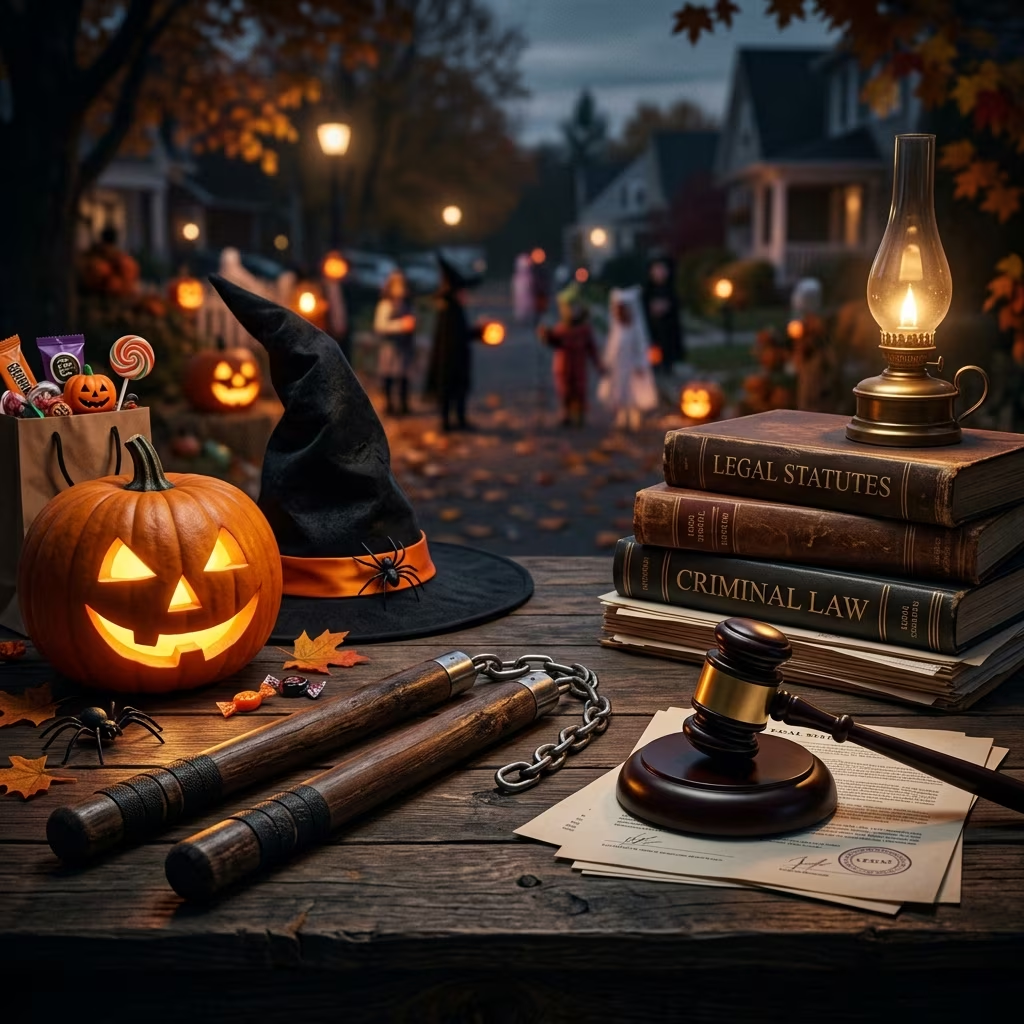
Halloween intensifies concerns about nunchucks because costumes frequently include martial arts themes, and people may be tempted to carry realistic weapons for authenticity. Law enforcement agencies often worry about weapons at large public gatherings, where visibility is limited and emotions run high.
Real Nunchucks vs. Props
For Halloween celebrations, the safest approach is to treat real nunchucks as training tools only and to use lightweight, non-functional props in public. Foam or clearly toy-like items are far less likely to be treated as weapons, especially if they cannot cause serious injury.
However, realistic-looking replicas can still cause problems, particularly if they are swung aggressively, brandished in a threatening manner, or carried into venues with strict weapons rules. Security personnel may not differentiate between real and fake at a glance.
Typical Halloween Risks Involving Nunchucks
- Accidental injury: Crowded streets and parties increase the chance of hitting someone while playfully swinging nunchucks.
- Misinterpretation by police: Officers responding to calls about weapons may treat any object resembling a nunchuck as a potential threat until proven otherwise.
- Violation of local ordinances: Cities often impose special rules on weapons during public events, parades, or festivals, which can encompass martial arts weapons.
- Alcohol and impaired judgment: Using nunchucks while intoxicated drastically raises the risk of unsafe behavior and legal consequences.
Good Practices for Staying Legal and Safe
Whether you are dressing up for Halloween or practicing martial arts year-round, a few practical guidelines can reduce legal risk and improve safety.
Know Your Local Laws
Laws change and can vary from city to city, so do not rely on assumptions or outdated information. Instead:
- Check current state statutes on weapons and prohibited devices.
- Review local ordinances, especially those related to public events or concealed weapons.
- Consult a licensed attorney or reputable legal resource for up-to-date guidance.
Use Nunchucks Responsibly
Responsible use is essential to avoid harm and liability:
- Train under the supervision of experienced martial arts instructors.
- Practice in designated training spaces, not in public crowds.
- Avoid using nunchucks while under the influence of drugs or alcohol.
- Secure nunchucks when not in use to prevent unauthorized handling.
Opt for Props at Public Events
For costume parties, haunted houses, and trick-or-treating:
- Choose foam, plastic, or clearly toy-like nunchuck replicas.
- Ensure they lack rigid materials and metal chains that could cause real injuries.
- Follow venue policies; some events ban all weapon-like items, including props.
Civil Liability: When Injuries Lead to Lawsuits
Even if criminal charges are not filed, someone injured by nunchucks can bring a civil lawsuit for damages such as medical costs, pain and suffering, and lost income. Courts consider whether the user acted reasonably and whether they took appropriate precautions.
Examples of conduct that may support civil liability include:
- Demonstrating nunchucks in a crowded area without safety buffers.
- Allowing untrained individuals to use them during events.
- Ignoring explicit warnings or venue rules against weapons.
Civil liability often hinges on negligence—failing to exercise reasonable care given the known risks of a striking weapon.
International Perspective: Nunchucks Beyond the U.S.
Outside the United States, regulations on nunchucks range from lenient to highly restrictive. In some countries, they are generally legal, while others treat them similarly to knives or batons and require licenses or impose outright bans.
For instance, certain jurisdictions allow rubber training nunchucks but prohibit metal or wooden versions with chains, reflecting concerns about serious injury in street confrontations. Travelers should research destination laws before packing martial arts equipment, as customs or border officers may confiscate prohibited weapons.
Frequently Asked Questions (FAQs)
Are nunchucks legal in most U.S. states?
Yes. Nunchucks are legal in most states, especially for lawful purposes such as martial arts training and home possession. However, some places impose restrictions, and Massachusetts still bans personal use with limited exceptions.
Can I carry nunchucks as part of my Halloween costume?
It depends on your location and the type of nunchucks. Using foam or clear toy props is usually safer, but carrying real wooden or metal nunchucks can violate local weapon rules or lead to misunderstandings with law enforcement, especially at crowded events.
Do replica or toy nunchucks count as weapons?
If a replica is rigid and capable of causing injury, authorities may treat it as a weapon. Soft foam or clearly toy-like items are less likely to be treated this way, but misuse can still lead to trouble, particularly if you threaten or injure someone.
What happens if I injure someone with nunchucks?
Injuring someone can result in criminal charges such as assault, battery, or assault with a deadly weapon, along with civil lawsuits seeking compensation. Serious injuries make these outcomes more likely.
How can I find out whether my state restricts nunchucks?
You should review your state’s weapon statutes and any relevant local ordinances. High-quality legal resources and law firm guides can provide overviews, but the safest approach is to consult the current law or speak with a licensed attorney.
References
- Nunchuks Legality by State 2026 — World Population Review. 2026-01-01. https://worldpopulationreview.com/state-rankings/nunchucks-legality-by-state
- Federal Court Overturns NYS Nunchuck Ban — The NHG Law Group. 2019-04-01. https://www.nhglaw.com/wp-content/uploads/2019/04/Nunchucks.pdf
- Are Nunchucks and Martial Arts Weapons Legal? — FindLaw. 2022-09-15. https://www.findlaw.com/injury/product-liability/nunchucks-and-the-law.html
- Nunchaku — Encyclopedic entry summarizing legal status. 2023-05-01. https://en.wikipedia.org/wiki/Nunchaku
- § 22010 PC – Are nunchucks legal in California? — Shouse Law Group. 2023-04-10. https://www.shouselaw.com/ca/defense/penal-code/22010/