
How to Obtain Permanent Guardianship of a Child
Learn how permanent guardianship works, who can seek it, and what courts consider before granting it.
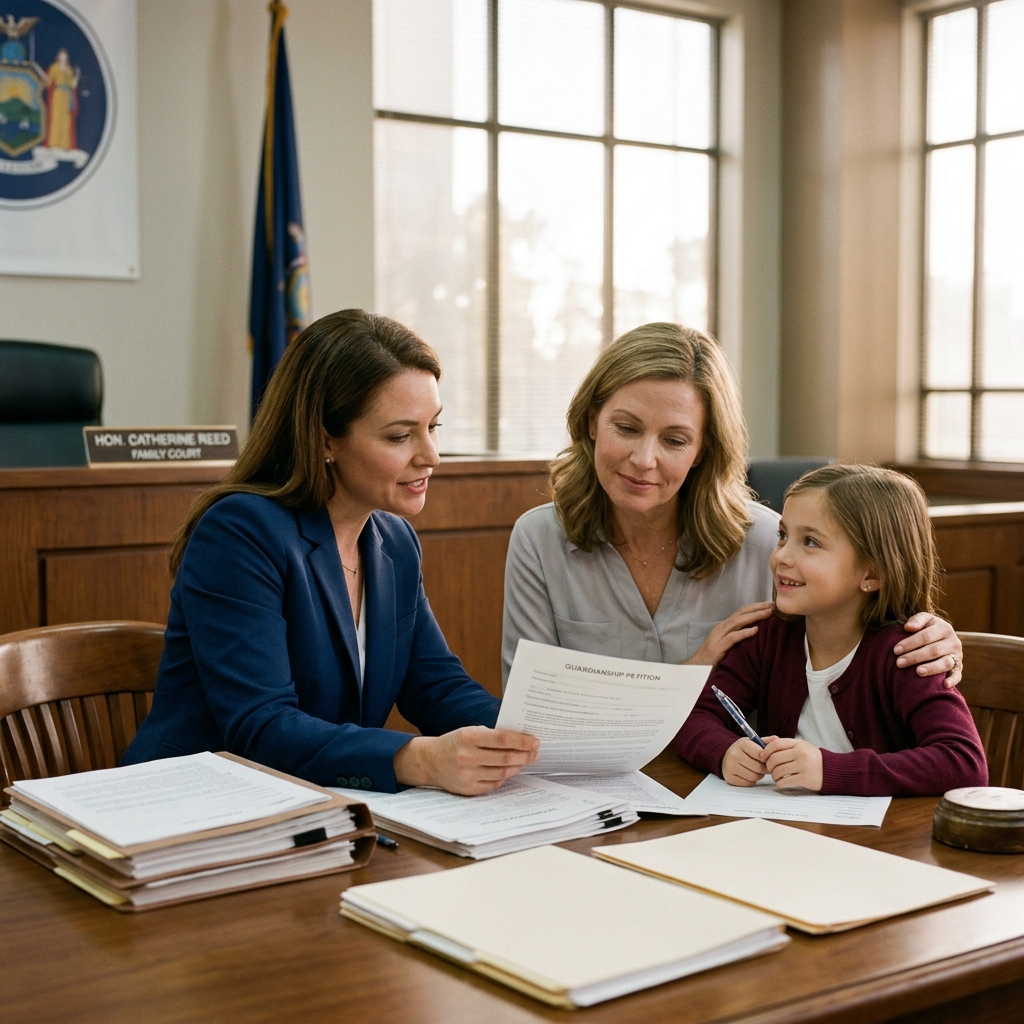
Understanding Permanent Guardianship
Permanent guardianship is a court-created legal relationship that allows an adult to care for a child when the child cannot safely remain with a parent and adoption is not the preferred or available permanency option. In this arrangement, the guardian takes on the day-to-day legal responsibility for the child’s care, while the court keeps supervisory authority over the case. State child welfare guidance describes permanent guardianship as a lasting permanency option that is meant to provide stability for the child when reunification and adoption are not realistic outcomes.
This type of arrangement is often used in kinship care, where a relative or another close adult steps in to provide a stable home. It is designed to give the child a permanent home environment without fully severing all family ties in the way adoption does. In many states, the guardianship lasts until the child reaches adulthood, unless the court later changes the order.
When Permanent Guardianship May Be Considered
Court systems generally reserve permanent guardianship for situations where a child needs long-term stability but another permanency route is not appropriate. For example, a court may consider this option when a parent is unable to provide adequate care because of unavailability, instability, or ongoing concerns that make safe parenting impossible. Some state agencies also recognize guardianship as a possible permanency plan when termination of parental rights is not legally possible or would not serve the child’s interests.
It is also commonly considered when a child already has a strong bond with a relative or trusted adult and has lived with that person for a meaningful period of time. Arizona’s child safety guidance, for instance, notes that guardianship may be appropriate when the child, parents, and other parties agree, and when reunification is not being pursued now or in the future.
How It Differs From Adoption and Temporary Care
Permanent guardianship is often confused with adoption, but the two are not the same. Adoption creates a new legal parent-child relationship and generally ends the legal relationship between the child and the birth parents. Permanent guardianship, by contrast, gives the guardian authority to raise the child while preserving some legal connection to the parents unless parental rights have already been terminated or otherwise limited.
It is also different from temporary guardianship. Temporary arrangements are usually short-term and may be used when a parent is unavailable for a limited period. Permanent guardianship is intended to last much longer, often until the child turns 18. That longer duration matters because the court is looking for a stable home, not a short bridge between living arrangements.
| Feature | Permanent Guardianship | Adoption |
|---|---|---|
| Legal relationship | Child lives under guardian’s authority | Guardian becomes legal parent |
| Parent rights | May remain limited or unchanged depending on case | Usually terminated |
| Goal | Stable long-term care | Complete family re-creation |
| Duration | Typically until age 18 | Lifetime |
Who Can Ask the Court for Guardianship
The person seeking guardianship is often a grandparent, aunt, uncle, adult sibling, or other trusted caregiver, though some states allow non-relatives to serve if they are suitable and the arrangement protects the child. Child welfare rules in Oklahoma, for example, refer to guardianship between a child and a relative or other adult when it is in the child’s best interests.
The specific filing rules vary by state and by case type. In some child welfare cases, the motion or petition may be filed by the child’s attorney, a district attorney, or another legally authorized party rather than by the proposed guardian alone. In private family-law cases, the prospective guardian usually files the petition directly and must prove to the court that the appointment is justified.
What the Court Usually Wants to See
Courts do not grant permanent guardianship simply because an adult is willing to help. Judges look for evidence that the arrangement is necessary, safe, and genuinely in the child’s best interests. Child welfare guidance from Oklahoma states that a court must find, by clear and convincing evidence, that the parent is unfit or unavailable, that termination of parental rights is not possible or not in the child’s best interests, that the child has lived with the guardian for at least six months or has a qualifying relationship with the guardian, and that guardianship serves the child’s best interests.
Other states use similar standards, even if the wording differs. Courts often consider the emotional bond between the child and the prospective guardian, the length of the child’s stay in the home, the caregiver’s ability to provide a stable environment, and whether the child’s medical, educational, and emotional needs can be met over time.
- The child’s safety and stability
- The caregiver’s relationship to the child
- The parent’s ability or inability to provide care
- Whether adoption is available or appropriate
- The child’s current living situation and adjustment
Filing the Case and Notifying Other People
Obtaining permanent guardianship usually begins with a petition or motion filed in the proper court. The filing must identify the child, the proposed guardian, and the facts supporting the request. Oklahoma’s requirements include basic identifying information, the guardian’s address, the relationship to the child, and a statement that the guardian understands the role is intended to be permanent until the child becomes an adult.
Notice is an important part of the process. The people entitled to notice may include the parents, the child’s legal representatives, and child welfare agencies involved in the matter. If the child is an Indian child, tribal notice may also be required. In some cases, notice is not required for a parent whose rights have already been terminated.
Because notice rules are technical and deadlines can matter, families often benefit from legal help before filing. A mistake in service or notice can delay the case or create later challenges to the order.
The Hearing Process
After the petition is filed and notice is served, the court schedules a hearing. At that hearing, the judge reviews the evidence and decides whether guardianship should be granted. The hearing may include testimony from the prospective guardian, the parents, social workers, case managers, or other witnesses with knowledge of the child’s situation.
Some systems also give the child an opportunity to be heard, especially if the child is old enough to express a reasoned preference. Arkansas legal guidance notes that children in guardianship matters have important procedural protections, including the right to counsel in certain proceedings and the right to challenge evidence. While rules differ by state, the general principle is that the court must make an individualized decision rather than rely on assumptions.
Rights and Duties of a Permanent Guardian
Once appointed, a permanent guardian usually has the authority to make everyday decisions about the child’s life. That may include enrolling the child in school, consenting to routine medical care, choosing the child’s residence, and arranging professional services when needed. The guardian is expected to act in the child’s best interests and to provide consistent supervision and support.
At the same time, guardianship is a serious legal duty. Depending on the state, the guardian may need to keep records, report to the court, and avoid decisions that conflict with the child’s welfare. In Texas, for example, guardianship is a court-monitored role, and guardians can be removed if they violate their obligations or misuse funds belonging to the ward.
- Provide safe housing and daily supervision
- Support education and health care
- Protect the child’s legal and physical well-being
- Follow court orders and reporting requirements
- Seek court approval when the law requires it
Can Permanent Guardianship End or Change?
Even though it is designed to be lasting, permanent guardianship is not always absolutely final. Most jurisdictions allow courts to revisit guardianship orders if circumstances change substantially. For example, if a parent later becomes fit and able to care for the child, or if the arrangement is no longer in the child’s best interests, the court may consider modification or termination. Arkansas legal information notes that guardianship can end when the child turns 18, when the guardian or ward dies, or when the court decides the arrangement is no longer necessary or beneficial.
That said, ending a permanent guardianship is not automatic. The party asking for a change usually must present evidence showing that the existing order should be modified. The judge will still focus on the child’s safety, continuity, and emotional stability rather than on the wishes of any one adult alone.
Practical Steps for Families Considering Guardianship
Families exploring this option should start by collecting records and organizing the facts that show why guardianship is needed. Helpful documents may include school records, medical information, proof of the child’s residence, case notes from child welfare agencies, and written statements showing the caregiver’s relationship with the child. Legal resources also recommend consulting an attorney, since the rules vary by state and the paperwork can be highly specific.
It is also important to think carefully about the long-term consequences. Guardianship may be a strong solution when a child needs stability and a trusted adult is ready to step in, but it may not be the right fit if adoption is possible and would provide a more complete legal resolution. The best option depends on the child’s history, the family structure, and what the court is likely to view as the most secure permanency plan.
Frequently Asked Questions
Does permanent guardianship give the guardian the same rights as a parent?
The guardian usually receives broad authority to make important decisions for the child, but the legal relationship is not always identical to parenthood. The court order defines the scope of those powers, and some parental rights may remain in place depending on the case and state law.
Can a relative become a permanent guardian?
Yes. Relatives are often the first people considered for permanent guardianship because courts favor placements that preserve family connections when they are safe and stable.
Is the child’s opinion considered?
Often yes, especially when the child is older or mature enough to express a meaningful preference. The weight given to the child’s wishes depends on state law and the circumstances of the case.
Do both parents have to agree?
Not always. Some cases move forward over a parent’s objection if the evidence supports guardianship and the legal standards are met. Other cases proceed more smoothly when everyone agrees, particularly in expedited or kinship situations.
Should I hire a lawyer?
Legal representation is strongly recommended. Guardianship law is procedural, state-specific, and sensitive to notice, evidence, and court deadlines. A lawyer can help prepare the petition, gather proof, and avoid errors that may affect the child’s future.
References
- Kinship Guardianship as a Permanency Option – Oklahoma — Child Welfare Information Gateway. 2024-06-01. https://www.childwelfare.gov/resources/kinship-guardianship-permanency-option-oklahoma/
- Permanent Guardianship: Understanding Its Legal Definition — US Legal Forms Legal Resources. 2024-01-01. https://legal-resources.uslegalforms.com/p/permanent-guardianship
- Permanent Guardianship — Arizona Department of Child Safety. 2025-01-01. https://extranet.azdcs.gov/DCSPolicy/Content/Program%20Policy/05_Child_Permanency/04_Guardianship/CH5_S24%20Permanent%20Guardianship.htm
- Children’s Law: Minor Guardianship — Arkansas Law Help. 2024-01-01. https://a.arlawhelp.org/juvenile-issues/guardianship
- Types of Guardianship for Minors — Keystone Law Group, P.C. 2024-01-01. https://keystone-law.com/types-of-guardianship
- Getting guardianship of a child (Guide) — Illinois Legal Aid Online. 2024-01-01. https://www.illinoislegalaid.org/legal-information/getting-guardianship-child-0
- Guardianship — Texas Law Help. 2024-01-01. https://texaslawhelp.org/article/guardianship
- Guardianship — Texas Health and Human Services. 2024-01-01. https://www.hhs.texas.gov/regulations/legal-information/guardianship
Similar Articles








Read full bio of medha deb


