
How to Draft an Effective Complaint and Demand Letter
Learn how to clearly present your dispute, state your demands, and support your position with facts and evidence before you consider going to court.
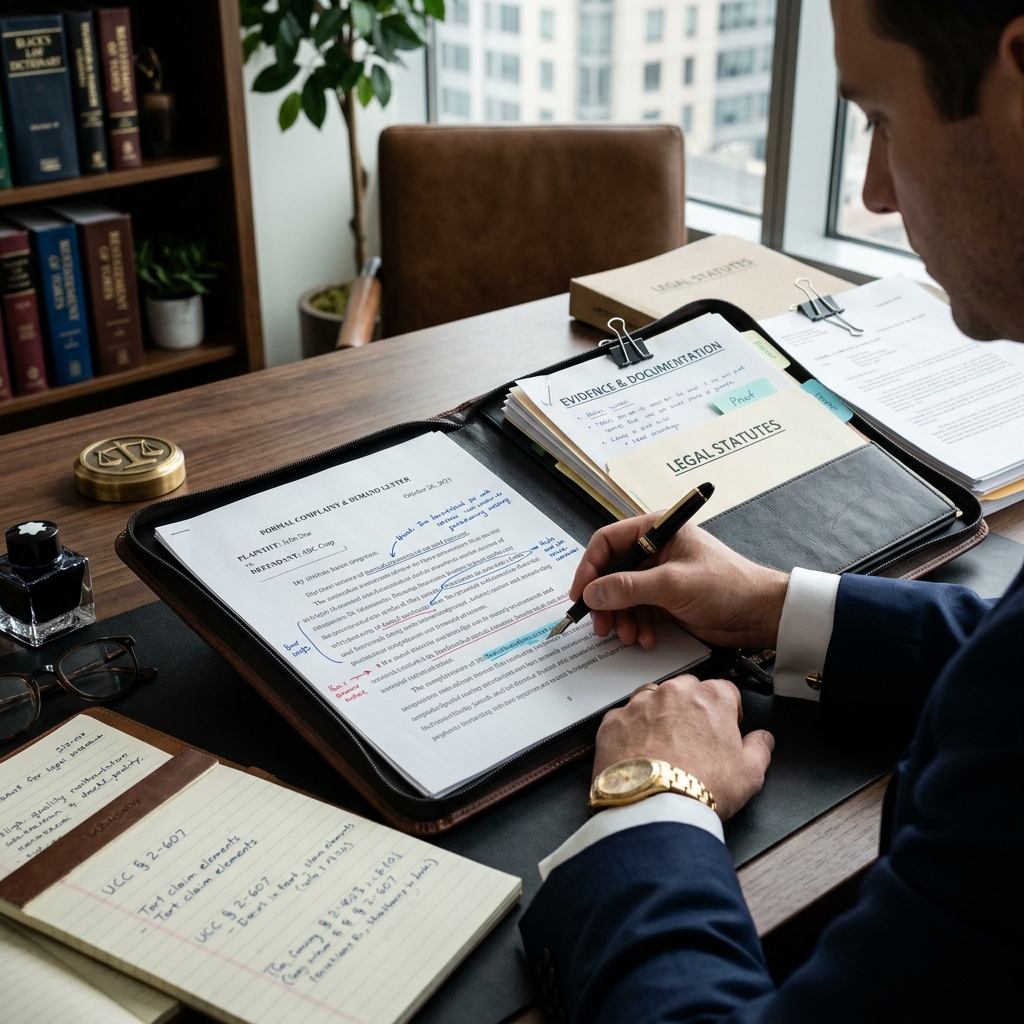
A well-crafted complaint or demand letter is often the first formal step in resolving a dispute. It tells the other party what went wrong, what you want, and what may happen if the matter is not resolved. Used correctly, this type of letter can lead to settlement, avoid court, and still protect your legal rights.
Understanding Complaint and Demand Letters
Although people use different names for these documents, the basic idea is the same: you are communicating a problem and formally requesting a specific remedy.
- Complaint letter: Usually sent to a business, organization, or professional to report unsatisfactory service, defective products, or other misconduct and to request corrective action.
- Demand letter: A more formal letter, often used when money is owed or a contract has been breached, which states the facts, the amount or action demanded, and warns that legal action may follow if the dispute is not resolved.
Both letters should be written in a calm, businesslike tone and focus on facts rather than emotions or accusations.
When and Why You Should Send a Demand Letter
In many civil disputes, the law does not require you to send a demand letter, but doing so is often strategically useful.
- It shows you tried to resolve the issue before filing a lawsuit.
- It clearly explains your position and gives the other side a final chance to fix the problem.
- It may create a written record that becomes important evidence if the matter goes to court.
- In some cases (such as certain consumer or statutory claims), a demand letter may be required before you can recover specific damages or attorney’s fees.
Ideally, you send a demand letter after informal attempts (phone calls, emails, in-person discussions) fail, but before you file a lawsuit.
Preparing Before You Write
Effective letters are built on careful preparation. Before you start drafting, gather and organize your information.
- Identify the legal relationship: Is there a contract, invoice, lease, or other agreement that defines each party’s responsibilities?
- Collect documents: Contracts, receipts, emails, text messages, photographs, bills, statements, and any prior written complaints or responses.
- Create a timeline: List key dates and events in chronological order so you can explain what happened clearly.
- Calculate your losses: Add up unpaid amounts, repair costs, medical expenses, and any other financial harm, with supporting figures.
- Review your goals: Decide what you realistically want—refund, repair, replacement, payment plan, or policy change.
Keeping a detailed record and a dedicated folder—physical or digital—for all dispute-related materials will help you stay organized and support your position if litigation becomes necessary.
Core Elements of a Strong Complaint or Demand Letter
While every situation is different, most effective letters contain the same essential components.
| Component | Main Purpose |
|---|---|
| Heading and party information | Identify who is writing, who is receiving the letter, and how to contact you. |
| Introduction and purpose | Explain briefly why you are writing and reference the underlying transaction or agreement. |
| Factual background | Describe the key events in order, using specific dates, amounts, and actions. |
| Evidence and references | Mention the documents, photos, or other proof that support your statements. |
| Statement of harm | Explain how you were financially or otherwise harmed and specify the total amount, if applicable. |
| Clear demand | State exactly what you want the recipient to do, including payment or other corrective steps. |
| Deadline to respond | Set a reasonable date by which the other party should comply or contact you. |
| Consequences | Indicate that you may pursue legal remedies if your demand is not met, without making illegal threats. |
| Professional closing | Sign the letter and provide your full contact details. |
Structuring Your Letter Step by Step
You do not need to follow a rigid format, but a logical structure makes the letter more persuasive and easier to understand.
1. Start with Clear Party and Contact Information
Begin with your name, address, phone number, and email. Then list the recipient’s name, title (if known), company or organization, and mailing address.
- Use a business-like layout; typed letters are preferred over handwritten ones.
- Double-check the recipient’s address using official records or recent correspondence.
2. Briefly State the Purpose of the Letter
In the opening paragraph, explain why you are writing, in one or two sentences.
- Reference the contract, account, order number, or incident date.
- Use neutral language: This letter concerns unpaid invoice #123 dated… or I am writing to address damage caused on…
3. Present the Facts in Chronological Order
Next, describe what happened. Focus on relevant facts rather than opinions or emotional statements.
- Include key dates, amounts, locations, and names.
- Avoid exaggerations and adjectives; stick to what can be shown or verified.
- Leave out side issues that do not directly relate to the dispute.
4. Refer to Evidence Supporting Your Position
Describe any documents or other evidence that back up your statements.
- Contracts, receipts, invoices, emails, text messages, or letters.
- Photos of property damage or defective items.
- Police reports, inspection reports, or medical records, where appropriate.
You can either attach copies of important documents or offer to provide them upon request. If you attach documents, it helps to highlight or note the specific sections you rely on.
5. Explain the Harm and How You Calculated It
To make a credible demand, you must show how you have been harmed and how you arrived at your figures.
- List each category of loss (unpaid wages, repair costs, replacement value, medical expenses, lost profits, etc.).
- Match each item to documents such as bills, estimates, or statements.
- For non-monetary harm, such as inconvenience or time spent, be realistic and avoid inflated claims.
6. Make a Specific, Concrete Demand
State exactly what you want the recipient to do.
- If seeking money, specify a total amount and, if helpful, provide an itemized breakdown.
- If asking for action, describe the steps needed: repairs, replacements, policy changes, or written confirmations.
- Use clear language such as I request reimbursement in the total amount of… or I ask that you complete the agreed work by…
7. Set a Reasonable Deadline and Method of Response
Give the other party enough time to respond while making it clear that your demand is urgent.
- Common deadlines range from 7 to 30 days, depending on the complexity of the issue.
- Specify how you prefer to be contacted (phone, email, postal mail).
- For payment demands, state acceptable payment methods and where to send payment.
8. Indicate Possible Legal Consequences
In a demand letter, it is standard to mention that you may pursue legal remedies if the matter is not resolved, but this should be stated calmly and lawfully.
- Avoid any threat of illegal behavior or personal harm; such threats can create legal problems for you.
- Use professional phrasing, such as If we cannot resolve this matter by [date], I may consider filing a claim in court.
- Do not promise legal actions you are unwilling or unable to take.
Tone, Style, and Professionalism
The tone of your letter can significantly influence how it is received. Courts and lawyers tend to take neutral, well-organized letters more seriously than emotional or hostile ones.
- Stay calm and respectful: Even if you feel wronged, use courteous language.
- Avoid insults and accusations: Name-calling or emotional outbursts reduce your credibility.
- Write in plain language: Short sentences and clear words are more persuasive than legal jargon.
- Proofread carefully: Check spelling, dates, and figures. A polished letter looks more professional.
Delivering and Tracking Your Letter
How you send the letter matters, especially if you might later need to prove that the recipient received it.
- Certified or registered mail: Using certified mail with return receipt or another tracking method provides proof of delivery.
- Courier or process server: For higher-stakes disputes, personal delivery with documentation can be helpful.
- Recordkeeping: Keep copies of the letter, the mailing receipt, and any delivery confirmations, as well as notes about phone calls and emails related to the dispute.
Common Mistakes to Avoid
Even strong claims can be weakened by avoidable errors. Watch out for the following issues:
- Too much emotion: Angry or sarcastic language can distract from your legal position.
- Vague demands: If you do not clearly state what you want, the recipient may ignore the letter or offer inadequate solutions.
- Missing evidence: Making factual claims without any documentation reduces the impact of your letter.
- Unrealistic deadlines: A deadline that is too short can make cooperation harder and seem unreasonable.
- Illegal threats: Threatening harm or harassment can expose you to legal liability and undercut your case.
When to Seek Legal Advice
While individuals often write their own complaint and demand letters, some disputes are complex enough that you may benefit from consulting an attorney.
- Large financial claims or serious personal injury.
- Disputes involving extensive contracts or unclear legal duties.
- Situations where statutory notice (formal written demand) is required before you can sue or recover certain damages.
A lawyer can help you analyze your rights, select the correct legal arguments, and draft a letter that meets any formal requirements under applicable law.
Frequently Asked Questions (FAQs)
Do I have to send a demand letter before suing?
In many cases you are not legally required to send a demand letter before filing a lawsuit, but doing so is generally encouraged because it may resolve the dispute and shows good faith efforts to settle. Certain statutes, however, may require written notice before specific remedies are available, so check local law or consult an attorney.
How long should I give the other party to respond?
The appropriate deadline depends on the nature of the dispute. For straightforward payment issues, giving at least one to two weeks is common; for more complex matters, 30 days is often considered reasonable. The key is to allow enough time for the recipient to receive, review, and respond to your letter.
Can I email a demand letter instead of mailing it?
Email is convenient and may be effective, especially in ongoing business relationships, but it may be harder to prove receipt than certified mail or tracked delivery services. For important or high-value disputes, many people use both email and some form of physical, trackable delivery.
Should I attach copies of evidence to my letter?
You do not always have to attach evidence, but referring to it and offering to provide copies can strengthen your position. When you do attach documents, include only the most relevant items and make it clear how they support your claim (for example, by highlighting specific contract clauses).
Is it ever helpful to include a draft complaint with a demand letter?
Some lawyers include an unfiled complaint along with a demand letter to show that they are prepared to proceed with litigation if negotiations fail. This approach should be used carefully and usually only after getting legal advice, since it signals a high level of seriousness and may affect the tone of negotiations.
References
- Demand for Payment Letter — LawDepot. 2023-06-15. https://www.lawdepot.com/us/financial/payment-demand-letter/
- How to Write a Demand Letter — TexasLawHelp. 2023-04-10. https://texaslawhelp.org/article/how-to-write-a-demand-letter
- Write a Demand Letter — WashingtonLawHelp. 2022-09-01. https://www.washingtonlawhelp.org/en/write-demand-letter
- Demand Letters – Tips on Making a Demand — Peoples Law Library of Maryland. 2021-11-05. https://www.peoples-law.org/demand-letters-tips-making-demand
- Demand Letter — Legal Information Institute, Cornell Law School. 2020-01-15. https://www.law.cornell.edu/wex/demand_letter
- How to Make an Effective Demand Letter — Jon Howell, YouTube. 2021-08-18. https://www.youtube.com/watch?v=xapk8fRPHMc
Similar Articles








Read full bio of medha deb


