California has some of the most detailed landlord-tenant laws in the United States. Residential evictions must follow strict procedures, and both landlords and tenants need to understand how notices, court filings, and legal protections work to avoid serious consequences. This guide explains the core rules governing residential evictions in California, the standard timeline, and common mistakes that lead to lawsuits or delays.
1. Overview: How Residential Evictions Work in California
Evicting a tenant in California is never as simple as changing the locks or asking someone to leave. Under state law, the only lawful way to remove a residential tenant is to complete the formal unlawful detainer process in court and obtain a judgment that is enforced by the sheriff or marshal. Any shortcut, such as shutting off utilities or locking the tenant out, is considered an illegal “self‑help” eviction.
In most cases, an eviction will follow this general sequence:
- Landlord gives a written notice to the tenant, with a clearly stated reason and deadline.
- If the tenant does not comply, the landlord files an unlawful detainer lawsuit in court.
- The tenant is formally served with the summons and complaint.
- The tenant has a limited number of business days to respond.
- The case is resolved by settlement, default judgment, or trial.
- If the landlord wins, the court issues a judgment and a writ of possession.
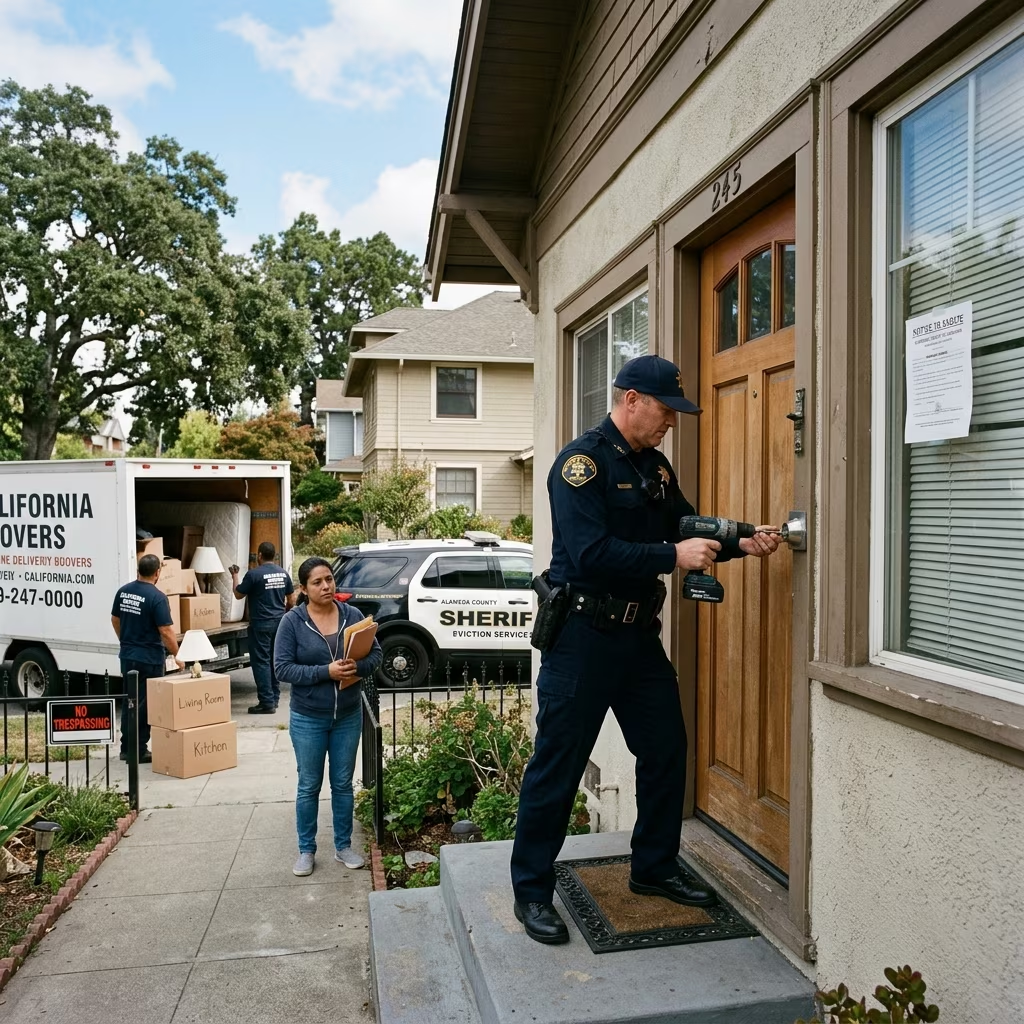
- The sheriff posts a notice to vacate and, if necessary, physically removes the tenant after the deadline.
Because the process is technical, landlords who skip steps or issue defective notices often see their cases dismissed, while tenants who ignore court papers risk losing their housing very quickly.
2. Legal Reasons for Eviction: Just Cause and Other Limits
California’s Tenant Protection Act (often referred to as AB 1482) requires just cause for many residential evictions. This means that, for covered properties and tenants, the landlord must have a legally recognized reason to end the tenancy.
2.1 “At Fault” vs. “No Fault” Grounds
The law distinguishes between two categories of eviction reasons:
- At fault reasons – based on alleged misconduct or violation by the tenant.
- No fault reasons – based on the owner’s legitimate need to recover or alter the unit, not on tenant wrongdoing.
Common “At Fault” Grounds
- Nonpayment of rent after proper demand.
- Material breach of a lease term (for example, unauthorized occupants or pets, or illegal use).
- Nuisance, substantial damage (waste), or maintaining unsafe conditions.
- Criminal activity on the premises or criminal acts directed at the landlord or agent.
- Refusal to allow lawful entry for inspections or repairs.
- Refusal to sign a substantially similar replacement lease when requested.
Common “No Fault” Grounds
- Owner or qualifying relative intends to move into the unit.
- Substantial rehabilitation, major remodeling, or demolition of the unit.
- Permanent withdrawal of the unit from the rental market.
- Compliance with a government or court order requiring the tenant to vacate, such as an order related to habitability or safety.
When just‑cause rules apply, landlords may only evict for reasons listed in the statute or relevant local ordinances. Misstating or fabricating a reason for eviction can result in liability and potential penalties.
2.2 Which Tenancies Are Covered by Just‑Cause Protections?
Just‑cause protection does not apply to every rental unit in California. It generally covers tenants who have occupied qualifying housing for at least 12 months, and applies to many older multi‑unit buildings, certain corporate‑owned single‑family homes, and other specified properties.
Key coverage features include:
- Tenants usually must have lived in the unit for at least 12 months for protection to apply.
- If new adult tenants move in earlier, the protection may not start until 24 months or until all adult tenants meet the occupancy period threshold.
- The law commonly applies to apartment buildings and duplexes built at least 15 years ago, and some single‑family properties owned by corporations.
There are important exceptions. Certain newer buildings, individually owned single‑family homes (with proper exemption notices), and specified forms of regulated affordable housing may not be covered by the statewide just‑cause statute. In addition, some cities and counties have local rent control or just‑cause rules that are stricter than state law. Landlords and tenants should always check for local ordinances.
3. Notice Requirements Before Filing an Eviction Case
Before a landlord can start an unlawful detainer lawsuit, they must first serve a written notice on the tenant that clearly states the basis for termination and the deadline to comply or vacate. A defective notice can invalidate the entire case.
3.1 Essential Elements of a Valid Notice
All eviction notices in California share some basic requirements.
- The notice must be in writing.
- It must identify the tenant, the rental address, and the landlord or landlord’s agent.
- It must state the reason for the notice (for example, nonpayment or termination of tenancy).
- It must specify the date by which the tenant must pay rent, cure the violation, or move out.
- It must be signed by the landlord or authorized agent and dated.
Notices delivered only by text, email, or similar methods do not satisfy California’s formal service requirements. The law requires personal delivery, specific mailing methods, or posting and mailing in prescribed situations.
3.2 Common Types of Notices
| Type of Notice | Typical Use | Standard Timeframe |
|---|---|---|
| 3‑Day Notice to Pay Rent or Quit | Tenant has not paid rent when due. | Three days to pay in full or move out (business days interpretation may vary). |
| 3‑Day Notice to Perform Covenant or Quit | Tenant violated a non‑monetary lease term that can be fixed. | Three days to remedy the violation or leave. |
| 3‑Day Notice to Quit | Serious or non‑curable breaches (e.g., major nuisance or illegal activity). | Three days to vacate, no opportunity to cure in some cases. |
| 30‑Day Notice of Termination | Ending month‑to‑month tenancy where tenant has occupied less than one year, if allowed by law. | At least 30 days before termination. |
| 60‑Day Notice of Termination | Ending certain tenancies where tenant has occupied for one year or more, if termination is permitted. | At least 60 days before termination. |
Other specialized notices may apply under local rent‑control rules, for evictions based on owner move‑in, or where government orders require tenants to vacate for safety reasons.
4. The Unlawful Detainer Court Process
If the tenant does not comply with the notice, the landlord’s next step is to start an unlawful detainer case in superior court. This is the formal eviction lawsuit.
4.1 Filing and Serving the Lawsuit
To initiate the case, the landlord files a complaint and related forms with the court, then arranges for the tenant to be served with the summons and complaint. Service generally must be personal, substituted personal service, or posting and mailing according to statutory rules.
The court papers must include:
- A clear statement of the landlord’s claims (for example, unpaid rent and supporting facts).
- The grounds for eviction (such as violation of lease terms or termination of tenancy).
- Any money damages sought (back rent, costs, and sometimes attorney’s fees).
4.2 Tenant’s Time to Respond
Once served, the tenant has a limited window of business days to file a written response (often called an answer) with the court. Recent changes in California law have expanded the response time in many cases from five to ten business days, giving tenants more opportunity to seek legal help and prepare their defenses.
In the answer, the tenant may:
- Deny allegations made in the complaint.
- Raise legal defenses, such as improper notice, retaliation, discrimination, or failure to follow just‑cause requirements.
- Introduce facts showing the landlord’s statements are incomplete or misleading.
If the tenant fails to respond on time, the landlord can request a default judgment, which allows the case to proceed without a trial and can lead to a lockout in roughly two weeks.
4.3 Settlement, Trial, and Judgment
Many eviction cases settle before trial. Parties may agree to payment plans, move‑out dates, or other arrangements that resolve the dispute. When settlement is not possible, the case goes to trial.
At trial, the judge hears evidence from both sides, decides whether the landlord has proven a valid reason and proper procedure, and then issues a decision. If the landlord wins, the court enters a judgment for possession and may award money damages. If the tenant prevails, the case is dismissed, and the tenant remains in the unit.
5. After the Court Decision: Writ of Possession and Lockout
Winning an eviction case does not immediately remove the tenant. The landlord must obtain a writ of possession, which authorizes the sheriff or marshal to oversee the physical eviction.
The sheriff then posts a written notice to vacate at the property. This notice is typically a document with clear red lettering, giving tenants a short period—often five days—to move out and specifying the exact date by which they must leave. If the tenant has not vacated by the deadline, the sheriff returns to remove occupants and restore possession to the landlord.
In some circumstances, tenants can ask the court for a brief delay of the lockout (known as a “stay” of execution), sometimes up to 40 days, though the landlord may be entitled to payment for that extended occupancy. This option is frequently used by tenants who need more time to secure alternative housing.
6. Protections Against Illegal Evictions and Retaliation
California law strongly restricts self‑help and retaliatory evictions. Landlords may not use coercive tactics such as changing locks, shutting off water or electricity, removing doors or windows, or taking tenant property to force someone out. These actions can expose landlords to lawsuits, damages, and potential criminal liability.
6.1 Unlawful Lockouts and Self‑Help Measures
If a landlord attempts a lockout instead of going through court, tenants may seek immediate relief, including emergency court orders and monetary damages. Landlords may also face enforcement actions from law enforcement or regulatory agencies.
6.2 Evictions Involving Domestic Violence or Similar Abuse
California provides special protections for tenants who are victims of domestic violence, sexual assault, stalking, human trafficking, elder abuse, or dependent adult abuse. Landlords generally cannot evict or refuse to renew a victim’s tenancy when the tenant has obtained a recent restraining order or police report related to the abuse and does not live with the perpetrator. Instead, the landlord may seek to evict the perpetrator, not the victim.
7. Practical Tips for Landlords and Tenants
Because residential evictions are technical and high‑stakes, careful planning and documentation are essential for both sides.
7.1 Tips for Landlords
- Confirm whether the property and tenancy are covered by just‑cause rules or local rent control before issuing any notice.
- Use written notices that clearly state the reason, date, and required action, and serve them in a legally valid manner.
- Keep detailed records of rent payments, notices, communications, and any tenant violations.
- Avoid self‑help actions; always pursue the formal unlawful detainer process.
- Consult an attorney or legal aid when dealing with complex issues such as owner move‑in, substantial rehabilitation, or protected tenants.
7.2 Tips for Tenants
- Read every notice carefully; note the stated reason and deadline.
- Seek legal assistance immediately after receiving a notice or court papers, especially since response deadlines are strict.
- File a written answer within the allowed business days to avoid default judgment.
- Gather evidence of payments, communications, repairs, and any retaliation or discrimination.
- Ask about negotiation or payment plans; many cases settle without a forced lockout.
8. Frequently Asked Questions (FAQs)
8.1 Can a landlord evict a tenant without going to court?
No. In California, the only lawful way to evict a residential tenant is to file an unlawful detainer case and obtain a court order enforced by the sheriff or marshal. Informal lockouts, utility shutoffs, and similar tactics are illegal.
8.2 How long does a typical eviction take?
Timeframes vary, but many uncontested evictions can take roughly 30 to 45 days from service of the court papers to lockout. Contested cases, appeals, or settlements can alter that schedule.
8.3 What happens if the tenant does not respond to the lawsuit?
If the tenant fails to file a timely response, the landlord can request a default judgment. After judgment, the court issues a writ of possession, and the sheriff typically performs a lockout about 12 to 14 days later.
8.4 Are all tenants protected by just‑cause rules?
No. Just‑cause protections apply to many, but not all, residential tenancies. Coverage depends on factors such as how long the tenant has lived in the unit, the type and age of the property, ownership structure, and any applicable exemptions. Local ordinances may add additional protections.
8.5 Can a victim of domestic violence be evicted because of the abuse?
Generally, no. When a tenant meets statutory conditions—such as having a recent restraining order or police report and not residing with the abuser—the landlord is prohibited from evicting the victim on the basis of the abuse and may instead evict the perpetrator.
References
- Know Your Rights: Eviction — California Rural Legal Assistance, Inc. 2023-05-01. https://crla.org/get-help/housing/evictions-and-lockouts/know-your-rights-eviction
- California Limits When a Landlord Can Evict Renters — Legal Services of Northern California. 2020-02-01. https://lsnc.net/self-help/housing/california-limits-when-landlord-can-evict-renters
- Eviction: Self-Help Guide for Tenants — Disability Rights California. 2023-03-01. https://www.disabilityrightsca.org/publications/disability-rights-california-self-help-guide-for-tenants-facing-eviction
- The Eviction Process for Landlords — California Courts Self-Help Guide. 2024-01-15. https://selfhelp.courts.ca.gov/eviction-landlord
- Evictions — UC Merced Law Clinic. 2022-08-10. https://lawclinic.ucmerced.edu/tips-and-information/evictions
- New California Eviction Law: Renters Get Longer to Respond — CalMatters. 2024-09-18. https://calmatters.org/housing/2024/09/california-eviction-law/
- The Eviction Process in California: Laws and Steps — Nolo. 2023-06-01. https://www.nolo.com/landlord-tenant/california-eviction-process.html