
Who Brings A Criminal Case: How Charges Start, What To Know Now
A clear guide to who files criminal charges and how a case begins.
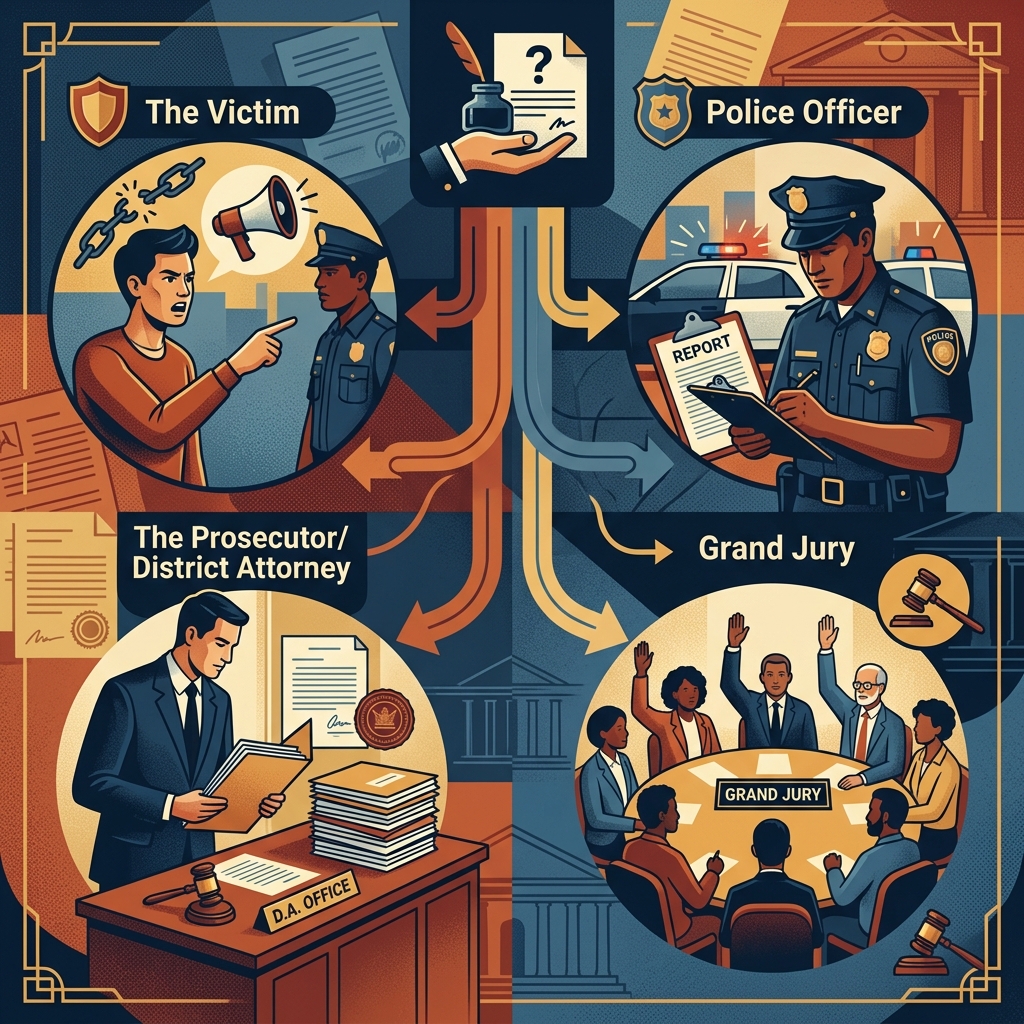
Criminal cases do not begin the same way as ordinary disputes between private people. In most situations, the state, county, or federal government is the party that decides whether to bring charges, and that decision usually depends on evidence gathered by law enforcement and reviewed by a prosecutor. The process is designed to protect the public while also giving the accused important constitutional safeguards.
Understanding who brings a criminal case helps explain why criminal law feels different from civil law. A private person may report a crime, but that person does not usually control the lawsuit. Instead, public officials decide whether the facts support formal charges, what those charges should be, and whether the case should proceed to court.
The government, not the victim, files criminal charges
The central rule in criminal law is simple: criminal cases are brought by the government. A person who believes a crime occurred may call the police, file a report, or provide testimony, but the authority to charge belongs to public prosecutors acting on behalf of the public.
This structure reflects the purpose of criminal law. Crimes are treated as offenses against society as a whole, not just against one individual. That is why the case name usually shows the government on one side and the accused person on the other. In a state case, the prosecution may be titled something like State v. Defendant; in federal court, it is usually United States v. Defendant.
- The victim may report the facts and cooperate with investigators.
- Police gather evidence and document the incident.
- A prosecutor decides whether the evidence supports formal charges.
- The government, not the private complainant, controls the case.
How a criminal case usually begins
A criminal matter often starts with an arrest report, an incident report, or another law enforcement referral. After police investigate, the file is sent to a prosecutor for review. The prosecutor then evaluates whether the facts support one or more crimes and whether the evidence is strong enough to move forward.
That review may lead to several outcomes. The prosecutor may decide to file charges, seek an indictment from a grand jury, issue a criminal complaint, or decline the case altogether. Which path is used depends on the jurisdiction, the seriousness of the allegation, and the type of offense involved.
| Step | Typical actor | Purpose |
|---|---|---|
| Report or arrest | Police or other law enforcement | Document the suspected crime and collect initial evidence |
| Case review | Prosecutor | Decide whether charges are justified |
| Formal charging | Prosecutor or grand jury | Begin the criminal case in court |
| Court proceedings | Judge, prosecutor, defense | Address guilt, rights, and possible punishment |
Common ways criminal charges are filed
There is more than one route to starting a criminal case. Some systems use an indictment, while others begin with a complaint or information. Minor offenses may even start with a citation. The form used often depends on the seriousness of the alleged conduct and the rules of the court system.
Indictment by a grand jury
An indictment is a formal accusation approved by a grand jury. In this process, prosecutors present evidence to a group of citizens, and the grand jury decides whether probable cause exists to believe the accused committed the offense. If the grand jury votes to proceed, an indictment is issued.
Indictments are commonly associated with more serious offenses, especially felonies, though the exact rules vary by jurisdiction. The grand jury does not determine guilt. Its role is much narrower: it decides whether there is enough evidence to require the defendant to face trial.
Information filed by the prosecutor
An information is a formal charging document filed directly by a prosecutor. It is also called a criminal information. This method allows the government to begin the case without first going to a grand jury, which can make the process faster in some situations.
When an information is used, the prosecutor still has to support the charge with facts and evidence. The document must identify the alleged offense and provide enough detail so that the accused understands what is being alleged.
Criminal complaint
A criminal complaint is another way a case can begin. It is a sworn written statement that sets out the essential facts of the offense. In some jurisdictions, a complaint may be filed by a prosecutor or submitted after a police officer or private person reports the conduct.
The complaint does not usually end the process. It often leads to a hearing, an arrest warrant, or a later charging decision. Still, it is an important starting point because it places the allegation before the court.
Citation for minor offenses
For lower-level offenses, such as some traffic-related or petty misdemeanor matters, police may issue a citation instead of making a full arrest. A citation tells the person to appear in court on a specific date and answer the charge.
This is generally reserved for less serious matters where the law allows a simplified process. Even though a citation may seem informal, it can still lead to real criminal consequences if the person fails to appear or is later convicted.
The role of police and investigators
Law enforcement officers are often the first public officials involved in a criminal matter. They respond to the scene, interview witnesses, collect physical evidence, and prepare reports for the prosecutor. In some cases, they make an arrest immediately; in others, they investigate for days or weeks before any charges are filed.
Police do not usually decide the final charge on their own. That decision is commonly left to prosecutors, who review the facts under the relevant legal standards. The prosecutor may ask for more evidence, seek additional interviews, or reject the case if the available proof is too weak.
- Taking statements from witnesses
- Preserving physical evidence
- Writing incident and arrest reports
- Referring the file to the prosecutor
What prosecutors do before filing charges
A prosecutor is the lawyer who represents the government in criminal court. Before charges are filed, prosecutors review the police file and decide whether the evidence supports prosecution. They also determine which offense level is appropriate and whether alternatives such as diversion, dismissal, or additional investigation make more sense.
This screening role is critical. A criminal case can affect liberty, employment, housing, and reputation, so prosecutors are expected to file only when the evidence and the law justify proceeding. In federal cases, the U.S. Attorney’s Office performs this function; in state and local cases, the relevant district, county, or state prosecutor handles it.
How criminal cases differ from civil lawsuits
People often confuse criminal and civil cases because both involve legal disputes and courtroom procedures. But they are very different in purpose, parties, and outcomes. Civil cases usually involve private disputes, while criminal cases involve the government enforcing the law.
| Feature | Criminal case | Civil case |
|---|---|---|
| Who files | The government | A private person or organization |
| Goal | Punishment and public safety | Compensation or enforcement of rights |
| Standard of proof | Beyond a reasonable doubt | Usually preponderance of the evidence |
| Possible result | Jail, prison, probation, fines | Money damages or court orders |
The higher burden of proof in criminal court reflects the seriousness of what is at stake. Because a conviction can lead to incarceration and other major consequences, the system places the burden on the government rather than the accused.
What the charging document must include
Whatever form the charge takes, it must give the accused fair notice of what the government claims happened. A charging document generally identifies the person accused, the offense, the time and place of the alleged incident, and the basic conduct being alleged.
This detail matters because the defendant has a right to understand the accusation well enough to prepare a defense. Without clear charging language, the defendant could not know what evidence to challenge or which facts are in dispute.
What happens after charges are filed
Once a criminal case is formally started, the court process begins. The defendant is usually brought to an initial hearing or arraignment, where the charges are read and the accused is informed of basic rights. In many cases, the defendant enters a plea of guilty, not guilty, or no contest, depending on the jurisdiction and the case posture.
After that, the parties may exchange evidence, file motions, negotiate a plea agreement, or prepare for trial. Many criminal cases end without a full trial because the prosecution and defense reach a resolution beforehand.
Why it matters who brings the case
Knowing who brings a criminal case helps explain the balance built into the justice system. The government has the power to accuse, investigate, and punish, but that power is limited by procedural rules and constitutional protections. A private complainant may help start the process, but the final charging decision usually belongs to the public prosecutor.
This separation is important because it reduces the risk of personal revenge, private pressure, or unsupported accusations turning directly into criminal punishment. By requiring official review, the law tries to make sure that only cases with a lawful basis go forward.
Frequently asked questions
Can a victim personally file criminal charges?
Usually, no. A victim can report the crime, provide evidence, and ask authorities to investigate, but the decision to file charges belongs to the government through a prosecutor or, in some cases, a grand jury.
Does a grand jury decide whether someone is guilty?
No. A grand jury decides whether enough evidence exists to accuse someone formally and require a trial. Guilt is decided later by a judge or jury after the case is fully heard.
Can the police bring a criminal case by themselves?
Police can investigate, arrest, and write reports, but they generally do not control the courtroom case. Prosecutors are the ones who decide whether to charge and how to proceed.
Are all criminal cases started the same way?
No. Some begin with an indictment, others with a prosecutor-filed information or complaint, and minor offenses may begin with a citation. The exact method depends on the offense and the jurisdiction.
Why does the government have to prove guilt?
The law assumes the accused is innocent unless the government proves the case beyond a reasonable doubt. That rule protects individuals from punishment based on suspicion alone.
References
- How Courts Work: Bringing Charge — American Bar Association. 2024. https://www.americanbar.org/groups/public_education/resources/law_related_education_network/how_courts_work/bringingcharge/
- Criminal Cases — United States Courts. 2024. https://www.uscourts.gov/about-federal-courts/types-cases/criminal-cases
- Criminal court overview — California Courts Self Help Guide. 2024. https://selfhelp.courts.ca.gov/criminal-court/overview
- The Differences between Criminal Court and Civil Court — LawHelp.org. 2024. https://www.lawhelp.org/resource/the-differences-between-criminal-court-and-ci
Similar Articles








Read full bio of Sneha Tete




