
Understanding Pitchess Motions in California
How California defendants can use Pitchess motions to access police personnel records and uncover evidence of misconduct.
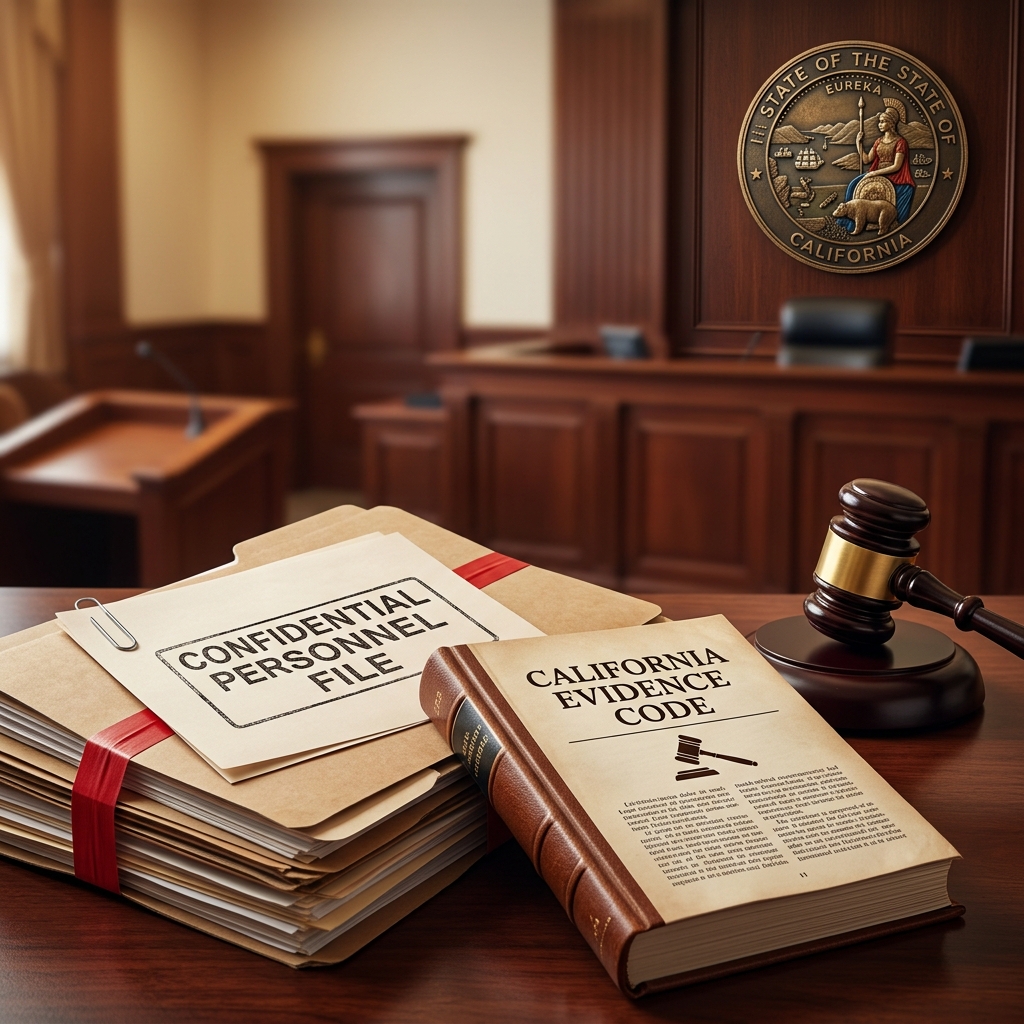
In California, a Pitchess motion is a powerful tool that allows a criminal defendant to request access to a law enforcement officer’s confidential personnel records in order to uncover evidence of police misconduct relevant to the case. These motions are governed primarily by California Evidence Code sections 1043–1047 and are often critical in cases where an officer’s credibility or use of force is central to the charges.
This guide explains what a Pitchess motion is, when it may be appropriate, how it is filed and litigated, and how the resulting information can be used in a criminal defense.
What Is a Pitchess Motion?
A Pitchess motion is a formal written request asking the court to permit inspection of a peace officer’s personnel file for evidence of prior misconduct that may be relevant to the defendant’s case. The motion seeks information such as complaints, internal investigations, or disciplinary actions that may show a pattern of behavior, including dishonesty or excessive force.
Because police personnel files are considered confidential under California law, they are not available through ordinary discovery. The Pitchess procedure provides a narrow, court-supervised mechanism for obtaining specific, relevant information while still protecting privacy interests.
Typical Goals of a Pitchess Motion
- Impeach officer credibility – uncover prior incidents suggesting dishonesty, false reporting, or other conduct that may undermine the officer’s testimony on the stand.
- Support a misconduct defense – find evidence that an officer has previously been accused of excessive force, coercive tactics, or civil rights violations that align with the defendant’s allegations.
- Identify patterns of behavior – demonstrate that the incident in the case is part of a broader pattern, rather than an isolated event.
- Locate witnesses – obtain names of complainants or witnesses from prior incidents who may provide valuable testimony in the current case.
Legal Framework: Evidence Code 1043–1047
Pitchess motions arise from a combination of case law and statutes. Today, they are primarily regulated by Evidence Code sections 1043–1047, which outline what a motion must contain, how it is served, and how courts review the requested records.
| Code Section | Key Focus |
|---|---|
| Evidence Code § 1043 | Sets out filing requirements, notice, and the need for an affidavit showing “good cause” for disclosure. |
| Evidence Code § 1045 | Describes what information may be disclosed and limitations on production, such as time limits and privacy protections. |
| Evidence Code §§ 1046–1047 | Address related procedural and evidentiary issues, including use of the information and protections for officers and complainants. |
These provisions balance a defendant’s right to obtain evidence necessary for a fair trial against the state’s interest in maintaining confidentiality of personnel files and protecting complainants and officers from undue exposure.
When a Pitchess Motion May Be Appropriate
Certain criminal cases are particularly well-suited for Pitchess motions. Defense counsel will often consider filing when the prosecution’s case depends heavily on a single officer’s account, or when the defendant alleges misconduct that mirrors prior complaints against the same officer.
Common Situations Where Pitchess Motions Are Used
- Disputed police reports – the defendant claims the officer lied or significantly mischaracterized events, and prior complaints about falsified reports may be crucial.
- Allegations of excessive force – the defense alleges unnecessary or brutal use of force, and prior excessive-force complaints could corroborate that claim.
- Coerced confessions or statements – the defendant asserts that threats, deception, or coercion were used; evidence of similar prior conduct may support suppression motions or jury arguments.
- Racial profiling or discrimination – alleged biased policing may be bolstered by earlier complaints of racial bias against the same officer or unit.
- Credibility contests – where the case boils down to “officer’s word versus defendant’s word,” impeachment material from personnel records can be decisive.
Not every case will justify a Pitchess motion. Courts require a factual basis for the request; generalized claims that “the police always lie” or that there is a broad conspiracy will not satisfy the good-cause standard.
Core Requirements for Filing a Pitchess Motion
A Pitchess motion must be filed in writing and must comply strictly with the statutory requirements. Failure to include any required element can result in denial of the motion, regardless of the underlying merits.
Essential Elements of the Written Motion
Under Evidence Code section 1043, a properly drafted Pitchess motion typically includes:
- Case and party identification – the criminal court case number, the name of the defendant, and the name(s) of the officer(s) whose records are sought.
- Agency identification – the law enforcement agency that has custody of the personnel files (for example, a city police department or a county sheriff’s department).
- Description of records sought – a reasonably specific description of the types of records requested, such as complaints involving dishonesty, excessive force, or racial bias within a defined time frame.
- Affidavit showing good cause – a detailed sworn statement (often by defense counsel) laying out the factual scenario of the case and explaining why the requested information is material to the defense.
- Proof of notice – documentation that the law enforcement agency has been served with the motion and given the required advance notice of the hearing.
The affidavit of good cause is usually considered the heart of the motion. It must connect the alleged misconduct in the case to the specific types of records requested and show how those records could reasonably assist in the defense.
The “Good Cause” Standard Explained
To satisfy the “good cause” requirement, the affidavit must do more than simply assert that misconduct occurred. Courts typically look for two main components:
- Specific factual scenario – a concrete description of what happened in the incident, including the officer’s actions, the defendant’s version of events, and any relevant context.
- Materiality to the defense – an explanation of how evidence of similar prior misconduct would help challenge the officer’s credibility, support a suppression motion, or otherwise aid the defense strategy.
For example, if the defendant claims that the officer fabricated a report to justify an arrest, the affidavit might describe the inconsistencies between physical evidence and the report, then request prior complaints of dishonesty or falsified reports involving that officer. The connection between the alleged conduct and the requested records is what courts look for when deciding whether good cause exists.
Vague accusations, speculative theories, or purely rhetorical attacks on law enforcement are generally not sufficient. The declaration must present a plausible scenario in which the alleged misconduct “could or might have occurred” and explain why prior similar complaints are relevant.
Timing and Service Requirements
Pitchess motions are typically filed before trial, often during pretrial proceedings or even before the preliminary hearing, to allow time to review any disclosed records and conduct follow-up investigation.
Notice to the Law Enforcement Agency
The law enforcement agency that maintains the officer’s personnel records must receive timely notice of the motion. Evidence Code section 1043 requires that the agency be served a certain number of court days before the hearing so that it has an opportunity to respond.
- The agency is typically served directly, not just its legal counsel, to ensure the custodian of records is aware of the request.
- The agency or its attorney may file an opposition or appear to argue that the requested information should not be disclosed.
- Proof of service is attached to the motion to show that all procedural requirements were met.
Exact notice periods can vary by statute and local rule, so defense counsel must verify current requirements before filing.
The Court’s In-Camera Review of Records
If the judge finds that the motion and affidavit establish good cause, the court will typically conduct an in-camera hearing to examine the officer’s personnel files. “In camera” means the review occurs privately, outside the presence of the parties and the public, in order to protect confidentiality.
What Happens During the In-Camera Hearing?
- The custodian of records brings the relevant files to court.
- The judge reviews complaints, investigation reports, and other materials that match the description in the motion.
- The court determines which items, if any, are relevant and discoverable in light of the case and statutory limits.
- Only the information deemed relevant is ordered disclosed to the defense, often in the form of summaries or copies of selected documents.
Certain categories of information may be excluded from disclosure, such as complaints that are too remote in time, irrelevant to the issues raised, or protected by other privacy rules. The result is a targeted production of material that the court believes is necessary for a fair trial while minimizing intrusion into the officer’s personnel history.
How Disclosed Information Can Be Used in Defense
Once the defense receives information through a Pitchess order, the material can be woven into various aspects of the case strategy. The specific uses will depend on what was disclosed and the theory of defense.
Potential Uses of Pitchess Discovery
- Impeachment at trial – prior sustained complaints of dishonesty or false reporting can be used to challenge the officer’s credibility before the jury, subject to the rules of evidence.
- Pretrial motions – evidence of misconduct may support motions to suppress statements, exclude evidence, or dismiss charges based on constitutional violations.
- Locating witnesses – complainants from prior incidents may be interviewed and, in some cases, called as witnesses to establish a pattern of conduct.
- Plea negotiations – strong impeachment material can alter the bargaining position between the defense and prosecution, potentially leading to more favorable resolutions.
- Sentencing arguments – in some circumstances, evidence of officer misconduct may be relevant to sentencing or post-conviction proceedings.
Defense counsel must remain mindful of protective orders and confidentiality rules governing how the information may be used and shared. Courts can limit disclosure to attorneys and prohibit dissemination beyond what is necessary for the case.
Interaction with Public Records Laws
In recent years, California has expanded public access to certain categories of police records through legislation such as Senate Bill 1421, which opened some serious use-of-force and dishonesty records to public inspection. Even so, Pitchess motions remain important when a defendant seeks information not covered by these disclosure laws or when access through public channels is incomplete.
In practice, defense counsel may combine public-records requests with Pitchess motions to build a fuller picture of an officer’s complaint history, using each mechanism for the types of records it best reaches.
Practical Tips for Defendants and Counsel
Because Pitchess motions are technical and highly dependent on case facts, they are typically prepared and argued by experienced criminal defense attorneys. Defendants considering such a motion should keep several practical points in mind:
- Act early – filing the motion as early as practicable gives time to obtain, review, and investigate the disclosed records before trial.
- Develop a clear theory of misconduct – the affidavit should present a coherent narrative explaining how the officer allegedly acted improperly and why similar prior complaints matter.
- Be specific, not speculative – targeted requests tied to concrete facts are more likely to meet the good cause standard than broad fishing expeditions.
- Respect confidentiality rules – misuse or improper dissemination of disclosed records can lead to sanctions or restrictions on further use.
- Consult counsel – navigating Evidence Code requirements, local rules, and evidentiary issues is complex; professional representation is strongly recommended.
Frequently Asked Questions About Pitchess Motions
Do I need a lawyer to file a Pitchess motion?
While the law does not absolutely require representation, Pitchess motions are procedurally demanding and must comply with detailed statutory requirements. Because mistakes in form or content can result in denial, most defendants rely on criminal defense attorneys to prepare, file, and argue the motion.
Can I request all of an officer’s personnel records?
No. Courts generally require narrow, targeted requests focused on categories of misconduct that are relevant to the specific case. Broad attempts to obtain all personnel records without limitation are unlikely to be granted and may be seen as fishing expeditions.
Will the officer know about my Pitchess motion?
Yes. The law enforcement agency holding the records must be served with the motion, and the officer’s interests are typically represented by that agency or its attorney. The officer’s personnel file is brought to the in-camera hearing for review, so the officer and agency are aware of the request.
What if the judge denies the motion?
If the court finds that the motion does not establish good cause or fails to satisfy statutory requirements, it may deny the request. In some circumstances, denials can be reviewed on appeal, but appellate courts give significant deference to trial judges’ determinations about good cause and relevance.
Does a successful Pitchess motion guarantee dismissal of my case?
No. Even when Pitchess discovery reveals damaging information about an officer, the effect on the case will depend on how that information interacts with other evidence and legal issues. It may strengthen impeachment, support suppression motions, or improve plea negotiations, but it does not automatically result in dismissal.
Are civil cases allowed to use Pitchess motions?
Yes. While Pitchess motions are most commonly associated with criminal cases, the procedure can also be used in some civil actions involving police conduct, such as civil rights lawsuits alleging excessive force or unlawful arrest, subject to similar statutory standards and protections.
References
- Pitchess Motion for Police Misconduct — Eisner Gorin LLP. 2021-05-10. https://www.egattorneys.com/blog/pitchess-motion-california/
- Filing a Pitchess Motion for Police Misconduct — LegalMatch. 2023-08-15. https://www.legalmatch.com/law-library/article/filing-a-pitchess-motion-for-police-misconduct.html
- “Pitchess Motion” – How to Get a Cop’s Personnel Record — Shouse Law Group. 2022-03-01. https://www.shouselaw.com/ca/civil-rights/police-misconduct/pitchess-motion/
- Los Angeles Pitchess Motions — Kraut Law Group. 2020-11-20. https://www.losangelescriminallawyer.pro/los-angeles-pitchess-motions.html
- Was There a Bad Cop on Your Case? What Is a Pitchess Motion? — Greg Hill & Associates. 2019-07-12. https://www.greghillassociates.com/was-there-a-bad-cop-on-your-case-what-is-a-pitchess-motion.html
- Pitchess in Play: Unlocking Police Files When the Law Won’t — Daily Journal. 2018-09-05. https://www.dailyjournal.com/article/387431-i-pitchess-i-in-play-unlocking-police-files-when-the-law-won-t
- Pitchess Motions in California — Eisner Gorin LLP. 2021-02-17. https://www.keglawyers.com/pitchess-motions
Similar Articles








Read full bio of medha deb




