
Understanding Credit Card Scanner Crimes
Learn how credit card scanner and skimming crimes occur, what laws apply, and how to protect yourself and your financial accounts.
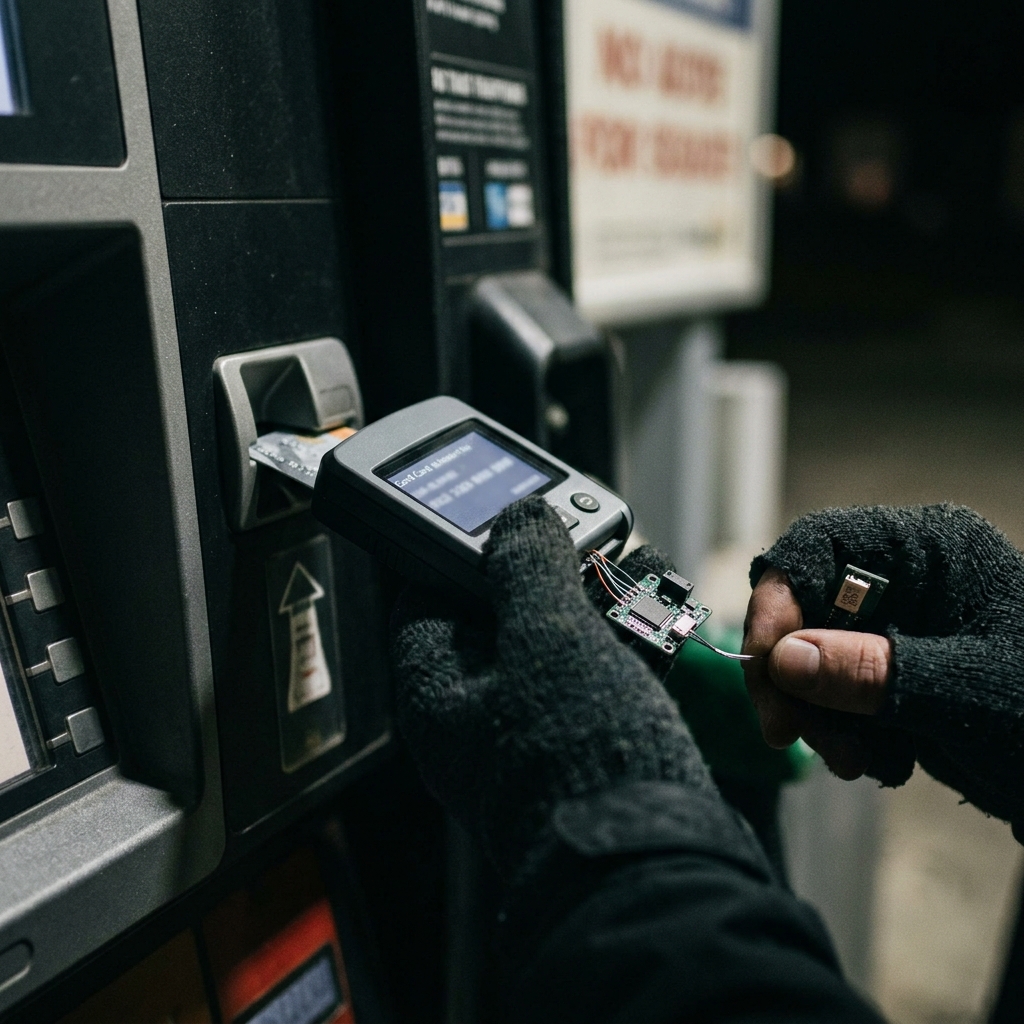
Credit card scanner crimes, commonly known as skimming, involve the unlawful capture of payment card data using hidden or tampered devices. These crimes can drain bank accounts, damage credit, and expose victims to broader identity theft, but there are clear legal protections and practical ways to reduce the risk.
What Are Credit Card Scanner Crimes?
Credit card scanner crimes are offenses in which criminals use electronic devices to read, copy, or intercept information from credit and debit cards without the cardholder’s consent. The stolen data is then used to make fraudulent purchases, create counterfeit cards, or sold on criminal marketplaces.
While the technology and techniques vary, the central feature of these crimes is the unauthorized access and use of card information obtained during what appears to be a normal transaction.
Key Terms You Should Know
- Skimmer: An illegal card reader attached to or integrated into a legitimate payment terminal to capture card data.
- Scanning device: Any handheld or fixed electronic tool used to read card information, including modified card readers and covert devices.
- Card cloning: The process of creating a duplicate or counterfeit card using stolen data.
- Card-not-present fraud: Fraudulent transactions made online or by phone using stolen card details, without the physical card.
How Skimming and Scanner Crimes Typically Work
Most skimming schemes follow a predictable pattern: place a hidden device, capture data, and exploit that data. Knowing the basic workflow helps you spot suspicious situations and respond quickly.
Common Locations and Devices
Skimmers and illicit scanners are usually deployed where people routinely use payment cards with minimal scrutiny.
- ATMs – Fake card slots or overlays that read the card’s magnetic stripe, often paired with hidden cameras to record PINs.
- Gas station pumps – External overlays or internal devices installed behind the panel, particularly on unattended outdoor pumps.
- Retail payment terminals – Modified checkout card readers or portable terminals used by dishonest employees.
- Non-bank ATMs – Machines in convenience stores or bars, which may have weaker security and less monitoring.
Step-by-Step Anatomy of a Skimming Operation
- Device installation: Criminals attach a skimmer to a card slot or keypad, or insert a device inside the payment terminal housing.
- Data capture: When customers swipe or insert their cards, the skimmer reads the magnetic stripe or other data and stores it locally.
- PIN harvesting: A small camera or fake keypad overlay captures PIN entries, enabling ATM withdrawals if a debit card is compromised.
- Data retrieval: Offenders return to the device to download stored information, or the device transmits data wirelessly.
- Fraudulent use: Stolen data is used to create cloned cards, make online purchases, or sold to other criminals.
Digital and Contactless Concerns
Modern cards use EMV chips and contactless technology, which significantly reduce some traditional skimming risks but introduce new myths and misunderstandings.
- RFID “tap” fears: There is little evidence that criminals routinely use proximity scanners on contactless credit cards in public; most real-world fraud still relies on compromised terminals or data breaches.
- Online compromise: Malware on personal computers or phones and compromised websites can steal card data entered during online transactions.
Legal Framework and Criminal Liability
Credit card scanner crimes violate a combination of federal and state laws. These laws target both the collection and misuse of card data, as well as related identity theft and computer crimes.
Federal Law Protections and Offenses
At the federal level, several statutes may apply when card data is stolen or used in interstate fraud schemes:
- Identity theft and fraud statutes – Unauthorized use of personal and financial information can trigger federal identity theft and access device fraud charges.
- Computer crime laws – Use of malicious software or hacking to obtain card data can fall under federal computer fraud statutes.
Victims also benefit from federal consumer protection laws, such as the Fair Credit Billing Act, which limits liability for unauthorized credit card charges to a small amount, often effectively reduced to zero by card issuers.
State Law Examples
States supplement federal rules with more targeted statutes addressing card skimming and related conduct. For example, Georgia specifically criminalizes certain activities involving payment card magnetic stripes and financial transaction card theft.
Typical state-level offenses include:
- Possession or use of devices designed to capture card data
- Financial transaction card theft or forgery
- Unauthorized use of a payment card or account number
- Identity theft based on card and account information
Penalties and Sentencing Factors
Penalties for scanner crimes vary by jurisdiction but commonly include:
- Criminal fines based on the amount of loss and number of victims
- Incarceration, which may range from local jail time to multi-year prison sentences for organized schemes
- Restitution orders requiring offenders to repay financial institutions or victims
- Probation and supervision, often with restrictions on computer and financial activities
Rights and Remedies for Victims
Victims of credit card scanner crimes have important legal and practical remedies designed to limit financial harm and restore security.
Immediate Steps If You Suspect Skimming
- Contact your bank or card issuer immediately to report suspicious transactions and request a new card.
- Dispute unauthorized charges using formal procedures offered by your card company or bank.
- Change passwords and review security settings on any accounts tied to the compromised card.
- Report to law enforcement if you discovered a device or have evidence of organized fraud.
Federal and Regulatory Reporting
You can often submit fraud complaints to federal agencies that track and respond to financial crime. In the United States, the Federal Trade Commission maintains a dedicated reporting system for scams and fraud, including payment card incidents.
Liability Limits and Reimbursement
For most credit cards, federal law and card issuer policies strictly limit your financial responsibility for fraud. Many issuers advertise $0 fraud liability, meaning you will not pay for unauthorized charges if you report them promptly.
Debit cards can involve different rules and timelines, but quick reporting still greatly improves the chance of reimbursement and minimizes losses.
Practical Strategies to Prevent Scanner Crimes
Although no measure is perfect, combining physical vigilance, digital hygiene, and smart use of financial tools significantly reduces your exposure to scanner-related fraud.
Checking Devices Before You Use Them
- Inspect the card slot: Tug gently on the card reader at ATMs and gas pumps; skimmers are often loosely attached with tape or simple adhesive.
- Look for mismatched equipment: Compare the terminal you’re using to nearby machines. If it looks different, crooked, or unusually bulky, choose another device or payment method.
- Examine the keypad: If the keypad seems raised, hard to press, or thicker than expected, it may be a fake overlay.
- Watch for hidden cameras: Check for small holes, unusual fixtures, or objects aimed toward the keypad where you enter your PIN.
Safer Ways to Use Your Cards
- Cover your PIN: Use your hand or body to block the keypad when entering your PIN, even if you do not see any obvious camera.
- Prefer chip or tap over swipe: EMV chips and secure contactless payments offer stronger protection than magnetic stripe transactions.
- Pay inside when possible: At gas stations, using the cashier’s indoor terminal may be safer than unattended pumps.
- Be cautious with non-bank ATMs: Machines outside bank branches may have less robust security and monitoring.
Digital Security Habits
- Keep devices secure: Maintain updated security software and operating systems to reduce the risk of malware stealing card data.
- Avoid saving card details: Do not store card numbers in browsers or online retail accounts if you can avoid it.
- Use strong, unique passwords: Ensure that your banking and shopping accounts have unique, complex passwords and enable multi-factor authentication where available.
Monitoring and Alerts
- Regularly review statements: Check both credit and debit accounts for unfamiliar transactions.
- Enable transaction alerts: Many banks and card issuers let you receive alerts for purchases above a certain amount or for online transactions.
Comparison of Card Types and Skimming Risk
| Card Type | Primary Technology | Typical Skimming Risk | Key Protection Features |
|---|---|---|---|
| Magnetic Stripe Credit/Debit Card | Magnetic stripe | High, especially at compromised ATMs and gas pumps | Liability limits for credit cards; fraud monitoring by issuers |
| EMV Chip Card | Embedded microchip | Lower than magnetic stripe when used as chip transactions | Dynamic transaction data, stronger authentication |
| Contactless “Tap” Card | Near-field communication (NFC) | Lower in practice; limited evidence of widespread proximity skimming | Encrypted communication, short reading distance, issuer safeguards |
When to Consult a Lawyer
While many skimming incidents are handled directly by banks and law enforcement, there are situations where speaking with a lawyer experienced in consumer or financial law is appropriate:
- Your bank or card issuer denies reimbursement for clearly unauthorized charges
- You suffer significant secondary losses, such as damage to your credit score or business reputation
- You are wrongly accused of participating in scanner crimes or related fraud
- Your case involves large-scale data breaches or class action issues
A lawyer can explain relevant laws in your state or country, help you document losses, and represent you in disputes with financial institutions or other parties.
Frequently Asked Questions (FAQs)
1. How can I tell if a payment terminal has a skimmer attached?
Look for signs of tampering: loose or bulky card slots, mismatched color or design compared to nearby terminals, unusual keypad overlays, or extra attachments that do not seem part of the original machine.
2. If my card information is skimmed, will I have to pay for the fraudulent charges?
In most cases, no. For credit cards, federal law limits your liability and many issuers offer $0 fraud liability, provided you report unauthorized transactions promptly.
3. Are contactless cards more vulnerable to scanner crimes?
Current evidence suggests that contactless cards are not widely exploited through proximity scanners in public. The main risks still involve compromised terminals, malware, or data breaches, rather than someone simply “tapping” your card data from a distance.
4. Should I avoid using ATMs or gas pumps altogether?
You do not need to stop using these machines, but you should use them with caution. Inspect devices before use, cover your PIN, and favor machines located at bank branches or well-monitored locations.
5. What should I do if I physically find a skimming device?
Do not attempt to confront any individuals who may be involved. If it is safe, notify the business immediately and contact local law enforcement so that they can safely remove and investigate the device.
6. Can skimming lead to broader identity theft?
Yes. Stolen card data can be combined with other personal information obtained through phishing, data breaches, or public records to build full identity profiles used for more extensive fraud.
References
- Credit Card Skimming — Georgia Attorney General’s Consumer Protection Division. 2023-01-10. https://consumer.georgia.gov/consumer-topics/credit-card-skimming
- Credit Card Skimming — Nationwide Mutual Insurance Company. 2022-06-15. https://www.nationwide.com/lc/resources/personal-finance/articles/skimming
- Credit Card Fraud: Cloning & Skimming — Equifax Inc. 2023-08-01. https://www.equifax.com/personal/education/credit-cards/articles/-/learn/credit-card-fraud/
- Credit Card Fraud — Wikimedia Foundation (background source, not cited directly). 2022-11-30. https://en.wikipedia.org/wiki/Credit_card_fraud
- Ten Tips to Prevent Card Skimming Fraud — 1st United Credit Union. 2022-04-22. https://www.1stunitedcu.org/more-for-you/financial-wellness/ten-tips-to-prevent-card-skimming-fraud
- Credit Card proximity scanner scam — Reddit r/CreditCards (expert community commentary). 2023-04-24. https://www.reddit.com/r/CreditCards/comments/12xcisl/credit_card_proximity_scanner_scam/
Similar Articles








Read full bio of medha deb




