
Safe Online Prescription Drug Purchasing Guide
Understand the legal, medical, and safety risks of buying prescription drugs online and learn how to choose a legitimate, accredited internet pharmacy.
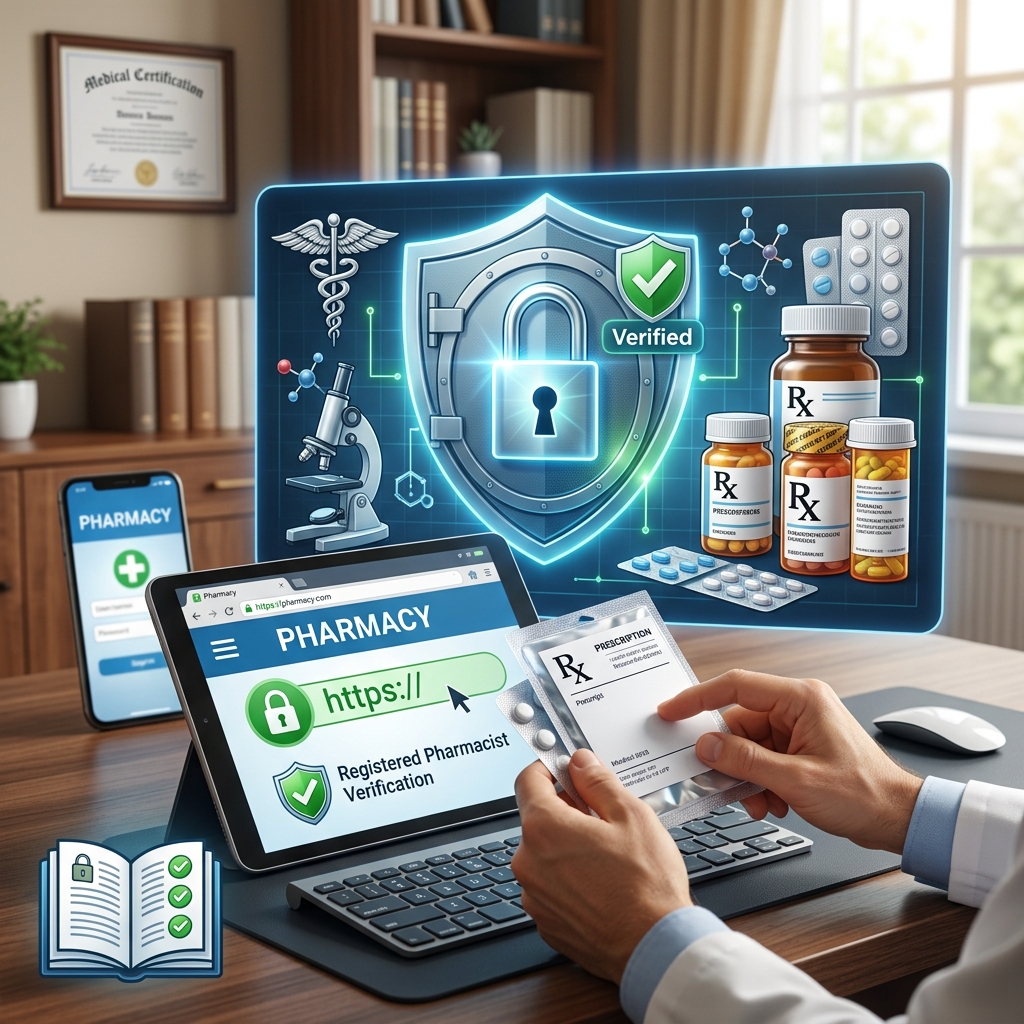
Ordering prescription drugs online can offer convenience, privacy, and potential cost savings. At the same time, unsafe or illegal online pharmacies may sell counterfeit, substandard, or inappropriate medications that can cause serious harm, including overdose or death. This guide explains how to recognize legitimate internet pharmacies, the legal and health risks of buying medicines online, and practical steps to protect yourself.
Why People Buy Prescription Drugs Online
Online pharmacies have grown rapidly as patients seek alternatives to traditional brick-and-mortar drugstores. Common reasons include:
- Convenience: Home delivery eliminates travel and waiting in line.
- Cost concerns: Some sites advertise lower prices or bulk discounts, which can be appealing to patients with high copays or no insurance.
- Privacy: People may feel more comfortable ordering medications related to mental health, sexual health, or stigma-associated conditions online.
- Access barriers: Patients in rural areas or those with limited mobility may rely on internet pharmacies for regular supplies.
While these benefits are real, they are only safe to pursue when using a legitimate, licensed pharmacy that follows all professional and regulatory standards.[10]
Major Risks of Buying Medicines Online
Many online pharmacies operate outside regulatory oversight and can expose patients to significant risks. Authoritative health agencies have repeatedly warned about the dangers of buying prescription medicines from unverified or illegal websites.
Counterfeit and Substandard Drugs
Counterfeit medicines are products that are deliberately and fraudulently mislabeled with respect to identity or source. They may contain the wrong dose, the wrong active ingredient, or no active ingredient at all. Substandard drugs might be produced in poor-quality facilities or stored improperly, leading to reduced effectiveness or contamination.
Research shows that purchasing counterfeit or substandard medications on the internet can have serious economic, social, and health consequences. Rogue vendors contribute to increased morbidity and mortality by distributing ineffective or dangerous drugs.
Overdose, Misuse, and Drug Interactions
Illegal online sellers often provide addictive or high-risk medications without appropriate medical supervision. Some offer dangerous and addictive drugs without a valid prescription, which contributes to misuse and overdose. In the United States, federal agencies have warned that individuals ordering counterfeit pills from illegal pharmacies may be at risk for life-threatening overdoses.
When medications are dispensed without a proper doctor-patient relationship, critical checks for interactions, allergies, and contraindications may be bypassed, increasing the likelihood of adverse events.
Data Privacy and Financial Fraud
Unsafe online pharmacies may fail to protect your personal and financial information. Regulatory guidance warns about websites that lack clear written privacy protections or sell customers’ data to other parties.
Fraudulent operators may also charge you for medicines you never ordered or received, or use insecure payment methods that expose you to identity theft.
Legal Consequences
In many jurisdictions, including the United States and Canada, it is illegal to obtain prescription drugs over the internet without a valid prescription from a licensed health care provider. Ordering restricted substances from foreign or unlicensed pharmacies may violate drug laws and import regulations, and in some cases can result in confiscation of products, fines, or other enforcement actions.
Key Features of a Legitimate Online Pharmacy
Regulators and professional organizations provide clear criteria to distinguish reputable internet pharmacies from unsafe sellers. The following characteristics are essential indicators that a pharmacy is operating legally and safely.[10]
| Feature | Legitimate Online Pharmacy | Unsafe / Rogue Website |
|---|---|---|
| Prescription Requirement | Always requires a valid prescription from a licensed prescriber. | Sells prescription medicines without any prescription or based only on a brief online questionnaire. |
| Licensing & Registration | Licensed with a state or national pharmacy regulator and displays license or registration information.[10] | No evidence of licensing; not listed in official pharmacy registers.[10] |
| Pharmacist Availability | Has a registered pharmacist available to answer questions by phone or secure messaging.[10] | No access to a pharmacist; customer service appears generic or anonymous. |
| Physical Address | Displays a verifiable street address and phone number in the country where it operates. | Provides no street address or uses only a post office box; contact details are incomplete or missing. |
| Product Quality | Sends medicines in intact packaging, with clear labeling, expiration dates, and approved identification numbers when applicable. | Ships products in damaged or foreign-language packaging, with missing or expired dates, or pills that look different from previous prescriptions. |
| Pricing & Marketing | Prices are reasonable and consistent with market averages; discounts are transparent. | Offers deep discounts that seem too good to be true, bonus pills, or miracle cures for serious conditions. |
| Privacy & Payment | Provides clear written protections for personal and financial data. | Lacks privacy policy, sells customer data, or relies only on cryptocurrency or informal payment channels. |
How to Verify an Online Pharmacy
Because illegal websites can appear professional, verification should rely on official tools and regulators rather than appearances alone. Several government and professional bodies provide resources for consumers.[10]
Regulatory and Accreditation Checks
- Check licensing with your national or state regulator: In the United States, you can use state board of pharmacy license databases and tools promoted by the Food and Drug Administration to confirm that a pharmacy is licensed. In the United Kingdom, the General Pharmaceutical Council maintains a register of pharmacies and pharmacists that can be searched online.[10]
- Look for recognized accreditation programs: In North America, accreditation programs administered by pharmacy boards or professional associations help identify internet pharmacies that meet high safety standards.
- Confirm linkage to a physical pharmacy: Canadian guidance stresses that legitimate online pharmacies should be connected to a brick-and-mortar pharmacy located in Canada and compliant with provincial or territorial regulations.
Steps You Can Take Before Ordering
Before placing an order, take these practical steps:
- Verify the website’s license using official pharmacy registers or tools recommended by health authorities.[10]
- Confirm that a valid prescription is required and that you will not be offered prescription-only medicines solely based on a questionnaire.
- Check that the site lists a street address, phone number, and a way to contact a pharmacist for counseling.[10]
- Review the privacy policy to see how your health and financial information will be stored, used, and protected.
- Search for professional logos or registration numbers and follow the links to verify them on official regulator pages.[10]
Warning Signs of Illegal or Unsafe Online Sellers
Regulators have identified recurring red flags that signal a rogue pharmacy. If you see any of the following, you should avoid the website and consider reporting it to authorities.
- Sells prescription drugs without requiring a valid prescription from a health care provider.
- Claims you can obtain medicines after answering only a short online questionnaire.
- Is not licensed in your country or listed with your state or national pharmacy regulator.
- Offers deep discounts, bonus pills, or miracle cures for serious illnesses.
- Does not provide a verifiable street address or telephone number.
- Ships medicines in damaged, unlabeled, foreign-language, or expired packaging.
- Lists prices in foreign currencies while claiming to be based in your jurisdiction.
- Uses nonstandard payment methods only, such as cryptocurrency or peer-to-peer transfers.
- Lacks a privacy policy or admits selling customer data to other websites.
Safety Checklist When Your Medication Arrives
Even after using a seemingly reputable pharmacy, you should verify the product once it arrives, especially if this is your first order from that site. Official consumer protection guidance suggests the following checks.
- Compare appearance: If you have previously taken the medicine, compare the tablets, capsules, and packaging with what you received from a trusted pharmacy.
- Inspect packaging: Make sure the packaging is intact, not broken or damaged, and includes clear labeling and patient information.
- Check expiration date: Confirm the expiration date is printed and has not passed.
- Confirm regulatory identifiers: In Canada, look for a drug identification number assigned by Health Canada. In other countries, approved products may have similar identifiers that confirm regulatory approval.
- Review language and instructions: The labeling should be in a language you can understand, with dosing instructions consistent with what your prescriber told you.
What to Do If You Suspect a Counterfeit or Unsafe Medicine
If you suspect that a medicine you received online is counterfeit, unsafe, or has caused adverse effects, you should take action immediately. Authorities provide clear recommendations.
- Do not take suspicious pills: If the product appears counterfeit or has unexpected appearance or packaging, do not consume it.
- Seek urgent care for emergencies: In the event of a suspected poisoning or overdose, call emergency services and seek medical attention right away.
- Consult poison control or similar services: National poison centers can advise on unknown substances or suspected toxic exposures.
- Report adverse events: In the United States, you can report side effects or product quality problems to regulatory programs such as MedWatch.
- Inform regulators about unsafe websites: Health agencies encourage consumers to report illegal online pharmacies offering dangerous medicines, so they can investigate and take enforcement action.
Special Considerations for Cross-Border Online Purchases
Buying drugs from foreign websites introduces additional legal and safety challenges. National regulators often warn against purchasing medications from sellers outside your jurisdiction because standards, approvals, and oversight may differ.
For example, Canadian authorities advise against doing business with websites that are not clearly based in Canada and linked to a physical pharmacy meeting provincial requirements. Similarly, U.S. guidance warns that medicines from unlicensed foreign pharmacies may be illegal or unsafe, and that you should not consume medications obtained from pharmacies that are not state-licensed.
Practical Tips for Safer Online Medicine Use
Patients who choose to use online pharmacies can significantly reduce risk by following a consistent safety strategy.
- Discuss any decision to buy medicines online with your doctor or other licensed health care provider, especially if you take multiple medications or have chronic conditions.
- Use official tools and regulatory registers to confirm pharmacy licensing and accreditation before every new purchase.[10]
- Always maintain a valid prescription and ensure that your prescriber knows where you obtain your medicines.
- Keep detailed records of what you ordered, including drug names, strengths, lot numbers (if provided), and the website used.
- Monitor for side effects and communicate anything unusual to your health care team promptly.
Frequently Asked Questions (FAQs)
Is it legal to buy prescription drugs online?
It can be legal to buy prescription medicines online if the pharmacy is properly licensed, located within your jurisdiction, and requires a valid prescription from a licensed health care provider. Buying prescription-only drugs from sites that do not require a prescription, or from unlicensed foreign pharmacies, is often illegal and unsafe.
How can I tell if an online pharmacy is licensed?
Check the pharmacy’s license using government or regulatory registers. In systems with board-of-pharmacy regulation, you can search the pharmacy’s name or web address to confirm registration.[10] Legitimate sites usually display license numbers and may show official logos that link directly to the regulator’s register.
Why is a prescription requirement so important?
A prescription requirement ensures that a qualified health professional has evaluated your medical history, current medications, and health status before authorizing the drug. Regulators emphasize that websites providing prescriptions without a proper examination or relying only on short questionnaires are unsafe and often illegal.
What should I do if my online order looks different from my usual medication?
If the pills or packaging look different from what you receive from your regular pharmacy, do not take the medicine until you have verified it. Check expiration dates, labeling, and packaging condition, and contact a pharmacist or your doctor for advice. If you suspect counterfeiting, report the product to the appropriate regulatory authority.
Are large discounts a sign of a good deal or a warning?
Regulatory guidance warns that deep discounts or prices that seem too good to be true, especially combined with offers of bonus pills or miracle cures, are common features of rogue pharmacies. Reasonable savings can exist at legitimate pharmacies, but extremely low prices should prompt caution and thorough verification.
References
- How to Buy Medicines Safely From an Online Pharmacy — U.S. Food and Drug Administration. 2022-11-08. https://www.fda.gov/consumers/consumer-updates/how-buy-medicines-safely-online-pharmacy
- Potential public health risk among individuals ordering counterfeit pills from illegal online pharmacies — Centers for Disease Control and Prevention. 2024-10-02. https://www.cdc.gov/media/releases/2024/s1002-counterfit-prescription-online-pharmacies.html
- Buying drugs online — Health Canada. 2020-05-26. https://www.canada.ca/en/health-canada/services/buying-drugs-over-internet.html
- Buying medicines safely online — General Pharmaceutical Council (UK). 2023-03-01. https://www.pharmacyregulation.org/patients-and-public/standards-you-can-expect-using-pharmacy-services/buying-medicines-safely-online
- Buying prescription drugs on the Internet: promises and pitfalls — Cleveland Clinic Journal of Medicine. 2006-03-01. https://www.ccjm.org/content/73/3/282
- Negative consequences of the widespread and inappropriate easy access to prescription and over-the-counter medicines via the internet: A review — Frontiers in Psychiatry. 2021-03-25. https://www.ncbi.nlm.nih.gov/pmc/articles/PMC8025924/
- Buying prescription drugs online: Is it safe? — New Jersey Division of Consumer Affairs. 2019-01-01. https://www.njconsumeraffairs.gov/News/Consumer%20Briefs/buying-prescription-drugs-online.pdf
Similar Articles








Read full bio of Sneha Tete


