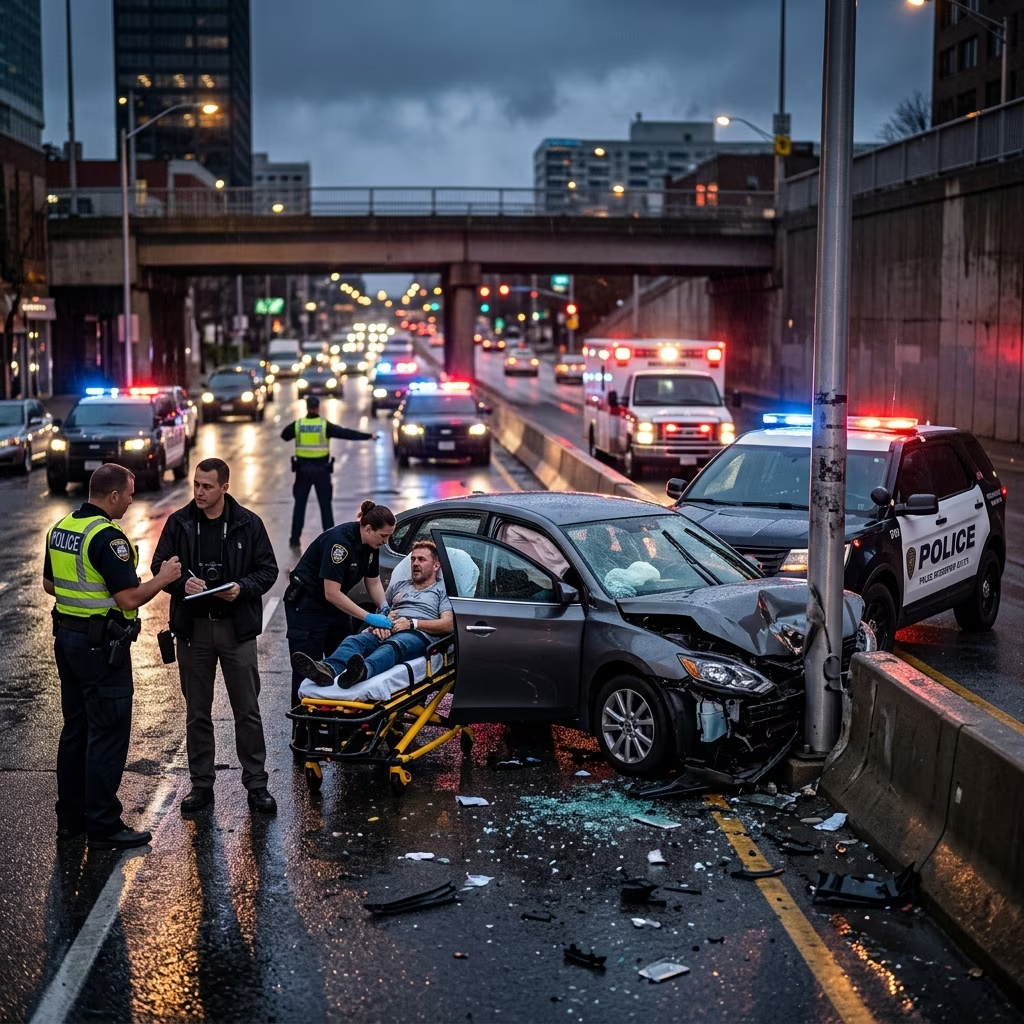
High-speed police pursuits can unfold in seconds but leave lasting physical, emotional, and financial damage. When a chase leads to a crash, victims often face a critical question: who is legally responsible for the injuries and losses? This guide explains how liability is evaluated in police pursuit cases, the role of suspects and law enforcement, and what injured people can do to seek compensation.
Why Police Pursuits Create Complex Injury Claims
Police chases are not ordinary traffic accidents. They involve at least three key actors:
- The fleeing suspect, whose conduct often triggers the pursuit.
- The police officers, who decide whether to initiate, continue, or terminate the chase.
- The government entity (city, county, state) that employs the officers and sets pursuit policies.
Because all three may contribute to the risk of harm, determining liability is rarely straightforward. Courts and legislatures have developed rules balancing public safety with the need to apprehend dangerous offenders, and these rules can vary significantly by jurisdiction.
Key Legal Concepts in Police Chase Liability
Several legal concepts shape who can be held liable when a police chase causes injury:
- Negligence – Failure to use reasonable care under the circumstances, such as engaging in a pursuit where the danger to the public clearly outweighs the need to arrest.
- Gross negligence – A much more serious level of misconduct, often defined as a reckless or willful disregard for the safety of others.
- Sovereign immunity – Legal rules that limit when government entities and employees can be sued, and may cap how much victims can recover.
- Proximate cause – The legal link between someone’s conduct and the harm suffered by the victim. Courts ask whether the conduct was a substantial factor in bringing about the injury.
Understanding these concepts is essential for analyzing who may be responsible in any particular case.
Who May Be Liable After a Police Pursuit Crash?
| Potentially Liable Party | Typical Basis for Liability | Common Obstacles |
|---|---|---|
| Fleeing suspect | Reckless driving, speeding, traffic violations leading to collision | Lack of insurance or assets, criminal proceedings |
| Individual officer | Negligent or grossly negligent pursuit decisions or vehicle operation | Qualified or sovereign immunity, high proof standards |
| Police department / municipality | Defective pursuit policy, poor training, vicarious liability | Statutory immunity, damages caps, procedural hurdles |
| Other drivers | Independent negligence (e.g., distracted driving at time of crash) | Establishing separate causation |
Liability of the Fleeing Suspect
In most cases, the suspect who attempts to escape is the primary source of danger. They may speed, run red lights, drive erratically, or fail to yield, all of which can cause collisions with other vehicles, pedestrians, or property.
When a suspect’s reckless driving causes a crash:
- The suspect can typically be held liable for all resulting injuries, including those suffered by bystanders, police officers, and passengers in their own vehicle.
- Victims may file civil claims for damages such as medical costs, lost wages, pain and suffering, and property damage.
- Parallel criminal charges (e.g., evading arrest, vehicular assault) do not automatically compensate victims; separate civil action is usually required.
Practical challenges often arise. Suspects may have little or no insurance, minimum policy limits, or limited assets, making full recovery difficult even when liability is clear.
Liability and Immunity of Police Officers
Police officers owe a duty to protect public safety, but they also must enforce the law. Vehicle pursuits force officers to weigh these objectives in rapidly evolving situations. Many jurisdictions grant officers some immunity when they are responding to emergencies or pursuing suspects, recognizing the inherent risks involved.
Common approaches include:
- General immunity for ordinary negligence during emergency driving or pursuits, shielding officers from most civil suits.
- Liability in cases of gross negligence, where an officer’s conduct reflects reckless disregard for others’ safety.
- Special statutory schemes that define when an officer or their employer may owe compensation to innocent third parties, sometimes regardless of fault.
For example, some states provide that officers are not personally liable for injuries arising out of pursuits unless the officer acted with gross negligence, while the employing municipality may have obligations to compensate innocent victims under specified conditions.
Government and Municipal Liability
Police departments and municipalities often face scrutiny when a pursuit leads to serious injuries or deaths. Liability can arise through several paths:
- Vicarious liability for an officer’s negligent actions taken within the scope of employment.
- Direct liability for inadequate training, supervision, or pursuit policies that fail to properly protect the public.
- Statutory obligations to compensate innocent bystanders harmed by pursuits, even when formal immunity exists.
However, governments often benefit from sovereign immunity laws that restrict suits or cap damages. As one example, Florida law generally protects government entities and employees but permits limited claims within specified financial caps for certain types of negligence. Other states, such as Texas, have their own tort claims acts that outline when immunity is waived and when it remains in place.
Some courts have progressively allowed more claims against municipalities, especially where evidence suggests that an officer’s decision to initiate or continue a pursuit was unreasonable or that agency policies did not adequately consider public safety.
Federal Civil Rights Claims in Police Pursuit Cases
In rare situations, victims may pursue a claim under 42 U.S.C. § 1983, arguing that an officer’s conduct during a pursuit violated constitutional rights. To succeed, plaintiffs generally must show more than simple negligence; they need evidence of conduct that is so egregious it can be said to shock the conscience, such as a deliberate intent to cause harm unrelated to legitimate law enforcement objectives.
The U.S. Supreme Court has emphasized that high-speed chases undertaken in good-faith efforts to apprehend suspects, without intent to harm, usually do not create liability under the Due Process Clause, even when tragic outcomes occur. These standards make federal civil rights claims difficult, but they may be viable in extreme cases.
Innocent Bystanders and Occupants: Special Considerations
People completely uninvolved in the underlying crime—such as other motorists, pedestrians, or residents whose property is damaged—are often the least prepared for the risks of a police pursuit. Some jurisdictions have created special rules or compensation schemes for these innocent third parties.
Key considerations for bystanders include:
- Whether statutory schemes provide automatic or capped compensation when they are injured during pursuits.
- Whether the law treats them differently from suspects or passengers in the fleeing vehicle.
- How courts evaluate the officer’s decision-making about initiating, continuing, or terminating the chase when bystanders are harmed.
Some laws expressly focus on innocent third parties, recognizing that they bear risks over which they have essentially no control.
Pursuit Policies and Risk-Benefit Balancing
Modern law enforcement agencies increasingly rely on detailed pursuit policies to guide officers in real time. These policies often require officers to balance:
- The severity of the suspected offense (e.g., violent felony vs. minor traffic violation).
- Traffic conditions, road design, time of day, and the presence of pedestrians.
- Weather and visibility.
- Availability of alternatives, such as aircraft support, GPS tracking, or later apprehension.
Professional training emphasizes that certain circumstances call for terminating a pursuit when the danger to the public becomes unreasonable, such as losing visual contact with the suspect for a sustained period or encountering heavy traffic at high speeds. When agencies fail to adopt or enforce such policies, or when officers ignore them, liability risks can increase.
What Damages May Be Recoverable?
Victims of police pursuit crashes can often seek a range of damages, subject to applicable immunities and statutory limits.
- Medical expenses – Emergency care, hospitalization, surgery, rehabilitation, and future medical needs.
- Lost income – Wages lost during recovery and diminished earning capacity if injuries are long-term.
- Pain and suffering – Physical pain and emotional distress, including anxiety or trauma related to the crash.
- Property damage – Vehicle repair or replacement and damage to buildings, fences, or other property.
- Permanent impairment – Compensation for lasting disabilities, scarring, or disfigurement.
In some statutory schemes, specific categories of severe injuries—such as paraplegia, loss of vision, or major brain injury—may correspond to fixed compensation amounts when pursuits cause harm to innocent third parties.
Practical Steps for Victims After a Police Pursuit Crash
Anyone injured in a collision involving a police chase should consider taking the following steps as soon as safely possible:
- Get medical care immediately – Even if injuries seem minor, prompt evaluation is crucial for health and documentation.
- Document the scene – Photos, videos, and notes about vehicles, road conditions, and visible injuries can be important.
- Obtain official reports – Request or later obtain law enforcement crash or incident reports that describe the pursuit and collision.
- Identify witnesses – Collect names and contact information from anyone who saw the events unfold.
- Consult a qualified attorney – Police pursuit cases often involve specialized legal issues, government immunities, and short deadlines for claims against public entities.
Because many states impose strict notice requirements and shorter time limits when suing government bodies, delay can jeopardize a victim’s ability to recover compensation.
Frequently Asked Questions About Police Chase Injuries
Can I sue the police if I was an innocent bystander injured during a chase?
In some jurisdictions, yes, but it depends on local laws and whether officers or agencies are immune from suit. Certain statutes require compensation for innocent third parties even when formal immunity is in place, while others allow claims only when officers acted with gross negligence or violated established pursuit policies.
What if I was a passenger in the fleeing vehicle?
Passengers may be able to pursue claims against the suspect driver, and in rare cases against law enforcement or municipalities, depending on how the pursuit was conducted and applicable immunities. However, courts sometimes treat passengers differently, especially if they were aware of or involved in the flight from police, which can affect how damages are assessed.
Are police officers ever personally liable for pursuit-related injuries?
Officers are rarely held personally liable for ordinary negligence during pursuits, due to qualified or sovereign immunity. They may face personal liability when their conduct meets the high threshold of gross negligence or intentionally harmful behavior, though proving such claims is difficult and fact-intensive.
How do federal civil rights claims fit into police pursuit cases?
Federal civil rights claims under 42 U.S.C. § 1983 may be available when an officer’s pursuit conduct violates constitutional protections, but courts generally require proof of conduct that is more than negligent—often something akin to deliberate harm or behavior that shocks the conscience. Routine high-speed pursuits aimed at apprehending suspects, without intent to injure, typically do not meet this standard.
Do I still have a case if the suspect has no insurance?
You may still have options, including claims against your own uninsured or underinsured motorist coverage, and in some jurisdictions, limited claims against government entities for pursuit-related harms. The viability and value of such claims depend on local statutes, policy limits, and the specific facts of the incident.
References
- A Lifeline For Victims Of Police-Chase-Related Injuries — The Husband & Wife Law Team. 2020-08-12. https://husbandandwifelawteam.com/blog/a-lifeline-for-victims-of-police-chase-related-injuries
- Police Officer Liability in High-Speed Pursuits — Michigan Legislative Council. 1996-10-01. https://council.legislature.mi.gov/Content/Files/mlrc/1996/police.htm
- Liability for Fatal High-Speed Police Chases in Maryland — Washington DC Injury Lawyer Blog. 2017-06-15. https://www.washingtondcinjurylawyerblog.com/liability-for-fatal-high-speed-police-chases-in-maryland/
- Liability for Accident Caused by Police High-Speed Chases? — Siana Law. 2019-03-01. https://sz-law.com/article/liability-for-accident-caused-by-police-high-speed-chases/
- Melbourne Police Chase Accident Lawyers — Ben Crump Law. 2021-05-10. https://bencrump.com/areas-we-serve/melbourne-fl/car-accident-lawyer/police-chase/
- The Liabilities of Vehicle Pursuits — Criminal Justice Institute. 2019-04-01. https://www.cji.edu/wp-content/uploads/2019/04/liabilitiesofvehiclepursuits.pdf
- Civil Liability for Law Enforcement Pursuit Driving (I) — AELE Law Journal. 2007-02-01. https://www.aele.org/law/2007LRFEB/2007-02MLJ101.pdf
- What Happens to Innocent Victims Injured in Police Chases? — Watts Trial Firm. 2020-03-20. https://www.wattstrialfirm.com/personal-injury/what-happens-to-innocent-victims-injured-in-police-chases/