
Access to Adoption Records: What You Need to Know
Understand who can access adoption records, what information may be available, and how state rules affect the process.
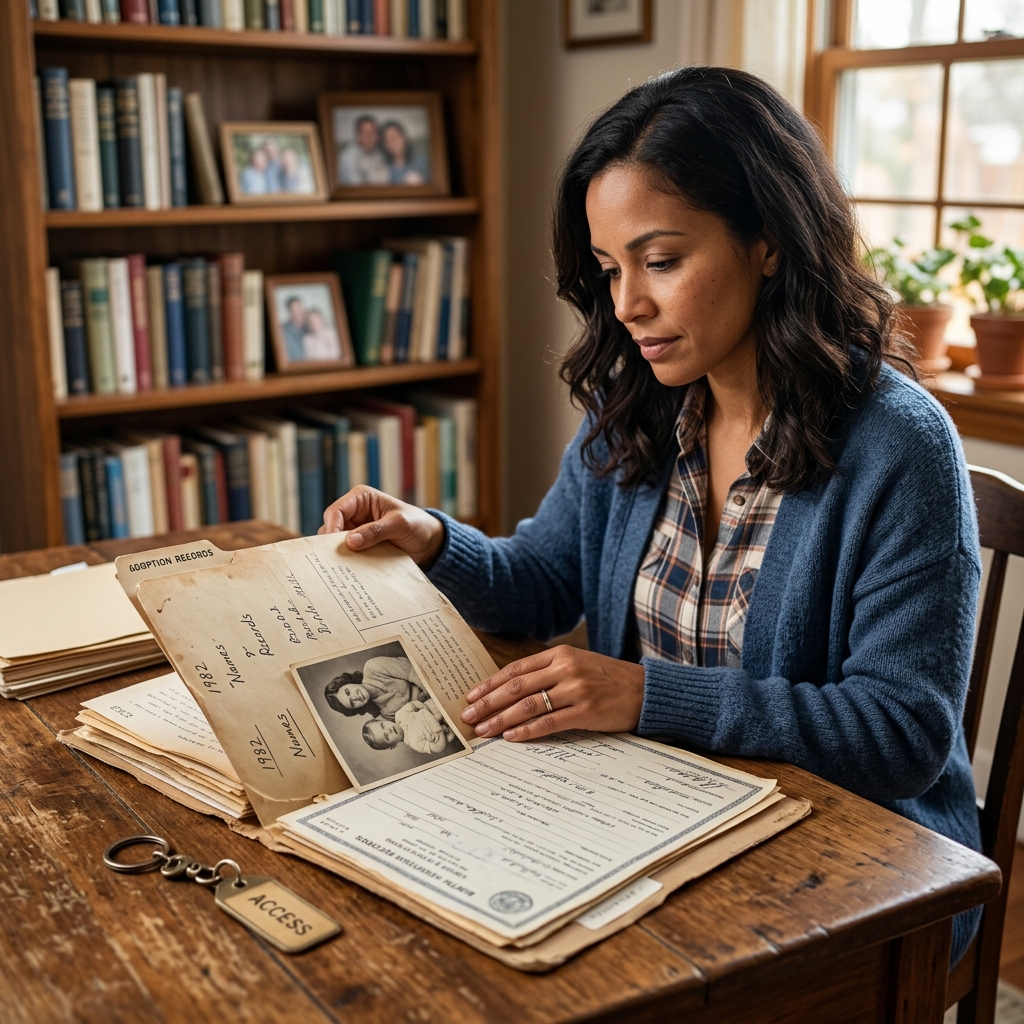
Adoption records are often treated as confidential, but that does not always mean they are permanently hidden. In many states, different parts of an adoption file may be available through a court, a state agency, an adoption registry, or a confidential intermediary process. The rules vary widely, and the key question is usually not whether a record exists, but who is allowed to see it and under what conditions.
For adoptees, birth parents, adoptive parents, and sometimes descendants or legal representatives, the path to information can be straightforward in some situations and highly restricted in others. Understanding the distinction between identifying and non-identifying information is essential, as is knowing whether the adoption was finalized long ago or under a newer legal regime.
Why adoption records are treated differently from other records
Adoption files often contain sensitive personal details about birth parents, adoptive parents, and the child. Because adoption changes a child’s legal family relationship, states have historically sealed these records to protect privacy and prevent unwanted contact. At the same time, modern adoption law increasingly recognizes that some people have a strong interest in learning their origins, medical history, or family identity.
This balancing act explains why access rules differ so much. Some states allow adult adoptees to request certain records directly. Others require a court order, a showing of good cause, or proof that all interested parties consent. In many places, the type of information requested matters as much as the identity of the person asking.
What kinds of information may be in an adoption file
An adoption record is not a single document. It may include court papers, agency notes, background reports, medical information, original birth documents, and later amended records. Not all of these materials are treated the same way. Some states separate the file into categories so that a requester may receive one type of information while being denied another.
Common categories include:
- Identifying information, such as names, addresses, or other details that could reveal a birth parent’s identity.
- Non-identifying information, such as general medical history, social history, or physical traits that do not directly reveal identity.
- Original birth certificates, which may show the child’s name at birth and the names of the birth parents.
- Court orders and placement papers, which may explain how the adoption was processed and finalized.
In many states, non-identifying information is easier to obtain than identifying information. Medical background may be especially important when an adoptee needs family health history or genetic details for treatment decisions.
Who may be eligible to request records
Eligibility depends on state law, the age of the adoptee, and the nature of the information requested. Adult adoptees are often the primary group allowed to seek access, but adoptive parents, birth parents, and even descendants of a deceased adoptee may have rights in some jurisdictions. The exact rules differ by state, so a person may have full access in one state and only limited access in another.
| Requester | Possible access | Common limits |
|---|---|---|
| Adult adoptee | May request original birth information, non-identifying information, or court review in some states | May need to be 18, 21, or older depending on state law |
| Birth parent | May seek contact preference information or records tied to the adoption | Often subject to the adoptee’s age and state confidentiality rules |
| Adoptive parent | May access certain agency or court records relating to the child | Access often narrows once the child becomes an adult |
| Descendant or representative | May be allowed to request records in limited circumstances | Usually must show legal authority or a qualifying relationship |
Some states also distinguish between older adoptions and more recent ones. Older files may have been handled under different confidentiality laws, while newer cases may reflect updated rules that give adult adoptees more direct access.
How state law shapes the process
There is no single national rule for adoption record access. State law determines whether records are sealed, whether they can be opened, and whether a requester must go through court. That means two people with similar family histories may face very different procedures depending on where the adoption took place.
Some states maintain mutual-consent registries. In those systems, an adoptee and a birth relative can each file an authorization or contact preference statement, and the state may release information only when the required matching conditions are met. Other states rely on the court system, allowing a judge to decide whether enough legal reason exists to disclose sealed information. In still other states, some records are available directly from a state health department or vital records office.
Because these systems are so different, anyone seeking records should first identify the state where the adoption was finalized, not just where the adoptee currently lives. That is usually the law that controls the file.
Common ways people try to obtain adoption records
There are several pathways to information, and the best one depends on what the requester is seeking. Some people begin with the agency or attorney involved in the placement. Others start with the state’s vital records office or archives. In contested situations, a petition to the court may be the only available route.
- Requesting non-identifying information from the adoption agency or state agency that handled the placement.
- Applying for an original birth certificate if state law allows adult access.
- Filing a court petition to unseal records or request a judicial review.
- Using a registry to match with a biological relative who has also registered.
- Working through a confidential intermediary who can contact relevant parties and request consent.
In many cases, starting with the least invasive option saves time and avoids unnecessary litigation. If those methods fail, a court petition may still be possible, especially when health, identity, or compelling family circumstances are involved.
When a court order may be required
Court involvement usually becomes necessary when the record is sealed and the law does not provide direct access. A judge may need to weigh privacy concerns against the reasons for disclosure. Some states require a showing of good cause, while others use a broader best-interest standard or specific statutory criteria.
Judicial review does not guarantee access. Even when a petition is filed correctly, the court may deny release if the law is strict or if no legal basis supports disclosure. However, a court petition can sometimes result in partial access, such as release of medical data without names, or access only to a redacted copy of the original file.
The petition process usually involves filing with the court that handled the adoption or the county where the record is kept. Supporting documentation may help, especially if the requester needs information for health care, inheritance issues, or to establish a family relationship recognized by state law.
Practical obstacles people often face
Even when the law allows access in principle, practical barriers can still slow the process. Records may be old, incomplete, or stored in multiple places. Agencies may have closed, merged, or changed names. Court files may have been microfilmed, archived, or partially destroyed. Vital records offices may require specific forms, identification, and fees.
Emotional barriers also matter. Searching for adoption records can involve uncertainty, possible rejection, and the possibility that family members do not wish to be contacted. Many people find it helpful to prepare before beginning a search, especially if they expect that the record may reveal unexpected information.
What to gather before making a request
Preparation can make the process much easier. Even if a requester does not know every detail, small pieces of information can help locate a file or determine the right office to contact. It is often useful to collect whatever family documents already exist and make a list of known names, dates, and places.
- Full name of the adoptee, including any known birth name or adopted name
- Approximate date and place of birth
- County and state where the adoption was finalized
- Names of the adoptive parents, if known
- Name of the agency, attorney, or hospital involved, if available
- Copies of letters, decrees, or family papers related to the adoption
Having this information ready can reduce delays and help the correct office locate the file more quickly.
How confidential intermediaries and registries work
Confidential intermediary systems and adoption registries offer a middle path between total secrecy and open disclosure. A confidential intermediary is usually a trained person authorized to search sealed records, locate a relative, and ask whether that person consents to contact. This can protect privacy while still allowing the possibility of reunion or exchange of information.
Registries work differently. They generally depend on voluntary participation. If both sides have registered and the system matches them, contact may become possible. If only one side registers, the registry may still keep the request on file for future matching. These tools are especially useful when direct access to identifying information is blocked but mutual consent is possible.
Questions to ask before starting a search
Before filing forms or contacting agencies, it helps to define the purpose of the search. Some people want medical background only. Others want names, photographs, or a full reunion. Clarifying the goal can point toward the correct legal route and help set realistic expectations.
Useful questions include:
- Do I need identifying information, or only background details?
- Is the adoption file likely to be sealed under state law?
- Can I request the records directly as an adult adoptee or biological parent?
- Would a registry or intermediary likely work better than a court petition?
- Do I need legal help if the request is denied?
Answering these questions early can prevent unnecessary filings and reduce frustration.
Frequently asked questions
Are adoption records public? In most states, no. Adoption files are usually confidential, and public access is limited or unavailable unless the law specifically allows disclosure.
Can adult adoptees always get their original birth certificate? No. Some states allow direct access, some require a court order, and others restrict access unless certain statutory conditions are met.
Is non-identifying information easier to obtain? Yes. Medical and social history without names or contact details is often available even when identifying information remains sealed.
Do adoptive parents have the same rights as adoptees? Not necessarily. Their access rights may be narrower, especially once the adoptee becomes an adult.
What happens if the adoption agency no longer exists? The records may still be held by a court, state archive, or vital records office. A missing agency does not always mean the file is gone.
Can a court deny access even if I am related? Yes. Relationship alone does not guarantee access when the law protects the record or requires a stronger showing for release.
Why legal guidance can matter
Because adoption law is highly state-specific, legal advice can be especially helpful when a request is denied, when a court petition is needed, or when the adoption involved unusual facts such as interstate placement, closed agencies, or older sealed files. A lawyer can help identify the correct office, review whether the requester has standing, and determine whether the request should target a birth certificate, court file, or agency record.
Even without formal legal representation, understanding the process can make a difficult search more manageable. The most important step is to identify the right state law, the right kind of record, and the right procedure for the information being sought.
References
- Access to Adoption Records — Child Welfare Information Gateway. 2023-05-01. https://www.childwelfare.gov/resources/access-adoption-records/
- Access to Adoption Records in Maryland — People’s Law Library. 2024-02-01. https://www.peoples-law.org/access-adoption-records-maryland
- Accessing Adoption Records in Texas — TexasLawHelp. 2024-01-01. https://texaslawhelp.org/article/accessing-adoption-records-in-texas
- Accessing Birth and Adoption Records—A Practical Guide for Adoptees — Adoption Council. 2022-01-01. https://adoptioncouncil.org/publications/accessing-birth-and-adoption-records-a-practical-guide-for-adoptees/
- Adoption Records Access — Oregon Judicial Department. 2024-01-01. https://www.courts.oregon.gov/programs/family/children/pages/adoption.aspx
Similar Articles








Read full bio of medha deb


