
Estate Planning for Disabled Beneficiaries
Learn how to structure wills, trusts, and beneficiary designations to protect disabled loved ones and preserve vital government benefits.
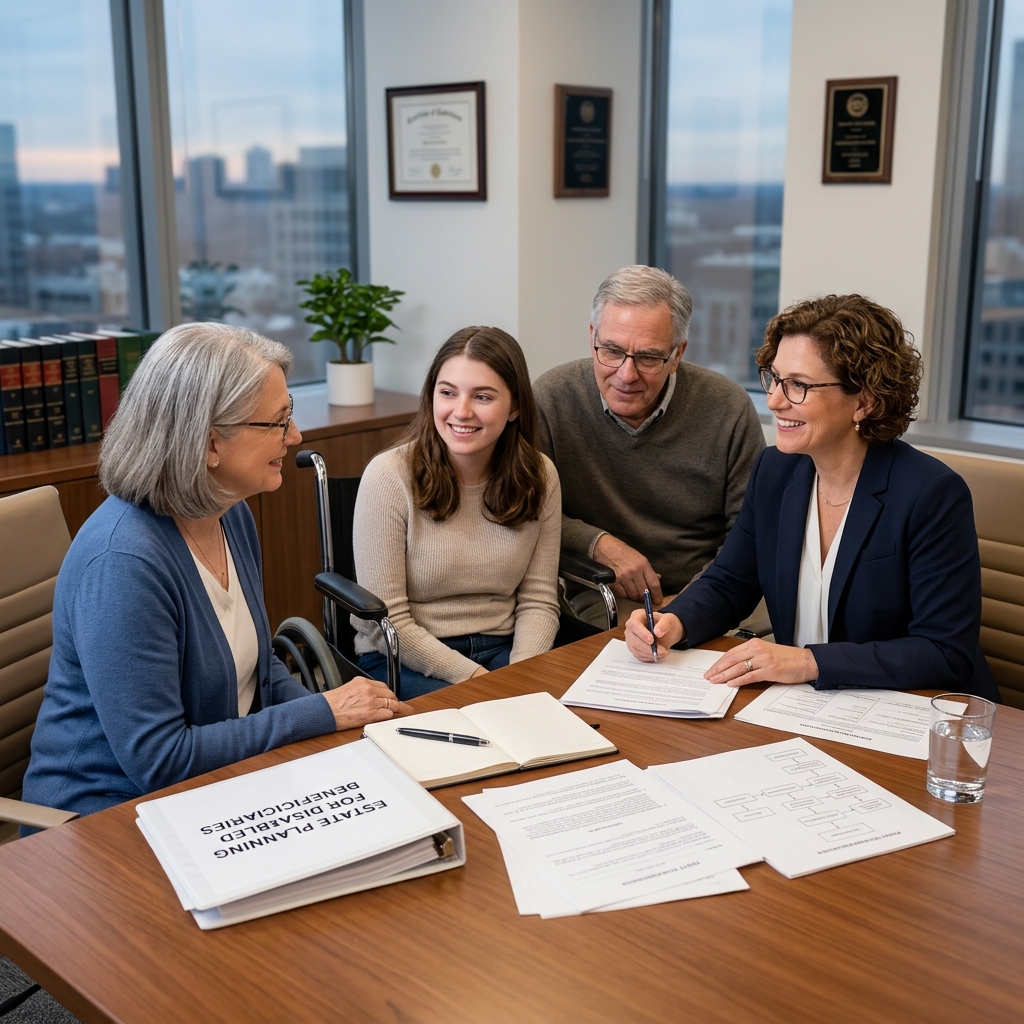
Planning your estate when a loved one lives with a disability requires more than deciding who gets what. It involves carefully coordinating wills, trusts, and beneficiary designations so that support is available for the disabled person without jeopardizing crucial government benefits such as Supplemental Security Income (SSI) and Medicaid.
This guide explains the key legal tools, common pitfalls, and practical strategies for creating a sustainable plan that protects a disabled beneficiary over the long term.
Why Disability-Sensitive Estate Planning Matters
Traditional estate planning often focuses on dividing property fairly among heirs. When one of those heirs has a disability, however, a direct inheritance can unintentionally harm them by disqualifying them from means-tested benefits that fund medical care, housing, and daily support.
- Means-tested programs such as SSI and Medicaid limit countable assets and income.
- A lump-sum inheritance, life insurance payout, or retirement account paid outright can push the disabled person over those limits.
- Once benefits are suspended, requalification can be slow and stressful, and the new money may quickly be consumed by medical and support costs.
By using disability-sensitive tools like special needs trusts and careful beneficiary designations, families can provide additional resources without sacrificing essential public benefits.
Key Goals When Planning for a Disabled Beneficiary
Effective planning typically balances four core objectives:
- Maintain eligibility for SSI, Medicaid, and other disability-related benefits.
- Provide supplemental funds for quality-of-life expenses that public programs do not fully cover.
- Ensure responsible management of assets through trustees, agents, and guardians.
- Offer flexibility as laws, benefits programs, and the disabled person’s needs change over time.
Achieving these goals requires a combination of legal documents and a clear understanding of the beneficiary’s current and future needs.
Understanding Government Benefits and Eligibility
Before deciding how to leave property to a disabled beneficiary, you need to understand which programs they use and how those programs treat inherited assets.
Means-Tested vs. Non-Needs-Based Benefits
| Program Type | Examples | Asset Limits? | Planning Impact |
|---|---|---|---|
| Means-tested benefits | SSI, Medicaid, some state waiver services | Yes – strict limits on countable assets and income | Direct inheritances can cause loss of eligibility; trusts often needed. |
| Non-needs-based benefits | Social Security Disability Insurance (SSDI), Medicare (after waiting period) | Generally no asset limits | Estate planning can focus more on management and long-term support, not eligibility. |
Because many disabled individuals rely on both types of programs, planning must be tailored to their specific benefits mix.
How Inheritances Affect SSI and Medicaid
- SSI and Medicaid typically treat cash, investments, and other non-exempt property owned directly by the beneficiary as countable resources.
- Going over the resource limits (often only a few thousand dollars) can result in suspension or termination of benefits.
- Outright bequests, direct gifts, and naming the disabled person as an insurance or retirement account beneficiary are common causes of disqualification.
For this reason, many families route inheritances into specially designed trusts rather than leaving assets outright to the disabled person.
Special Needs Trusts: Core Tool for Disabled Beneficiaries
A special needs trust (often abbreviated SNT) is a trust designed so that assets held for a disabled person do not count as the beneficiary’s own resources for purposes of SSI and Medicaid, as long as federal and state rules are followed.
Third-Party Special Needs Trusts
A third-party SNT is funded with assets belonging to someone other than the disabled person, commonly parents, grandparents, or other relatives.
- Can be created during life (in a standalone trust) or through a will or revocable living trust.
- Generally does not require a Medicaid payback at the beneficiary’s death, allowing remaining funds to pass to other heirs or charities.
- Trust distributions are intended to supplement, not replace, government benefits—for example, travel, additional therapies, personal care items, or recreational activities.
Third-party SNTs are the main tool used by families to leave inheritances while preserving the disabled beneficiary’s means-tested benefits.
First-Party (Self-Settled) Special Needs Trusts
A first-party SNT, sometimes called a “payback” or “self-settled” trust, is funded with the disabled person’s own assets—such as a personal injury settlement, back payments from benefits, or an inheritance already received.
- To qualify, the disabled person must meet disability criteria and typically be under a certain age when the trust is established (often under 65, depending on jurisdiction).
- Upon the beneficiary’s death, remaining assets are generally required to reimburse the state for Medicaid expenditures, or be retained in a pooled trust to help other beneficiaries.
- This type of trust can help restore eligibility for SSI or Medicaid when the beneficiary unexpectedly acquires assets that would otherwise disqualify them.
Because of the mandatory payback provisions, first-party SNTs are usually used only when a disabled person already owns disqualifying assets and needs to protect benefits.
Pooled Special Needs Trusts
Pooled trusts are special needs trusts run by nonprofit organizations that combine the resources of many beneficiaries while maintaining separate sub-accounts.
- Often available to disabled individuals of various ages, including those over traditional age limits for individual payback trusts.
- Managed by professional trustees experienced in disability and benefits rules.
- At death, some portion of remaining funds usually must stay in the pool or reimburse Medicaid, depending on the trust terms.
Pooled trusts can be helpful when families lack an individual trustee or when the amount involved is too small to justify a standalone trust.
Integrating Special Needs Trusts into Your Estate Plan
Establishing the right type of trust is only one step. You must also coordinate your will, beneficiary designations, and other planning documents so that assets flow correctly into the trust.
Wills and Revocable Living Trusts
- Do not leave property outright to a disabled beneficiary if they rely on means-tested benefits.
- Instead, direct the share intended for that person into a properly drafted third-party special needs trust.
- Use contingent provisions to address situations in which the disabled person’s eligibility status changes over time.
Many families choose a revocable living trust for overall estate management and embed the special needs trust as a subtrust that becomes irrevocable at the parent’s death.
Beneficiary Designations: Life Insurance and Retirement Accounts
Assets that pass by beneficiary designation, such as life insurance, annuities, and retirement accounts, require special attention.
- Rather than naming the disabled person directly, name the special needs trust as beneficiary for the portion intended to support that person.
- Consider tax implications and minimum distribution rules for retirement accounts paid to trusts; specialized legal drafting may be required.
- Avoid informal arrangements where another family member is told to “hold” the assets for the disabled person without a trust—this can create legal, tax, and moral problems.
Coordinating beneficiary designations with your overall plan helps ensure that liquidity is available for the disabled beneficiary while still protecting eligibility for benefits.
Choosing Trustees, Guardians, and Other Decision-Makers
Who manages the trust and who cares for your disabled loved one may matter as much as the legal structure itself.
Selecting a Trustworthy Trustee
- Pick someone who understands—or is willing to learn about—disability benefits and the rules governing special needs trusts.
- Consider professional trustees (banks, trust companies, nonprofits) if family members lack the time or expertise.
- Allow for successor trustees in case your initial choice becomes unwilling, unable, or unsuitable.
The trustee must balance benefit preservation with quality-of-life expenditures, all while keeping detailed records and communicating with the beneficiary and their support network.
Guardians and Conservators
If the disabled beneficiary lacks legal capacity to manage personal or financial affairs, guardianship or conservatorship may be necessary.
- Use your estate plan to nominate who should serve as guardian of the person (for personal and medical decisions) and, if appropriate, guardian of the estate (for financial decisions).
- Review existing guardianship orders periodically to ensure they still reflect the best choice as the disabled person and the family’s circumstances evolve.
In many families, the trustee and guardian roles are separated to avoid conflicts of interest and to spread responsibilities among trusted individuals.
Additional Planning Tools: ABLE Accounts and Disability-Focused Strategies
Special needs trusts are often the centerpiece of planning, but other tools can complement them and provide flexible, tax-advantaged savings options.
ABLE Accounts
An ABLE account (Achieving a Better Life Experience account) is a tax-advantaged savings vehicle for certain individuals with disabilities, typically those whose disability began before age 26 (with evolving eligibility rules).
- Funds in ABLE accounts are generally disregarded or subject to higher limits for SSI and Medicaid compared to ordinary cash savings, up to program-specific caps.
- Families often use ABLE accounts for smaller, day-to-day expenses and special needs trusts for larger inheritances and long-term support.
- ABLE accounts can work in tandem with third-party special needs trusts, offering more flexibility for the beneficiary to manage certain funds directly.
Personal Disability Planning for the Parent or Caregiver
Estate planning should also consider what happens if the primary caregiver becomes disabled or incapacitated.
- Use powers of attorney and health care directives to designate who can manage your finances and medical decisions if you cannot.
- Consider disability insurance and long-term care planning so that your own needs do not undermine your ability to support the disabled beneficiary.
- Explore strategies such as Medicaid planning or homestead protections where appropriate and permitted, especially if you anticipate needing long-term care yourself.
Documenting Care Instructions and Future Plans
Beyond money and legal documents, families often worry about who will understand the disabled beneficiary’s daily routines, preferences, and personal history.
Letters of Intent and Care Memoranda
A Letter of Intent or care memorandum is a non-binding document that describes the disabled person’s needs and your hopes for their future.
- Include medical information, providers, medications, and allergies.
- Describe daily routines, communication methods, behavioral triggers, and calming strategies.
- List educational goals, therapeutic services, and community activities that matter to the beneficiary.
- Provide contact information for key professionals, friends, and family members who play a role in the person’s life.
Although not legally enforceable, this documentation is invaluable to trustees, guardians, and future caregivers making decisions after you are gone.
Reviewing and Updating Your Plan
Disability-related estate plans are not “set-and-forget”. Laws, benefits programs, and personal circumstances change over time.
- Schedule regular reviews—many experts recommend at least every one to three years, or after major life events.
- Monitor changes in disability laws, SSI/Medicaid regulations, and tax rules that may affect your trust or beneficiary designations.
- Update trustees, guardians, and successors if relationships or the individuals’ ability to serve change.
- Revise your Letter of Intent as the disabled beneficiary’s abilities, preferences, and support systems evolve.
Continuous attention helps ensure that the plan remains aligned with the disabled person’s needs and current legal requirements.
FAQs: Estate Planning for Disabled Beneficiaries
1. Why can’t I simply leave money directly to my disabled child?
Direct gifts or inheritances may be treated as countable resources for SSI and Medicaid, potentially pushing your child over asset limits and causing loss of benefits. A properly drafted special needs trust allows funds to be used for your child without being counted as their own assets.
2. Do special needs trusts replace government benefits?
No. Special needs trusts are designed to supplement benefits, paying for extra services, personal items, and experiences that public programs do not fully cover. The goal is to preserve eligibility while improving quality of life.
3. Is a third-party special needs trust better than a first-party trust?
They serve different purposes. Third-party trusts are generally used for inheritances and do not require Medicaid payback at death. First-party trusts are used when the disabled person already has assets that would disqualify them from benefits and usually require reimbursement to the state when the beneficiary dies.
4. Can I use both an ABLE account and a special needs trust?
Yes. Many families use an ABLE account for modest savings and everyday expenses, while a special needs trust holds larger sums. This combination offers flexibility and may provide tax advantages.
5. Do I need a lawyer who focuses on special needs planning?
Because special needs trusts and disability-related benefits rules are complex, working with an attorney experienced in this area is highly recommended. An advisor unfamiliar with these issues may unintentionally draft documents that jeopardize eligibility.
References
- Estate Planning for Families of Individuals with Disabilities — Disability Rights Pennsylvania. 2018-02-01. https://www.disabilityrightspa.org/wp-content/uploads/2018/03/EstatePlanningFamiliesFEB2018.pdf
- Estate and Future Planning for Ohioans with Disabilities — Ohio Developmental Disabilities Council, Ohio.gov. 2020-06-11. https://dam.assets.ohio.gov/image/upload/ddc.ohio.gov/estate-planning-revised-6-11-2020.pdf
- Developing an Estate Plan for Parents of Children with Disabilities: A 15-Step Approach — Special Needs Alliance. 2016-09-01. https://www.specialneedsalliance.org/the-voice/developing-an-estate-plan-for-parents-of-children-with-disabilities-a-15step-approach-2/
- A Guide to Estate Planning for Individuals with Special Needs — Just Vanilla. 2023-04-10. https://www.justvanilla.com/blog/estate-planning-for-individuals-with-special-needs
- Estate Planning for Families with Minor and/or Children with Special Needs — Montana State University Extension. 2019-01-01. https://extension-store.montana.edu/montguides/estate-planning-for-families-with-minor-andor-children-with-special-needs
- Estate Planning for Pennsylvania Families with a Disabled Family Member — Dickinson Law, Pennsylvania State University. 2014-01-01. https://insight.dickinsonlaw.psu.edu/cgi/viewcontent.cgi?article=1234&context=fac-works
Similar Articles








Read full bio of Sneha Tete


