
Key Defenses in Personal Injury Lawsuits
Understand common defenses that can reduce or block compensation in personal injury cases and learn how to counter them effectively.
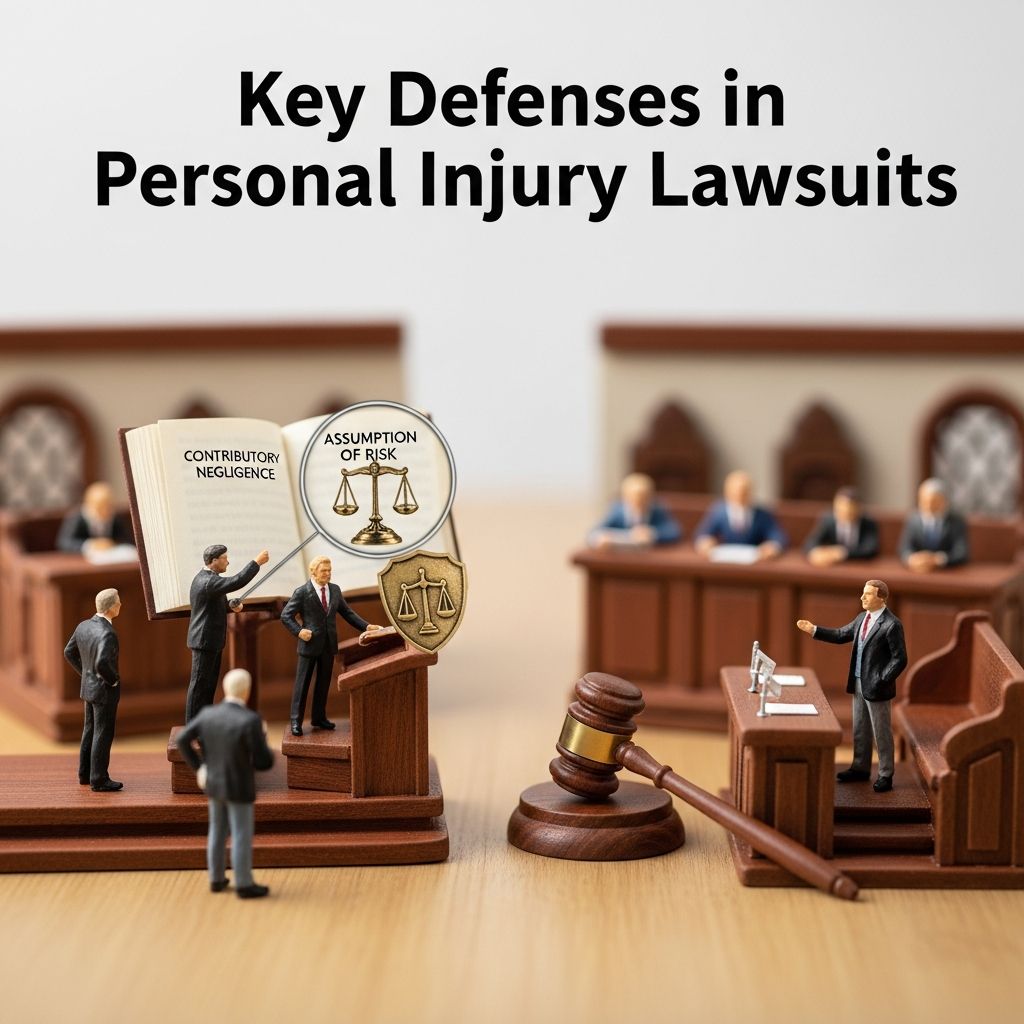
Personal injury lawsuits arise when one party claims another caused their harm through negligence or wrongdoing. Defendants often raise specific defenses to shift blame, minimize liability, or dismiss claims entirely. These strategies target core elements like duty, breach, causation, and damages that plaintiffs must prove. Understanding them equips injured parties to build stronger cases and anticipate opposition tactics.
Core Elements Plaintiffs Must Establish
Before delving into defenses, grasp the foundation of a personal injury claim. Plaintiffs bear the burden of demonstrating four key factors: the defendant owed a duty of care, breached that duty, directly caused the injury, and resulted in measurable damages. Defenses exploit weaknesses in any of these areas to undermine the claim.
- Duty of Care: A legal obligation to act reasonably, such as drivers yielding to pedestrians.
- Breach: Failure to meet that standard, like speeding through an intersection.
- Causation: Proof that the breach proximately led to the harm.
- Damages: Quantifiable losses including medical bills, lost wages, and pain.
Defendants challenge these pillars methodically, often using evidence like witness statements, medical records, and surveillance footage.
Contributory and Comparative Negligence Explained
One of the most frequent defenses involves the plaintiff’s own actions contributing to the incident. In contributory negligence jurisdictions, any fault by the injured party can bar recovery entirely, though this strict rule is rare today. More commonly, comparative negligence apportions blame proportionally, reducing awards based on the plaintiff’s percentage of fault.
For instance, if a jury finds a pedestrian 25% at fault for jaywalking, compensation drops by that amount. Insurance adjusters scour police reports and videos to argue shared responsibility.
| Negligence Type | Description | Impact on Damages |
|---|---|---|
| Contributory | Any plaintiff fault bars recovery | 100% reduction if proven |
| Pure Comparative | Damages reduced by plaintiff’s fault percentage | Proportional reduction (e.g., 30% fault = 30% cut) |
| Modified Comparative | Recovery barred if plaintiff over 50% at fault | Full award if under threshold |
Plaintiffs counter by gathering evidence showing the defendant’s primary negligence, such as dashcam footage or expert reconstructions.
Assumption of Risk: When Plaintiffs Knowingly Proceed
Defendants invoke assumption of risk when the injured person voluntarily engages in a known dangerous activity. This complete or partial bar applies in scenarios like sports, recreational events, or hazardous work sites where risks are obvious.
Examples include a spectator hit by a foul ball at a baseball game or a paintball player injured despite safety gear. The defense requires proving the plaintiff had actual knowledge of the specific hazard and chose to encounter it anyway. Courts distinguish between inherent risks (e.g., tackles in football) and those stemming from negligence (e.g., defective equipment).
- Express Assumption: Signed waivers explicitly acknowledging dangers.
- Implied Assumption: Behavior implying consent, like entering a construction zone marked with warnings.
To rebut, plaintiffs highlight hidden dangers or defendant failures, such as inadequate safety measures beyond normal risks.
Challenging Causation: Pre-Existing Conditions and Intervening Causes
Defendants frequently dispute causation, arguing injuries stem from prior conditions or unrelated events rather than their actions. Insurers review medical histories to claim symptoms pre-date the incident, reducing liability for full damages.
In slip-and-fall cases, they might assert the fall caused minimal trauma, attributing pain to arthritis or old accidents. Plaintiffs strengthen causation with prompt medical evaluations, imaging showing acute injuries, and physician opinions linking the event to new harm.
Intervening causes, like a subsequent car crash, can also break the chain if unforeseeable. Proximate cause demands the defendant’s act be a substantial factor in the injury.
Statute of Limitations and Procedural Hurdles
Time bars represent an absolute defense if plaintiffs file too late. Each state sets deadlines—typically 2-3 years from injury discovery—for initiating suits. Missing this forfeits rights permanently.
Defendants also challenge jurisdiction, venue, or service of process. Plaintiffs avoid pitfalls by consulting attorneys early to calculate deadlines accurately, especially with latent injuries like asbestos exposure.
Insurance Tactics and Delay Strategies
Beyond legal defenses, insurers employ psychological ploys to erode claims. Adjusters twist casual statements (e.g., “I’m okay”) to downplay severity. Delays pressure settlements below value, while lowball offers test resolve.
Key countermeasures include documenting everything—photos, witnesses, medical visits—and limiting insurer communications through counsel. Patience and persistence, backed by legal expertise, counter these maneuvers.
Building Resilience: Evidence Preservation Tips
Immediate post-incident actions fortify against defenses. Secure the scene with photos of hazards, injuries, and damage. Obtain witness details and file reports promptly.
Seek medical care without delay; gaps suggest fabrication. Maintain consistent treatment records to refute pre-existing injury claims. Preserve clothing, receipts, and surveillance requests as evidence.
Courtroom Strategies for Plaintiffs
If negotiations fail, trials demand sophisticated tactics. Lawyers craft narratives emphasizing defendant fault via timelines and visuals. Cross-examinations expose defense inconsistencies, while experts quantify impacts.
Jury selection targets empathetic peers; damages presentations use life-care plans. Defendants counter with their anchors minimizing payouts. Preparation via mock trials hones delivery.
Frequently Asked Questions (FAQs)
What if I’m partially at fault for my injury?
In most states, comparative negligence reduces your award proportionally, but doesn’t bar recovery unless over 50%. Gather evidence minimizing your share.
Can signing a waiver eliminate all claims?
Express assumption of risk covers known inherent dangers but not gross negligence or hidden hazards.
How do I prove my injury was caused by the incident?
Use timely medical records, expert testimony, and before-after comparisons to establish proximate causation.
What evidence is crucial after an accident?
Photos, witness statements, medical docs, and incident reports counter defenses effectively.
Should I speak to insurance adjusters alone?
No—statements can be misrepresented. Direct them to your attorney.
Empowering Your Claim with Professional Help
Navigating defenses requires foresight and skill. Experienced attorneys predict tactics, amass counter-evidence, and negotiate aggressively. They transform potential losses into fair recoveries, ensuring defendants face full accountability.
References
- Four Common Defense Strategies In Personal Injury Claims — Prowse Barrette. N/A. https://prowsebarrette.com/four-common-defense-strategies-in-personal-injury-claims/
- Mastering Personal Injury Claims: Navigating Insurance Defense — Kraft Law. N/A. https://www.kraftlaw.com/legal-articles/common-defenses-used-by-insurance-companies-in-personal-injury-cases/
- The Most Common Defense Arguments in Personal Injury Cases — Danda Law. N/A. https://www.dandalaw.com/blog/the-most-common-defense-arguments-in-personal-injury-cases/
- Common Personal Injury Defense Strategies — The Cochran Firm. 2019-05-23. https://www.cochranfirm.com/new-york/common-personal-injury-defense-strategies/
- Common Defense Tactics in Slip and Fall Cases — Crime and Injury Law. N/A. https://www.crimeandinjurylaw.com/common-defense-tactics-in-slip-and-fall-cases-and-how-to-counter-them/
Similar Articles








Read full bio of medha deb


