
The Lawless Expanses: Why Human Rights Evaporate in International Waters
Exploring the critical legal loopholes that allow human rights abuses, modern slavery, and environmental crimes to thrive on the high seas.
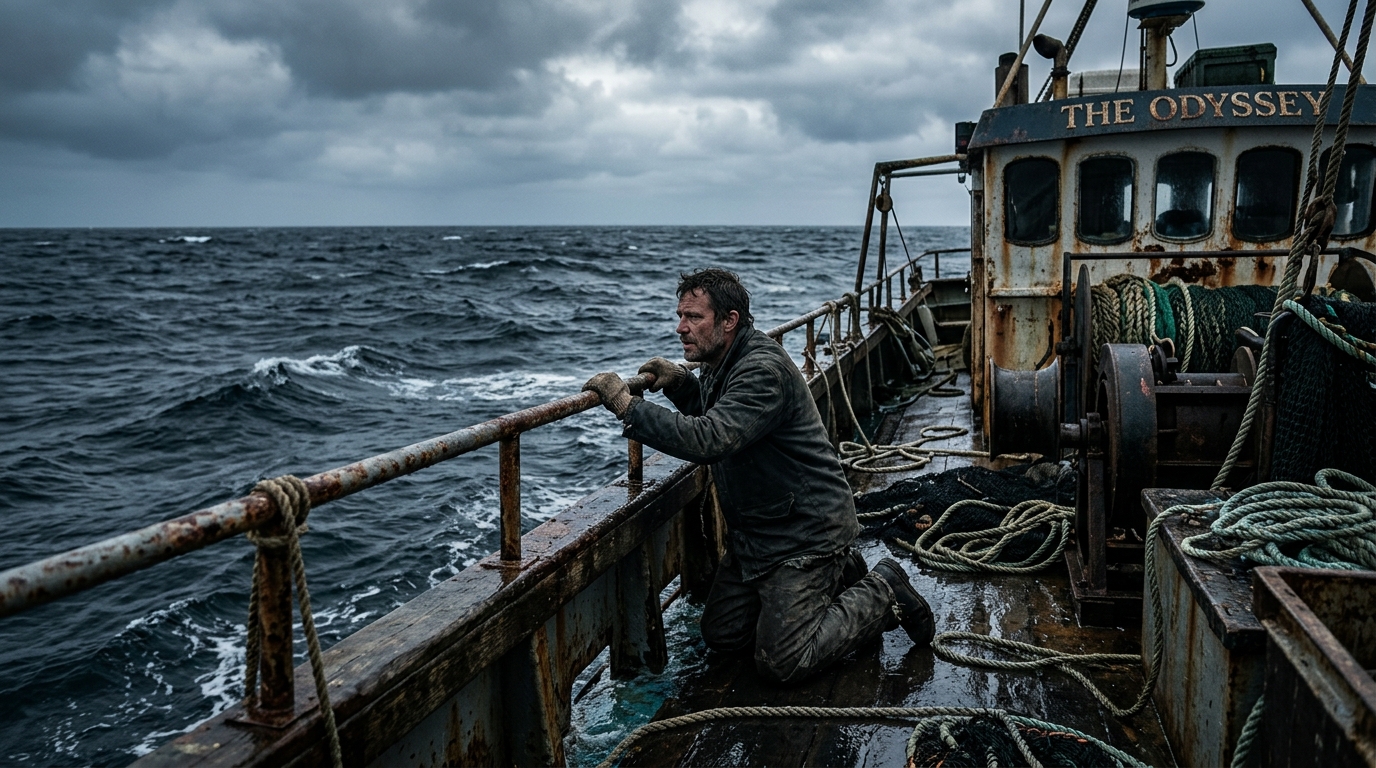
The world’s oceans have long inspired tales of boundless horizons and maritime adventure. Yet, beneath this romanticized veneer lies a profoundly disturbing reality: the high seas are among the most perilous places on Earth for human rights. Covering nearly half the planet’s surface, international waters exist in a nebulous legal twilight. When vessels cross invisible borders into these pelagic zones, the robust legal protections and enforcement frameworks governing sovereign nations dissolve, allowing exploitation to flourish unchecked.
Far from the watchful eyes of regulatory bodies, maritime workers, seafarers, and migrant fishers face conditions amounting to severe abuse, human trafficking, and even murder. The vast remoteness of the deep ocean means victims are entirely isolated from help, possessing no means of escape and no authorities to call upon. Because international maritime law was historically constructed to prioritize the unrestricted freedom of navigation and global commerce, individual human rights were tragically relegated to an afterthought, leaving vulnerable populations trapped in a profound legal vacuum.
The Jurisdictional Black Hole of the Open Ocean
To comprehend why absolute impunity reigns supreme on the water, one must carefully navigate the complex architecture of maritime jurisdiction. Under the United Nations Convention on the Law of the Sea (UNCLOS), the high seas are strictly defined as all parts of the ocean that do not fall within any state’s exclusive economic zone (EEZ), territorial sea, or internal waters. This immense geographic area lacks any centralized police force or international maritime tribunal with direct enforcement capabilities over criminal acts.
Instead, maritime governance relies entirely on a concept known as flag state jurisdiction. Under international law, a ship is legally considered a floating extension of the territory of the nation whose flag it flies. That specific nation bears the exclusive responsibility for implementing and enforcing labor standards, safety regulations, and criminal laws on board. This system creates three distinct jurisdictional spheres:
- Flag State Jurisdiction: The primary and overriding authority over the vessel, its crew, and its operations while navigating international waters.
- Coastal State Jurisdiction: The limited authority a nation exerts over foreign vessels transiting its territorial waters, typically confined to customs, sanitary, and environmental regulations.
- Port State Jurisdiction: The administrative power a country holds to inspect and regulate foreign-flagged ships that voluntarily enter its domestic ports.
When a horrific crime occurs thousands of miles from shore, only the flag state holds the undisputed sovereign right to prosecute the offenders. If that state lacks the resources, the diplomatic reach, or the political will to act, victims are left entirely without legal recourse.
The Flag of Convenience Loophole
This profound reliance on flag state jurisdiction has birthed one of the maritime industry’s most insidious practices: the flag of convenience (FOC) system. In a calculated bid to minimize operational overhead and bypass stringent domestic labor and environmental regulations, shipowners routinely register their commercial fleets in nations with which they have absolutely no genuine geographic or economic link. Developing countries maintain highly lucrative open registries, allowing foreign corporate entities to fly their flags for a nominal registration fee.
These open registries promise shipowners immense financial benefits: radically lower tax burdens, relaxed safety inspections, and virtually zero interference regarding crew welfare. Devastatingly, this practice fundamentally severs the traditional bond of accountability between the shipowner and the governing state. When a massive fishing vessel beneficially owned by a European or Asian conglomerate is officially flagged to a small Pacific island nation, that island assumes the monumental legal burden of policing a vessel that may never once dock at its shores. Unsurprisingly, many FOC states entirely lack the robust naval infrastructure or international prosecutorial reach required to conduct complex criminal investigations on the high seas.
| Registry Type | Enforcement Capacity | Labor Standards Oversight | Shipowner Anonymity |
|---|---|---|---|
| Traditional (e.g., USA, UK) | High. Backed by robust domestic naval resources. | Strict compliance with domestic labor laws. | Low. Owners are usually domestic citizens. |
| Open/FOC (e.g., Panama, Vanuatu) | Extremely Low. Rarely investigate high-seas crimes. | Minimal; reliant on third-party audits. | High. Shell companies mask true beneficial ownership. |
By deliberately hiding behind shell companies and exploiting the FOC system, unscrupulous maritime operators strategically insulate themselves from legal liability. When human rights violations surface, actual beneficial owners remain shielded by impenetrable layers of corporate obscurity.
Modern Slavery and Labor Abuses at Sea
The human cost of this deliberate regulatory void is staggering, manifesting most brutally within the global commercial fishing industry. To continuously satisfy the relentless global demand for cheap seafood, a significant portion of the international fishing fleet operates on razor-thin profit margins. To remain financially viable, operators ruthlessly eliminate operational costs by intensely exploiting migrant laborers. Tens of thousands of men and adolescent boys are lured onto these vessels with fraudulent promises of lucrative wages and stable employment.
Upon boarding, the grim reality of their captivity sets in. Passports, identification documents, and return tickets are immediately confiscated by captains, effectively stripping the workers of their legal identity and their ability to flee. Laborers immediately fall into vicious cycles of unpayable debt bondage, forced to work off exorbitant recruitment and travel fees over years of grueling, uncompensated labor. Conditions on these offshore vessels routinely meet the formal United Nations legal threshold for modern slavery.
Seafarers are forcibly subjected to shifts lasting up to twenty-two hours, hauling heavy, perilous gear in treacherous weather conditions. Physical abuse, systemic starvation, and severe psychological torment are regularly deployed as mechanisms of absolute compliance. If a worker becomes severely injured, falls gravely ill, or dares to protest, they can simply be cast overboard. In the desolate vastness of the deep ocean, missing crew members are effortlessly written off in the official logbook as tragic accidents or mysterious disappearances. The total lack of independent witnesses guarantees no police investigation ever materializes.
This suffocating isolation is further exacerbated by the logistical practice of transshipment. Massive refrigerated cargo ships meet fishing boats out in international waters to collect the fresh catch and resupply the exhausted crew. Because of transshipment, a commercial fishing vessel can remain actively at sea for several consecutive years without ever touching land, effectively transforming the ship into an inescapable floating prison.
The Intersection of Environmental Crimes and Human Suffering
The horrific abuse of vulnerable maritime workers does not occur in an isolated vacuum; it is inextricably linked to severe, widespread environmental degradation. The commercial fleets perpetrating modern slavery and human trafficking are frequently the exact same vessels engaged in Illegal, Unreported, and Unregulated (IUU) fishing. Over the past several decades, incredibly aggressive industrial fishing practices have systematically decimated commercial fish stocks in shallow coastal regions. Consequently, to find profitable catches, commercial vessels are forced to travel much further out into the uncharted high seas and remain on the water for significantly longer durations.
Because legal fishing operations in severely depleted waters yield rapidly diminishing financial returns, illicit operators resort to utilizing banned drift nets, fishing inside protected marine sanctuaries, and flagrantly ignoring international catch quotas. To offset the soaring logistical costs of maritime fuel and the extended time away from port, these illegal syndicates turn directly to forced labor to artificially deflate their overhead, forming a devastating, symbiotic cycle of human rights abuses and ecological destruction. IUU fishing systematically strips developing coastal economies of billions of dollars in vital revenue and severely threatens global food security. Furthermore, to consciously avoid detection by port authorities, perpetrators routinely disable their Automatic Identification Systems (AIS), masking any desperately transmitted distress calls.
The Formidable Challenge of Prosecution
Even in the rare instances when severe human rights violations on the high seas are successfully documented, navigating the labyrinthine maze of international legal jurisdiction to secure a successful prosecution is incredibly arduous. Consider a tragically common scenario: a brutal murder occurs in international waters on a commercial vessel beneficially owned by a massive multinational conglomerate, officially registered and flying the flag of an island nation, captained by a foreign national, with the victim being a migrant worker.
Under strict international maritime law, the flag state holds absolute primary jurisdiction. However, that state likely lacks the immediate resources, geographic proximity, or political incentive to dispatch specialized forensic teams across the globe. The victim’s home country possesses no legal authority to forcefully board the foreign-flagged vessel or demand the immediate extradition of the commanding captain. Meanwhile, the wealthy nation where the corporate profits eventually settle legally claims that the subsidiary shell company completely absolves them of any direct criminal liability.
While international frameworks like universal jurisdiction exist for grave crimes such as piracy, they are almost never successfully applied to standard labor abuses or individual murders. Domestic legislation, such as 18 U.S. Code Section 7, explicitly outlines special maritime and territorial jurisdiction, but its legal reach is largely confined to vessels owned by domestic citizens or offenses directly impacting the home nation. Consequently, maritime perpetrators operate with sheer, unadulterated impunity.
Forging a Path Toward Accountability and Justice
Dismantling this entrenched, systemic impunity on the high seas requires a monumental and heavily coordinated effort from the entire international community. No single piece of domestic legislation can solve a multifaceted crisis fundamentally rooted in profound global jurisdictional gaps. First and foremost, the global community must aggressively strengthen and unify Port State Measures. When commercial vessels eventually return to port to offload their valuable cargo, destination nations hold the sovereign right to meticulously inspect the ships. By rigorously enforcing the International Labour Organization’s Maritime Labour Convention (MLC, 2006), port states can forcefully detain vessels demonstrating evidence of forced labor, radically unsafe living conditions, or systemic unpaid wages.
Secondly, multinational corporate accountability must be drastically enhanced. The global seafood supply chain remains notoriously opaque, allowing illegally caught and slave-tainted fish to seamlessly mingle with legitimate catch. Implementing stringent, blockchain-backed trace-ability requirements would legally force massive corporations to map their supply chains directly back to the specific vessel of origin. If major global consumer markets categorically refuse to import seafood without a fully verified, ethical chain of custody, the massive financial incentives driving maritime slavery would be severely crippled.
Lastly, international legal frameworks must radically evolve to aggressively pierce the corporate veil of the Flag of Convenience system. Establishing a centralized, internationally recognized maritime enforcement body with the mandate to investigate and prosecute severe human rights abuses, independent of flag state approval, is an essential step toward achieving justice.
Frequently Asked Questions (FAQs)
What exactly are the high seas in legal terms?
The high seas refer to all parts of the ocean that fall outside of any single country’s Exclusive Economic Zone (EEZ), territorial waters, or internal waters. Because they belong to no single nation, they are governed by international treaties and the legal framework of flag state jurisdiction.
What does the term flag of convenience mean?
A flag of convenience (FOC) occurs when a shipowner registers a commercial vessel in a foreign country—often one with relaxed regulations, low taxes, and minimal labor oversight—to deliberately avoid the stricter rules of their own home nation. This practice makes it incredibly difficult to enforce human rights standards globally.
Why do naval forces not arrest criminals in international waters?
Under international law, a warship or coast guard cutter cannot arbitrarily board and arrest individuals on a foreign-flagged vessel in international waters unless there is reasonable suspicion of specific universal crimes, such as piracy or slave trading. Ordinary criminal jurisdiction typically rests solely with the vessel’s flag state.
How does illegal fishing relate to human rights abuses?
Illegal, Unreported, and Unregulated (IUU) fishing operations often rely on forced labor to reduce their overhead costs. Because illegal fishing severely depletes coastal waters, these illicit vessels are forced further out to sea for much longer periods, trapping workers in highly abusive conditions far from any regulatory oversight.
References
- United Nations Convention on the Law of the Sea (UNCLOS) — United Nations. 1982-12-10. https://www.un.org/depts/los/convention_agreements/texts/unclos/unclos_e.pdf
- Maritime Labour Convention, 2006, as amended (MLC, 2006) — International Labour Organization. 2006-02-23. https://www.ilo.org/global/standards/maritime-labour-convention/lang–en/index.htm
- 18 U.S. Code § 7 – Special maritime and territorial jurisdiction of the United States defined — Legal Information Institute, Cornell Law School. 2001-10-26. https://www.law.cornell.edu/uscode/text/18/7
- Crime on the High Seas: What Conditions Are Necessary to Achieve Effective Maritime Governance Regime? — CUNY Academic Works. 2021-05-01. https://academicworks.cuny.edu/cc_etds_theses/877/
Similar Articles








Read full bio of Sneha Tete


