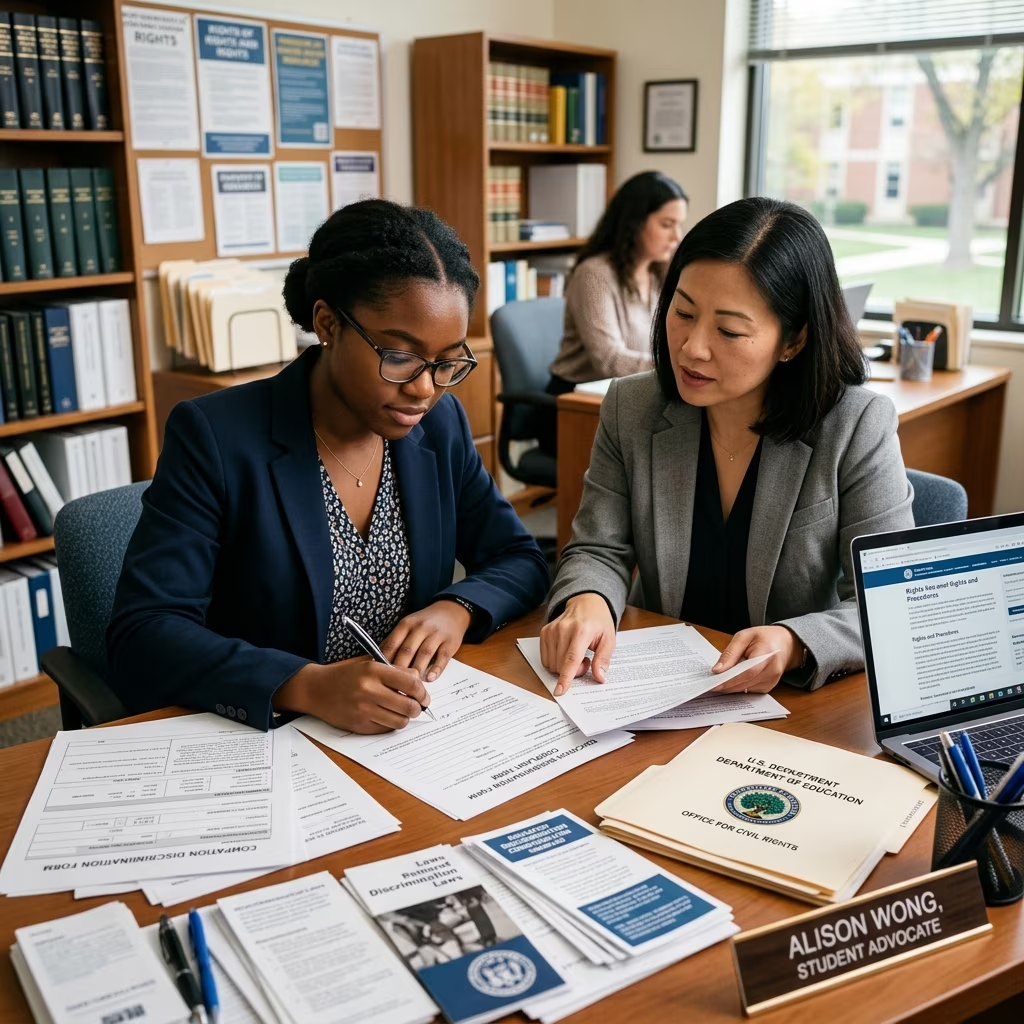
If a public school, school district, or other education program has treated a student unfairly because of a protected characteristic, a formal complaint can be the most direct way to seek review. The process is usually straightforward, but success depends on filing with the correct agency, meeting the deadline, and explaining the facts clearly.
This guide explains the basic steps for preparing an education discrimination complaint, what information should be included, and how to make the complaint easier for investigators to understand. It also covers when to complain locally first and when to go directly to a civil rights agency.
What Counts as Education Discrimination?
Education discrimination generally involves unequal treatment in a school setting because of a protected trait. In many cases, complaints are based on race, color, national origin, sex, disability, or age. A student may be denied access to a program, punished differently, ignored when requesting support, or subjected to hostile treatment because of one of these characteristics.
Not every school conflict is discrimination. A complaint is strongest when the facts show a connection between the school’s conduct and a protected class. That connection may appear in direct comments, repeated patterns, inconsistent treatment, or the school’s failure to respond to known bias.
| Common complaint issue | Possible discrimination basis | Example of concern |
|---|---|---|
| Unequal discipline | Race or sex | Students in one group are punished more harshly for similar conduct |
| Denied accommodations | Disability | The school refuses to provide needed supports |
| Harassment | Sex, race, national origin | Repeated slurs or mocking that the school does not address |
| Access barriers | Disability or age | Programs, activities, or services are not accessible |
Know Which Agency Should Receive the Complaint
The right place to file depends on the kind of school and the nature of the problem. Many complaints about public schools are filed with the U.S. Department of Education’s Office for Civil Rights, often called OCR. OCR reviews complaints involving discrimination based on protected traits in programs that receive federal funds.
Some states also have education or civil rights agencies that handle complaints under state law. In some situations, a school district may also have its own internal complaint process. If a local process exists, it may be helpful to use it in addition to a state or federal filing, especially if the school district’s rules require an internal review first.
If the issue involves a private school, charter school, or a specialized program, the correct complaint path may differ. The safest approach is to identify the school’s funding status, the protected basis involved, and the agency authorized to investigate that type of claim before submitting anything.
Watch the Deadline Carefully
Deadlines matter. For many OCR complaints, the filing deadline is 180 calendar days from the date of the last discriminatory act. Calendar days usually include weekends and holidays, so waiting too long can cause a complaint to be dismissed as untimely.
If the problem happened over a period of time, the deadline may run from the most recent incident in the pattern. In some cases, investigators may consider whether the complaint describes ongoing conduct rather than a single event. Still, it is best to file as soon as possible while the facts, dates, and evidence are still fresh.
Some state agencies have shorter deadlines, especially when a complaint must follow an appeal from the school district. If there is any question about timing, filing early is much safer than trying to explain a delay later.
Gather Facts Before You Write
A good complaint is specific. It should tell a clear story about what happened, who was involved, when it happened, where it happened, and why it was discriminatory. General frustration is not enough. Investigators need facts that let them compare your account with school records, witness statements, emails, and policies.
Before drafting the complaint, collect as much supporting material as possible. That may include:
- Emails and text messages
- Disciplinary notices
- Report cards, attendance records, or accommodation plans
- Photos, screenshots, or video where available
- Witness names and contact information
- Notes of meetings or phone calls
It is also useful to make a short timeline. A dated sequence of events helps you avoid leaving out important facts and makes the complaint easier to read.
What the Written Complaint Should Include
Whether you use a form or write your own letter, the complaint should contain the essential information an investigator needs to understand the issue. That usually includes the complainant’s name and contact information, information about the student or group affected, the name and location of the school or district, and a detailed description of the discriminatory conduct.
In many cases, the complaint should also explain the harm caused and the remedy sought. For example, you may want the school to stop the conduct, review a decision, provide services, train staff, or change a policy.
| Complaint element | Why it matters |
|---|---|
| Your contact information | Lets the agency reach you for follow-up questions |
| Student or group information | Identifies who was harmed |
| School or district name | Shows who the complaint is against |
| Detailed facts | Helps the investigator understand the conduct and context |
| Requested remedy | Explains what outcome you want |
How to Describe the Problem Clearly
One of the most common mistakes is writing a complaint that is too broad. Instead of saying the school was “unfair,” describe the actual events. Explain what was said or done, who witnessed it, and how the conduct affected the student’s access to education.
Strong complaints usually include dates and specifics. For example, rather than saying a student was treated badly “many times,” identify the incidents you can remember, the teachers or staff members involved, and the school’s response if there was one. If you do not know every exact date, estimate carefully and say so.
If the complaint involves a group of students, explain how the conduct affected that class or category of students. If the issue involves harassment or slurs, describe the words used if you can do so accurately. If you saw graffiti, offensive posts, or other physical evidence, note that in the complaint and preserve it if possible.
File the Complaint the Way the Agency Accepts It
Agencies often allow complaints to be filed online, by mail, by email, or by fax. Some provide electronic complaint forms that guide you through the required fields. Others accept a signed letter or intake questionnaire. Before sending anything, confirm the agency’s preferred method and whether a signature is required.
Always keep a copy of everything you submit. Save a complete record of your complaint, any attachments, proof of delivery, and any follow-up communications. If you file electronically, print or save the confirmation page or sent email.
If the agency offers an optional form, using it may help ensure that you do not leave out required details. However, a well-written letter can also be effective if it contains the same information in a clear format.
What Happens After You File
After the complaint is submitted, the agency may review it to decide whether it has jurisdiction and whether the facts are sufficient to open an investigation. If the matter proceeds, the school district or other respondent may be asked to answer the complaint.
Depending on the agency and the type of case, the process may include document requests, interviews, settlement discussions, or a formal finding. Some complaints end with voluntary resolution, while others lead to a determination that the school did or did not violate civil rights laws.
Keep in mind that an investigation is not the same as a court case. The agency is usually looking at whether the school followed civil rights obligations, not whether every school decision was ideal.
Should You Try the School’s Internal Process First?
In many situations, it is wise to use the school district’s complaint process alongside any external filing. Local procedures may solve the issue faster, create a written record, and show that you tried to address the matter directly.
That said, internal complaints do not always replace the deadline for a state or federal filing. If the conduct is serious or time-sensitive, do not wait for a local process to end before protecting your rights with the proper agency.
When possible, send written complaints to the principal, superintendent, district civil rights coordinator, or other designated official. Written communication creates a paper trail and can be useful later if the problem continues.
Tips for Making Your Complaint Stronger
Small details often make a large difference. A complaint is more persuasive when it is organized, factual, and supported by documents. Before sending it, ask someone who does not know the story to read it and explain whether the facts make sense.
- Use a simple chronological order
- Separate facts from personal opinions
- Attach relevant records and screenshots
- Name witnesses when appropriate
- Explain the school’s response, or lack of response
- State the remedy you want in practical terms
If you are unsure how to frame the complaint, an advocate, parent organization, disability rights group, or lawyer may help you identify what information is most useful. That can be especially valuable when the case involves repeated incidents, mixed motives, or multiple protected categories.
Frequently Asked Questions
Do I need a lawyer to file a complaint?
No. Many people file complaints on their own. A lawyer may help in complex cases, but legal representation is usually not required to start the process.
Can I complain on behalf of my child?
Yes. Parents or legal guardians commonly file complaints for minors. The agency may ask for proof that you have authority to act for the student.
What if the school says it was not discrimination?
The school’s disagreement does not end the matter. The agency reviews the facts and documents independently and decides whether discrimination likely occurred.
Can I file more than one complaint?
Yes, if different agencies have authority over different parts of the problem. In some situations, a local grievance, state complaint, and federal civil rights complaint may all be appropriate.
What if I missed the deadline?
File anyway if you believe there may be a basis to excuse the delay or if the conduct is ongoing. The agency will decide whether it can still consider the complaint.
A Practical Way to Move Forward
Filing an education discrimination complaint is mostly about preparation. The strongest filings are timely, detailed, and grounded in records rather than emotion alone. If you identify the correct agency, describe the events carefully, and attach useful evidence, you improve the chance that the complaint will be understood and reviewed efficiently.
When the school environment affects access to education because of race, disability, sex, national origin, age, or another protected trait, a written complaint can be an important first step toward a remedy. The key is to act quickly, stay organized, and give investigators the clearest possible account of what happened.
References
- File A Complaint with Office for Civil Rights — My School My Rights. n.d. https://www.myschoolmyrights.com/rights/file-a-complaint-with-office-for-civil-rights/
- Special Education Tip-of-the-Day: Filing an OCR Complaint — Disability Rights Arizona. n.d. https://disabilityrightsaz.org/resource/special-education-tip-of-the-day-filing-an-ocr-complaint/
- Complaints and Concerns About Discrimination — Washington Office of Superintendent of Public Instruction. n.d. https://ospi.k12.wa.us/policy-funding/equity-and-civil-rights/complaints-and-concerns-about-discrimination
- File an Education Discrimination Complaint — Commonwealth of Pennsylvania, Pennsylvania Human Relations Commission. n.d. https://www.pa.gov/services/phrc/file-an-education-discrimination-complaint-
- How to File a Complaint — State of Michigan. n.d. https://www.michigan.gov/mde/resources/title-ix/how-to-file-a-complaint
- OCR: Discrimination Complaint Form — U.S. Department of Education. n.d. http://www.ed.gov/laws-and-policy/civil-rights-laws/file-complaint/ocr-discrimination-complaint-form