
How Georgia Law Values Pets in Negligence Cases
Understanding how Georgia courts measure financial damages when a beloved pet is injured or killed through negligence.
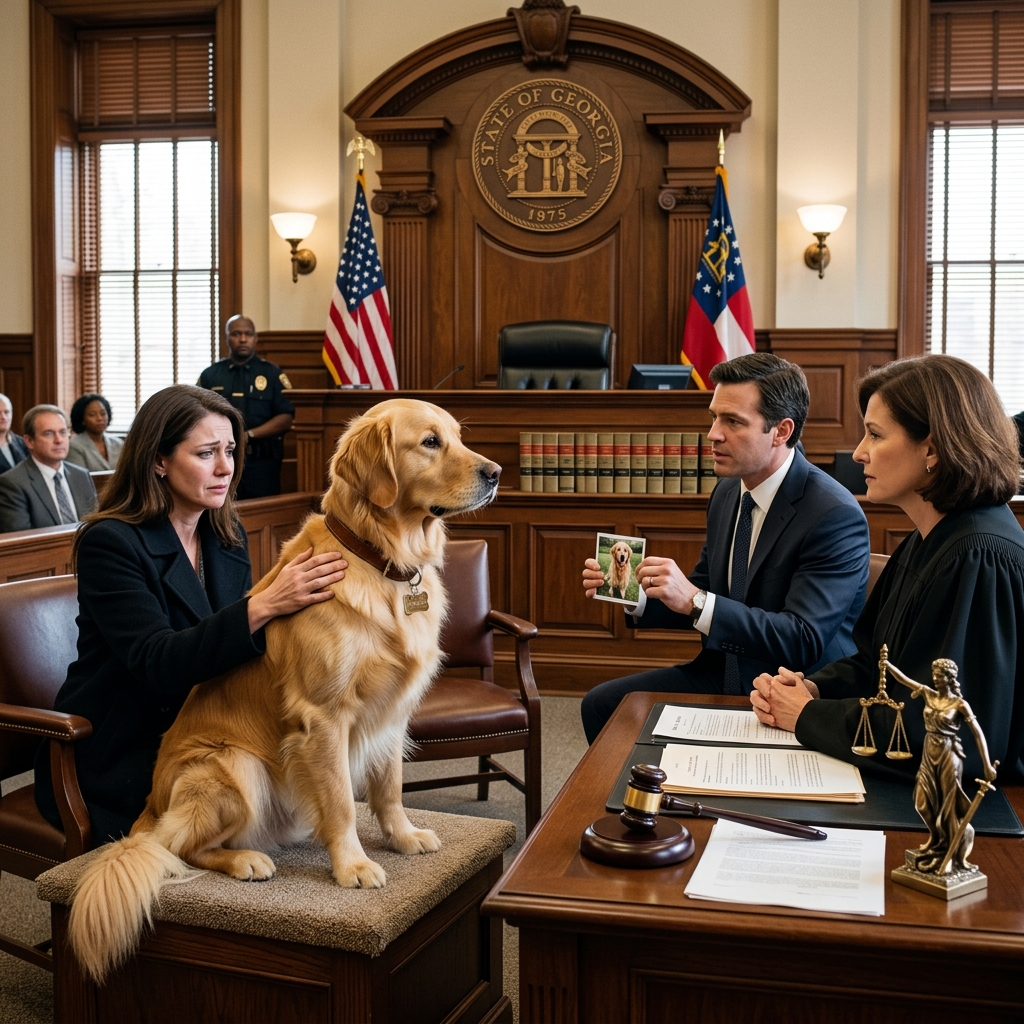
When a pet is injured or killed because someone was careless, grieving owners often ask a difficult question: what is my pet worth under the law? In Georgia, the Supreme Court has addressed this issue directly, creating a framework that balances the traditional view of animals as property with the reality that families routinely spend substantial sums on veterinary care.
This article explains how Georgia courts approach damages in negligence cases involving pets, what kinds of costs owners may recover, and what is still off-limits—especially sentimental value and emotional distress.
Why Courts Must Put a Price on Companion Animals
Most pet owners see their animals as family members, not possessions. Yet in legal disputes, courts must apply rules that were historically designed for property: cars, furniture, and livestock. When litigation arises over an injured or deceased pet, judges are forced to answer two related questions:
- How should the law classify pets? In Georgia, companion animals are treated as personal property, even though they occupy a unique place in modern households.
- What is the correct measure of damages? Courts need a consistent formula for calculating money awards so that juries are not making decisions based purely on emotion.
As veterinary medicine has advanced, owners regularly spend thousands of dollars—and sometimes far more—trying to save sick or injured pets. Georgia’s Supreme Court has acknowledged this reality by allowing recovery of reasonable veterinary costs in addition to an animal’s fair market value.
Core Legal Principle: Pets as Property With Special Characteristics
Under Georgia law, a dog or cat is legally a form of personal property, just like other tangible items someone owns. This classification has important consequences:
- In negligence cases, damages are generally tied to the economic loss of property, not the emotional loss of a family member.
- Long-standing precedent governs how to value property, including animals, if they are destroyed or damaged.
However, the Georgia Supreme Court recognized that pets are not exactly like other property. They have individual characteristics, training, and health histories, and their owners may incur substantial medical costs when they are injured. As a result, the court adopted what many commentators describe as an “intermediate” approach: affirming the property classification, but allowing broader economic recovery than the bare purchase price would suggest.
Key Georgia Supreme Court Ruling on Pet Damages
The modern framework comes from the Georgia Supreme Court’s decision in a case involving a dog that received the wrong medication at a boarding facility, leading to severe illness and extensive veterinary bills. While the details are specific to that dispute, the court’s reasoning now shapes how similar cases are handled across the state.
What Damages Can Owners Recover?
In negligence cases involving the death or injury of a pet, the Georgia Supreme Court held that the proper measure of damages is:
| Type of Damage | Recoverable? | Explanation |
|---|---|---|
| Fair market value of the animal | Yes | The value of the pet as property at the time of loss, considering objective characteristics such as breed, age, training, and temperament. |
| Reasonable veterinary and related medical expenses | Yes | Costs incurred to treat the animal’s injuries caused by negligence, even if they exceed the pet’s market value, as long as they are deemed reasonable. |
| Sentimental or intrinsic value of the pet | No | Non-economic value based on the pet’s role as a family member or emotional attachment is not compensable under current Georgia law. |
| Owner’s emotional distress | Generally no | Courts have declined to treat the loss of a pet as a basis for separate non-economic damages for the owner, absent special circumstances. |
This approach allows owners to pursue meaningful financial recovery when negligence forces them to incur substantial medical costs, while still keeping the damages grounded in economic measures rather than emotional worth.
How “Fair Market Value” of a Pet Is Determined
Because many pets are adopted or obtained for little or no cost, fair market value is not always obvious. Georgia courts have indicated that market value can be proven using both quantitative and qualitative evidence. Relevant considerations may include:
- Breed and lineage – Purebred or specially bred animals may have higher market value, supported by evidence of typical sale prices.
- Age and health – Young, healthy animals often have greater market value than very old or chronically ill pets.
- Training and skills – Working dogs, service animals, or highly trained companions can be valued based on their specialized abilities.
- Temperament and suitability – Evidence that a pet had particularly desirable traits, such as good temperament or specific uses, may support a higher valuation.
Georgia precedent recognizes that when a pet lacks a conventional market price, courts must still attempt to assess its fair market value using these attributes and any available expert testimony.
Reasonable Veterinary Costs: The Role of the Jury
One of the most important aspects of the Georgia Supreme Court’s ruling is its treatment of veterinary expenses. The court held that owners may recover the reasonable cost of care and treatment for injuries negligently inflicted on a pet, even if those costs are higher than the pet’s market value. This recognizes that owners often prioritize the animal’s life over economic calculus.
However, the court did not grant a blank check. It emphasized that:
- Reasonableness is a fact question – It is up to the jury (or judge, in a bench trial) to decide whether the treatment choices and associated costs were reasonable under the circumstances.
- Evidence of veterinary standards is important – Testimony from veterinarians and documentation of treatment plans can help demonstrate that the care was medically appropriate.
- Extraordinary measures may be scrutinized – Experimental or heroic interventions with very low chances of success may be harder to justify as reasonable expenses.
This framework encourages owners to act responsibly in seeking veterinary care while preserving their ability to recoup substantial costs when a pet is harmed through another’s negligence.
What Georgia Law Explicitly Refuses to Cover
While the Supreme Court expanded the scope of economic recovery compared to a strict purchase-price rule, it was equally clear about the limits of damages in pet cases.
No Sentimental or Intrinsic Value Damages
The court rejected the idea that owners can recover based on the pet’s sentimental or intrinsic value to the household. In practice, this means:
- Courts will not award damages simply because a pet is considered a family member or has deep emotional significance.
- Juries must not base their awards on sympathy alone; they must rely on evidence of market value and reasonable cost of care.
Commentators have noted that this stance preserves traditional limits on non-economic damages in property cases and avoids unpredictable verdicts driven by the emotional impact of losing a beloved animal.
No Standalone Emotional Distress Claims for Owners
Georgia law also maintains a clear separation between property damage and personal emotional harm. Absent special circumstances, such as intentional infliction of emotional distress or other independent torts, courts do not treat anguish over a pet’s injury or death as a separate, compensable harm. This keeps pet-related negligence damages aligned with property law, rather than personal-injury law.
How Georgia’s Approach Compares to Broader Trends
Animal law scholars and advocacy organizations have closely followed cases like Georgia’s, viewing them as part of a broader national conversation about the legal status of companion animals. Although states differ in detail, several themes are emerging:
- Property classification remains dominant – Most jurisdictions still treat pets as property, even as they acknowledge their unique role in families.
- Economic damages are expanding – Courts increasingly allow recovery of substantial veterinary costs that exceed the animal’s purchase price, recognizing modern care practices.
- Non-economic damages are limited – The majority of courts resist awarding sentimental or emotional-distress damages for pet loss, concerned about consistency and predictability.
Georgia’s decision fits squarely within this trend, offering somewhat more generous economic recovery while reaffirming traditional limits on non-economic damages.
Practical Implications for Pet Owners in Georgia
For Georgia residents, understanding this legal framework can help manage expectations and inform decisions if a pet is harmed by negligence.
Documenting Your Pet’s Market Value
If litigation seems likely, owners should gather evidence that could support a fair market valuation. Useful documentation may include:
- Purchase or adoption records that show any fee paid for the animal.
- Pedigree papers or registration certificates for purebred pets.
- Training records, certifications, or proof of specialized skills (e.g., service-dog accreditation).
- Medical records demonstrating overall health prior to the incident.
Such information can help experts and juries assess a realistic market value consistent with Georgia precedent.
Tracking Veterinary Expenses After an Incident
Owners should carefully track all veterinary and related costs incurred to treat a pet injured by someone else’s negligence. Important steps include:
- Keeping detailed invoices from veterinarians, emergency clinics, and specialist providers.
- Obtaining written treatment plans and prognoses from the attending veterinarian.
- Recording any discussions about likely success rates, alternative treatments, and cost considerations.
This documentation can help demonstrate that the care sought was medically appropriate and financially reasonable, supporting a claim for recovery of veterinary expenses.
Managing Expectations About Emotional Loss
Perhaps the most challenging aspect for grieving owners is recognizing that the legal system does not directly compensate emotional loss. While courts acknowledge the depth of human–animal bonds, they remain constrained by property-based rules. Understanding this limitation in advance may help avoid unrealistic expectations about potential financial awards.
Frequently Asked Questions (FAQ)
Can I be compensated for the grief of losing my pet?
In Georgia, negligence-based claims for pet loss focus on economic damages—market value and reasonable veterinary expenses. Courts do not generally award separate damages for grief or emotional distress stemming from the pet’s injury or death.
What if my pet was adopted and had no purchase price?
Even if a pet was obtained for free, Georgia courts still look to fair market value, not just purchase price. Evidence of breed, age, health, and training may support a market valuation, and owners may still recover reasonable veterinary costs.
Can veterinary expenses exceed the pet’s market value?
Yes. The Georgia Supreme Court expressly allowed recovery of reasonable veterinary costs even when they exceed the animal’s fair market value, recognizing the unique nature of companion animals and modern veterinary practices.
Who decides whether my veterinary expenses were reasonable?
Reasonableness is ultimately a question for the fact-finder—the jury in a jury trial or the judge in a bench trial. They will evaluate evidence about the treatment provided, its medical necessity, and its cost compared to usual standards of care.
Does Georgia’s approach mean pets are treated like people under the law?
No. While Georgia’s framework allows more robust economic recovery than a strict purchase-price rule, pets remain classified as property. The law does not grant them legal personhood or provide non-economic damages comparable to those available in human personal-injury or wrongful-death cases.
References
- Barking Hound Village, LLC v. Monyak — Supreme Court of Georgia. 2016-06-06. https://law.justia.com/cases/georgia/supreme-court/2016/s15g1184.html
- How Much is That Doggie in the Window? The Georgia Supreme Court Looks at the Measure of Damages for a Lost Pet — Smith, Gambrell & Russell, LLP. 2016-06-09. https://www.sgrlaw.com/how-much-is-that-doggie-in-the-window-the-georgia-supreme-court-looks-at-the-measure-of-damages-for-a-lost-pet/
- Georgia’s Supreme Court Offers Value to Dog’s Life — Dean Phillips Law. 2016-06-10. https://deanphillipslaw.com/georgias-supreme-court-offers-value-dogs-life/
- Fight for Animals’ Intrinsic Value in Wrongful Death of Dog — Animal Legal Defense Fund. 2016-06-07. https://aldf.org/case/fight-for-animals-intrinsic-value-in-wrongful-death-of-dog/
- Georgia Cases — Animal Legal & Historical Center — Michigan State University College of Law. Accessed 2024-10-01. https://www.animallaw.info/cases/us/georgia
- Ga. Court Sets Standard for Pet Value — Atlanta Jewish Times. 2016-06-09. https://www.atlantajewishtimes.com/ga-court-sets-standard-pet-value/
- Blog: Another Court Opinion Scaring Folks About the Status of Pets as Property — dvm360. 2016-06-27. https://www.dvm360.com/view/blog-another-court-opinion-scaring-folks-about-status-pets-property
Similar Articles








Read full bio of medha deb


