
How Criminal Charges Are Brought in the U.S.
Understand how investigations, prosecutors, and courts work together to turn suspected crimes into formal criminal charges and court cases.
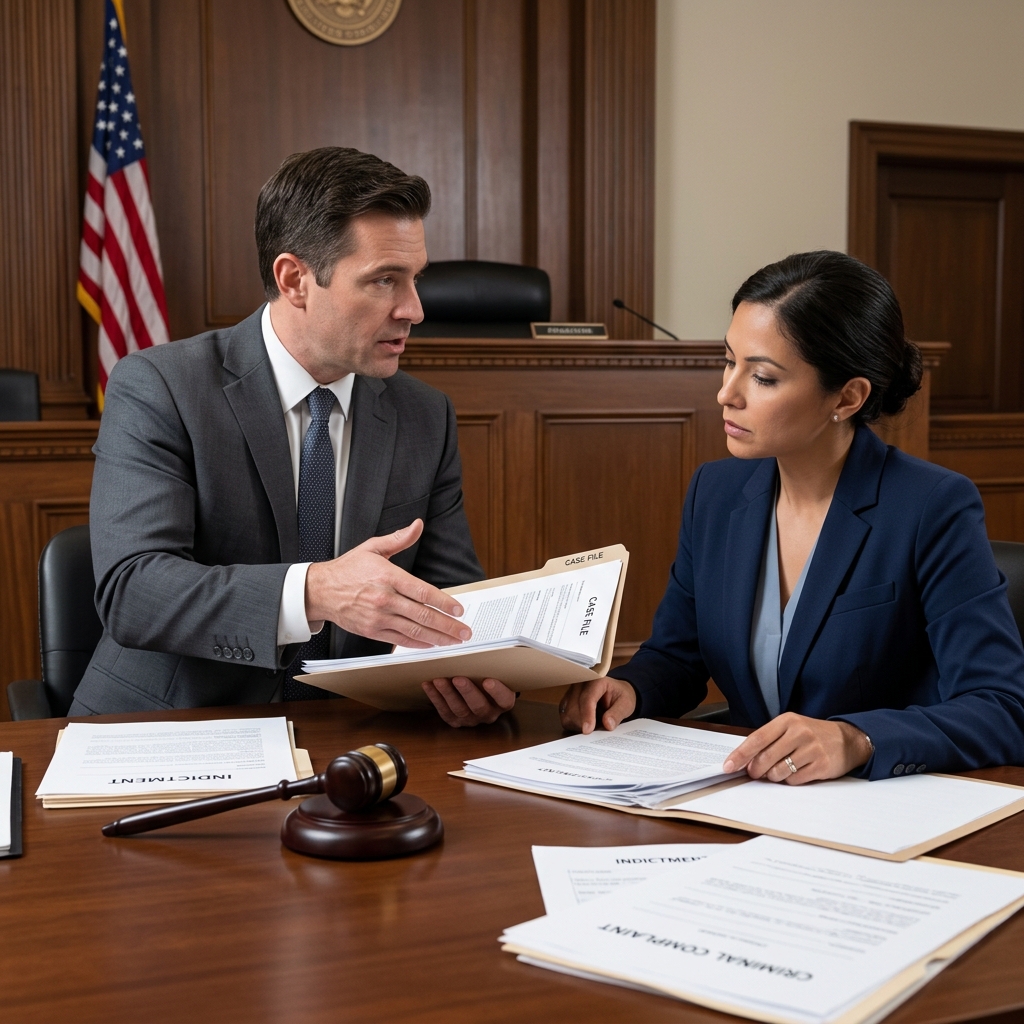
When someone is accused of a crime in the United States, the case does not begin with a courtroom drama. It starts with a structured process that moves from investigation to formal charges, and then into the criminal court system. Only the government, acting through prosecutors, can file criminal charges and start a criminal case, usually in coordination with law enforcement agencies.
This guide explains, in clear language, how criminal charges are brought, what documents and decisions are involved, and what an accused person can expect in the early stages of a criminal case.
Who Can Bring Criminal Charges?
In the U.S. system, private individuals cannot file criminal charges on their own. They may report alleged crimes, but the decision to bring charges belongs to government prosecutors.
- Law enforcement agencies (for example, local police, sheriffs, or federal agencies like the FBI) investigate suspected crimes and gather evidence.
- Prosecutors (such as district attorneys at the state level or U.S. Attorneys at the federal level) review that evidence and decide whether to file criminal charges.
- Courts oversee the process once charges are filed, making sure the case follows constitutional and procedural rules.
Victims, witnesses, and the public can notify law enforcement of possible criminal activity. Allegations of criminal behavior should be reported to the appropriate agency, but only the government decides whether to initiate a criminal case.
From Suspicion to Case: The Role of Investigation
The path to criminal charges usually begins with an investigation. This may be brief for straightforward incidents, or it may last months or years in complex matters.
Typical investigative steps include:
- Receiving reports from victims, businesses, or other agencies.
- Interviewing witnesses and suspects to gather information.
- Collecting physical and digital evidence such as documents, video recordings, or electronic data.
- Using legal tools like subpoenas, search warrants, or surveillance, when authorized.
If investigators believe a crime has been committed and identify a suspect, they work with prosecutors to present the evidence. At this point, the question becomes whether the evidence is strong enough and legally sufficient to justify formal charges.
How Prosecutors Decide to File Charges
Once law enforcement completes its initial work, the case is handed to a prosecuting authority. The prosecutor is responsible for deciding if charges should be filed and what specific offenses to allege.
Key factors in charging decisions include:
- Strength of the evidence: Is there probable cause to believe the suspect committed a particular crime?
- Applicable law: Does the conduct match the elements of a specific criminal statute?
- Seriousness of the offense: Felonies, especially those involving violence or large financial harm, receive close scrutiny.
- Public interest and resources: Prosecutors consider whether pursuing the case is an appropriate use of limited resources.
Only if the prosecutor concludes that the evidence supports at least a reasonable likelihood of conviction and that bringing charges is in the public interest will the case move forward to a formal charging document.
Common Charging Documents: Complaints, Informations, and Indictments
Formal charges are set out in written documents filed with the court. These documents identify the defendant, describe the alleged offense, and cite the laws supposedly violated.
| Charging Document | Typical Use | Who Issues It? |
|---|---|---|
| Criminal complaint | Frequently used for initial charges, especially in misdemeanor or early stages of a case. | Filed by a prosecutor, often supported by an affidavit from law enforcement. |
| Information | A formal accusation issued by a prosecutor without grand jury involvement. | Signed and filed by the prosecutor. |
| Indictment | Formal charges approved by a grand jury, commonly used for serious federal felonies. | Returned by a grand jury based on evidence presented by the prosecutor. |
Each document serves the same basic purpose: to give the accused clear notice of what they are alleged to have done, and under which laws, so they can prepare a defense.
The Grand Jury and Indictment Process (Primarily Federal)
In many serious federal cases, charges cannot be filed solely on a prosecutor’s signature. The U.S. Constitution and federal law require an indictment approved by a grand jury for crimes punishable by death or long terms of imprisonment.
A grand jury is a group of citizens who meet in closed proceedings to determine whether there is probable cause to charge an individual with one or more crimes.
In the grand jury process:
- The prosecutor presents evidence, including documents and witness testimony.
- The proceedings are not open to the public, and the defense normally does not present evidence or cross-examine witnesses.
- If the grand jury finds probable cause, it issues an indictment, which formally charges the defendant.
Once an indictment is returned, federal agents may arrest the suspect if that has not already occurred, and the case proceeds to the first court appearance.
Arrest and Initial Court Appearance
Criminal charges often lead to an arrest, though sometimes a defendant is notified of charges and asked to appear in court without being taken into custody. In the federal system, arrest may follow a search warrant, complaint, or indictment.
After arrest, the accused must be brought promptly before a judge. At this initial appearance:
- The judge advises the defendant of the charges and of key constitutional rights, including the right to counsel and the right to remain silent.
- The court considers whether the defendant should be released before trial, possibly on bail or under conditions, or remain detained.
- The judge may make an initial determination of probable cause if the case began with a complaint rather than an indictment.
This early hearing is mainly about informing the accused and addressing pretrial release, not about deciding guilt or innocence.
Arraignment: Formal Notice and Plea
Shortly after charges are filed, the accused appears in court for an arraignment. This is a crucial step because it formally introduces the charges to the defendant and sets the case on a path toward trial or negotiated resolution.
During arraignment:
- The judge or court clerk reads the charges or provides a written copy of the charging document.
- The defendant is informed of their rights, such as the right to an attorney and to a jury trial.
- The defendant is asked to enter a plea to the charges, commonly:
- Not guilty – contests the charges and proceeds toward trial.
- Guilty – admits the offense, often leading toward sentencing.
- No contest (nolo contendere) – does not admit guilt but accepts conviction; not available in all jurisdictions.
If the defendant pleads not guilty, the case moves into pretrial stages, including discovery and motions. If the defendant pleads guilty or no contest, the court will schedule a sentencing hearing.
Early Pretrial Steps After Charges Are Filed
Once charges are formally in place and the defendant has been arraigned, the criminal case enters pretrial preparation. These steps do not change the charges themselves but determine what evidence can be used and how the case will proceed.
Main early pretrial activities include:
- Discovery: The prosecution and defense exchange information and evidence, such as witness lists, reports, and recordings.
- Pretrial motions: Each side may ask the court to make legal rulings, for example to suppress certain evidence or dismiss charges.
- Plea negotiations: Prosecutors and defense attorneys discuss possible plea agreements that might resolve the case without trial.
In felony cases, some states and federal courts may also hold a preliminary hearing to decide whether there is enough evidence to continue toward trial, particularly when there is no grand jury indictment.
How Criminal Charges Differ from Civil Claims
It is important to distinguish criminal charges from civil lawsuits, because the way cases are started and proved is very different.
- Who initiates the case? Only the government initiates a criminal case; private parties initiate civil cases.
- Objective: Criminal cases aim to determine criminal responsibility and potentially impose penalties such as incarceration or fines. Civil cases aim to resolve disputes and award monetary damages or court orders.
- Burden of proof: In criminal trials, the government must prove guilt beyond a reasonable doubt. In civil trials, the usual standard is a preponderance of the evidence, a lower threshold.
Even when both criminal and civil proceedings arise from the same events, criminal charges follow the public prosecution process described in this article, not the rules that govern private lawsuits.
What Accused Persons Should Know About Early Stages
Being the subject of a criminal investigation or facing newly filed charges can be confusing and frightening. Understanding the early steps helps individuals make informed decisions and exercise their rights.
Key points for anyone who may face charges:
- Only a prosecutor can decide to file criminal charges; law enforcement and victims do not control this decision.
- A charging document—complaint, information, or indictment—will describe the alleged crimes and must be provided to the defendant.
- If arrested, the accused has a right to prompt court appearance and information about the charges.
- At arraignment, the defendant should understand that their plea choice affects whether the case goes to trial or moves directly toward sentencing.
- Early legal representation can help evaluate evidence, advise on plea options, and challenge improper charges or procedures.
Frequently Asked Questions About How Charges Are Brought
Can a victim directly file criminal charges?
No. Victims can report alleged crimes and cooperate with investigators, but criminal charges are filed only by government prosecutors, not private individuals.
What is the difference between a complaint and an indictment?
A complaint is a charging document usually filed by a prosecutor with supporting statements from law enforcement, often used to start a case quickly. An indictment is returned by a grand jury after it determines there is probable cause to charge one or more crimes.
Do all criminal cases use grand juries?
No. While serious federal felonies generally require grand jury indictments, many state cases proceed on complaints or informations approved by a judge instead of a grand jury.
Can charges change after they are first filed?
Yes. Prosecutors may amend or add charges as new evidence emerges, subject to procedural rules and defendant rights. However, any change must be reflected in an updated charging document and brought before the court.
What if the evidence is weak—can a case still be filed?
Prosecutors are expected to file charges only when there is sufficient evidence to support a reasonable likelihood of proving the case at trial. If evidence is weak, prosecutors may decline charges or later dismiss the case.
Is an arrest always required before charges are brought?
No. In some situations, prosecutors file charges and the court sends a summons asking the defendant to appear. In other cases, law enforcement arrests the suspect and then the prosecutor files charges shortly afterward.
References
- Criminal Cases — United States Courts. 2023-05-01. https://www.uscourts.gov/about-federal-courts/types-cases/criminal-cases
- A Brief Description of the Federal Criminal Justice Process — Federal Bureau of Investigation. 2022-09-15. https://www.fbi.gov/how-we-can-help-you/victim-services/a-brief-description-of-the-federal-criminal-justice-process
- Steps in the Federal Criminal Process — U.S. Department of Justice. 2021-11-30. https://www.justice.gov/usao/justice-101/steps-federal-criminal-process
- Criminal Procedure — Legal Information Institute, Cornell Law School. 2020-08-10. https://www.law.cornell.edu/wex/criminal_procedure
- Criminal court overview — California Courts Self-Help Guide. 2023-03-20. https://selfhelp.courts.ca.gov/criminal-court/overview
- United States criminal procedure — Cited for background; primary sources used instead. 2019-07-01. https://en.wikipedia.org/wiki/United_States_criminal_procedure
Similar Articles








Read full bio of Sneha Tete




