
How Courts Decide Bail in Criminal Cases
A clear, practical guide to how judges set, raise, reduce, or deny bail and what it means for defendants before trial.
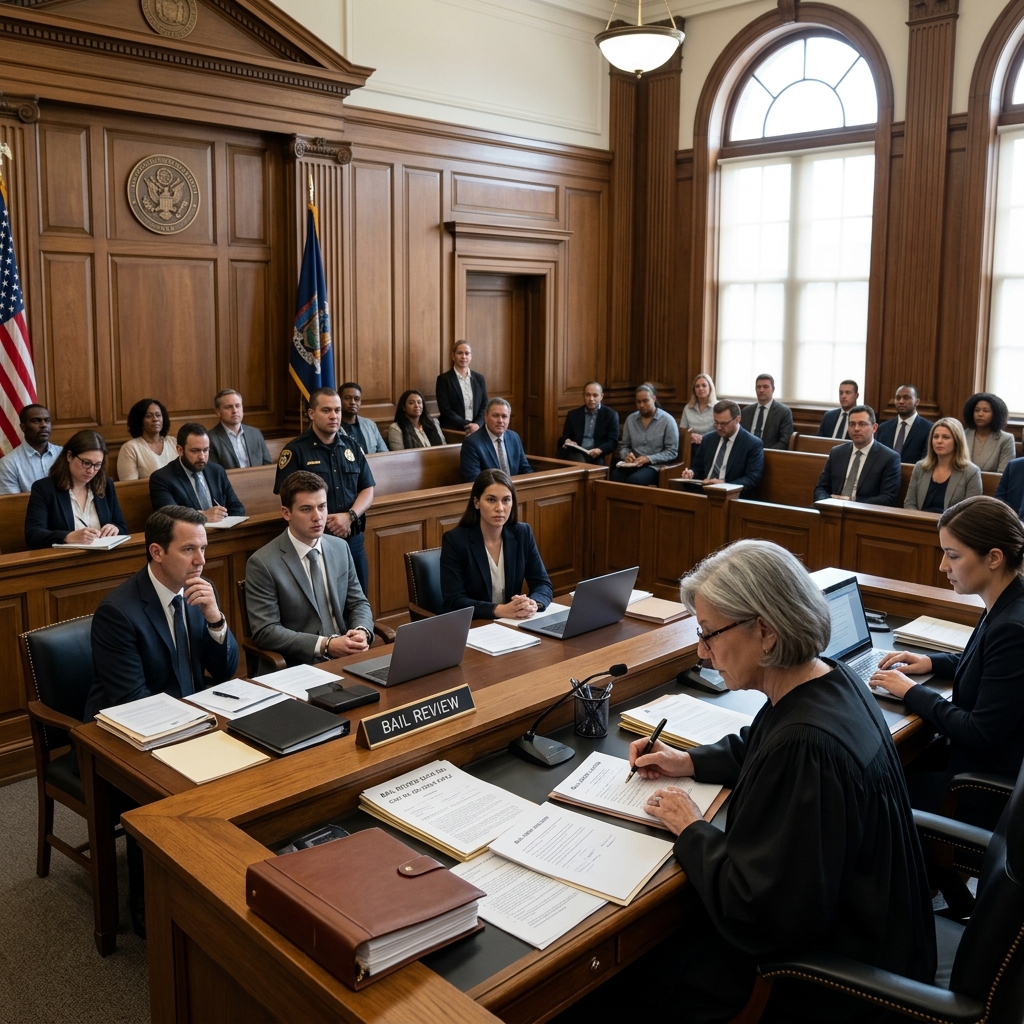
Bail decisions shape what happens to a person accused of a crime between arrest and trial. While the rules vary by jurisdiction, the core idea is the same: bail is used to decide who stays in custody and who goes home while the case moves forward, and under what conditions.
This guide explains how bail is set, which factors judges typically weigh, what happens at a bail hearing, and how bail can be raised, reduced, or denied in serious cases such as homicide, violent assaults, or major fraud.
Understanding the Purpose of Bail
Bail is not meant to punish a person before they have been convicted. In most systems, bail exists to manage risk.
- Primary goal: Make sure the accused shows up for court dates.
- Secondary goal: Protect public safety and prevent new crimes while the case is pending.
- Additional goal: Maintain public confidence in the justice system when serious charges are involved.
Canadian law, for example, expressly identifies three grounds for detaining or releasing a person: ensuring attendance at court, protecting the public, and maintaining confidence in justice. U.S. federal law similarly directs judges to set bail at an amount and with conditions that reasonably assure court appearance and community safety.
Step-by-Step: What Happens From Arrest to Bail Decision
Although details differ by state, province, or country, the bail process in criminal cases usually follows a predictable sequence.
1. Arrest and Booking
Once police arrest someone, the person is taken to a detention facility for booking, which generally includes:
- Recording personal information and alleged charges
- Fingerprinting and photographs
- Health and safety screening
For some minor offenses, police or a bail magistrate may set a standard bail amount or release the person with a promise to appear, without a formal court hearing.
2. Initial Appearance or Arraignment
Most defendants see a judge within a short time after arrest—often within 24–48 hours in many jurisdictions.
- The judge informs the accused of the charges and basic rights.
- The court addresses the question of release, bail amount, or detention.
- In serious cases, the judge may schedule a dedicated bail hearing with more evidence and argument.
3. Bail Hearing
A bail hearing is the formal proceeding where the court decides whether to release the accused, under what conditions, and at what cost.
Typical elements of a bail hearing include:
- Review of charges: The judge looks at the allegations and potential penalties if convicted.
- Prosecutor’s position: The prosecution may argue that the defendant is a flight risk, a danger, or that the case is so serious bail should be high or denied.
- Defense argument: Defense counsel highlights community ties, employment, lack of criminal record, or other factors showing the person can safely be released.
- Evidence and information: The judge may review police reports, prior record, victim impact statements, or pretrial services assessments.
At the end of the hearing, the judge either sets bail, imposes non-financial conditions of release, or orders detention.
Key Factors Judges Consider When Setting Bail
Courts rarely use a single factor to decide bail. Instead, judges weigh multiple considerations relating to risk, fairness, and public confidence.
| Factor | How It Influences Bail |
|---|---|
| Seriousness of the charge | More serious or violent offenses typically lead to higher bail or possible detention. |
| Evidence and likelihood of conviction | Strong evidence and a likely conviction can increase perceived flight risk and raise bail. |
| Past criminal record | Prior offenses, especially similar ones, often push bail higher or lead to denial. |
| Community ties | Stable housing, family, long-term employment, and local roots support lower bail. |
| Financial situation | Courts may consider what the defendant can realistically afford when setting bail. |
| Risk to public safety | If there is a substantial risk of harm, bail may be set very high or denied altogether. |
| History of failing to appear | Prior missed court dates strongly influence judges toward higher bail or stricter conditions. |
For example, Canadian law instructs judges to consider whether detention is needed to prevent flight, protect the public, or maintain confidence in the administration of justice, including the seriousness of the offense and potential sentence. In the U.S. federal system, the court must consider the nature of the crime, community ties, and financial resources when determining bail conditions.
Types of Bail and Pretrial Release
“Bail” can mean a cash amount, a bond, or a set of non-financial obligations the defendant must follow while on release.
Common Forms of Bail
- Cash bail: The full amount is deposited with the court or bail authority, often by the defendant or a surety such as a family member.
- Secured bond: The defendant or a third party pledges property, cash, or other collateral to secure release; failure to appear can lead to forfeiture.
- Unsecured bond: No money is paid upfront, but the defendant promises to pay a specific amount if they miss court.
- Bail bond (commercial bondsman): In some U.S. states, defendants pay a non-refundable percentage (often around 10%) to a bail bond company, which then guarantees the full bail amount to the court.
- Release on recognizance: The court releases the person based on their promise to appear, often used for low-risk defendants.
Conditions Attached to Release
Judges often impose specific rules the defendant must follow while awaiting trial, either along with or instead of money bail.
- Regular check-ins with a probation or pretrial services officer
- Electronic monitoring or curfew requirements
- Prohibition on contacting victims or witnesses
- Travel restrictions or requirements to stay within a certain jurisdiction
- Orders to maintain employment, attend school, or seek treatment (such as counseling or substance use treatment)
Breaching bail conditions can lead to arrest, revocation of bail, new charges, and greater difficulty obtaining release later.
Why Bail Sometimes Reaches Extremely High Amounts
In rare but highly publicized cases—often involving allegations of murder, severe violence, or large-scale financial crimes—courts may set bail in the millions. These decisions are usually driven by a combination of factors, not just the headline charge.
Typical Reasons for Very High Bail
- Extreme flight risk: Evidence that the defendant has the means, motive, or history suggesting they might flee if released.
- Seriousness and potential sentence: Where the possible penalty includes lengthy incarceration, the incentive to avoid trial increases.
- Public safety concerns: Allegations of ongoing danger, threats to victims or witnesses, or risk of further violence.
- Public confidence: Courts may conclude that setting very low bail in a high-profile, serious case would undermine confidence in justice.
In these circumstances, the prosecution may ask the court to set bail at a very high level or to deny bail entirely, while the defense may argue that the amount is excessive and violates constitutional or statutory protections against unreasonable bail.
How Bail Can Be Raised, Reduced, or Reviewed
Bail is not always a one-time, unchangeable decision. Many legal systems allow for later review as new information becomes available.
Reasons Bail Might Be Increased
- The defendant violates release conditions, such as contacting a victim or leaving the jurisdiction.
- New, more serious charges are added based on ongoing investigation.
- Fresh evidence shows the defendant is a greater flight or safety risk than initially believed.
- Public safety concerns rise—for example, credible threats against witnesses.
In many jurisdictions, the prosecution can file a motion asking the court to raise bail or revoke release if circumstances change.
When Bail Can Be Reduced
Defendants and their lawyers can also request bail reductions, sometimes at a special bail review hearing.
- Evidence shows the original amount was more than needed to ensure court appearance.
- The defendant’s financial circumstances make the existing bail effectively equivalent to detention.
- Charges are downgraded, dismissed in part, or the prosecution’s case appears weaker.
- Defendant demonstrates continued compliance and stability over time.
Legal standards often require bail to be no higher than reasonably necessary to manage risk and secure compliance, giving courts authority to adjust it downward when appropriate.
What Happens if the Defendant Fails to Appear?
Bail is tied to a simple promise: appear in court when you are required. Breaking that promise has serious consequences.
- Bail forfeiture: For cash or secured bonds, the court can keep the money or seize collateral if the defendant does not appear.
- New criminal charges: Failing to appear is itself a criminal offense in many jurisdictions.
- Future bail decisions: Judges are far less likely to grant favorable bail terms again, and may order detention.
- Arrest warrants: Courts typically issue a warrant for the defendant’s arrest after a missed appearance.
By contrast, a defendant who attends all hearings and complies with conditions may have cash bail returned at the end of the case, minus applicable fees.
Frequently Asked Questions About Bail
Is bail guaranteed in every criminal case?
No. In serious cases or where there is a strong risk of flight or danger to the public, courts can deny bail and order detention until trial, based on criteria set out in statutes or constitutions.
Can bail be set at any amount the judge chooses?
Judges have wide discretion, but they are typically constrained by constitutional or statutory rules requiring bail to be reasonable and tailored to risk. In the U.S. federal system, for example, bail must be set at a level that reasonably ensures court appearance and safety, not punitive excess.
Do all jurisdictions use commercial bail bond companies?
No. Some U.S. states rely heavily on private bail bondsmen, while others limit or prohibit commercial bail bond practices. Many countries instead use court-managed deposits, unsecured bonds, or non-financial conditions.
Can the victim influence the bail amount?
Victim input can be considered, especially regarding safety concerns, but the judge must base the decision on legal standards and evidence rather than emotion alone. Victim safety is often addressed through specific release conditions, such as no-contact orders.
What should a defendant do if bail is unaffordable?
Defendants can work with counsel to request a bail review or reduction, presenting evidence of financial circumstances, community ties, and low risk. Courts in many jurisdictions recognize that setting bail far beyond a person’s means can amount to pretrial detention and may adjust the amount or use alternative conditions.
Practical Tips for Defendants and Families
While bail law is complex, there are practical steps defendants and families can take to navigate the process more effectively.
- Gather documentation: Employment records, lease agreements, school enrollment, and letters from community members can help demonstrate stability and ties to the jurisdiction.
- Be honest about finances: Courts may be more willing to consider lower bail or non-financial conditions if they understand the defendant’s genuine ability to pay.
- Respect all conditions: Strict compliance with release rules builds credibility and reduces the risk of bail being revoked or increased.
- Consult legal counsel early: Lawyers can advise whether to seek a review, negotiate conditions, or challenge bail as excessive based on local law.
References
- The Bail Process: A Comprehensive Guide — Alabama Criminal Defense Attorney Blog. 2023-05-01. https://www.criminal-defense-attorney.info/blog/the-bail-process-a-comprehensive-guide/
- What Can I Expect During a Bail Hearing? — McCready Law Group. 2024-03-10. https://zacharymccreadylaw.com/blog/what-can-i-expect-during-a-bail-hearing/
- Learn How Bail Is Set — Massachusetts Trial Court, Mass.gov. 2022-07-15. https://www.mass.gov/info-details/learn-how-bail-is-set
- Federal Bail Process — Law Offices of Peter Katz. 2023-02-20. https://www.pkatzlegal.com/federal-criminal-defense/federal-criminal-court-process/federal-bail-process/
- Backgrounder: The Bail Process — Department of Justice Canada. 2023-01-12. https://www.justice.gc.ca/eng/cj-jp/bail-caution/index.html
- Understanding the Bail Process — Dan Mellen, Attorney at Law. 2022-09-30. https://www.danmellenattorney.com/blog-1/understanding-the-bail-process/
- Texas Bail Manual — NACDL. 2020-11-01. https://www.nacdl.org/getattachment/23d6b324-5de3-47a7-842c-4ede36ea6cba/texas-bail-manual-nov-2020.pdf
Similar Articles








Read full bio of medha deb




