
Holding Arizona Accountable: Systemic Prison Neglect
Fighting systemic medical neglect in Arizona state prisons.
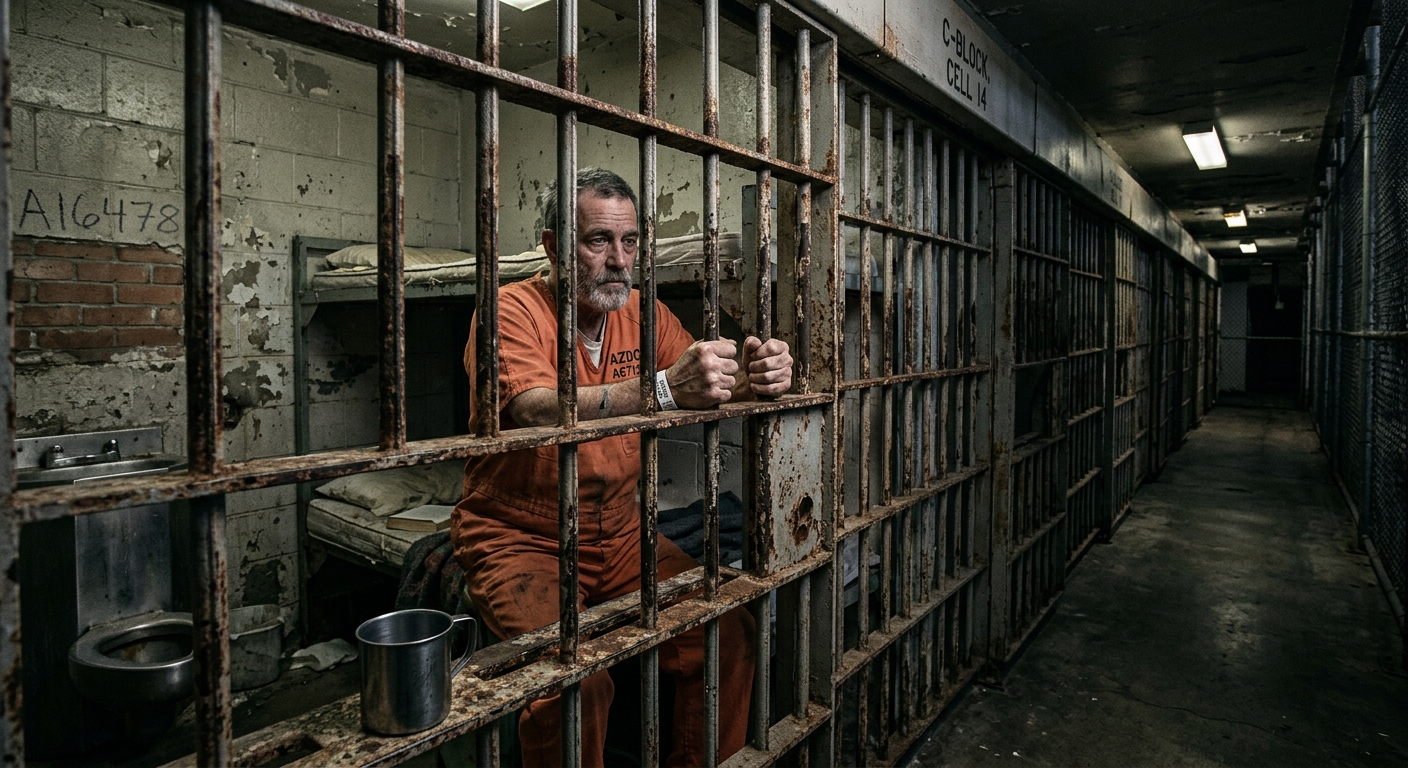
Introduction: A Crisis Behind Bars
Prisons are fundamentally designed to limit an individual’s liberty, not to strip them of their inherent human rights or subject them to physical decay. Yet, for well over a decade, the Arizona Department of Corrections, Rehabilitation, and Reentry (ADCRR) has operated a sprawling correctional system defined by severe medical neglect and brutal confinement practices. Under the Eighth Amendment of the United States Constitution, all incarcerated individuals are legally guaranteed protection from cruel and unusual punishment. This constitutional bedrock inherently includes the right to minimally adequate healthcare, mental health support, and humane living environments.
In Arizona, however, thousands of incarcerated people have been caught in a humanitarian crisis where treatable conditions are ignored, psychological trauma is compounded, and isolation is used as a standard management tool. The relentless legal advocacy by civil rights organizations has systematically dragged these institutional failures into the public eye. At the epicenter of this ongoing struggle is the landmark federal class-action lawsuit Jensen v. Shinn, a case that meticulously exposed the ADCRR’s gross constitutional violations. This article explores the deep-rooted failures of the Arizona state prison system, the protracted legal warfare required to force reforms, and the devastating human toll of bureaucratic apathy.
The Catastrophic Failure of Healthcare
Within the confines of Arizona’s state prisons, attempting to secure basic medical attention is frequently an exercise in futility. A functional and humane healthcare system within any correctional facility requires efficient triage, accurate clinical diagnosis, and timely access to treatments. The ADCRR, which has heavily relied upon privatized healthcare contractors to manage its medical obligations, has routinely failed to meet these non-negotiable baseline standards.
Individuals suffering from severe or chronic conditions—such as advanced diabetes, aggressive cancers, and severe cardiovascular disease—have consistently faced agonizing delays in receiving life-saving specialty care. Trial evidence and persistent monitoring reports have revealed horrifying instances where incarcerated patients exhibited unmistakable signs of severe illness, such as rapid weight loss or highly abnormal lab results, but were left undiagnosed until their ailments reached terminal stages. The overarching approach to prison healthcare in the state has often been reactive rather than preventative, leaving patients to suffer through pain that could easily be mitigated in a standard community medical setting.
Furthermore, the mismanagement of basic medical protocols has resulted in catastrophic outcomes. Documented testimonies in court highlighted cases where simple clinical procedures were botched due to understaffing or poorly trained personnel, leading to permanent physical injuries for the patients involved. The reliance on private, for-profit medical vendors often creates an environment where minimizing operational costs supersedes patient health, fundamentally compromising the standard of care that the Constitution demands.
The Psychological Toll of Solitary Confinement
Compounding the state’s medical negligence is the ADCRR’s extensive and controversial use of solitary confinement. Within the state’s maximum-custody units, incarcerated individuals are frequently subjected to near-total isolation. People are routinely locked inside small, poorly ventilated, and often windowless cells for up to 24 hours a day. This extreme environment denies them meaningful human contact, adequate natural sunlight, and essential environmental stimulation.
Prolonged solitary confinement is widely condemned by international human rights organizations and medical professionals as a form of psychological torture. In the Arizona system, individuals who are placed in these isolation units are disproportionately those already battling severe pre-existing mental health disorders. Instead of receiving necessary psychiatric intervention and therapeutic support, these individuals are met with sensory deprivation and extreme social isolation. This environment inevitably exacerbates underlying psychiatric conditions, frequently leading to heightened anxiety, severe depression, visual and auditory hallucinations, and a tragically elevated rate of self-harm and suicide.
Federal court findings have heavily criticized Arizona’s deployment of solitary confinement, noting that the state subjects its incarcerated population to harsh and deprived conditions that strip away basic human dignity. The severe lack of structured out-of-cell time, coupled with extreme restrictions on family visitation and a complete absence of rehabilitative programming, creates a systemic pressure cooker designed to break the human psyche rather than prepare individuals for eventual reentry into society.
A Decade of Defiance: The Legal Battle
The trajectory toward holding Arizona officials accountable has been a complex and protracted legal battle characterized by the state’s persistent evasion of its constitutional duties. The origins of this fight date back to 2012 when a coalition of legal advocates filed a comprehensive class-action lawsuit on behalf of everyone incarcerated in Arizona’s state prisons. The case, originally known as Parsons v. Ryan and later transitioning to Jensen v. Shinn, sought systemic injunctions rather than monetary damages.
Initially, a breakthrough seemed imminent in 2014 when the state and the plaintiffs reached a sweeping settlement agreement. Under this agreement, the ADCRR consented to implement over a hundred specific performance measures designed to overhaul its medical, dental, and mental healthcare services. However, the anticipated era of reform never materialized. Over the following years, state officials systematically failed to comply with the court-mandated performance benchmarks. Despite being repeatedly fined millions of dollars for civil contempt of court, the financial penalties proved entirely insufficient to force genuine operational changes within the prisons.
Faced with the state’s blatant and ongoing intransigence, U.S. District Judge Roslyn O. Silver took a highly unusual and decisive judicial step in July 2021: she completely rescinded the 2014 settlement agreement and ordered the case to proceed to trial. During an extensive federal trial in late 2021, an overwhelming mountain of evidence was presented to the court, detailing horrific medical neglect and agonizing conditions in maximum-security units.
On June 30, 2022, Judge Silver issued a monumental 200-page ruling that categorically condemned the state’s prison operations. She declared that the state was operating a medical system that was “plainly grossly inadequate” and found that correctional officials were acting with deliberate indifference to the health and safety of incarcerated people. The ruling unequivocally affirmed that Arizona was violating the Eighth Amendment rights of its prison population.
Mortality Rates and The Human Cost
The legal phrase “deliberate indifference” is a highly clinical term that completely fails to capture the visceral, day-to-day suffering endured by those trapped inside Arizona’s facilities. The true cost of this systemic negligence is ultimately measured in lost human lives. While comprehensive, real-time data on in-custody deaths can sometimes be difficult to access due to opaque reporting practices, historical data compiled by the Bureau of Justice Statistics highlights the severe mortality risks inherent in state prison systems.
According to federal data, the vast majority of deaths in state prisons nationwide—nearly 87 percent between 2001 and 2019—are attributed to illnesses. In environments like Arizona’s prisons, where medical intervention is chronically delayed or denied, manageable illnesses rapidly devolve into fatal conditions.
For the families of incarcerated individuals, the agonizing lack of communication regarding a loved one’s health often ends in an abrupt and tragic notification of death. Preventable fatalities in these facilities are a direct byproduct of systemic understaffing, inadequate medical screening, and a pervasive institutional culture that prioritizes security and cost-cutting over basic humanity. By failing to intervene when critical health warnings arise, the state effectively sanctions a shadow system of capital punishment, executed through bureaucratic apathy and medical neglect rather than a formal judicial sentence.
The Path Forward: Mandates and Monitoring
Securing a sweeping federal judgment is only half of the equation; the true challenge lies in forcing a recalcitrant state agency to implement actual change. Following the historic 2022 ruling, the federal court issued stringent remedial orders mandating substantial, structural overhauls to healthcare staffing levels, medical screening protocols, and the living conditions within isolation units.
However, given the ADCRR’s decade-long history of noncompliance and evasion, civil rights attorneys maintain aggressive, continuous monitoring of the prison system. Legal advocates regularly review medical files, interview incarcerated patients, and conduct on-site inspections of prison facilities to ensure that the court’s mandates are translating into tangible improvements on the ground.
Because state officials have historically proven so resistant to reform, plaintiffs have continuously explored the possibility of requesting a federal receivership. A receiver is an independent expert appointed by a federal judge to temporarily take over the day-to-day management of a specific government function—in this case, the prison healthcare system. While appointing a receiver is considered a drastic judicial intervention, advocates argue it may be the only viable mechanism left to strip control from state officials who have demonstrated a lethal incapacity to safely manage their own facilities.
Broader Implications for Justice Reform
The ongoing crisis in Arizona serves as a grim microcosm of the broader, systemic issues plaguing the American penal system at large. The increasing reliance on privatized prison healthcare, the severe lack of independent oversight, and the societal marginalization of incarcerated populations create a fertile environment for human rights abuses to flourish unchecked.
The legal victories achieved in the Jensen v. Shinn litigation set a critical precedent for civil rights law, powerfully reinforcing the principle that constitutional rights do not simply evaporate the moment a person crosses the threshold of a prison. The case stands as a stark warning to other state jurisdictions that prioritize budget austerity over constitutional obligations, emphasizing the absolute necessity of relentless legal advocacy and robust public scrutiny.
Frequently Asked Questions
What does the Eighth Amendment protect in the context of prisons?
The Eighth Amendment of the U.S. Constitution prohibits the federal and state governments from inflicting “cruel and unusual punishments.” In the context of the penal system, the Supreme Court has interpreted this to mean that prison officials must provide humane conditions of confinement, which includes ensuring that incarcerated individuals receive adequate food, clothing, shelter, and medical care.
What was the primary ruling in Jensen v. Shinn?
In June 2022, a federal judge ruled that the Arizona Department of Corrections, Rehabilitation, and Reentry was violating the constitutional rights of incarcerated people. The court found that the state’s medical and mental health care systems were “plainly grossly inadequate” and that the conditions in maximum-custody solitary confinement units amounted to cruel and unusual punishment.
Why did the federal judge rescind the 2014 settlement agreement?
The judge rescinded the original 2014 settlement agreement in 2021 because the State of Arizona consistently and persistently failed to meet the court-mandated performance benchmarks for healthcare delivery. Despite millions of dollars in contempt fines, the state did not make the necessary systemic improvements to protect the health of incarcerated individuals.
What is a federal receiver in prison litigation?
A federal receiver is an independent, court-appointed official granted the authority to take over the management and operations of a failing institution. In prison healthcare litigation, a receiver can be appointed to bypass state officials and directly implement mandated reforms, hire staff, and restructure the healthcare delivery system when the state has proven incapable or unwilling to do so.
Conclusion
The battle for humane conditions within Arizona’s prisons is far from over, but the relentless pursuit of justice by civil rights organizations has ensured that these systemic failures can no longer be hidden in the shadows. True accountability requires more than just judicial rulings; it demands a fundamental shift in how society values the lives of those it chooses to incarcerate. As the monitoring of the ADCRR continues, the ongoing litigation remains a pivotal testament to the importance of defending the constitutional rights and basic dignity of all human beings, regardless of their legal status.
References
- JENSEN v. SHINN (2022) Case Order — United States District Court, D. Arizona. 2022-06-30. https://caselaw.findlaw.com/court/us-dis-crt-d-ari/2144349.html
- Mortality in State and Federal Prisons, 2001–2019 – Statistical Tables — Bureau of Justice Statistics. 2021-12-01. https://bjs.ojp.gov/library/publications/mortality-state-and-federal-prisons-2001-2019-statistical-tables
- Jensen v. Thornell (formerly Jensen v. Shinn) Case Overview — Prison Law Office. 2025-05-15. https://prisonlaw.com/cases/jensen-v-thornell/
Similar Articles








Read full bio of medha deb




