
How the Government Prosecutes Criminal Civil Rights Violations
Understand how federal authorities investigate, charge, and prosecute criminal civil rights violations, and what that means for victims seeking justice.
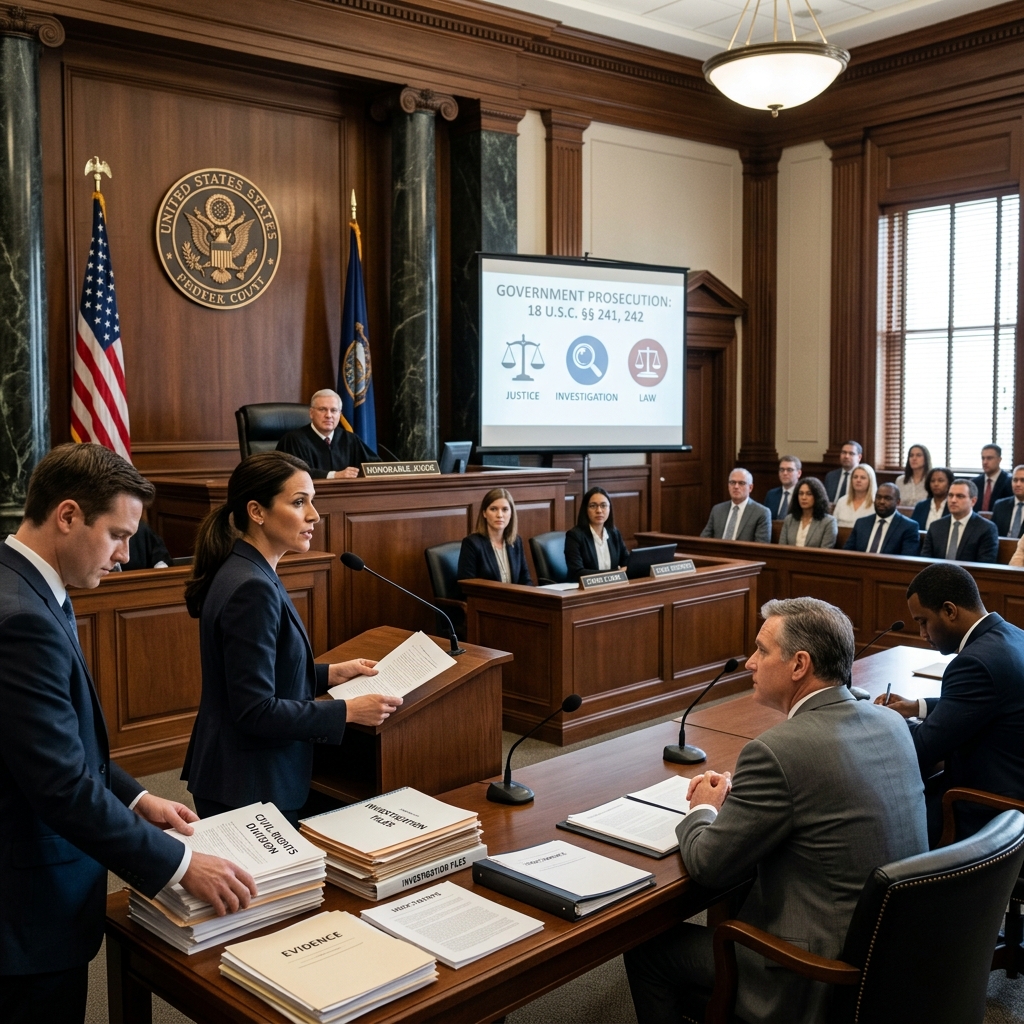
Criminal civil rights prosecutions are one of the strongest tools the United States government uses to respond to serious abuses such as hate crimes, police brutality, and conspiracies to deprive people of fundamental freedoms. These cases are distinct from private civil lawsuits and involve federal prosecutors seeking fines, imprisonment, or even life sentences when violations are severe.
This article explains how criminal civil rights laws work, which agencies enforce them, what kinds of conduct are covered, and how these government actions relate to your own options as a victim or witness.
Criminal Civil Rights Law vs. Civil Remedies
When civil rights are violated, the law provides two broad pathways: criminal enforcement by the government and civil remedies pursued by individuals.
| Feature | Criminal Civil Rights Case | Civil Rights Lawsuit |
|---|---|---|
| Who brings the case? | Government prosecutors (usually the U.S. Department of Justice) | Private individual or organization, typically with an attorney |
| Main goal | Punish unlawful conduct and deter future violations | Compensate the victim and obtain injunctive relief (orders to stop or change behavior) |
| Possible consequences | Fines, probation, imprisonment, sometimes life sentence or death penalty | Money damages, orders to change policies, attorneys’ fees |
| Standard of proof | Beyond a reasonable doubt | Preponderance of the evidence (more likely than not) |
| Control over case | Government decides whether to charge, what charges to bring, and whether to settle | Plaintiff and their lawyer choose whether to file, settle, or go to trial |
Understanding this distinction helps clarify that a victim can seek justice both through government prosecution and through a separate civil lawsuit, and the outcome of one does not necessarily control the other.
Key Federal Criminal Civil Rights Statutes
The federal government uses a set of specific criminal statutes to prosecute civil rights violations. These laws cover a range of misconduct, from abuse by officials to hate-motivated violence.
Deprivation of Rights Under Color of Law (18 U.S.C. § 242)
One of the most important criminal civil rights laws is 18 U.S.C. § 242, which makes it a crime for anyone acting “under color of law” to willfully deprive another person of rights protected by the Constitution or federal statutes. This statute is often used in cases involving police officers, jail staff, or other government officials who misuse their authority.
To bring a case under this law, prosecutors must show four elements:
- The victim was an inhabitant of a U.S. state, territory, or district when the violation occurred.
- The defendant acted under color of law (for example, as a police officer on duty or a government employee using official power).
- The defendant’s actions deprived the victim of a right secured or protected by the Constitution or federal law.
- The defendant acted willfully, with specific intent to violate that right.
Penalties depend on the severity of the conduct and harm caused. Violations can be punished by up to one year in prison and fines, but if bodily injury, weapons, or death are involved, the maximum penalty can rise to ten years, life imprisonment, or even the death penalty in extreme cases.
Conspiracy to Interfere with Civil Rights (18 U.S.C. § 241)
Another major statute, 18 U.S.C. § 241, targets conspiracies to injure, threaten, or intimidate people in the free exercise of rights such as voting or equal access to public services. This law applies when two or more people work together to interfere with protected rights, including when they disguise themselves or act covertly to hinder those rights.
Because conspiracies can magnify harm and make violations harder to detect, § 241 allows for serious penalties—up to ten years in prison, and potentially longer terms when repeat offenders are involved or when the conspiracy results in serious injury or death.
Federal Hate Crime Laws
Modern federal hate crime statutes criminalize violence and attempted violence motivated by characteristics such as race, color, religion, national origin, sexual orientation, gender, gender identity, or disability. These laws allow the federal government to step in when crimes are driven by bias and local authorities cannot or do not adequately respond.
Maximum penalties can reach ten years in prison for nonfatal incidents, and life imprisonment or longer if the offense includes killing, attempted killing, kidnapping, or aggravated sexual abuse. There are also specific rules about the statute of limitations—how long prosecutors have to bring charges—depending on whether the offense results in death.
Pattern-or-Practice Misconduct by Law Enforcement
Beyond individual criminal cases, the federal government can address systemic civil rights violations by law enforcement and juvenile justice agencies. Under a civil “pattern-or-practice” statute, it is unlawful for government authorities to engage in patterns of conduct that routinely deprive people of constitutional rights, such as widespread excessive force, discriminatory harassment, or unlawful stops and arrests.
These actions generally involve civil enforcement rather than criminal prosecution, but they often accompany or follow criminal cases against individual officers or officials.
Who Investigates and Prosecutes Criminal Civil Rights Cases?
Criminal civil rights enforcement involves several federal agencies working together. Each plays a distinct role, from gathering facts to arguing cases in court.
Role of the FBI
The Federal Bureau of Investigation (FBI) is the primary federal agency responsible for investigating possible violations of federal civil rights statutes. When credible allegations arise—such as claims of police brutality, hate crimes, or conspiracies to suppress voting—the FBI may open an investigation.
Types of misconduct the FBI examines include:
- Excessive or unreasonable use of force by officials.
- Discriminatory harassment based on race, religion, or other protected traits.
- False arrest or fabrication of charges.
- Coercive sexual conduct by officials.
- Unlawful stops, searches, or seizures by law enforcement.
Individuals can submit complaints to their local FBI office or through online reporting channels when they believe a federal civil rights crime has occurred.
Department of Justice Civil Rights Division
The U.S. Department of Justice (DOJ) Civil Rights Division is the main prosecuting authority for these cases. Within the division, the Criminal Section investigates and prosecutes criminal civil rights violations across the country.
The Division’s responsibilities include:
- Reviewing complaints and investigative files from the FBI and other agencies.
- Deciding whether the evidence supports federal criminal charges.
- Bringing cases in federal court against individuals and organizations that violate civil rights laws.
- Coordinating with U.S. Attorney’s Offices and state authorities when both federal and state charges may apply.
Members of the public can report possible civil rights violations directly to the Civil Rights Division through an online form or by phone. Staff review reports, determine whether federal law applies, and decide the next steps, which could include an investigation, referral, or other action.
How a Federal Criminal Civil Rights Case Typically Proceeds
Every case is unique, but most criminal civil rights prosecutions follow a recognizable sequence—from complaint and investigation through charging decisions and trial.
1. Complaint or Incident Report
The process often begins with a complaint or report:
- A victim, witness, or advocate contacts the FBI or the DOJ Civil Rights Division.
- Local prosecutors or law enforcement agencies alert federal authorities to possible civil rights crimes.
- Media coverage or public protests draw attention to an incident, prompting review by federal officials.
The initial information should describe what happened, who was involved, when and where the incident occurred, and why the complainant believes civil rights were violated.
2. Federal Investigation
If the complaint appears credible and within federal jurisdiction, the FBI or another investigative arm may open a case. Investigators can:
- Interview witnesses and victims.
- Collect physical evidence, videos, documents, and communications.
- Review internal records from police departments, jails, or other agencies.
- Consult experts on use-of-force, forensic analysis, or bias indicators.
For cases involving police departments, DOJ’s Civil Rights Division has also opened pattern-or-practice investigations to examine whether systemic issues exist beyond a single incident.
3. Charging Decision by the Department of Justice
After gathering evidence, federal prosecutors evaluate whether the facts support criminal charges. Key considerations include:
- Whether the conduct falls under a specific statute such as § 241 or § 242.
- The strength of evidence of intent, especially the willfulness required under § 242.
- The severity of harm (bodily injury, death, sexual assault, or other aggravated factors).
- Whether parallel state criminal cases are pending and how federal action would interact with them.
Because criminal civil rights prosecutions carry serious penalties and require proof beyond a reasonable doubt, the DOJ often pursues only the strongest cases where the evidence clearly indicates a willful violation of federally protected rights.
4. Prosecution in Federal Court
Once charges are filed, the case proceeds through the federal criminal process:
- Initial appearance and potential detention or bail decisions.
- Discovery, where parties exchange evidence.
- Plea negotiations, in which a defendant may agree to plead guilty in exchange for a particular sentence.
- Trial, if the case does not resolve through a plea.
If the defendant is convicted, the court imposes a sentence based on federal guidelines and the specific statutory penalties. For severe civil rights violations that cause death or involve kidnapping or aggravated sexual abuse, the law allows for sentences up to life imprisonment or, in limited circumstances, the death penalty.
What Victims Should Know About Government Prosecution
Victims of civil rights crimes are deeply affected by both the underlying misconduct and the legal process that follows. While the government controls criminal prosecutions, victims still play a crucial role.
Victim Participation and Rights
Victims may be asked to:
- Provide detailed statements about what happened.
- Share medical records, photographs, or other documentation of injuries.
- Testify in grand jury proceedings or at trial.
Federal law provides crime victims with rights such as notice of significant developments, the opportunity to be heard at sentencing, and the right to be treated with fairness and respect. These rights apply in criminal civil rights cases just as in other federal prosecutions.
Impact on Civil Lawsuits
A government criminal case does not prevent a victim from filing a separate civil lawsuit seeking compensation. In fact, some survivors pursue both routes:
- Criminal prosecution to hold the perpetrator accountable and signal public condemnation.
- Civil litigation to recover damages for medical costs, lost wages, pain and suffering, and other losses.
Even if criminal charges are not filed, or if the defendant is acquitted, a victim may still have a viable civil claim because the burden of proof in civil court is lower than in criminal court.
Common Questions About Criminal Civil Rights Enforcement
FAQ 1: What kinds of actions count as criminal civil rights violations?
Criminal civil rights violations typically involve severe misconduct that interferes with fundamental freedoms, such as:
- Intentional, excessive force by police officers or correctional staff that violates constitutional protections against unreasonable seizures and cruel and unusual punishment.
- Violent hate crimes motivated by race, religion, national origin, sexual orientation, gender identity, or disability.
- Conspiracies to prevent people from exercising rights like voting or accessing public services.
- Systematic patterns of unlawful detentions or searches targeting particular communities.
FAQ 2: How do I report a possible federal civil rights crime?
Individuals who believe they have experienced or witnessed a criminal civil rights violation can:
- Contact their local FBI office and file a “color of law” complaint, providing as much detail as possible.
- Submit an online report to the DOJ Civil Rights Division describing the incident, parties involved, and relevant documentation.
- Reach out to legal counsel or advocacy organizations for guidance on preserving evidence and navigating both criminal and civil options.
After receiving a report, federal officials review the information and determine whether it falls within the scope of federal civil rights laws and whether further investigation is warranted.
FAQ 3: Are all civil rights violations crimes?
No. Some civil rights violations are addressed only through civil remedies—such as lawsuits for discrimination in housing or employment—while others can be prosecuted criminally when they involve violence, threats, conspiracies, or abuse of official authority. The presence of willful intent and serious harm often distinguishes criminal cases from those that are solely civil.
FAQ 4: Why doesn’t the DOJ prosecute every alleged violation?
The DOJ has limited resources and must focus on cases where federal jurisdiction clearly exists, the evidence is strong, and the conduct is serious enough to justify criminal penalties. Some incidents are better handled by state and local prosecutors, administrative agencies, or through civil litigation.
FAQ 5: Does a federal civil rights prosecution affect state charges?
Federal and state prosecutions are separate. The same conduct can sometimes be charged in both systems because they are different sovereigns. Federal charges do not prevent state cases, and vice versa, although prosecutors may coordinate to avoid conflicting outcomes and to ensure that the combined response is fair and efficient.
Using Government Prosecution as Part of a Broader Justice Strategy
For many victims and communities, criminal civil rights prosecutions represent a vital acknowledgment that serious abuses are not tolerated. At the same time, government enforcement is only one part of a broader strategy for protecting rights and achieving accountability.
People affected by civil rights crimes can consider:
- Reporting promptly to federal and local authorities to preserve evidence and increase the chances of a thorough investigation.
- Consulting civil rights attorneys about potential civil claims for damages or injunctive relief.
- Engaging with advocacy organizations that monitor systemic patterns, support reforms, and help victims navigate complex legal processes.
- Documenting ongoing impacts of the violation, which can inform both sentencing in criminal cases and damages in civil suits.
By understanding how federal criminal civil rights enforcement works and how it interacts with other legal pathways, individuals and communities can make more informed decisions about pursuing justice and promoting lasting change.
References
- Overview of Selected Federal Criminal Civil Rights Statutes — Congressional Research Service. 2015-03-25. https://www.everycrsreport.com/reports/R43830.html
- Federal Civil Rights Statutes — Federal Bureau of Investigation. 2022-04-21. https://www.fbi.gov/investigate/civil-rights/federal-civil-rights-statutes
- Civil Rights — Federal Bureau of Investigation. 2022-04-21. https://www.fbi.gov/investigate/civil-rights
- Criminal Section, Civil Rights Division — U.S. Department of Justice. 2023-08-01. https://www.justice.gov/crt/criminal-section
- Contact the Civil Rights Division — U.S. Department of Justice. 2024-01-10. https://civilrights.justice.gov/
- How Does the Federal Government Handle Prosecutions of Police Officers? — American Civil Liberties Union. 2015-03-13. https://www.aclu.org/news/national-security/how-does-federal-government-handle-prosecutions-police-officers
- Civil Rights Violations: Do I Have a Case? — SiebenCarey Law Firm. 2023-06-15. https://www.knowyourrights.com/blog/civil-rights-violations-do-i-have-a-case/
Similar Articles








Read full bio of medha deb




