
Neighbor Water Disputes: 5 Steps To Stop Property Runoff Safely
Understand how water from a neighbor’s property can trigger liability, evidence needs, and practical ways to resolve the dispute.
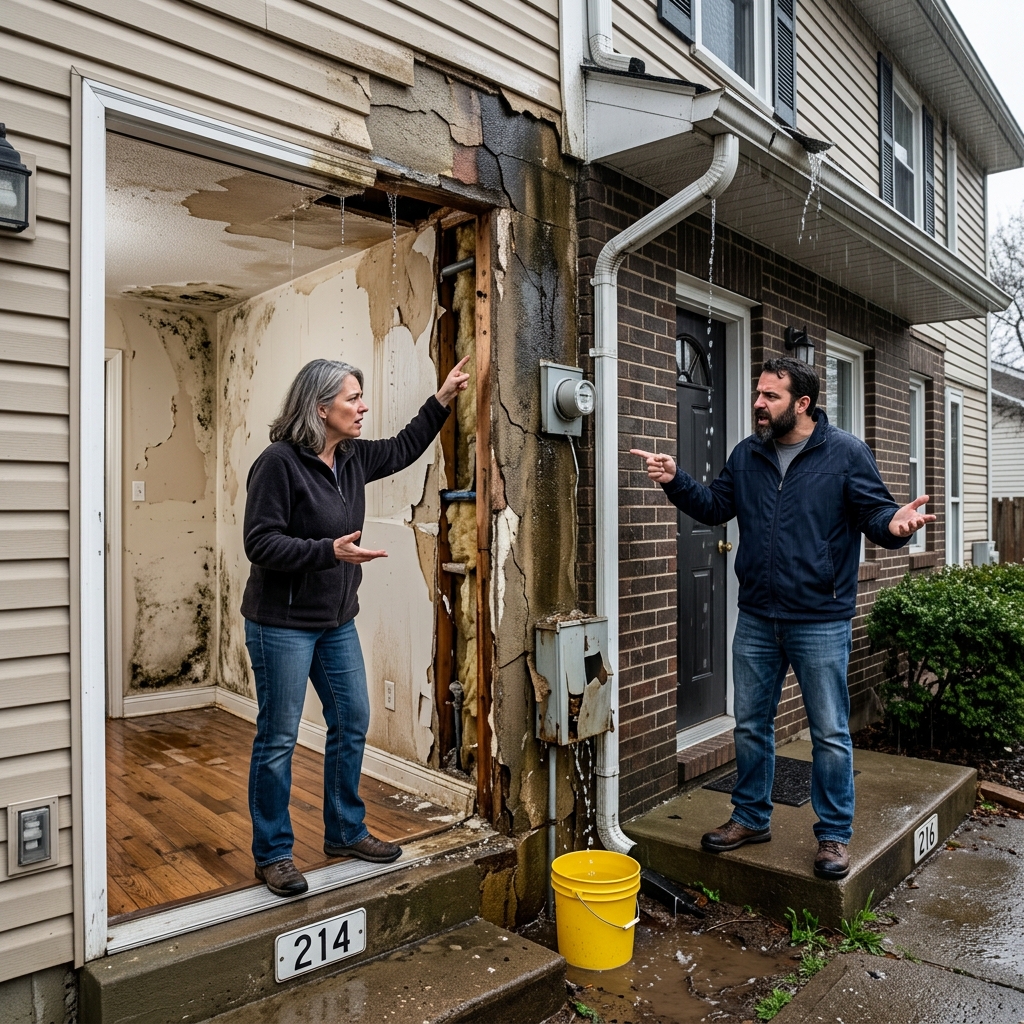
Water problems between neighboring properties can start with something small, such as a clogged gutter, a broken pipe, or a yard that sends runoff in the wrong direction. But once water enters a home, garage, basement, or other structure, the issue can become expensive quickly. In many cases, the central legal question is whether the water came from a natural condition or from a neighbor’s change to their property.
Not every drainage problem creates a legal claim. The strongest cases usually involve a neighbor who altered the land, installed a drain, redirected a downspout, failed to maintain a system, or otherwise caused water to flow onto another property in an unreasonable way. When that happens, the affected property owner may have options to seek repairs, reimbursement, or a court order requiring the problem to stop.
How Water Disputes Between Neighbors Usually Begin
Neighbor water disputes often arise after heavy rain, snowmelt, or a plumbing failure. A homeowner may notice standing water in the yard, seepage in a basement, damp drywall, damage to flooring, or mold growth. In other cases, the water issue is visible outside first, such as erosion, muddy runoff, or a stream of water crossing a property line.
The source matters. If water is moving naturally because of slope, soil conditions, or weather patterns, the law may treat the condition differently than if a neighbor created a new drainage path. That distinction is important because property owners are generally not automatically responsible for every drop of water that reaches another lot.
Natural Runoff Versus Altered Drainage
Most property law systems distinguish between natural surface water flow and water that has been changed by human activity. Natural runoff is the ordinary movement of rainwater across land due to terrain. If a yard naturally slopes downhill and water flows that way after a storm, that alone may not create liability.
By contrast, a property owner may face responsibility if they take action that increases the amount of water sent to a neighbor or changes the direction of flow in a harmful way. Common examples include:
- Installing a drainage system that concentrates water at the boundary
- Redirecting a downspout toward a neighboring lot
- Re-grading a yard so runoff no longer disperses naturally
- Building structures that block water and force it onto another property
- Failing to maintain pipes, gutters, or retaining features that were meant to control water
Courts often look at whether the neighbor’s conduct was reasonable in light of the harm caused. The more obvious and preventable the damage, the stronger the argument that the conduct should lead to liability.
What a Property Owner Must Usually Prove
A successful claim usually depends on evidence, not just frustration. In many disputes, the injured owner must show that the neighbor’s conduct caused the damage and that the impact was more than a minor inconvenience.
| Legal issue | What it means in practice |
|---|---|
| Cause | The neighbor’s action or failure to act must be connected to the water damage. |
| Unreasonableness | The drainage change or maintenance failure must be careless, excessive, or otherwise unreasonable. |
| Foreseeability | A reasonable person should have expected the water to create problems for the adjoining property. |
| Actual loss | The property owner must show repair costs, cleanup expenses, or other measurable damage. |
Evidence is especially important because water damage can have several possible causes. A leak may originate from a roof, a broken irrigation line, poor maintenance, or storm conditions. A claim is strongest when the affected owner can show the flow path, the source of the water, and the resulting harm.
Types of Harm That May Support a Claim
Water intrusion can affect far more than a wall stain or a patch of soggy grass. Depending on the severity, the damage may include structural issues, ruined belongings, and temporary displacement from the home.
- Drywall, insulation, flooring, and baseboard replacement
- Mold remediation and cleanup costs
- Foundation, grading, or landscaping repairs
- Furniture, appliances, or stored items that were damaged
- Hotel or temporary housing expenses if the home is unsafe to occupy
- Professional inspection and remediation fees
In some situations, a claimant may also seek compensation for related medical harm or other direct losses. The more clearly the damage can be tied to the neighbor’s conduct, the more persuasive the claim will be.
Why Documentation Matters So Much
Anyone dealing with a water dispute should document the problem as soon as possible. Delays can make it harder to prove where the water came from, whether conditions worsened, and how much the damage cost. Good records can also help insurers, mediators, and attorneys understand the timeline.
Useful documentation includes photographs, videos, written notes, repair estimates, receipts, and copies of messages with the neighbor or homeowners’ association. If water enters after a storm, it can help to record the weather conditions and the exact time the damage was discovered. If possible, keep notes about whether water was flowing over a boundary, pooling at a shared fence line, or entering through a specific opening.
Steps to Take Before Filing a Lawsuit
Litigation is rarely the first or best step in a neighborhood water dispute. Many problems can be resolved through direct communication, especially when the other owner does not realize their property is causing damage.
- Tell the neighbor about the issue calmly and clearly.
- Put the complaint in writing so there is a record of notice.
- Give a reasonable amount of time for a response or repair.
- Notify a homeowners’ association or condo board if one applies.
- Contact your insurer if the damage is substantial or the cause is uncertain.
A practical approach often works best at the start. A neighbor may be willing to clean a drain, re-route a gutter, fix a leak, or bring in a landscaper once the problem is explained with photos or estimates.
When Mediation Can Help
Because water damage disputes often involve people who must continue living beside each other, mediation can be a useful alternative to a courtroom battle. In mediation, a neutral third party helps the neighbors discuss the facts, the repairs needed, and the cost-sharing options.
This process may be especially helpful when the issue is ongoing and the remedy requires cooperation. For example, one owner might agree to modify a drainage feature while the other agrees not to pursue immediate court action if the fix works. Mediation is often faster, less formal, and less expensive than a lawsuit.
How State Law Can Affect the Outcome
Water law is not identical in every state. Some states use a reasonableness approach, while others apply rules tied to surface water doctrine or other local property principles. That means the same drainage problem may lead to different results depending on where the properties are located.
Some states focus on whether the neighbor changed the natural flow of water in an unreasonable way. Others may allow claims when one owner’s alterations caused an overflow, diversion, or impoundment that injured nearby property. Because of these differences, a local property attorney can be valuable in assessing whether the facts support a claim in that jurisdiction.
Possible Remedies in a Legal Claim
If informal efforts do not work, a property owner may be able to ask for money damages, an injunction, or both. The available remedies depend on the evidence and the law that applies.
- Repair costs for damaged walls, flooring, landscaping, or other property
- Temporary housing costs if the home cannot be safely occupied
- Cleanup and mitigation expenses such as extraction and drying
- Court orders requiring the neighbor to fix the drainage problem
- Additional damages in limited cases involving severe or reckless conduct
In the right case, a court may order the neighbor to take action instead of, or in addition to, paying compensation. That can be especially useful when the source of the problem is ongoing and future damage is likely unless the condition changes.
Practical Defenses a Neighbor May Raise
A neighbor accused of causing water damage may argue that the flow was natural, that the property owner failed to maintain their own drainage, or that the claimed losses were caused by weather rather than any alteration. They may also contest the amount of damage or say that the repairs were unrelated to the water issue.
Because those defenses are common, clear evidence is critical. Photos, expert inspections, repair invoices, and testimony about water direction can make a major difference in whether the claim succeeds.
When to Involve an Attorney
A lawyer may be helpful if the neighbor refuses to cooperate, the damage is extensive, the insurance response is unclear, or the state’s water law is difficult to interpret. An attorney can review local rules, draft a formal demand letter, negotiate with the other side, and prepare litigation if needed.
Legal help is also valuable when the dispute involves multiple responsible parties, such as a neighbor, a contractor, a landlord, or an association. In those situations, sorting out who caused what damage can be complicated.
Frequently Asked Questions
- Can I sue a neighbor for water damage?
- Yes, in some situations. A claim is usually strongest when the neighbor altered their property, failed to maintain a drainage system, or otherwise caused water to enter your property in an unreasonable way.
- What if the water flow was natural?
- If the water moved naturally because of the land’s slope or ordinary weather conditions, liability may be harder to prove. Natural runoff is often treated differently from runoff caused by a man-made change.
- Should I contact insurance first?
- Yes, especially if the damage is significant. Insurance can help document the loss and may cover some repairs while responsibility is being sorted out.
- Is a small claims court an option?
- It can be, depending on the amount of damage and the court limit in your state. Smaller disputes may fit within small claims procedures.
- What is the best first step?
- Document the damage, notify the neighbor in writing, and gather repair estimates. If the problem continues, consult a local attorney or mediator.
Conclusion
Water damage disputes between neighbors are often a mix of property law, practical problem-solving, and evidence gathering. The key issue is usually not simply that water crossed a boundary, but whether a neighbor caused or worsened the problem through an unreasonable change to the property. Careful documentation, early communication, and prompt legal advice can make the difference between a repair that gets resolved quickly and a dispute that drags on.
References
- Water Damage and Neighbor Disputes — FindLaw. 2026-01-15. https://www.findlaw.com/realestate/neighbors/water-damage-and-neighbor-disputes.html
- Water Damage — Texas State Law Library. 2025-10-01. https://guides.sll.texas.gov/neighbor-law/water-damage
- Water Damage and Neighbor Disputes: Legal Rights and Options for Property Owners — Ilabaca Law. 2025-06-18. https://ilabacalaw.com/blog/real-estate/water-damage-and-neighbor-disputes-legal-rights-and-options-for-property-owners/
- Is Your Neighbor’s Water Draining onto Your Property? — King Law Offices. 2025-04-22. https://kinglawoffices.com/blog/civil-disputes/is-your-neighbors-water-draining-onto-your-property/
- Water Damage Disputes in Maryland — Powers & Worshtil, P.C. 2025-08-07. https://pandwlaw.com/water-damage-disputes-in-maryland/
- What to Do If Neighbor Flooded Your Property — AM Response. 2025-09-12. https://amresponse.com/what-to-do-if-neighbor-flooded-your-property/
Similar Articles








Read full bio of Sneha Tete


