Being accused of a crime is stressful, confusing, and often frightening. Yet this is also the moment when your legal rights matter most. Understanding those rights, how the criminal process works, and what actions you should take immediately can make a significant difference in the outcome of your case.
This article offers a clear, practical overview of what it means to be charged, what your core protections are under the law, and how to work effectively with a criminal defense lawyer. It is general information, not a substitute for advice from an attorney who knows the laws in your jurisdiction.
Core Legal Rights When You Are Accused
Modern criminal justice systems recognize a set of fundamental rights for people accused of crimes. These protections exist in constitutions, charters of rights, and statutes around the world and are designed to prevent unfair convictions.
Presumption of Innocence
The most important principle is the presumption of innocence: you are legally considered innocent unless and until the state proves your guilt beyond a reasonable doubt in court.
- The prosecution, not you, carries the burden of proof.
- Judges and juries must not treat you as guilty simply because you have been arrested or charged.
- Your silence or decision not to testify generally cannot be treated as proof of guilt.
Right to Remain Silent
In many countries, including the United States and Canada, you have a right not to incriminate yourself—often referred to as the right to remain silent.
In practice, this means you may refuse to answer questions from police or prosecutors or to testify against yourself in court. In the U.S., this protection comes mainly from the Fifth Amendment, and the Supreme Court’s Miranda decision requires police to warn you of this right during custodial interrogation.
- You may state clearly that you are exercising your right to remain silent and will not answer questions without a lawyer present.
- Anything you choose to say can be used as evidence against you at trial.
- Invoking your rights cannot legally be treated as evidence of guilt.
Right to Legal Counsel
A person facing criminal charges has a crucial right to legal representation. In the U.S., this is guaranteed by the Sixth Amendment; similar protections exist in many other legal systems.
- You may consult a lawyer as soon as you are detained, arrested, or charged.
- If you cannot afford an attorney, the state must provide one in serious criminal cases.
- Legal counsel helps you understand the charges, assess the evidence, and build a defense strategy.
Right to a Fair and Timely Trial
Criminal defendants are entitled to a fair trial within a reasonable time, overseen by an independent court.
Key elements of a fair trial include:
- An impartial judge and, where applicable, an impartial jury.
- Advance information about the charges and the evidence against you.
- The ability to attend your own hearings and participate effectively.
- The opportunity to present evidence and call witnesses in your defense.
- The right to confront and cross-examine witnesses against you.
- A prohibition on unnecessary delay of proceedings.
Additional Protections
Depending on the jurisdiction, accused persons may also have rights such as:
- Protection from unreasonable searches and seizures, often under constitutional provisions like the U.S. Fourth Amendment.
- Protection against excessive bail, fines, and cruel or unusual punishment, under provisions like the U.S. Eighth Amendment.
- Right to an interpreter if you do not understand the court’s language or are deaf.
- Right of appeal to a higher court if you believe your conviction or sentence is legally flawed.
- In some systems, a right to compensation for wrongful conviction.
What Happens After You Are Accused?
The exact steps differ by country and by whether the case is handled at the state, provincial, or federal level, but most criminal processes move through similar stages.
| Stage | Typical Purpose |
|---|---|
| Investigation | Police gather information and evidence about suspected offenses. |
| Arrest or Summons | You may be taken into custody or ordered to appear in court on a future date. |
| Charging Decision | Prosecutors formally decide what charges, if any, to file. |
| First Appearance / Arraignment | Court informs you of the charges, your rights, and asks for a plea. |
| Bail / Release Decision | Judge decides whether you will stay in custody or be released pending trial. |
| Pretrial Process | Both sides exchange evidence, file motions, and may negotiate a plea. |
| Trial | Judge or jury hears evidence and decides whether you are guilty or not guilty. |
| Sentencing | If convicted, the court imposes a sentence within legal limits. |
| Appeal | Review of legal errors that may have affected the verdict or sentence. |
Police Contact and Arrest
Contact with police may begin with questioning, a traffic stop, a search, or a formal arrest. At this stage your decisions can strongly influence the evidence available later.
- Remain calm and avoid arguing or resisting, even if you believe the arrest is unjust.
- Provide basic identifying information (such as your name) if required by law.
- Politely state that you wish to speak with a lawyer before answering any questions.
- Do not consent to searches of your home, vehicle, or belongings unless legally required (for example, when police have a valid warrant).
First Court Appearance and Bail
Your first appearance (sometimes called an arraignment) is typically the stage where the judge informs you of the charges and your rights, and decisions about release or bail are made.
- You will usually be advised of all pending charges and asked to enter a plea (such as guilty, not guilty, or no contest).
- The court may consider bail, release on conditions, or continued detention.
- In systems with Eighth Amendment-type protections, bail must not be excessive or used purely to punish before trial.
Choosing How to Plead
One of the earliest and most consequential choices you face is how to plead to the charges. The best option depends on the strength of the evidence, the possible sentence, and the advice of your lawyer.
Common Plea Options
- Not guilty: You deny the allegations or insist the state must prove them at trial. This keeps all your rights to contest the evidence and call witnesses.
- Guilty: You admit the offense and accept conviction. This may lead to a lighter sentence in some cases, but removes the need for the state to prove its case.
- No contest (nolo contendere): In some systems, you do not admit guilt but accept conviction as if you were guilty. This may have specific consequences in related civil cases.
A plea should rarely be entered without legal advice. Your lawyer will discuss potential defenses, the likelihood of success at trial, and any plea offers from the prosecution.
Plea Negotiations
Many criminal cases are resolved through negotiated agreements rather than full trials. Plea bargaining must still respect your rights and be entered knowingly and voluntarily.
- Plea offers may involve reduced charges or recommendations for lighter sentencing.
- You have the right to understand the consequences of any agreement, including immigration, employment, or licensing effects.
- The judge may ask detailed questions to confirm you understand and accept the deal.
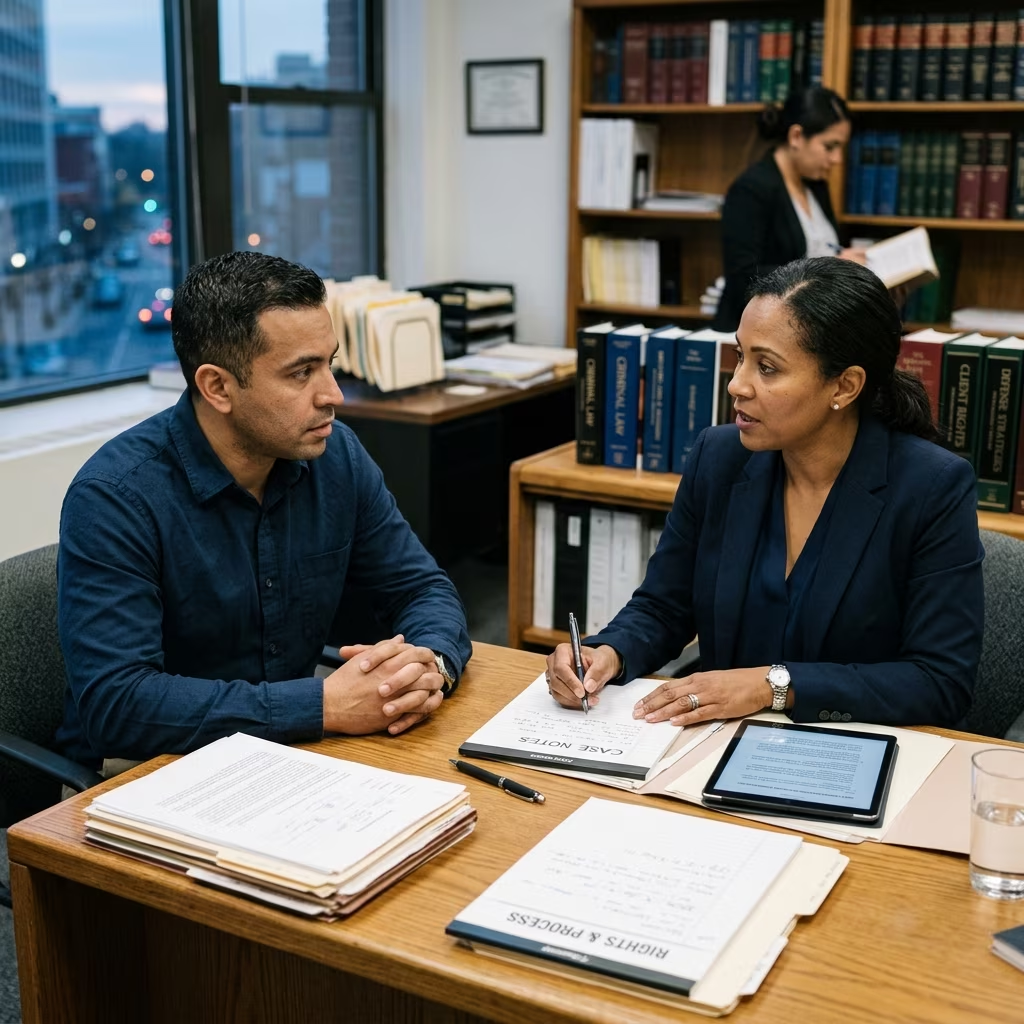
Working With a Criminal Defense Lawyer
A skilled defense lawyer is one of the most important resources you have when accused. The law expects the prosecution to respect your rights, but in practice you often need counsel to enforce those rights.
Why Legal Representation Matters
- Lawyers understand complex procedural rules that govern evidence, motions, and trial practice.
- They can challenge unlawful searches, coerced statements, or unreliable identification.
- They negotiate with prosecutors, identify weaknesses in the case, and propose alternatives to incarceration.
- They help you make informed decisions about pleas, trial strategy, and whether to testify.
What Your Lawyer Needs From You
To defend you effectively, your attorney needs accurate information and your cooperation.
- Provide a complete and honest account of events, even details that are uncomfortable.
- Share documents, messages, or other materials that may support your defense.
- List potential witnesses and how to contact them.
- Follow your lawyer’s advice carefully, especially about speaking to police, co-defendants, or the media.
Practical Do’s and Don’ts After Being Accused
Beyond formal rights, there are practical steps you can take to protect yourself when facing criminal allegations.
Critical Do’s
- Invoke your right to remain silent as soon as questioning begins, and repeat this if necessary.
- Request a criminal defense lawyer immediately and do not answer substantive questions until counsel is present.
- Attend all court dates on time and comply with release conditions to avoid additional charges or arrest warrants.
- Keep records of events, conversations, and documents that may become important evidence later.
- Maintain composure in dealings with police, prosecutors, and judges. Courts pay close attention to your behavior.
Important Don’ts
- Do not discuss case details with friends, coworkers, or on social media; these statements may be used against you.
- Do not destroy or hide potential evidence; this can lead to new charges.
- Do not contact alleged victims or witnesses without clear guidance from your lawyer.
- Do not consent to searches casually; ask if there is a warrant and speak to your lawyer about your options.
- Do not assume the situation is “minor” and ignore legal advice—many seemingly small charges carry serious long-term consequences.
Frequently Asked Questions (FAQs)
1. If I am innocent, should I still remain silent?
Yes. The right to remain silent protects both guilty and innocent people. Misunderstandings, stress, or poor wording can cause your statements to be misinterpreted. Exercising your constitutional right to silence is not evidence of guilt and gives your lawyer time to assess the situation before you speak.
2. Do I always need a lawyer, even for minor charges?
Serious offenses almost always require professional representation, and even minor charges can create criminal records that affect employment, housing, and immigration. Many jurisdictions provide legal aid or public defenders for those who cannot afford a lawyer in criminal matters.
3. Can the police keep questioning me if I ask for a lawyer?
In systems that follow the U.S. Miranda and related rules, police must stop custodial interrogation once you clearly request an attorney, unless you later reinitiate conversation voluntarily. Laws differ by jurisdiction, but continuing to question someone who has invoked legal counsel can lead to suppression of statements.
4. What happens if I miss a court date?
Missing a scheduled appearance can have serious consequences: judges may issue a warrant for your arrest, revoke bail, or impose additional charges. If you cannot attend because of an emergency, contact your lawyer and the court as soon as possible to seek a formal postponement.
5. How do I know the evidence against me?
Fair trial rights generally include the right to be informed of the case and to access the evidence the prosecution intends to use. Through disclosure or discovery procedures, your lawyer can obtain police reports, witness statements, and other materials needed to prepare your defense.
Protecting Yourself Long-Term
Being accused of a crime can affect more than the outcome of a single case. It may influence your reputation, career, family life, and future opportunities. Taking a long-term view helps you work strategically with your lawyer.
- Ask about options such as diversion programs, conditional discharges, or record-sealing where available.
- Consider collateral consequences—such as immigration status changes, professional discipline, or loss of licenses—when evaluating plea offers.
- Follow all court orders and probation terms strictly to avoid violations.
- After your case concludes, consult your lawyer about expungement or other ways to mitigate lasting effects where the law allows.
Above all, remember that the legal system recognizes you as a person with rights, not simply as a case file. Using those rights effectively and seeking qualified legal help are the best tools you have to navigate the process and seek a just outcome.
References
- Your rights – Information for accused — Province of British Columbia, Ministry of Attorney General. 2023-05-10. https://www2.gov.bc.ca/gov/content/justice/criminal-justice/bcs-criminal-justice-system/if-you-are-accused-of-a-crime/your-rights
- Understanding Your Rights: A Guide for Those Accused of a Crime — Anderson Hunter Law Firm. 2022-11-01. https://andersonhunterlaw.com/blog/understanding-your-rights-guide-when-accused-of-crime
- Rights of a Person Accused of a Crime — Éducaloi. 2023-03-15. https://educaloi.qc.ca/en/capsules/rights-of-a-person-accused-of-a-crime/
- The rights of accused people — Fair Trials. 2022-07-20. https://www.fairtrials.org/the-right-to-a-fair-trial/the-rights-of-accused-people/
- 8 Rights In A Criminal Case — Pissetzky Law LLC. 2024-08-01. https://www.pissetzkylaw.com/blog/2024/08/8-rights-in-a-criminal-case/
- What To Do After Being Accused of a Crime — Law Office of Bill Nettles. 2023-06-10. https://billnettleslaw.com/what-to-do-after-being-accused-of-a-crime/
- Criminal Guide – Being Accused of a Crime — Larry King Law. 2023-09-05. https://www.larrykinglaw.com/criminal-defense/criminal-law-info/criminal-guide-being-accused/