
Glossip v. Gross: Defining Pain in Executions
Exploring the Supreme Court's intense oral arguments on whether midazolam ensures painless lethal injections under the Eighth Amendment.
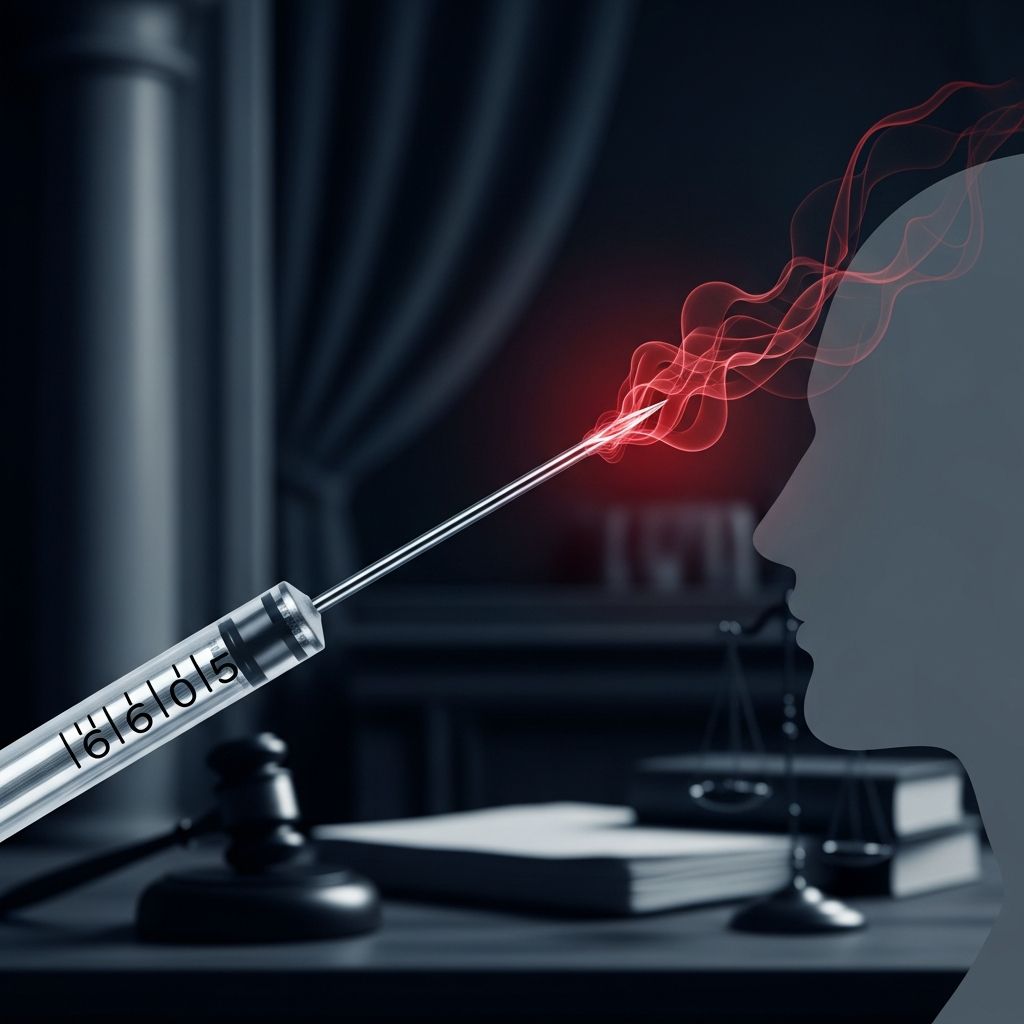
The Supreme Court’s examination of lethal injection protocols reached a critical juncture in Glossip v. Gross, a case that forced justices to grapple with the elusive boundary between necessary execution procedures and unconstitutional suffering. At its core, the dispute centered on Oklahoma’s use of midazolam as the initial sedative in a three-drug sequence, amid claims it failed to reliably prevent excruciating pain during the final stages of capital punishment.
Historical Context of Lethal Injection Challenges
Lethal injection emerged as the preferred method of execution in the United States during the late 1970s, supplanting older techniques like electrocution and gas chambers. Oklahoma pioneered the standard three-drug formula in 1977: sodium thiopental to induce deep unconsciousness, pancuronium bromide to paralyze muscles, and potassium chloride to stop the heart. This protocol gained widespread adoption after the Supreme Court upheld it in Baze v. Rees (2008), ruling that it did not pose a substantial risk of severe pain compared to available alternatives.
Supply chain disruptions soon complicated matters. European manufacturers halted exports of sodium thiopental due to ethical concerns, prompting states like Oklahoma to substitute midazolam, a benzodiazepine typically used for sedation rather than full anesthesia. Critics argued this swap elevated the risk of inmates experiencing conscious agony as paralytics and heart-stopping agents took effect, masked by immobility.
Botched Executions That Sparked the Lawsuit
High-profile failures amplified the debate. In April 2014, Oklahoma’s execution of Clayton Lockett exposed protocol vulnerabilities. After midazolam administration, Lockett writhed, groaned, and struggled against restraints for over 40 minutes before succumbing—not from the drugs, but apparent complications from a misplaced IV line. Witnesses described him clenching his teeth, moaning, and attempting to rise, signs interpreted as inadequate sedation.
Similar issues arose in Arizona with Joseph Wood’s July 2014 execution. Wood received 15 times the standard midazolam dose yet gasped and snorted for nearly two hours, prompting calls to halt the process. These incidents fueled lawsuits by death row inmates Charles Warner, Richard Glossip, John Grant, and others, who sought injunctions against Oklahoma’s revised protocol under 42 U.S.C. § 1983, alleging Eighth Amendment violations.
- Lockett’s case: IV infiltration led to 43 minutes of apparent distress.
- Wood’s case: Prolonged gasping despite massive dosing, highlighting midazolam’s ‘ceiling effect.’
- Result: Immediate stays for several executions, escalating to Supreme Court review.
Lower Court Battles and Path to the Supreme Court
Federal District Judge Terrence Kern conducted a three-day evidentiary hearing in 2014. State experts testified that a 500mg midazolam dose—five times the surgical amount—would ensure unconsciousness, rendering subsequent drugs painless. Inmate experts countered with pharmacological data showing midazolam’s limitations as a sole anesthetic, prone to variable absorption and insufficient coma induction.
Kern denied the preliminary injunction, finding no ‘substantial risk’ under Baze standards and no viable alternative proposed. The Tenth Circuit affirmed, with Chief Judge Mary Beck Briscoe upholding factual findings on midazolam’s efficacy. Charles Warner proceeded to execution on January 15, 2015, but the Supreme Court stayed others and granted certiorari in Glossip v. Gross (No. 14-7955).
Key Oral Arguments: Justices Probe Pain Thresholds
Oral arguments on April 29, 2015, revealed deep divisions. Petitioners, represented by Robin Konrad, emphasized midazolam’s inadequacy, citing Lockett and Wood as empirical proof of searing pain from potassium chloride on conscious subjects. Justices Sotomayor and Breyer pressed on humane standards, questioning if executions must eliminate all pain risk.
Oklahoma’s Solicitor General, John Abrahamson, defended the protocol, arguing safeguards like vein checks and high dosing minimized risks. Justice Alito challenged petitioners’ failure to offer alternatives, invoking Baze‘s requirement. Scalia dismissed pain claims as speculative, while Kennedy inquired about nitrogen hypoxia—a gas execution method gaining traction.
| Justice | Key Question/Concern |
|---|---|
| Samuel Alito | Why no alternative method proposed? Is midazolam truly ineffective? |
| Sonia Sotomayor | Doesn’t Lockett prove substantial suffering risk? |
| Stephen Breyer | Should executions be painless like veterinary euthanasia? |
| Anthony Kennedy | What about emerging alternatives like hypoxia? |
| Antonin Scalia | Are pain claims exaggerated for delay? |
The Supreme Court’s Divided 5-4 Ruling
Justice Alito’s plurality opinion, joined by Roberts, Scalia, Kennedy, and Thomas, affirmed the lower courts. Prisoners must prove a ‘substantial risk’ of severe pain relative to a known alternative—a burden unmet here. The Court credited state evidence on midazolam’s potency at execution doses and dismissed botched cases as IV errors, not drug failure.
Justice Thomas concurred, rejecting any pain-free mandate as effectively banning capital punishment. Breyer and Ginsburg dissented, arguing evolving standards demand better methods amid frequent mishaps. Sotomayor lambasted the protocol as inviting ‘excruciating pain,’ while Kagan criticized the alternative-method hurdle as insurmountable.
“Because some risk of pain is inherent in any method of execution, we have held that the Constitution does not require the avoidance of all risk of pain.” — Glossip v. Gross, 576 U.S. 863 (2015)
Implications for Death Penalty Protocols Nationwide
Glossip entrenched the two-prong test: prove the method’s risks substantially exceed an alternative’s, and show feasibility. States scrambled post-ruling; Oklahoma executed Glossip in 2023 after stays, but others pivoted to single-drug pentobarbital or hypoxia (adopted by Alabama, Mississippi).
The decision spurred innovation but criticism. Advocates decry it as licensing torture, citing ongoing botches—over 300 since 1976, per Death Penalty Information Center data. Internationally, the UN Committee Against Torture urged U.S. moratoriums, viewing delays as exacerbating cruelty.
Pharmacological Debate: Midazolam’s Ceiling Effect
Midazolam binds GABA receptors for sedation but plateaus at high doses, per inmate experts during arguments. Unlike barbiturates, it lacks true anesthetic depth, risking awareness during paralysis. State witnesses countered that execution contexts differ from surgery—no incision demands absolute insensibility.
- Pro-midazolam: High IV doses (500mg) overwhelm variability; animal studies show coma induction.
- Anti-midazolam: Human variability, poor venous access in inmates; Wood’s 7500mg failure proves unreliability.
Alternatives Explored in Litigation and Beyond
Petitioners floated firing squads or guillotines hypothetically, but courts demand ‘known and available’ options. Post-Glossip, nitrogen hypoxia gained legitimacy: Alabama’s 2022 use on Kenneth Smith was ruled constitutional, though witnesses reported prolonged struggle. Pentobarbital, sourced domestically, became preferred where obtainable.
| Method | Pros | Cons | States Using |
|---|---|---|---|
| Midazolam Cocktail | Readily available | Botch risk | Oklahoma, others |
| Pentobarbital | Proven anesthetic | Supply issues | Texas, Georgia |
| Nitrogen Hypoxia | Humane gas | Unproven at scale | Alabama |
| Firing Squad | Quick | Messy | Utah (backup) |
Evolving Eighth Amendment Standards
The Eighth Amendment prohibits ‘cruel and unusual punishments,’ interpreted via ‘evolving standards of decency.’ Glossip clarified method challenges but left pain’s definition subjective—no bright-line rule for ‘severe.’ Dissenters argued for categorical bans on unreliable sedatives, akin to Trop v. Dulles (1958).
Recent cases like Bucklew v. Precythe (2019) refined tests, requiring individualized showings for rare conditions. Abolition momentum grows: 27 states inactive on executions; public support wanes per Gallup polls.
Frequently Asked Questions (FAQs)
What was the main issue in Glossip v. Gross?
The case challenged Oklahoma’s use of midazolam in lethal injections, claiming it created a substantial risk of severe pain violating the Eighth Amendment.
Did the Supreme Court ban midazolam?
No, it upheld the protocol, requiring challengers to propose better alternatives and prove superior risk reduction.
How many botched executions involve midazolam?
At least seven high-profile cases by 2015, including Lockett and Wood, marked by prolonged distress.
What alternatives exist today?
Pentobarbital, nitrogen gas, and firing squads in select states, each with legal validations post-Glossip.
Has Glossip ended death penalty challenges?
No, it set hurdles but litigation continues, with over 2,400 on death row nationwide.
Future Directions in Execution Methods
As pharmaceuticals resist involvement, states eye non-drug options. Hypoxia promises simplicity—pure nitrogen induces hypoxia without chemicals—but ethical debates persist. Courts may revisit Glossip if data shows systemic failures, potentially redefining ‘substantial risk’ amid declining executions (13 in 2023, per DOJ).
The case underscores tensions: retribution versus humanity, finality versus perfection. Until consensus emerges, Glossip v. Gross remains a cornerstone, balancing constitutional mandates with practical realities.
References
- Glossip v. Gross — Harvard Law Review. 2016-01-11. https://harvardlawreview.org/print/vol-129/glossip-v-gross/
- Glossip v. Gross, 576 U.S. 863 (2015) — Supreme Court of the United States via Justia. 2015-06-29. https://supreme.justia.com/cases/federal/us/576/863/
- Glossip v. Gross: When It Comes to the Death Penalty, the Supreme Court Remains Divided — Georgetown Law O’Neill Institute. 2015-07-01. http://oneill.law.georgetown.edu/glossip-v-gross-when-it-comes-to-the-death-penalty-the-supreme-court-remains-divided/
- Glossip v. Gross — SCOTUSblog. 2015-06-29. https://www.scotusblog.com/cases/case-files/glossip-v-gross/
- Oral Argument Transcript, Glossip v. Gross — Supreme Court of the United States. 2015-04-29. https://www.supremecourt.gov/oral_arguments/argument_transcripts/2014/14-7955_1823.pdf
- Glossip v. Gross — Oyez.org. 2015-06-29. https://www.oyez.org/cases/2014/14-7955
Similar Articles








Read full bio of medha deb




