
Federal Hate Crime Enforcement and Civil Rights
Explore how federal criminal civil rights laws address hate crimes, protect vulnerable communities, and shape modern enforcement in the United States.
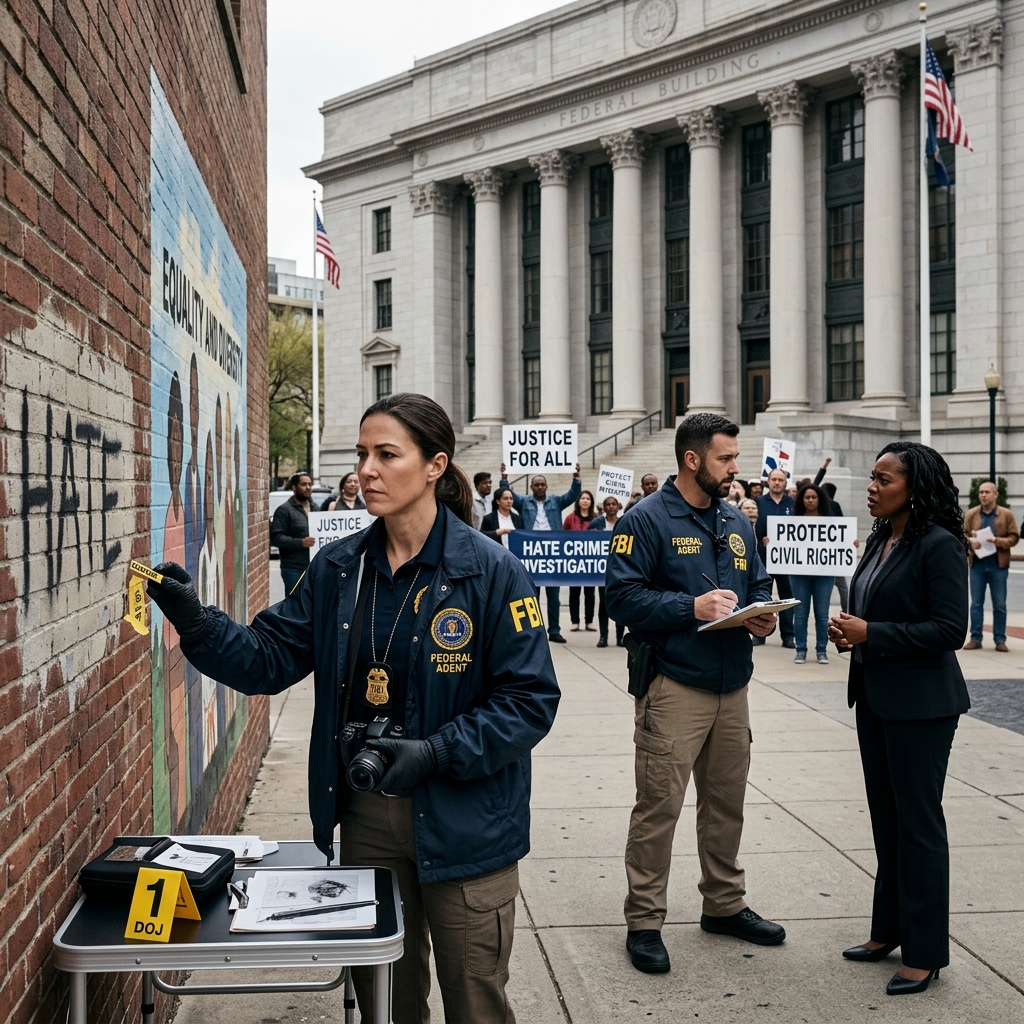
Federal criminal civil rights laws form a core part of the United States’ effort to combat discrimination, protect vulnerable communities, and address hate crimes that target people because of who they are. These laws empower federal authorities to investigate and prosecute serious violations, including racially motivated assaults, police brutality, church burnings, and trafficking for forced labor. Together, this legal framework reflects a national commitment to protect civil rights when local systems fail or when the harm touches fundamental constitutional protections.
What Federal Criminal Civil Rights Laws Cover
Federal criminal civil rights statutes address a range of conduct that interferes with basic freedoms or targets people based on protected characteristics. While the details vary by statute, these laws generally focus on serious misconduct that undermines equal protection and public safety.
- Hate crimes based on race, color, or national origin, especially when violence or threats are used.
- Police misconduct and brutality when officials willfully deprive individuals of rights secured by the Constitution or federal law.
- Attacks on houses of worship, such as burning or damaging churches, motivated by bias.
- Violence against certain health care providers, often linked to interference with protected services.
- Human trafficking and forced labor, including transporting people for enslavement or coercive work conditions.
These laws do not replace all state criminal statutes. Instead, they allow federal intervention when civil rights violations implicate national interests, protected activities, or patterns of discrimination that state systems cannot or do not address adequately.
Defining Hate Crimes in the Civil Rights Context
In the federal system, a hate crime is generally understood as a criminal act driven by bias against an individual’s or group’s protected characteristics. The underlying offense—such as assault, vandalism, or threats—is punishable in its own right. What makes it a hate crime is the motive.
Common protected characteristics in U.S. hate crime law include:
- Race and color
- National origin and ethnicity
- Religion
- Sexual orientation and gender identity
- Disability
Early federal statutes focused primarily on race, color, religion, and national origin. Over time, Congress added protections for gender, sexual orientation, gender identity, and disability, especially through later legislation such as the Matthew Shepard and James Byrd, Jr. Hate Crimes Prevention Act.
Historical Development of Federal Hate Crime Laws
Hate crimes are not a new phenomenon, but sustained legislative and scholarly attention grew significantly in the late twentieth century. Federal civil rights enforcement has roots in Reconstruction-era laws, yet modern hate crime legislation emerged only in the second half of the twentieth century.
Early Civil Rights Statutes and Federal Authority
Following the Civil War, Congress enacted laws aimed at protecting newly freed individuals from private and state-sponsored violence. One key statute was the Civil Rights Act of 1871, which allowed federal prosecution of conspiracies to deprive people of civil rights and of officials who violated constitutional protections. These early laws provided tools to address racial terrorism, but they were not framed specifically as “hate crime” statutes.
Through the mid-twentieth century, these provisions were occasionally used to address egregious violence by private actors and state officials, especially in the context of the civil rights movement. However, there were significant evidentiary hurdles, and federal jurisdiction remained relatively narrow.
The Civil Rights Act of 1968: First Modern Hate Crime Law
In 1968, Congress expanded federal civil rights protections through a major legislative package that included what is widely regarded as the first modern hate crime law. This law made it a federal crime to interfere with individuals engaged in certain federally protected activities—such as voting, attending school, or serving on a jury—because of their race, color, religion, or national origin.
This statute introduced an explicit bias motive requirement, using language like “because of” the victim’s protected status. To secure a conviction, federal prosecutors had to prove both:
- That the victim was engaged in a specified federally protected activity; and
- That the defendant acted with bias based on a protected characteristic.
These requirements expanded the government’s authority but also made prosecutions complex, as showing motive and a qualifying activity could be difficult in practice.
State-Level Hate Crime Laws and Later Federal Expansion
Beginning in the late 1970s, states started to adopt their own hate crime statutes, often increasing penalties when crimes were committed due to prejudice. By the end of the twentieth century, nearly all states had some form of hate crime law, reflecting growing recognition of the harms caused by bias-motivated offenses.
Federal law later broadened coverage beyond the 1968 framework. Notably, the Matthew Shepard and James Byrd, Jr. Hate Crimes Prevention Act (2009) extended protections to crimes motivated by gender, sexual orientation, gender identity, and disability, and it reduced the reliance on the “federally protected activity” requirement in many cases. This evolution made federal enforcement more flexible and responsive to a wider set of hate-motivated harms.
The Role of the Department of Justice in Civil Rights Enforcement
The U.S. Department of Justice (DOJ) Civil Rights Division is the primary federal entity responsible for enforcing criminal civil rights laws, including those related to hate crimes. Working with U.S. Attorneys’ Offices, the Division investigates and prosecutes violations nationwide.
Key responsibilities include:
- Reviewing complaints alleging hate crimes, police misconduct, and other civil rights violations.
- Overseeing federal investigations and coordinating with the FBI and local law enforcement.
- Litigating criminal civil rights cases in federal court.
- Issuing guidance and policy statements on enforcement priorities.
Individuals who experience hate crimes, discriminatory violence, or official misconduct can report them to the Civil Rights Division or to the FBI for investigation. Federal authorities then assess whether the conduct meets statutory thresholds and whether federal prosecution is appropriate, especially where state responses are inadequate or unavailable.
How Federal Hate Crime Enforcement Works in Practice
Applying hate crime laws requires careful analysis of motive, evidence, and jurisdiction. Not every offensive incident qualifies as a federal hate crime, and not every bias-motivated act will be prosecuted by federal authorities. Enforcement decisions consider both legal and practical factors.
Key Elements in Federal Hate Crime Cases
To prosecute a hate crime under federal civil rights statutes, the government generally must show:
- Underlying criminal conduct, such as assault, threat, vandalism, arson, or homicide.
- Bias motivation—the defendant acted because of the victim’s race, religion, national origin, or other protected trait.
- Jurisdictional basis, such as interference with federally protected activities or a valid link to interstate commerce under newer laws.
Proving bias motive often depends on statements made by perpetrators, symbols used (for example, slurs or hate group imagery), patterns of conduct, and contextual evidence. This can be challenging, particularly when defendants deny discriminatory intent or when the evidence is circumstantial.
Challenges in Enforcement and Reporting
Enforcement of hate crime laws faces several obstacles. Many hate crimes are never reported, often due to victims’ fear of law enforcement, uncertainty about legal protections, or mistrust of authorities. Underreporting limits the ability of federal and state agencies to understand and respond to the true scope of the problem.
According to a congressional research analysis, law enforcement agencies reported 7,314 hate crime incidents involving 8,812 victims and 6,406 known offenders to the FBI in 2019. These figures reflect only cases submitted by participating agencies; the actual number is likely higher due to underreporting and data gaps.
Other practical challenges include:
- Difficulty distinguishing bias motive from other factors like personal disputes or generalized hostility.
- Limited resources in some jurisdictions to investigate and document hate crimes thoroughly.
- Variation among states in definitions, training, and record-keeping, complicating nationwide analysis.
Impact of Hate Crimes on Individuals and Communities
Hate crimes have effects that extend beyond the immediate victim. Research and experience show that these acts can intimidate entire communities, undermine social cohesion, and signal that certain groups are unwelcome or unsafe. They often target historically marginalized populations, such as African Americans, LGBTQ individuals, and religious minorities.
Notable impacts include:
- Psychological harm to victims, including trauma, anxiety, and fear of future attacks.
- Community-wide fear, particularly when incidents suggest organized hatred or repeat targeting.
- Damage to social trust between communities and institutions, including law enforcement.
- Long-term stigma and isolation for groups repeatedly subjected to bias-motivated violence.
Because of these broader harms, many jurisdictions treat hate crimes as more serious than comparable offenses without bias motives, imposing sentence enhancements or prioritizing specialized investigation. Federal civil rights laws reinforce this approach by treating hate crimes as threats to core constitutional values and national unity.
Federal and State Partnership in Hate Crime Enforcement
The federal government does not act alone in responding to hate crimes. Instead, enforcement typically involves a partnership between federal agencies, state attorneys general, and local law enforcement.
Key aspects of this cooperative approach include:
- Primary state responsibility: In most cases, local and state authorities investigate and prosecute hate crimes under state law.
- Federal backup and oversight: The DOJ and FBI may step in when state systems are unable or unwilling to act, or when the conduct crosses state lines or involves federal interests.
- Data collection and analysis: Federal and state agencies compile hate crime statistics to inform policy, training, and public awareness.
Some states publish regular hate crime reports, breaking down incidents by type of offense, victim group, and alleged motive, helping authorities and advocates track trends and measure the effectiveness of legal responses.
Practical Examples of Conduct Covered by Federal Civil Rights Laws
While each case is fact-specific, common scenarios illustrate how federal criminal civil rights laws operate. The table below compares typical types of misconduct and how they can fall under federal authority.
| Type of Misconduct | Potential Federal Civil Rights Concern | Relevant Context |
|---|---|---|
| Racially motivated assault on a voter | Interference with federally protected activity and hate crime based on race | Victim targeted while voting in a federal election, motive linked to race or ethnicity |
| Police beating a suspect while using racial slurs | Willful deprivation of rights under color of law and potential hate crime | Officer acts with explicit bias, violating the Fourth Amendment and equal protection |
| Arson attack on a church serving a minority community | Attack on a house of worship and hate crime based on religion or race | Offense intended to intimidate congregants and disrupt religious practice |
| Transporting migrants for forced labor | Human trafficking and involuntary servitude | Victims coerced into work under threat or fraud, sometimes targeted due to national origin |
Frequently Asked Questions (FAQ)
1. What makes a crime a “hate crime” under federal law?
A crime becomes a hate crime when the offender commits a criminal act—such as assault, threats, or vandalism—because of the victim’s race, religion, national origin, or another protected characteristic. The underlying conduct must be illegal, and prosecutors must prove that bias motive was a significant reason for the offense.
2. Does every hate-motivated incident qualify for federal prosecution?
No. Federal jurisdiction depends on specific statutory requirements, such as interference with federally protected activities or a valid interstate commerce basis under more recent laws. Many hate crimes are handled primarily under state law, with federal authorities stepping in when necessary or when national interests are implicated.
3. Who enforces federal criminal civil rights laws related to hate crimes?
The DOJ Civil Rights Division, working with U.S. Attorneys and the FBI, investigates and prosecutes federal criminal civil rights violations, including hate crimes. These agencies review complaints, conduct investigations, and bring cases in federal court where appropriate.
4. How are hate crime statistics gathered and reported?
Law enforcement agencies submit hate crime data to the FBI, which compiles national statistics, and some states produce their own detailed reports. The numbers reflect only reported and recorded incidents, so they may understate the true prevalence due to underreporting and inconsistent data collection.
5. Why do many hate crimes go unreported?
Victims may fear retaliation, mistrust police, or be unaware that what they experienced qualifies as a hate crime. Communities that have historically faced discrimination or negative interactions with law enforcement may be particularly reluctant to come forward, contributing to gaps in official data.
6. Are hate crimes punished more severely than other crimes?
In many jurisdictions, yes. States often impose sentence enhancements for crimes shown to be motivated by bias, and federal statutes treat certain bias-driven offenses as serious civil rights violations. The rationale is that hate crimes harm not only individuals but also entire communities and democratic values.
References
- Criminal Civil Rights Enforcement and Hate Crimes — FindLaw. 2024-01-01. https://www.findlaw.com/civilrights/civil-rights-overview/criminal-civil-rights-enforcement-and-hate-crimes-history-and.html
- Hate crime | Research Starters — EBSCO / Salem Press. 2020-06-01. https://www.ebsco.com/research-starters/law/hate-crime
- The historical prosecution of hate crimes in the United States of America — Scielo / Potchefstroom Electronic Law Journal. 2017-01-01. https://www.scielo.org.za/scielo.php?script=sci_arttext&pid=S1021-545X2017000200002
- Civil Rights Division — U.S. Department of Justice. 2023-10-01. https://www.justice.gov/crt
- Hate Crimes — American Constitution Society. 2021-05-01. https://www.acslaw.org/projects/state-attorneys-general-project/state-attorneys-general-policy-resources/hate-crimes/
- Hate Crime Statistics — Congressional Research Service (CRS Report IF11312). 2020-11-10. https://www.congress.gov/crs_external_products/IF/HTML/IF11312.html
Similar Articles








Read full bio of medha deb




