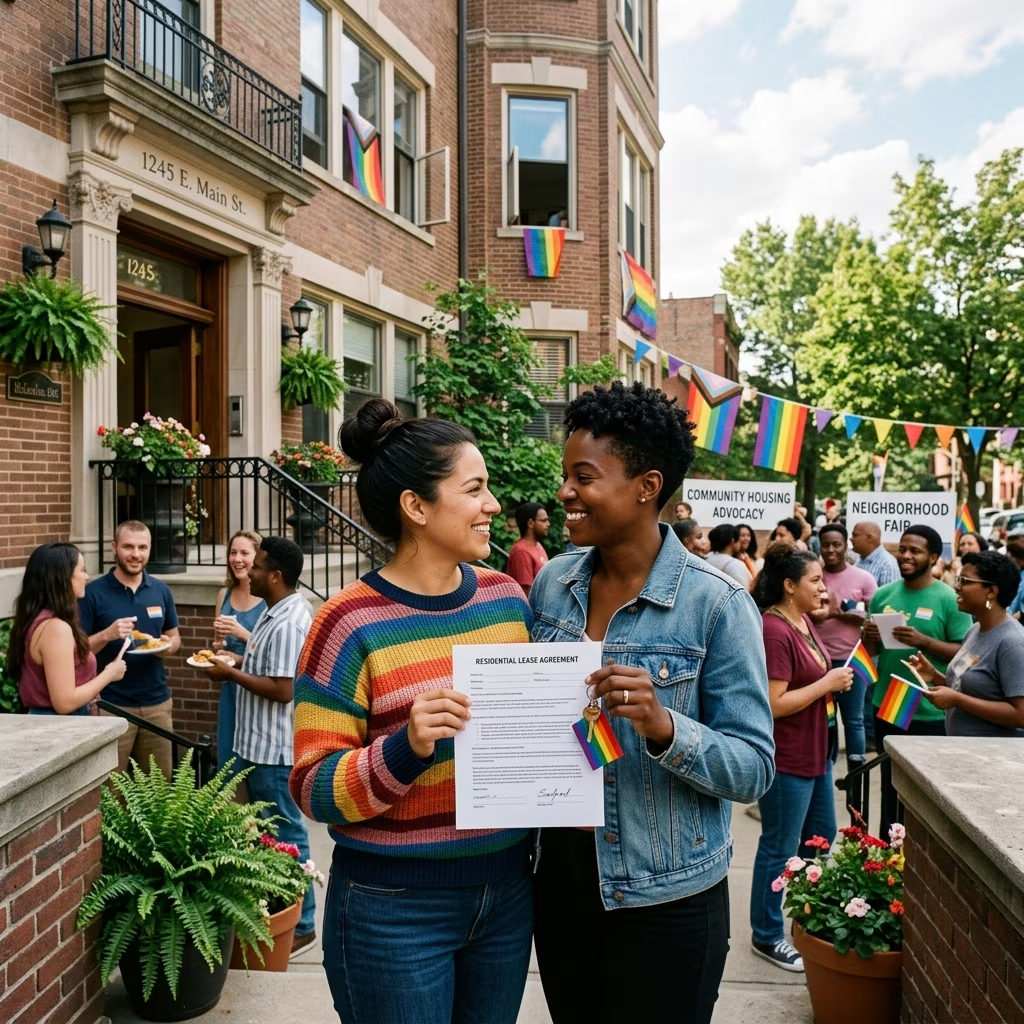
Housing is more than a place to sleep; it is a foundation for safety, stability, and participation in community life. For lesbian, gay, bisexual, transgender, queer, and other sexual or gender minority renters, fair access to housing has historically been threatened by discrimination. Today, a combination of federal, state, and local laws provides significant — though not yet perfect — protection against discrimination based on sexual orientation and gender identity in many rental situations.
This article explains how those protections work, what counts as illegal housing discrimination, how federal agencies interpret the law, and practical steps LGBTQ+ renters can take when their rights are violated. It draws on current legal guidance and research while presenting the information in clear, accessible terms.
Core Legal Framework Protecting LGBTQ+ Renters
Fair housing protections for LGBTQ+ renters come from several layers of law. Understanding the basic structure helps you see which rules apply to your situation and where gaps may still exist.
Federal Fair Housing Act and Sex Discrimination
The federal Fair Housing Act (FHA), first enacted in 1968, is the main national law governing discrimination in housing. It prohibits discrimination in most housing-related transactions based on race, color, religion, sex, disability, familial status, and national origin. The statute does not explicitly list sexual orientation or gender identity as separate protected traits.
However, in 2021 the U.S. Department of Housing and Urban Development (HUD) announced that discrimination because of sexual orientation or gender identity is treated as a form of prohibited sex discrimination under the FHA. HUD’s interpretation is grounded in Supreme Court case law on sex discrimination and an executive order directing federal agencies to read sex protections as also covering sexual orientation and gender identity.
As a result, when a housing provider refuses to rent to someone, imposes different terms, or harasses them because they are LGBTQ+, HUD considers that a violation of the FHA’s ban on sex discrimination.
Equal Access Rules for HUD-Funded Housing
HUD administers a separate set of rules known as Equal Access requirements. These regulations specifically bar discrimination based on sexual orientation or gender identity in housing that is funded by or insured through HUD, including public housing authorities and many emergency shelters. In these contexts, providers must give equal access to housing programs regardless of sexual orientation, gender identity, or marital status.
State and Local Fair Housing Laws
Almost all states have adopted their own fair housing statutes that supplement federal protections. Many of these laws explicitly include sexual orientation and gender identity as protected classes, sometimes alongside other traits such as source of income or veteran status.
- Some states protect both sexual orientation and gender identity in housing law.
- Others, such as Wisconsin or New York, may protect sexual orientation but not yet fully cover gender identity.
- In addition, numerous cities and counties have local ordinances that specifically prohibit housing discrimination against LGBTQ+ people.
Because this patchwork can be complex, renters should check both state law and local ordinances to determine the full range of protections available in their area.
Who Is Protected Under Fair Housing Rules?
Fair housing laws cover a broad set of people in different housing contexts. For LGBTQ+ renters, several categories specifically matter.
Protected Traits Relevant to LGBTQ+ Renters
Under HUD’s interpretation of the FHA and many state laws, the following traits are relevant for LGBTQ+ individuals:
- Sex (including discrimination based on gender, gender identity, and nonconformity with gender stereotypes).
- Sexual orientation (such as being gay, lesbian, bisexual, queer).
- Gender identity (including transgender status or nonbinary identity).
- Perceived orientation or identity, or association with LGBTQ+ people, where laws recognize discrimination based on perception or association.
Importantly, many laws also prohibit discrimination against someone who is perceived as LGBTQ+, even if that perception is inaccurate, and against people who live with, or are closely associated with, LGBTQ+ individuals.
Types of Housing Covered
The FHA and most state fair housing laws apply to a wide range of rental situations:
- Apartment complexes and multifamily buildings.
- Single-family homes offered for rent, with some limited exemptions.
- Condominiums and cooperative housing.
- HUD-funded or HUD-insured housing and many shelters.
There are narrow exemptions (for example, certain small owner-occupied buildings), but the general rule is that a landlord, property manager, or real estate agent offering housing to the public must comply with fair housing obligations.
What Counts as Housing Discrimination Against LGBTQ+ Renters?
Discrimination is more than explicit rejection. It can appear as subtle differences in treatment, hostile environments, or policies that disproportionately affect LGBTQ+ tenants. Laws target a wide range of conduct.
Common Discriminatory Actions
The following behaviors are typically illegal when they are motivated by sexual orientation or gender identity:
- Refusing to rent or making housing unavailable. For example, turning down an application after learning a person is gay, lesbian, or transgender.
- Imposing unequal terms or conditions. Charging higher rent, requiring different deposits, or limiting access to amenities for LGBTQ+ tenants.
- Harassing or creating a hostile environment. Verbal abuse, threats, or repeated derogatory comments about a renter’s sexual orientation or gender identity, especially when a landlord fails to address harassment by other tenants.
- Discriminatory advertising. Posting rental announcements implying a preference against LGBTQ+ tenants, such as statements that certain families or couples are unwelcome.
- Misrepresenting availability. Telling LGBTQ+ applicants a unit is unavailable while offering it to other applicants.
- Retaliation. Evicting, raising rent, or otherwise penalizing someone for filing a discrimination complaint or assisting an investigation.
Examples in Practice
Real-world cases illustrate how these rules function:
- Federal courts have found that refusing to rent to same-sex couples or harassing tenants because of their sexual orientation can constitute sex discrimination under the FHA.
- State civil rights agencies, such as Colorado’s, list actions like refusing to rent, steering tenants away from certain neighborhoods, and using discriminatory advertising as unlawful housing practices when based on protected traits, including sexual orientation and gender identity.
Discrimination by Neighbors and Third Parties
Fair housing responsibilities do not end with the lease. When landlords or housing providers know that tenants are being harassed by neighbors because they are LGBTQ+ and fail to act, they may be held liable under the FHA or state law. Providers are expected to take reasonable steps to stop discriminatory harassment once they are aware of it.
Federal Enforcement: HUD’s Role and Process
HUD is the main federal agency responsible for enforcing the FHA. It has issued detailed guidance on how complaints involving sexual orientation and gender identity will be handled.
HUD’s 2021 Policy Shift
In a February 2021 memorandum, HUD declared that discrimination based on sexual orientation and gender identity would be considered a form of sex discrimination under the FHA, and that HUD would begin investigating such complaints immediately. The agency instructed its offices and fair housing partners to review recent records and notify individuals whose allegations might now fall within FHA jurisdiction.
HUD also directed that all activities involving interpretation or enforcement of the FHA’s sex discrimination provisions be carried out consistently with this understanding.
How to File a Complaint with HUD
LGBTQ+ renters who experience discrimination can file complaints with HUD’s Office of Fair Housing and Equal Opportunity.
- Act promptly. The FHA imposes time limits on complaints, so filing as soon as possible after the discriminatory incident is important.
- Provide detailed information. Complaints should identify the housing provider, the property at issue, the specific events (including dates), and explain how the treatment was discriminatory.
- Cooperate with the investigation. HUD may interview the complainant, witnesses, and the housing provider, and review documents such as leases, advertisements, and communications.
The FHA also prohibits retaliation against individuals who file complaints or assist HUD’s investigations, offering an additional layer of protection.
State and Local Enforcement Options
In addition to HUD, many states and municipalities have agencies dedicated to enforcing fair housing or broader civil rights laws. These bodies may offer complementary or sometimes stronger protections for LGBTQ+ renters.
Fair Housing Assistance and Local Agencies
HUD’s Fair Housing Assistance Program supports state and local agencies that enforce fair housing rules through laws certified as substantially equivalent to the FHA. These agencies are generally required to treat discrimination based on sexual orientation and gender identity as prohibited sex discrimination or as violations of their own explicit protections.
For example, the Colorado Civil Rights Division enforces state housing discrimination provisions that include sexual orientation (defined to encompass transgender status) and gender identity among protected classes.
Advantages of Using State or Local Remedies
Depending on the jurisdiction, state and local procedures may provide:
- Additional protected traits. Some states cover traits not listed in federal law, such as sexual orientation, gender identity, source of income, or military status.
- Different relief options. State law might allow for specific damages, penalties, or mandatory training for violators.
- Local familiarity. Agencies may have deeper knowledge of local housing patterns and discriminatory practices.
Renters can often file with HUD, a state agency, or both, but should check each body’s rules regarding dual filing and deadlines.
Rights, Remedies, and Practical Steps for LGBTQ+ Renters
Knowing the law is only useful if renters understand how to use it. This section outlines key rights and practical steps for responding to discrimination.
Key Rights Under Fair Housing Laws
- Equal access to housing. LGBTQ+ renters have the right to apply for, rent, and remain in housing without discrimination based on sexual orientation or gender identity.
- Freedom from harassment. Tenants may not be subjected to severe or pervasive harassment, threats, or intimidation because they are LGBTQ+.
- Protection against retaliation. Reporting discrimination, assisting investigations, or standing up for fair housing rights cannot lawfully be punished through eviction, rent hikes, or other adverse actions.
- Access to enforcement processes. Renters can file complaints with HUD, state agencies, or in some cases bring lawsuits in court.
Practical Steps If You Experience Discrimination
LGBTQ+ renters who believe they have been discriminated against because of their sexual orientation or gender identity should consider the following steps:
- Document events immediately. Write down dates, times, and descriptions of what happened, including any remarks suggesting bias. Preserve emails, texts, voicemails, and advertisements.
- Identify potential witnesses. Neighbors, colleagues, or friends who observed treatment or heard statements may support a complaint.
- Review applicable laws. Check whether your state and city have explicit protections for sexual orientation and gender identity in housing, in addition to FHA coverage.
- Contact an enforcement agency. Reach out to HUD or your state or local civil rights or fair housing agency to discuss options for filing a complaint.
- Seek legal advice if needed. In complex cases, an attorney familiar with housing discrimination can explain possible damages and litigation strategies.
Comparing Federal and State Protections
Because protections can differ between federal and state law, it can be helpful to compare the two. The following table summarizes key points relevant to LGBTQ+ renters.
| Feature | Federal FHA (HUD Interpretation) | Typical State/Local Laws |
|---|---|---|
| Protected traits for LGBTQ+ renters | Sex discrimination interpreted to include sexual orientation and gender identity. | Many explicitly list sexual orientation and gender identity; some only list sexual orientation. |
| Scope of housing covered | Most rental housing and related transactions nationwide, with limited exemptions. | Typically similar scope; some may cover additional contexts or traits such as source of income. |
| Enforcement agency | HUD’s Office of Fair Housing and Equal Opportunity. | State civil rights or fair housing agencies; city or county commissions. |
| Explicit LGBTQ+ language | Not in statutory text, but enforced through interpretation and memoranda. | Often explicit in statutes or ordinances for sexual orientation and gender identity. |
| Additional protections | Equal Access rules for HUD-funded and HUD-insured housing. | May cover other traits like source of income, veteran status, or marital status. |
Frequently Asked Questions (FAQs)
Does federal law clearly protect LGBTQ+ renters from housing discrimination?
Federal law does not list sexual orientation and gender identity by name in the FHA, but HUD has announced that discrimination based on these traits is prohibited as a form of sex discrimination. HUD now accepts and investigates complaints involving LGBTQ+ discrimination in housing.
What if my state does not explicitly mention gender identity?
Even if your state law does not name gender identity, HUD’s interpretation of the FHA still treats gender identity discrimination as sex discrimination for purposes of federal enforcement. Additionally, local ordinances or other civil rights provisions may offer more explicit coverage, so it is important to check city and county rules.
Can a landlord advertise that they do not rent to same-sex couples?
Advertising with a preference or limitation based on a protected trait — including sexual orientation or gender identity where covered — is generally illegal under fair housing laws. A landlord who publicly states they will not rent to same-sex couples may face enforcement action.
What kinds of remedies are available if I win a discrimination case?
Depending on the forum and the specific law, remedies can include being offered the housing you were denied, monetary damages for financial losses and emotional distress, civil penalties against the landlord, and requirements that the landlord change policies or undergo training. HUD and state agencies can explain the range of remedies in their processes.
Are shelters and public housing required to respect my gender identity?
HUD’s Equal Access rules require HUD-funded and HUD-insured programs, including many shelters and public housing authorities, to provide equal access regardless of sexual orientation, gender identity, or marital status. These programs may not deny or limit services because of a person’s LGBTQ+ status.
Moving Toward More Explicit and Uniform Protection
Although HUD’s interpretation offers strong federal protection, legal advocates continue to press for clearer and more uniform rules. Recent proposals such as the Fair and Equal Housing Act aim to explicitly add sexual orientation and gender identity to the list of traits protected under the FHA, making the protections clearer in statutory text. Research also shows that, as of recent years, only a portion of states explicitly bar housing discrimination based on both sexual orientation and gender identity, underscoring ongoing gaps in coverage.
Until nationwide explicit protections are enacted, enforcement will rely on the combination of HUD’s interpretation, Equal Access rules, and state and local statutes. LGBTQ+ renters who understand these tools are better positioned to secure safe, fair housing and to challenge discrimination when it occurs.
References
- HUD Announces Sexual Orientation & Gender Identity are Protected by Federal Fair Housing Act — Fair Housing Project, North Carolina Justice Center. 2021-02-11. https://www.fairhousingnc.org/newsletter/hud-announces-sexual-orientation-gender-identity-are-protected-by-federal-fair-housing-act/
- HUD Prohibits Sexual Orientation, Gender Identity Discrimination — HUD Office of Fair Housing and Equal Opportunity summary. 2021. https://rworld.com/blog/hud-prohibits-sexual-orientation-gender-identity-discrimination
- Housing Discrimination Laws Protecting LGBTQ+ Individuals — Justia. 2023. https://www.justia.com/lgbtq/housing-discrimination/
- State Fair Housing Protection Laws — Policy Surveillance Program, Temple University. 2019. https://phlr.temple.edu/publications/state-fair-housing-protection-laws
- The Fair Housing Act (FHA): A Legal Overview — Congressional Research Service. 2020. https://www.congress.gov/crs-product/R48113
- Housing Discrimination — Colorado Civil Rights Division. 2021. https://ccrd.colorado.gov/housing-discrimination
- Nondiscrimination Laws Equality Map — Movement Advancement Project. 2023. https://mapresearch.org/equality-map/nondiscrimination-laws/