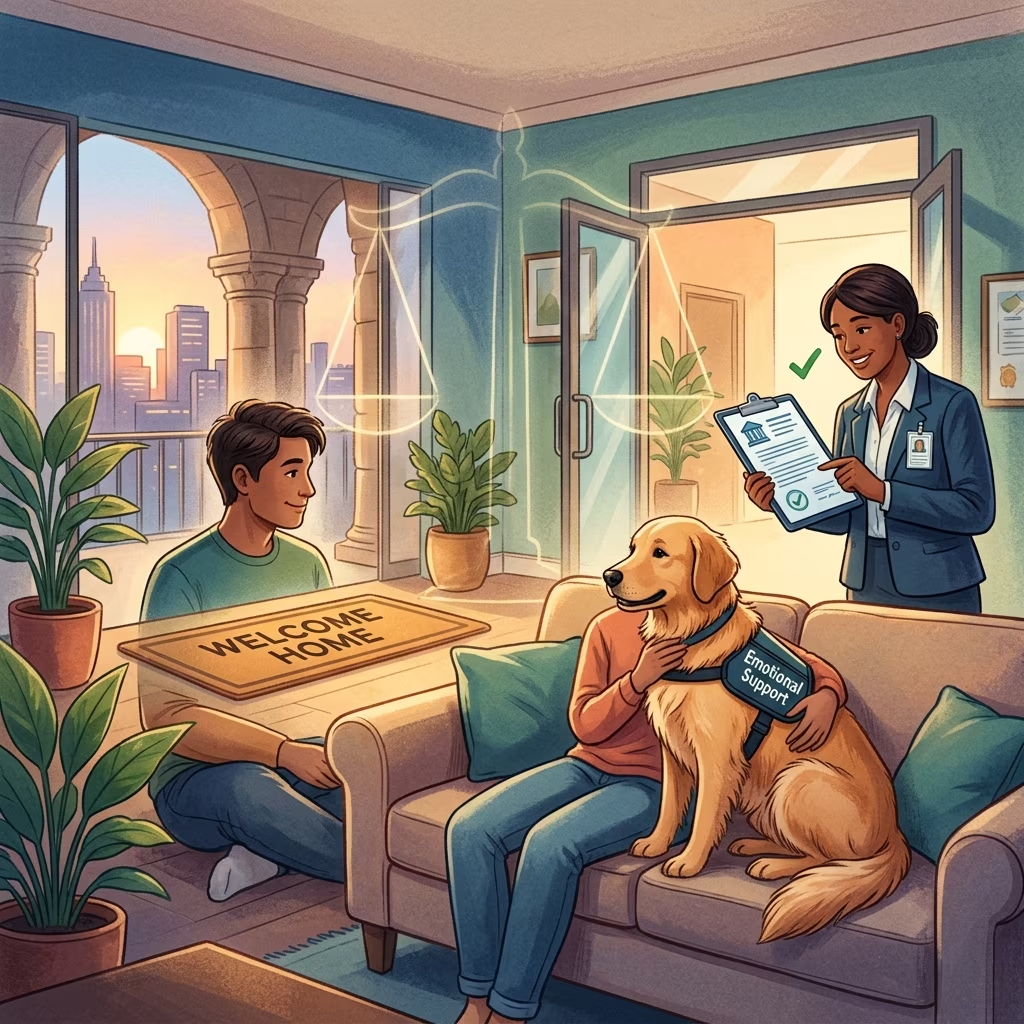
Emotional support animals have moved from a niche concept to a major topic in housing and disability law. As more people seek emotional support animal (ESA) documentation, landlords, lawmakers, and mental health professionals are all adjusting to new realities. At the same time, confusion about what ESAs can legally do — and how they differ from service animals — has prompted new rules designed to curb abuse and clarify rights.
This article explains how emotional support animals fit into federal housing protections, why ESA licenses and online certificates are legally problematic, and how recent laws address fraud, documentation, and professional responsibilities. It also offers practical guidance for tenants, landlords, and clinicians on navigating ESA requests in a lawful and ethical way.
Understanding Emotional Support Animals
Emotional support animals are companion animals that provide comfort and help alleviate symptoms of mental or emotional disabilities. They are typically prescribed as part of a treatment plan by a licensed mental health or healthcare professional. Unlike service animals, ESAs are not required to be specially trained to perform tasks and are not recognized as service animals under the Americans with Disabilities Act (ADA).
How ESAs differ from service animals
Because ESAs and service animals are often confused, it is important to distinguish their roles and legal status. Under the ADA, a service animal is generally a dog that has been individually trained to perform specific tasks related to a person’s disability, such as guiding a person who is blind or alerting someone before a seizure. Emotional support animals, therapy animals, and comfort animals do not meet this definition.
| Feature | Service Animal (ADA) | Emotional Support Animal |
|---|---|---|
| Primary role | Performs specific tasks related to a disability | Provides comfort and emotional support |
| Training requirement | Individually trained to perform tasks | No task training required |
| Legal status under ADA | Recognized and protected | Not recognized as a service animal |
| Access to public places | Broad access where the public can go | No general right of access under ADA |
| Housing protections | Protected under ADA and housing laws | Protected under federal housing law, not ADA |
These distinctions have major consequences. A doctor’s letter stating that someone needs an animal for emotional support does not transform that animal into a service animal for ADA purposes. However, the same letter can be crucial for housing rights under federal law.
Federal Housing Protections for Emotional Support Animals
Even though ESAs are not service animals under the ADA, they are strongly protected in housing under federal civil rights law. The key statute is the Fair Housing Act (FHA) The Fair Housing Act prohibits housing discrimination based on disability and requires landlords to provide reasonable accommodations when necessary for a person with a disability to use and enjoy a dwelling. In many cases, an ESA is treated as a reasonable accommodation, meaning landlords must modify “no-pet” policies or breed restrictions for qualifying tenants. Federal guidance emphasizes that landlords must assess ESA requests on a case-by-case basis, focusing on disability-related need and whether the accommodation is reasonable. They may deny a request only in limited circumstances, such as if the animal poses a direct threat or would cause substantial property damage that cannot be reduced through reasonable measures. Under federal law, there is no requirement for an ESA registry, license, or official certificate. The central document is an ESA letter from a licensed healthcare or mental health professional, which should confirm three basic elements: Housing guidance makes clear that a person’s condition must substantially limit one or more major life activities in order to trigger Fair Housing Act protections. The ESA letter does not need to disclose detailed diagnosis information, but it must show enough to justify the accommodation. Importantly, online “certifications” or registry entries, without a proper evaluation, are not recognized as valid documentation in federal housing law. In recent years, many websites have begun offering instant ESA “licenses,” registrations, and identification cards. These services often promise quick approval, animal vests, and printable certificates for a fee. However, there is no legal requirement for ESA registration, and federal authorities have confirmed that online certifications alone do not establish a disability-related need for an ESA. Federal housing guidance and disability rights agencies warn that businesses selling ESA registrations are providing services that are not required and may mislead consumers. Under federal law: As ESA usage has grown, some landlords have received large numbers of documents from online companies that never involved a true clinical assessment. This has raised concerns about fraud, leading some states to pass new laws governing ESA-related business practices and professional responsibilities. While the Fair Housing Act sets the baseline for ESA protections nationwide, individual states have started refining and supplementing these rules. Some states have passed laws targeting the sale of misleading ESA products, others regulate professional documentation practices, and many address the distinction between ESAs and service animals to combat misrepresentation. States such as California have enacted laws to ensure that businesses selling ESA-related items — including vests, tags, and certificates — clearly disclose the limited legal status of emotional support animals. These laws typically require businesses to inform buyers that: Such statutes are aimed at reducing misunderstandings and preventing consumers from believing that ESA products alone will guarantee them access to public places or transportation. Some states have also imposed conditions on healthcare practitioners who provide documentation for emotional support animals. Common requirements include: These measures are not meant to restrict existing federal rights but to ensure that ESA letters are based on genuine clinical evaluation, rather than brief online questionnaires with no ongoing professional involvement. In addition to regulating ESA documentation, some states address the misrepresentation of pets as service animals. For example, Kansas prohibits falsely representing an animal as a service animal, although it does not have a separate ESA statute. These laws target situations where people claim their pets are service animals to gain access to public spaces under the ADA. Importantly, misrepresentation laws usually focus on misuse of the service animal label, not legitimate ESA requests in housing. Still, they reflect a broader concern: ensuring that disability-related accommodations are used appropriately and that genuine service animal users are not undermined by fraudulent claims. The rapid growth of ESA usage has made it critical to understand where emotional support animals do have legal protection and where they do not. Confusion often arises when tenants and landlords assume that ESA rights are identical to service animal rights, which is not the case. Emotional support animals have their strongest protections in housing, based on the Fair Housing Act and related guidance. In many states, additional policies or guidance reinforce these rights. Outside of housing, emotional support animals do not have the same legal status as service animals. Under the ADA, businesses and public facilities are generally not required to allow ESAs in customer areas. Understanding these limits can help prevent conflict. A tenant may lawfully keep an ESA in an apartment that has a no-pet policy, yet still be denied access with that same animal to certain public spaces that only recognize service animals. With ESA claims rising and new laws emerging, all parties involved can benefit from clear, responsible practices. No. Emotional support animals, comfort animals, and therapy dogs are not considered service animals under Title II or Title III of the ADA. Service animals must be trained to perform specific tasks related to a disability, while ESAs provide emotional comfort and are not recognized as service animals. No. There is no legal requirement to register an ESA, and there is no official government registry. Online ESA certifications and registries do not establish a legal right to housing or public access. The key document is an ESA letter from a licensed professional. Under federal housing law, landlords generally cannot charge pet deposits or additional monthly pet fees for ESAs, because the animal is considered part of a disability accommodation. However, they may recover costs for actual damage caused by the animal. Yes, but only under limited circumstances. A landlord may deny an ESA request if the animal poses a direct threat to the health or safety of others, causes significant property damage that cannot be mitigated, or if the request is not properly supported by documentation. Each case must be evaluated individually. Not necessarily. Federal guidance emphasizes the need for a genuine disability-related need for an ESA, documented by a licensed professional. Some states now require a longer therapeutic relationship or additional disclosures, meaning quick online certificates without proper assessment may not meet legal or ethical standards.The Fair Housing Act and reasonable accommodations
Documentation: ESA letters and what they must show
Growth in ESA Licenses and Online Certifications
Why ESA certificates lack legal weight
New Laws and State-Level Responses
Regulation of ESA-related businesses
Conditions on healthcare professionals providing ESA letters
Misrepresentation and fraud laws
Rights and Limits: Where ESAs Are Protected and Where They Are Not
Areas where ESAs have strong legal protection
Areas where ESA rights are limited
Best Practices for Tenants, Landlords, and Professionals
Guidance for tenants and ESA owners
Guidance for landlords and housing providers
Guidance for clinicians and mental health professionals
Frequently Asked Questions (FAQs)
Are emotional support animals considered service animals under federal law?
Do I need to register my emotional support animal in a national database?
Can my landlord charge pet fees for an emotional support animal?
Can a landlord ever deny an ESA request?
Does an ESA letter from an online provider always count?
References