
Understanding Denver Criminal Law and Your Rights
A practical guide to criminal charges, procedures, penalties, and defense options in Denver and across Colorado.
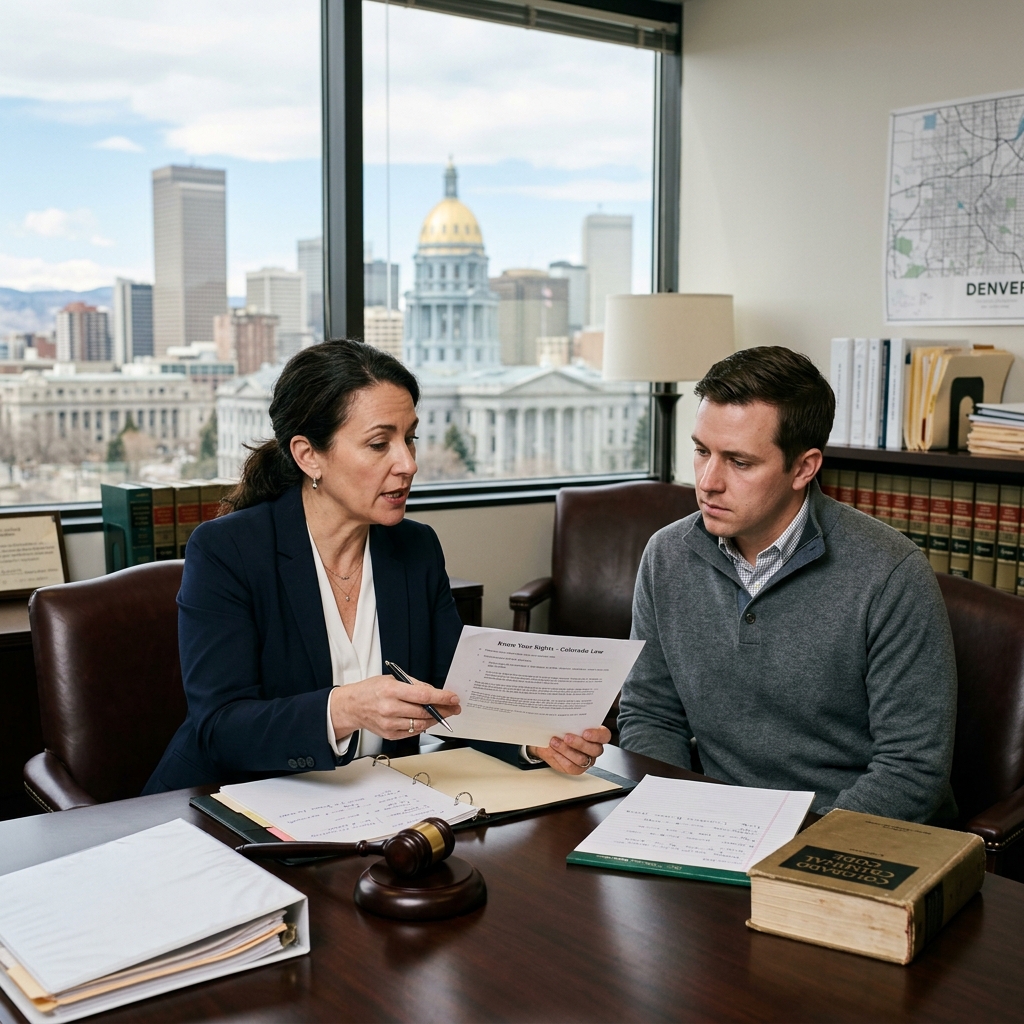
Criminal law in Denver is shaped primarily by the statewide criminal code of Colorado, but how those laws are applied depends heavily on local practices, prosecutors, and courts in the Denver metropolitan area.[10] Navigating a criminal accusation here requires understanding the kinds of charges you might face, what happens after an arrest, the possible penalties, and how a defense lawyer can help you protect your rights.
How Colorado and Denver Criminal Law Fit Together
Denver is governed by Colorado state criminal statutes, which define offenses, set penalties, and establish procedural rules for investigations and prosecutions.[10] While Denver has some municipal ordinances with criminal penalties, the most serious matters—such as felonies and many misdemeanors—are charged under state law and handled in state courts.
Key features of this structure include:
- Statewide criminal code: Colorado statutes define crimes like assault, theft, DUI, and drug offenses for all counties, including Denver.[10]
- Local enforcement: Denver Police Department and other local agencies investigate alleged crimes and make arrests based on state law.
- County prosecution: The Denver District Attorney decides what charges to file, negotiates pleas, and brings cases to trial in Denver courts.[10]
- Unified court system: State and municipal courts in Denver apply Colorado law, subject to constitutional protections and statewide procedural rules.[10]
This combination means that while Colorado statutes are the same in every county, the experience of facing charges in Denver depends on local policies, prosecutorial discretion, and available court programs.
Classes of Criminal Offenses in Denver
Colorado law divides criminal conduct into several broad categories, each with different potential consequences. Understanding these classes helps you grasp the seriousness of a charge and what you may be facing.[10]
Felonies
Felonies are the most serious criminal offenses under Colorado law and typically carry the possibility of prison time in the state Department of Corrections.[10] Felonies are divided into numerical classes, with Class 1 felonies being the most serious.
- Common felony examples:
- Serious assaults and violent crimes
- Robbery and burglary
- Major drug distribution offenses
- Sexual assault and related offenses
- White-collar crimes involving large financial losses
- Consequences can include long prison sentences, substantial fines, probation supervision, and lasting collateral effects such as loss of firearm rights and employment barriers.[10]
Misdemeanors
Misdemeanors are less serious than felonies but can still result in jail time, fines, and long-term consequences.[10] They are often handled in county or municipal courts.
- Typical misdemeanor charges:
- Many common assault or harassment cases
- Lower-level theft and property damage
- Disorderly conduct and some traffic-related crimes
- Certain drug possession offenses
- Penalties may include up to months in jail, fines, probation, and court-ordered classes or treatment programs.[10]
Petty Offenses and Municipal Violations
Colorado also recognizes petty offenses and city ordinance violations, which are generally less serious than misdemeanors.[10] In Denver, many local matters—such as minor disturbances or certain traffic issues—may be charged under municipal code rather than state law.
- Examples:
- Minor public disturbances
- Some parking or traffic violations
- Certain nuisance offenses
- Typical outcomes include fines, short jail terms, or non-custodial sanctions such as community service.
Comparing Offense Levels
| Category | Relative Seriousness | Possible Custody | Common Collateral Effects |
|---|---|---|---|
| Felony | Highest | State prison, lengthy probation | Loss of firearm rights, immigration impact, employment limits |
| Misdemeanor | Moderate | County jail, probation | Criminal record, fines, potential licensing issues |
| Petty offense / ordinance | Lower | Short jail or none | Fines, possible record, limited collateral impact |
From Investigation to Court: The Denver Criminal Process
Criminal cases in Denver typically follow a series of steps, starting with law enforcement investigation and potentially ending with trial, dismissal, or plea resolution.[10]
Investigation and Arrest
When police suspect criminal activity, they may conduct interviews, gather physical evidence, and seek search warrants from judges based on probable cause.[10] If they believe they have sufficient grounds, they may arrest a person and take them into custody.
- Probable cause standard: Officers must have objective reasons to believe a crime was committed and that the accused person was involved.[10]
- Search and seizure limits: The U.S. and Colorado constitutions restrict police searches and seizures, and violations can sometimes lead to evidence being excluded at trial.[10]
- Right to remain silent: Individuals generally have the right not to answer police questions and to request an attorney before speaking.[10]
Initial Appearance and Charging
After an arrest, defendants are typically brought before a judge for an initial appearance, sometimes called a first advisement.[10] At this hearing, they are informed of the alleged charges and their rights.
- Charging decisions are made by the Denver District Attorney or city prosecutor, who reviews police reports and determines what counts to file.[10]
- Bail or bond may be set to allow release from custody while the case is pending, based on factors like flight risk and public safety.[10]
- Right to counsel is explained, and indigent defendants may be screened for representation by a public defender.[10]
Pretrial Proceedings
Once charges are filed, the case enters the pretrial phase, where both sides gather information and explore possible resolutions.[10]
- Discovery: The prosecution shares police reports and other evidence, and the defense may request additional materials.[10]
- Motions: Attorneys can ask the court to suppress evidence, dismiss counts, or address constitutional concerns before trial.
- Plea negotiations: Many Denver cases are resolved through plea agreements that involve reduced charges or agreed-upon sentencing recommendations.[10]
Trial and Sentencing
If a case does not resolve by plea or dismissal, it may proceed to trial before a judge or jury.[10]
- Burden of proof: The prosecution must prove each element of the offense beyond a reasonable doubt.[10]
- Defense strategies can include challenging the credibility of witnesses, contesting the reliability of physical evidence, and asserting lawful defenses such as self-defense or lack of intent.
- Sentencing: If convicted, the judge imposes a sentence based on statutory ranges, aggravating and mitigating factors, and sometimes mandatory minimums.[10]
Common Types of Criminal Cases in Denver
While Denver sees a wide spectrum of criminal matters, certain kinds of cases arise frequently. Each type has distinct elements and defense considerations.
Driving Under the Influence (DUI)
DUI offenses involve allegations of operating a motor vehicle under the influence of alcohol, drugs, or a combination of both. Colorado law sets per se limits for blood alcohol concentration and includes impaired driving based on observed behavior.
- Evidence often includes breath or blood tests, officer observations, and field sobriety tests.
- Penalties can involve jail, fines, mandatory classes, driver’s license restrictions, and ignition interlock requirements for repeat offenders.
- Defense counsel may challenge the legality of traffic stops, testing methods, or the interpretation of impairment evidence.
Drug Possession and Distribution
Drug crimes in Denver range from simple possession to complex distribution or manufacturing allegations.
- Possession charges may depend on the type of substance and quantity involved, with some offenses treated more severely than others.
- Distribution or trafficking cases can carry serious felony penalties, particularly where large quantities or sales across county or state lines are alleged.
- Defenses often focus on search and seizure issues, possession (who controlled the drugs), and the reliability of lab testing.
Assault, Domestic Violence, and Related Offenses
Assault and domestic violence cases frequently appear on Denver dockets and can have significant legal and personal impacts.
- Assault charges can range from minor altercations to serious injury cases, with penalties increasing depending on the level of harm and use of weapons.
- Domestic violence involves allegations between intimate partners or household members and may trigger enhanced sentencing rules and protective orders.
- Evidence often includes witness statements, medical records, photographs, and prior incident history, and credibility disputes are common.
Theft, Property, and White-Collar Crimes
Denver also sees many cases involving property loss or financial wrongdoing.
- Theft and burglary involve taking property or entering premises without permission, often with intent to commit a crime inside.
- Vandalism and property damage charges arise from allegations of intentionally damaging another person’s property.
- White-collar offenses such as embezzlement, fraud, or identity theft are increasingly investigated, sometimes involving complex financial records.
Consequences of a Criminal Conviction in Denver
A criminal conviction can extend far beyond the formal sentence imposed by the court. Understanding these consequences is crucial when deciding how to approach your case.
Direct Legal Penalties
- Custodial sentences: Jail or prison terms may be ordered depending on offense level and criminal history.[10]
- Fines and fees: Courts can impose financial penalties and administrative costs.
- Probation: Many sentences involve supervision with conditions such as counseling, treatment, or community service.[10]
- Protective orders: In domestic violence or harassment cases, courts may issue orders restricting contact with alleged victims.
Collateral Consequences
Beyond direct legal penalties, convicted individuals often face long-term collateral consequences.[10]
- Difficulty obtaining or keeping employment due to a criminal record.
- Limitations on professional licensing in fields such as healthcare, law, or financial services.
- Potential immigration consequences for non-citizens, including removal or denial of status.[10]
- Loss of firearm rights for certain felony or domestic violence convictions.[10]
- Housing and credit challenges.
Role of Denver Criminal Defense Lawyers
Effective representation from a criminal defense attorney can profoundly influence the outcome of a Denver case. Colorado criminal defense lawyers help safeguard constitutional rights, analyze evidence, and advocate for the best possible resolution.
How a Defense Lawyer Can Help
- Early intervention: Contacting an attorney quickly after an arrest or investigation allows them to advise on interactions with law enforcement and help preserve critical evidence.
- Case assessment: Lawyers review police reports, witness statements, and physical evidence to identify weaknesses in the prosecution’s case.
- Negotiation: Many attorneys work to secure reduced charges, diversion programs, or more favorable plea agreements.
- Trial advocacy: When necessary, defense lawyers present evidence, cross-examine witnesses, and argue legal defenses before judges and juries.
Choosing a Criminal Defense Lawyer in Denver
Finding the right lawyer involves weighing several key factors relevant to your situation.
- Experience with similar charges: Look for attorneys who regularly defend cases like yours, such as DUI, drug offenses, or domestic violence.
- Local knowledge: Familiarity with Denver courts, prosecutors, and local procedures can be an advantage in navigating your case.
- Communication style: You should feel comfortable asking questions and receiving clear explanations of risks and options.
- Availability: Many Denver criminal lawyers emphasize accessibility, including after-hours contact when urgent issues arise.
Practical Steps If You Are Facing Charges in Denver
If you learn that you are under investigation or have been charged in Denver, taking prompt, informed steps can help protect your rights and future.
Immediate Actions to Consider
- Remain calm and invoke your rights: Avoid arguing with officers or prosecutors and clearly state your wish to speak with a lawyer before answering questions.[10]
- Document events: Write down what happened as soon as possible, including dates, times, locations, and names of witnesses.
- Preserve evidence: Keep text messages, emails, photographs, and other materials that might support your version of events.
- Contact a defense attorney: Reach out promptly to a qualified Denver criminal lawyer to get advice tailored to your circumstances.
Questions to Ask a Prospective Lawyer
- How often do you handle cases like mine in Denver courts?
- What are the likely ranges of outcomes, from worst-case to best-case scenarios?
- What steps will you take in the first 30 days of representation?
- How will we communicate, and how quickly can I expect responses to urgent questions?
- What are your fees, and do you offer payment plans?
Frequently Asked Questions (FAQs) About Denver Criminal Law
Is Denver criminal law different from the rest of Colorado?
Substantive criminal offenses and penalties are set by Colorado statutes, which apply statewide, including Denver.[10] What differs between counties is the way local prosecutors charge cases, what plea offers they make, and the availability of certain treatment or diversion programs.
Do I need a lawyer for a misdemeanor in Denver?
Even for misdemeanors, the consequences can include jail, fines, and a long-lasting criminal record. Many people choose to consult a defense lawyer because early advice can impact plea offers, evidence strategy, and long-term collateral effects.
Can a Denver criminal case be dismissed before trial?
In some situations, cases are dismissed pretrial due to lack of evidence, legal defects in the charges, or successful motions challenging constitutional violations.[10] However, dismissal is not automatic, and a defense attorney typically must identify and pursue the legal grounds.
What if I cannot afford a private criminal defense attorney?
Colorado provides public defenders for qualifying individuals who cannot afford private counsel in criminal cases.[10] Public defenders handle many Denver matters and can offer experienced representation, although their caseloads may be heavy.
Will a Denver criminal conviction affect my immigration status?
Certain convictions—including crimes involving moral turpitude, drug offenses, and serious felonies—can have immigration consequences for non-citizens.[10] Because the intersection of criminal and immigration law is complex, individuals in this situation should consult both a criminal defense attorney and an immigration lawyer.
References
- Colorado Criminal Defense Bar — Colorado Criminal Defense Bar. 2024-01-01. https://ccdb.org/
- Denver Criminal Defense Lawyer — Law Office of Jacob Martinez. 2023-09-01. https://www.denvercriminaldefense.com/
- Denver Criminal Law Firm — Wolf Law LLC. 2023-08-15. https://wolflawcolorado.com/
- Denver Criminal Defense Lawyer — Law Office of Kimberly Diego. 2023-07-10. https://www.diegocriminaldefense.com/
- Denver Federal Lawyers — Evergreen Attorneys. 2023-06-01. https://evergreenattorneys.com/federal-court/denver-federal-lawyers/
- Best Criminal Lawyers in Denver, CO — Justia. 2023-05-01. https://www.justia.com/lawyers/criminal-law/colorado/denver
- Best Denver, CO Criminal Defense Attorneys — Super Lawyers. 2023-05-01. https://attorneys.superlawyers.com/criminal-defense/colorado/denver/
Similar Articles








Read full bio of medha deb




