North Carolina has specific rules for when and how you can legally end a marriage. This guide explains the requirements for an absolute divorce in North Carolina, the paperwork you must file, how to serve your spouse, and what to expect at the court hearing, using plain language so non-lawyers can follow each step.
1. Understanding Divorce in North Carolina
In North Carolina, most people are seeking an absolute divorce, which legally ends the marriage and allows each person to remarry. This is separate from other issues like property division, alimony, child custody, and child support, which may require additional claims or separate court actions.
1.1 Absolute Divorce vs. Divorce from Bed and Board
- Absolute divorce: Ends the marriage completely; after the judge signs the judgment, the parties are no longer married.
- Divorce from bed and board: A type of court-ordered separation based on fault grounds, but the marriage is not fully dissolved; it often relates to support and living arrangements rather than fully ending the marriage.
This article focuses on the absolute divorce process, which is the most common route for ending a marriage in North Carolina.
2. Basic Eligibility: Can You File in North Carolina?
Before you can file for divorce in North Carolina, you must meet both residency and separation requirements.
2.1 Residency Requirement
- At least one spouse must have lived in North Carolina for a minimum of six months immediately before filing for divorce.
- You can file in the county where either you or your spouse currently lives.
2.2 Separation Requirement
For most divorces, North Carolina uses a no-fault separation ground.
- You and your spouse must have lived in separate homes for at least one year and one day before filing.
- At least one of you must have intended for the separation to be permanent during that time.
- Living in separate rooms in the same home does not count as separate and apart.
2.3 Incurable Insanity Ground
A less common ground for divorce is incurable insanity of one spouse:
- The spouses must live apart for three consecutive years due to one spouse’s incurable insanity.
- Specific proof is required, often including medical evidence.
Most people use the one-year separation ground because it is simpler and more common.
3. Planning Ahead: Issues Beyond the Divorce Decree
An absolute divorce only ends the marriage. It does not automatically decide how property is divided, whether alimony is paid, or how children are cared for. You must raise these issues before the divorce judgment is entered or you may lose certain rights.
| Issue | How It Is Usually Handled | Key Point |
|---|---|---|
| Property division (equitable distribution) | By agreement or separate court claim | File before the divorce judgment or you may lose the right to court-ordered division. |
| Alimony (spousal support) | Negotiated or requested in a court claim | Must also be claimed before absolute divorce is granted. |
| Child custody and support | May be addressed in the same case or separate actions | Can be decided before, during, or after divorce, but planning ahead helps stability. |
Because timing is critical, especially for property and alimony, it is wise to speak with a family law attorney before you file if you have assets or support concerns.
4. Required Court Documents
To start an absolute divorce case, you must file certain documents with the clerk of court in the proper county.
4.1 Core Documents to Start the Case
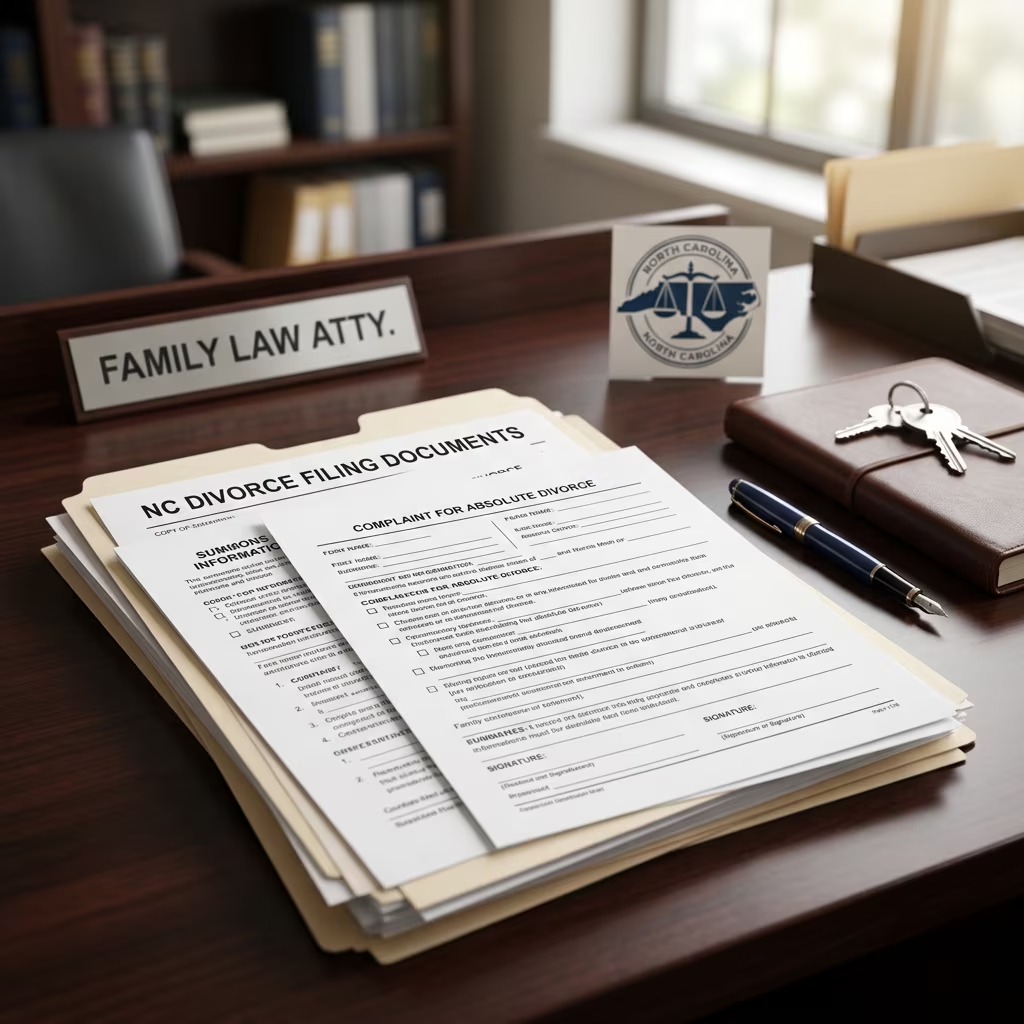
- Complaint: A written statement that explains the facts (marriage, separation, residency) and asks the court to grant an absolute divorce.
- Civil summons: A form that officially notifies your spouse that a lawsuit has been filed and gives them a deadline to respond.
- Domestic Civil Action Cover Sheet: An administrative form used by the court to categorize the case.
- Servicemembers Civil Relief Act (SCRA) affidavit: A sworn statement telling the court whether your spouse is on active duty in the military so their rights can be protected.
Some counties and the North Carolina court system also provide divorce packets with instructions and sample forms for people who represent themselves.
4.2 Filing Fee and Possible Waiver
- The clerk charges a filing fee to start a divorce case. The exact amount can vary and may be updated, so check with the clerk or the North Carolina Judicial Branch’s official materials.
- If you cannot afford the fee, you can apply to file as an indigent using an official court form; if approved, the filing fee may be waived.
5. Filing Your Divorce Case with the Court
Once your forms are prepared and signed, you must file them in the correct courthouse.
5.1 Where to File
- File with the Clerk of Superior Court in the county where you or your spouse lives.
- Bring the original documents and any required copies, along with the filing fee or indigent forms.
5.2 Verification and Notarization
- In many cases, the complaint must be verified, meaning you sign it under oath in front of a notary public.
- Check local rules or the form instructions to ensure you meet all signature and notarization requirements.
6. Serving Your Spouse with the Divorce Papers
After filing, you must legally deliver (“serve”) the summons and complaint to your spouse. You cannot simply hand them the papers yourself.
6.1 Acceptable Methods of Service
- Sheriff service: You pay a fee, and the sheriff personally delivers the papers to your spouse.
- Certified mail: You send the documents via certified mail, usually with return receipt requested; you then file proof that your spouse signed for them.
- Designated delivery service: Certain services like FedEx or UPS may be used, and you must file proof of delivery.
- Service by publication: If you cannot locate your spouse after diligent efforts, you may be allowed to publish notice in a newspaper, but strict rules apply and usually require court approval.
6.2 Proof of Service
The court will not move forward with your case until there is acceptable proof that your spouse was served. Typically:
- The sheriff files a return showing when and how service was made, or
- You file the signed receipt or delivery confirmation from certified mail or a delivery service.
7. Waiting Period and Your Spouse’s Response
Once your spouse is properly served, they have a limited time to respond.
7.1 Response Deadline
- Your spouse typically has 30 days from the date of service to file an answer or other response with the court.
- They can request additional time in some cases by filing a motion for extension.
7.2 Contested vs. Uncontested Divorce
- Uncontested: If your spouse does not challenge the divorce grounds and no other disputed claims are raised, your divorce may proceed more simply.
- Contested: If your spouse files an answer objecting to the divorce or raising disputes about property, support, or other issues, additional hearings and possibly a trial may be required.
- If your spouse does not respond at all after proper service, you may seek a divorce “by default” under North Carolina civil procedure rules.
8. Scheduling and Attending the Divorce Hearing
After the response deadline passes (or after your spouse files an answer), you can ask the court for a hearing date to finalize your divorce.
8.1 Requesting a Hearing
- Contact the clerk or follow local procedures to schedule a divorce hearing in district court.
- Prepare and file a Notice of Hearing and ensure it is properly served on your spouse, usually by mail.
8.2 What to Bring to Court
For the divorce hearing, you should bring:
- Several copies of a proposed Judgment of Absolute Divorce for the judge to sign.
- A Certificate of Absolute Divorce, which is sent to the North Carolina Vital Records office after the divorce is granted.
- Any evidence needed to prove residency and separation, such as a lease, utility bills, or testimony from witnesses, if requested.
8.3 What Happens at the Hearing
- The judge may place you under oath and ask basic questions about your marriage, separation date, residency, and grounds for divorce.
- If the judge is satisfied that all legal requirements are met, they sign the Judgment of Absolute Divorce.
- Once signed and filed, your marriage is legally ended, and you will later receive a certified copy or notice of entry from the clerk.
9. After the Divorce Is Final
When the judgment is entered, you are officially divorced. However, there may be follow-up steps.
- Mail a copy of the signed judgment to your former spouse if required by local practice or the court’s order.
- Update important documents such as wills, beneficiary designations, insurance policies, and powers of attorney to reflect your new status.
- Confirm that any separate claims for property division, custody, or support are being addressed through court orders or agreements.
10. When to Consider Hiring a Lawyer
North Carolina allows you to represent yourself in divorce proceedings, and there are self-help resources and sample forms available for simple cases. However, legal representation is strongly recommended in more complex situations.
You should seriously consider consulting a family law attorney if:
- You and your spouse own real estate, retirement accounts, or a business.
- You seek or may have to pay alimony.
- There are disputes about child custody or child support.
- Domestic violence, substance abuse, or safety concerns are involved.
- Your spouse has already hired a lawyer.
An attorney can help you meet deadlines, protect your rights to property or support, and avoid losing claims by mistake.
11. Frequently Asked Questions (FAQs)
11.1 How long does it take to get divorced in North Carolina?
You must be separated for at least one year and one day before you can file. After filing, the timeline depends on service of process, your spouse’s response, and the court’s schedule. Many simple divorces are completed a few weeks to a few months after filing, but more complex or contested cases can take longer.
11.2 Do I have to prove that my spouse did something wrong?
No. For an absolute divorce based on one-year separation, you do not have to show fault, such as adultery or cruelty. You only need to prove residency and the required period of separation. Fault may still matter for related issues like alimony or certain custody disputes.
11.3 Can we still live in the same house and be considered separated?
No. To qualify as separated for purposes of an absolute divorce, North Carolina law requires that you live in different residences for at least one year and one day, with at least one spouse intending the separation to be permanent. Living in separate rooms under the same roof does not meet this requirement.
11.4 What if I cannot find my spouse?
If you cannot locate your spouse after making diligent efforts, you may be able to serve them by publication in a newspaper, but you must follow strict rules and usually obtain permission from the court. Because service by publication is complex and can affect your spouse’s rights, consulting a lawyer is especially important in these situations.
11.5 Can I handle property division after the divorce is granted?
In many cases, no. If you do not request equitable distribution (property division) before the absolute divorce judgment is entered, you may permanently lose the right to have the court divide marital property. You should discuss timing and strategy with an attorney if you have any assets to divide.
11.6 Do I have to attend a class or clinic before filing?
North Carolina does not require a class for all divorces, but there are self-help clinics and educational programs that can be very helpful, especially if you are filing without a lawyer. These programs explain the forms, procedures, and common mistakes to avoid.
References
- Separation and Divorce — North Carolina Judicial Branch. 2023-05-01. https://www.nccourts.gov/help-topics/divorce-and-marriage/separation-and-divorce
- North Carolina Divorce Packet — North Carolina Judicial Branch. 2022-09-15. https://www.nccourts.gov/help-topics/divorce-and-marriage/north-carolina-divorce-packet
- North Carolina Divorce — WomensLaw.org. 2022-11-10. https://www.womenslaw.org/laws/nc/divorce
- Separation & Divorce — North Carolina Advocates for Justice. 2021-08-01. https://www.ncaj.com/for-the-public/separation-divorce
- Navigating the Divorce Process — Smith Debnam Law. 2020-06-01. https://www.smithdebnamlaw.com/article/navigating-the-divorce-process/
- North Carolina Vital Records: Divorce — North Carolina Department of Health and Human Services. 2021-03-05. https://vitalrecords.nc.gov/divorce.htm
- Divorce Packet (Self-Help) — LawHelpNC. 2019-01-01. https://www.lawhelpnc.org/resource/divorce-packet-self-help