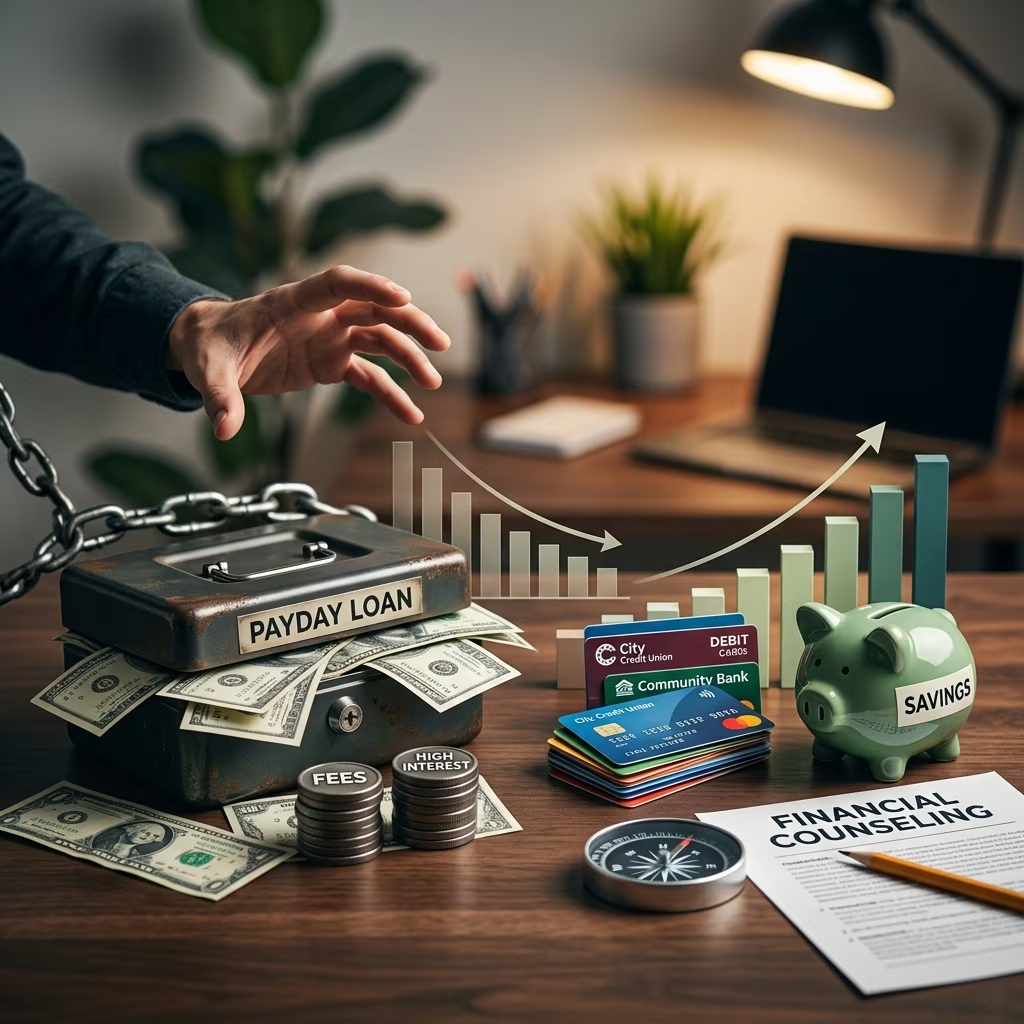
Payday loans are widely marketed as fast solutions when money is tight, but they are also one of the most expensive ways to borrow. Government and consumer protection agencies describe them as short-term, high-cost loans, typically for $500 or less with repayment due on your next paycheck. This guide explains how payday loans work, how much they really cost, why they can lead to a cycle of debt, and what alternatives you may want to consider before taking one.
What Exactly Is a Payday Loan?
Although definitions vary by state, consumer regulators generally agree that a payday loan is:
- Short-term credit usually due in a single lump-sum on your next payday, often within two to four weeks of borrowing.
- High-cost borrowing, with fees that translate into annual percentage rates (APRs) that can approach or exceed 400%.
- Small-dollar loans, commonly capped around $500 by state law, though limits can be higher or lower depending on where you live.
- Unsecured loans, meaning they are not backed by collateral like a car or house; approval is based largely on your income and bank account status rather than credit history.
Payday loans may be offered at storefront lenders, online, or through other short-term loan providers. The money can be delivered as cash, a check, direct deposit into your account, or sometimes on a prepaid card.
How Payday Loans Typically Work
While each lender has its own process, the typical payday loan follows a similar pattern.
1. Application and Eligibility
Payday lenders generally require far fewer documents and checks than banks or credit card issuers. According to consumer finance agencies and major lenders, the typical requirements include:
- Government-issued photo identification.
- Proof of income, such as a recent pay stub or benefits statement.
- An active checking account in reasonably good standing.
- Contact information, such as a phone number and address.
Most payday lenders do not perform traditional credit checks and may not verify that you can afford the repayment beyond your stated income. This makes the loans accessible to people with poor credit scores, but it also increases the risk that borrowers will end up with payments they cannot realistically manage.
2. Receiving the Funds
Once approved, you usually receive the loan in one of these ways:
- Cash or check at a storefront after signing the loan agreement.
- Electronic deposit directly into your checking account.
- Prepaid card loaded with the borrowed amount (less common, but possible).
The loan amount depends on state limits and the lender’s policies, commonly ranging up to about $500, though some lenders may offer more in states with higher caps.
3. Authorizing Repayment
To secure repayment, payday lenders typically require you to give them access to your future funds. This is usually done in one of two ways:
- Post-dated check for the full amount of the loan plus fees, dated for your next payday.
- Electronic authorization allowing the lender to debit your bank account, credit union account, or prepaid card for the full balance on or shortly after your next payday.
If you do not repay the loan by the due date, the lender can cash your check or electronically withdraw funds from your account, potentially causing overdraft fees or other bank charges.
Costs: Why Payday Loans Are Considered High-Cost Credit
Payday lenders usually charge a fixed dollar fee rather than an interest rate in the way banks and credit card issuers do. These fees are often presented as simple charges per $100 borrowed, which can make them appear modest. However, when converted to an annual percentage rate (APR), they are extremely high compared with other forms of credit.
Typical Fee Structure
- Many states that allow payday lending cap fees between $10 and $30 for each $100 borrowed.
- A common example cited by regulators is a $15 fee per $100 on a two-week loan.
What looks like a small fee over a short period becomes very costly when measured over a full year. For instance, consumer financial educators show that a typical two-week payday loan with a $15 fee per $100 borrowed has an APR of nearly 400%. Some studies find payday APRs between about 391% and more than 500%, depending on the exact fee and term.
Comparing Payday APRs With Other Credit
| Type of Credit | Typical Amount | Typical APR Range | Repayment Structure |
|---|---|---|---|
| Payday loan | Up to about $500 | Approx. 391%–400% or more | Single lump-sum on next payday |
| Credit card | Varies (often higher limit) | About 12%–30% in many cases | Monthly payments, revolving balance |
| Personal loan (bank/credit union) | Hundreds to thousands of dollars | Often below typical payday APRs, depending on credit | Fixed installments over months or years |
This comparison illustrates why regulators classify payday loans as high-cost credit and caution borrowers to consider alternatives when possible.
Repayment Terms and the Risk of a Debt Cycle
Payday loans are designed to be repaid quickly. That structure itself can create pressure and financial strain.
Short-Term, Lump-Sum Due Dates
- The loan is usually due on your next payday, often about two to four weeks after the loan is made.
- Repayment is typically in one lump-sum that includes both the principal and fees.
- There are generally no installment payments, unlike traditional personal loans where you can spread the cost over several months.
For many borrowers, paying back the full amount plus high fees at once can be difficult. If the due date arrives and the funds are not available, several things can happen:
- You may be charged additional fees for late payment or for insufficient funds when the lender attempts to withdraw money or cash your check.
- You could incur bank overdraft fees if the lender’s withdrawal pushes your account negative.
- The lender may offer or encourage you to roll over or renew the loan, charging new fees for the extension.
The Cycle of Debt
When borrowers cannot repay on time and instead renew or take out additional payday loans, they can become stuck in a cycle of repeatedly paying fees without significantly reducing the principal. Consumer studies have found that many payday borrowers end up taking multiple loans and paying more in fees than they initially borrowed.
Key risks of this cycle include:
- Escalating costs, as each renewal or new loan adds another set of high fees.
- Budget strain, since lump-sum payments may force borrowers to skip other essential expenses, such as rent or utilities.
- Repeated overdrafts, if lenders continue to attempt withdrawals from accounts that do not have sufficient funds.
Legal Protections and State Regulation
Payday lending in the United States is heavily shaped by state law. Some states prohibit payday loans outright, while others allow them subject to limits on amounts and fees.
Common State-Level Rules
Where payday loans are permitted, state regulations often address:
- Maximum loan size — many states set caps around $500, though the exact limit varies.
- Fee ceilings — for example, some states restrict fees to specified percentages of each $100 borrowed.
- Number of simultaneous loans — certain states limit how many payday loans a consumer can have at one time or with the same lender.
- Loan duration — regulations may cap the maximum repayment period, such as limiting loans to no more than a set number of days.
Consumer protection agencies also require lenders to provide clear disclosures about the cost of the loan, including the APR and total fee amount, so borrowers can compare payday loans with other credit options.
Because rules differ substantially from one state to another, it is important to check the law in your location before considering a payday loan. Some states have eliminated traditional payday lending, while others allow it with specific protections and limits.
When People Turn to Payday Loans
People typically use payday loans when they face a cash shortage and feel they have few alternatives. Common reasons include:
- Covering unexpected expenses, such as car repairs or emergency travel.
- Paying bills due before payday, like rent or utilities.
- Managing income gaps for workers with irregular hours or variable pay.
- Trying to avoid late fees or shut-offs by quickly obtaining funds.
The speed and relative simplicity of payday loans can make them appealing during stressful financial moments. However, the high fees and short repayment windows mean they should generally be considered only after evaluating less costly options.
Safer Alternatives to Payday Loans
Regulators and financial educators frequently encourage consumers to consider alternatives before using payday loans, because the cost and risk of a debt cycle are so high.
1. Credit Union or Bank Small-Dollar Loans
Many credit unions and some banks offer small personal loans or specific small-dollar products designed to help with short-term needs. These loans typically have:
- Lower APRs than payday loans.
- Installment repayments over several months.
- More thorough affordability checks.
Although approval can be harder than with a payday lender, the overall cost and risk are usually much lower.
2. Negotiating With Creditors or Service Providers
If the payday loan would be used to pay an existing bill, it may be worthwhile to contact the creditor or service provider instead. Many landlords, utility companies, and medical providers will:
- Offer payment plans or short extensions.
- Waive or reduce late fees in cases of hardship.
- Connect you with assistance programs or local aid.
3. Credit Card or Existing Line of Credit
When available, using a credit card or existing line of credit can be significantly cheaper than a payday loan, even if the interest rate on the card seems high. As noted by consumer agencies, typical credit card APRs are far below those of payday loans, and minimum payments can be spread over time.
4. Employer or Community Assistance
Some employers offer salary advances, employee hardship funds, or access to financial counseling. Local non-profits, charities, or government programs may also provide temporary assistance for housing, utilities, food, or transportation.
5. Budget Adjustments and Emergency Savings
In the longer term, building an emergency fund and reviewing monthly spending can reduce the need for high-cost short-term borrowing. Even small regular savings deposits can create a cushion that helps avoid payday loans in future emergencies.
Frequently Asked Questions About Payday Loans
Are payday loans always a bad idea?
Payday loans are not illegal in all states and they may provide quick access to cash when no other option is available. However, regulators consistently describe them as high-cost and warn of the risk of getting trapped in repeat borrowing. Because of their high fees and lump-sum repayment requirement, they are generally considered a last-resort form of credit.
How much can I borrow with a payday loan?
In many states, typical payday loan amounts are capped around $500, though some laws allow higher or lower amounts. The actual amount offered will depend on the lender’s policies and your income, and in some states, the law also limits how many payday loans you can have at once.
Do payday lenders check my credit score?
Most payday lenders focus on your income and bank account status rather than your credit report. They typically do not perform traditional credit checks as banks or credit card issuers do. While this makes loans accessible to people with poor credit, it can also mean less consideration of whether the repayment schedule is affordable.
What happens if I can’t repay a payday loan on time?
If you cannot repay the loan when it is due, the lender may cash your post-dated check or electronically debit your account for the amount owed. This can result in overdraft fees from your bank and additional charges from the lender. Some lenders may offer renewals or rollovers, but these involve new fees and can cause the total cost to grow quickly.
Can payday loans affect my credit?
While some payday lenders do not report to major credit bureaus, unpaid loans can still have indirect effects. If the debt is sent to collections or leads to judgments, those may appear on your credit report. Additionally, overdrafts and other financial strain triggered by payday loan repayment attempts can impact your ability to manage other obligations.
How can I tell if a lender is reputable?
To evaluate a payday or alternative lender, consider:
- Whether the lender is licensed in your state.
- Whether the loan terms and fees are clearly disclosed in writing, including the APR.
- Reviews or complaints filed with state consumer protection offices or the federal Consumer Financial Protection Bureau.
References
- What is a payday loan? — Consumer Financial Protection Bureau. 2024-01-10. https://www.consumerfinance.gov/ask-cfpb/what-is-a-payday-loan-en-1567/
- What Is a Payday Loan and How Does It Work? — Experian. 2022-07-21. https://www.experian.com/blogs/ask-experian/how-payday-loans-work/
- How Payday Loans Work: Interest Rates, Fees and Costs — InCharge Debt Solutions. 2023-03-15. https://www.incharge.org/debt-relief/how-payday-loans-work/
- What You Need to Know about Payday Loans — OneMain Financial. 2023-08-30. https://www.onemainfinancial.com/personal-loans/resources/what-you-need-to-know-about-payday-loans
- Payday Loans: Know Your Rights — Michigan Department of Attorney General. 2021-05-05. https://www.michigan.gov/consumerprotection/protect-yourself/consumer-alerts/credit/payday-loans
- How Do Payday Loans Work & What Happens if You Don’t Pay? — Bank of America Better Money Habits. 2023-06-01. https://bettermoneyhabits.bankofamerica.com/en/debt/what-is-a-payday-loan