
Georgia Second-Offense Shoplifting: Misdemeanor Penalties Explained
Understand how Georgia law treats second-offense misdemeanor theft by shoplifting, including penalties, consequences, and defense options.
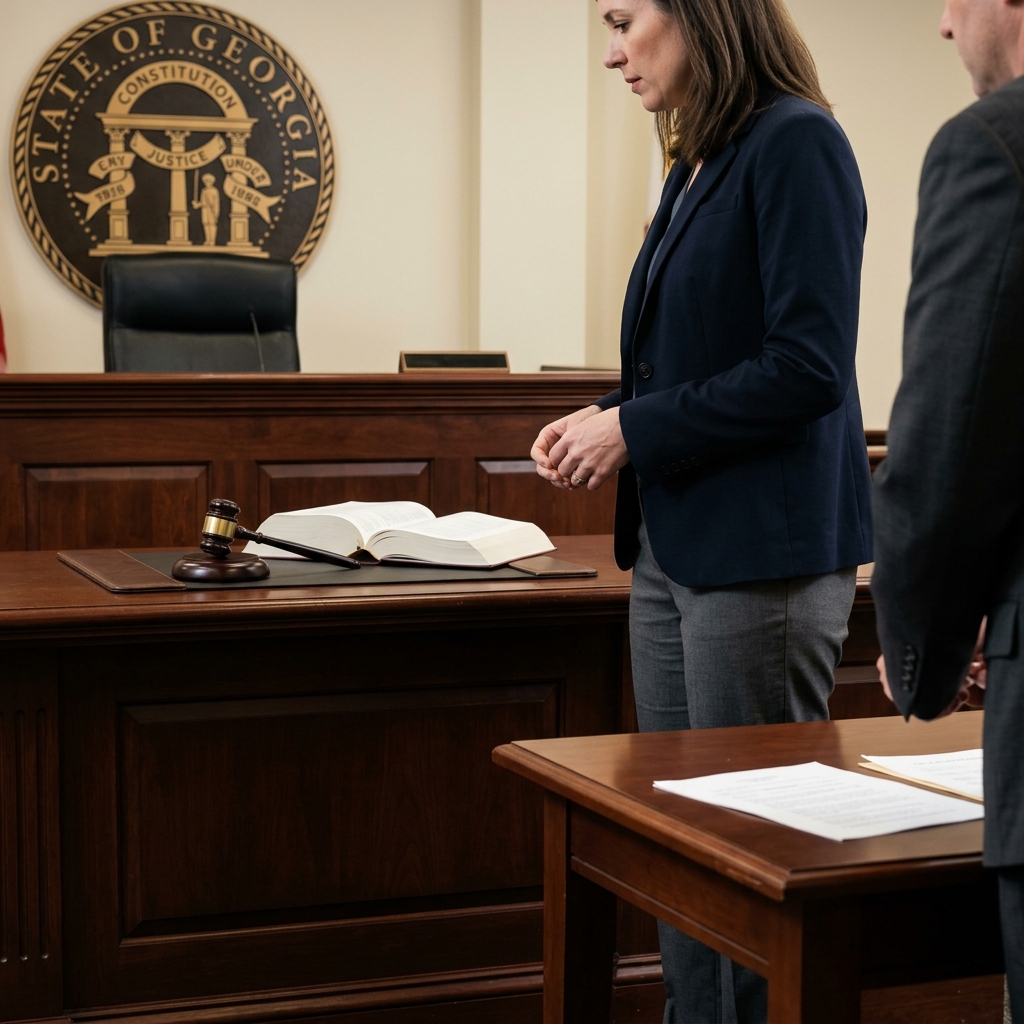
Georgia treats theft by shoplifting as a distinct criminal offense with special rules for repeat offenders. When a person faces a second misdemeanor shoplifting charge, the law imposes mandatory financial penalties and opens the door to harsher criminal consequences compared with a first offense. Understanding these rules is essential for anyone charged, as well as for families, employers, and retailers who must respond to shoplifting incidents.
Overview: How Georgia Defines Theft by Shoplifting
In Georgia, shoplifting falls under the offense legally titled “theft by shoplifting” in the Official Code of Georgia Annotated (O.C.G.A.) § 16-8-14. This statute covers more than simply walking out of a store with unpaid merchandise.
A person commits theft by shoplifting when they act alone or with another person and intend to take merchandise for personal use without paying for it, or intend to deprive the owner of its value, by engaging in certain prohibited conduct.
Common Conduct That Qualifies as Shoplifting
Under Georgia law, the following types of conduct can support a shoplifting charge, even if the person never leaves the store:
- Concealing or taking possession of goods or merchandise inside a store or retail establishment.
- Altering, switching, or removing price tags or labels from an item to reduce the apparent price.
- Transferring merchandise from one container or package to another to affect the price charged.
- Causing the amount paid to be less than the merchant’s stated price, such as through barcode manipulation or fraudulent discounts.
Contrary to a common misconception, Georgia does not require proof that the items were taken outside the store to sustain a shoplifting charge.
Misdemeanor vs. Felony Shoplifting in Georgia
The severity of a shoplifting charge in Georgia primarily depends on the value of the property involved and, in some situations, the number of prior convictions.
| Type of Shoplifting Charge | Value Threshold | Classification | Typical Penalties |
|---|---|---|---|
| First offense, property valued at $500 or less | Up to $500 | Misdemeanor | Up to 12 months jail and/or fine up to $1,000, plus possible probation and other conditions. |
| Second offense, property valued at $500 or less | Up to $500 | Misdemeanor | Same misdemeanor range, but mandatory minimum fine of $500 that cannot be suspended or probated. |
| Property valued over $500 | More than $500 | Felony | One to ten years of imprisonment, with fines at the court’s discretion. |
| Multiple felony shoplifting convictions | Depends on value and prior record | Felony (repeat offender) | Mandatory prison terms and limited discretion for early release. |
What Makes a Second Offense Different?
Under O.C.G.A. § 16-8-14, a second conviction for shoplifting—whether the first offense was a misdemeanor or felony—triggers special repeat-offender provisions.
Key Legal Features of a Second Misdemeanor Shoplifting Offense
- Mandatory $500 fine: For property valued at $500 or less, a second shoplifting conviction requires a fine of at least $500.
- Fine cannot be suspended or probated: The court may impose jail or probation, but it cannot waive, reduce, suspend, or place the mandatory minimum fine on probation.
- Same misdemeanor classification: When the stolen property is worth $500 or less, the offense remains a misdemeanor even for a second conviction, although penalties escalate.
- Possible jail or probation: Judges retain discretion to impose up to 12 months in jail, probation, or a combination of both, in addition to the mandatory fine.
These enhanced penalties reflect Georgia’s policy that repeat shoplifting is more serious, even when the dollar amount remains relatively low.
Escalating Penalties: Third and Fourth Offenses
While this guide focuses on second offenses, it is important to understand how penalties continue to escalate with additional convictions under Georgia law.
Third Shoplifting Offense (Property $500 or Less)
- Mandatory jail or confinement: The court must impose at least 30 days in jail, or 120 days in a probation detention center, community corrections program, or house arrest.
- Psychological evaluation and treatment: Judges may require mental health evaluation and treatment at the defendant’s expense.
- No suspension of confinement: This mandatory confinement portion may not be suspended, probated, deferred, or withheld.
Fourth or Subsequent Offense
- Felony classification: A fourth shoplifting conviction can be treated as a felony, even if the new offense involves property valued at $500 or less.
- Mandatory prison time: Georgia law requires at least one year in prison, and the defendant may face a sentence of up to ten years.
- Limited early release options: Repeat felony shoplifting offenders may be ineligible for certain forms of early release or sentence reduction.
These escalating penalties make a second offense a critical turning point: the outcome can strongly influence exposure for third and fourth offenses.
Criminal Consequences Beyond the Courtroom
Second-offense misdemeanor shoplifting carries consequences that extend beyond fines and incarceration. Many of these collateral consequences can affect a person’s life for years after the conviction.
Permanent Criminal Record
- Long-term record: A second shoplifting conviction typically appears on criminal background checks, making it harder to obtain employment, housing, and professional licenses.
- Challenges in expungement or record restriction: Georgia’s record restriction laws are complex, and repeat theft-related offenses may be harder to restrict than isolated low-level offenses.
Employment and Professional Licenses
- Employer policies: Many employers treat theft-related convictions as serious integrity issues, which can lead to termination or refusal to hire.
- Licensing boards: Professional boards (e.g., for nurses, teachers, or real estate agents) may scrutinize repeat shoplifting convictions and impose discipline or deny licensure.
Civil and Retail Consequences
- Civil demands: Retailers sometimes pursue civil recovery for shoplifting incidents, such as demanding payment of statutory damages or loss-prevention costs.
- Bans from stores: Many businesses issue trespass notices barring repeat shoplifters from their premises, which can lead to additional criminal charges if ignored.
How Georgia Courts Sentence Second-Offense Misdemeanor Shoplifting
Georgia judges apply the statute within the broader framework of criminal sentencing. While the law sets minimums and maximums, courts have considerable discretion in shaping the final sentence.
Common Sentencing Components
- Mandatory fine: At least $500 for the second offense, which cannot be suspended.
- Jail time: Up to 12 months in the county jail, often partially suspended when combined with probation for misdemeanor-level property values.
- Probation: Court-supervised probation requiring compliance with conditions such as curfews, counseling, employment, and regular check-ins.
- Restitution: Payment to the retailer for losses, damage, or unpaid merchandise.
- Community service: A set number of hours of unpaid work for community organizations or government entities.
Factors Judges Consider
- Defendant’s criminal history: Prior theft, drug, or violence offenses can increase the likelihood of jail time.
- Value of the property: Even within the misdemeanor range, higher values may result in harsher penalties.
- Circumstances of the offense: Whether the conduct appeared organized, involved accomplices, or used sophisticated methods.
- Efforts at rehabilitation: Voluntary counseling, treatment, or restitution before sentencing can demonstrate remorse and initiative.
Defense Strategies for Second-Offense Misdemeanor Shoplifting
Because the penalties increase with each conviction, it is crucial to treat a second offense seriously and explore all available legal defenses. The prosecution must prove each element of shoplifting beyond a reasonable doubt.
Challenging the State’s Evidence
- Intent to steal: Shoplifting requires proof of the intent to appropriate merchandise or deprive the owner of its value. Defense attorneys may argue that the defendant lacked the necessary intent—for example, due to distraction, mistake, or misunderstanding.
- Value of merchandise: The state must establish the value of the items to determine whether the charge is a misdemeanor or felony. Questioning the valuation can sometimes reduce a felony charge to a misdemeanor.
- Reliability of witnesses: Security personnel or other witnesses may have limited vantage points or may misinterpret behavior. Effective cross-examination can expose inconsistencies.
- Video evidence issues: Surveillance footage can be incomplete, unclear, or ambiguous. Attorneys may challenge the interpretation or even admissibility of such evidence.
Procedural and Constitutional Defenses
- Unlawful search or seizure: If store security or law enforcement violated constitutional rights during detention or search, some evidence may be suppressed.
- Right to remain silent: Statements made without proper advisement of rights or under coercive conditions can be challenged.
- Improper charging decisions: Defense counsel can contest whether the prosecutor charged the correct level of offense based on value and prior record.
Negotiated Outcomes
- Plea negotiations: In some cases, attorneys may negotiate reduced charges or alternative sentencing in exchange for a plea.
- Diversion or conditional programs: Depending on the county and the defendant’s history, diversion programs or conditional discharge options might be available, particularly for lower-value incidents and defendants motivated to seek counseling or treatment.
Practical Steps After a Second Shoplifting Arrest
Individuals facing a second shoplifting charge often feel pressured to explain themselves immediately. However, legal and practical steps should be taken with care.
Immediate Actions
- Remain calm and avoid self-incrimination: Anything said to store employees or police can later be used as evidence.
- Provide only basic identification details: Answer questions needed to identify yourself, but avoid discussing the alleged offense until speaking with an attorney.
- Request legal counsel promptly: Politely assert your right to consult with a lawyer before answering substantive questions.
Preparing for Court
- Document events: Write down your recollection of the incident, including timelines, store layout, and the names of any witnesses.
- Preserve evidence: Keep receipts, communications, or other documents that may support your version of events.
- Address underlying issues: If shoplifting is linked to substance use, mental health concerns, or financial stress, seeking counseling can help both personally and in demonstrating to the court that you are taking responsibility.
Frequently Asked Questions (FAQ)
1. Is a second shoplifting offense in Georgia automatically a felony?
No. When the value of the property is $500 or less, a second shoplifting offense is still classified as a misdemeanor, although it carries a mandatory minimum $500 fine and may include jail or probation.
2. Does a second misdemeanor shoplifting conviction require jail time?
Not always. The statute requires a mandatory fine of at least $500, but a judge may choose to impose probation rather than significant jail time, depending on the facts of the case and the defendant’s history. However, subsequent convictions (third, fourth) do involve mandatory confinement.
3. Can the mandatory $500 fine be reduced or converted to community service?
Georgia law states that the $500 minimum fine for a second shoplifting conviction cannot be suspended or probated. While additional fines or penalties may be structured as part of probation, the baseline amount must be paid.
4. Do prior shoplifting convictions from other states count as first offenses?
Under Georgia law, the term “conviction” for shoplifting includes guilty pleas, verdicts, and pleas of nolo contendere (no contest), and applies regardless of whether prior offenses were misdemeanors or felonies. Out-of-state convictions may be considered when determining whether an incident is a second, third, or fourth offense, though the specific treatment can depend on the details of the prior case and how it is documented.
5. What should I do if I believe I was wrongly accused of shoplifting?
Remain polite but avoid discussing the incident in detail with store employees or police, beyond basic identifying information. Ask to speak with an attorney as soon as possible. A lawyer can review surveillance footage, witness statements, valuation of the merchandise, and procedures used during your detention or arrest to determine whether the charge can be challenged or reduced.
References
- Georgia Code § 16-8-14 (Theft by shoplifting) — State of Georgia / Justia. 2024-01-01. https://law.justia.com/codes/georgia/title-16/chapter-8/article-1/section-16-8-14/
- Georgia Shoplifting Laws: What You Need To Know — Michael Fulcher Law. 2023-06-01. https://michaelfulcherlaw.com/georgia-shoplifting-laws/
- Georgia Code Title 16 § 16-8-14 (FindLaw summary) — FindLaw. 2024-01-01. https://codes.findlaw.com/ga/title-16-crimes-and-offenses/ga-code-sect-16-8-14/
- Shoplifting Charges in Georgia — Jay G. Wall Law. 2022-09-01. https://www.jaygwalllaw.com/theft/shoplifting-charges-in-georgia/
- Shoplifting – Penalty for a Shoplifting Conviction in Georgia — Georgia Criminal Lawyer. 2023-03-01. https://www.georgiacriminallawyer.com/shoplifting
- What Happens If You’re Caught Shoplifting in Georgia? — Crawford & Boyle, LLC. 2025-05-15. https://www.crawfordboyle.com/blog/2025/may/what-happens-if-you-re-caught-shoplifting-in-geo/
Similar Articles








Read full bio of medha deb




