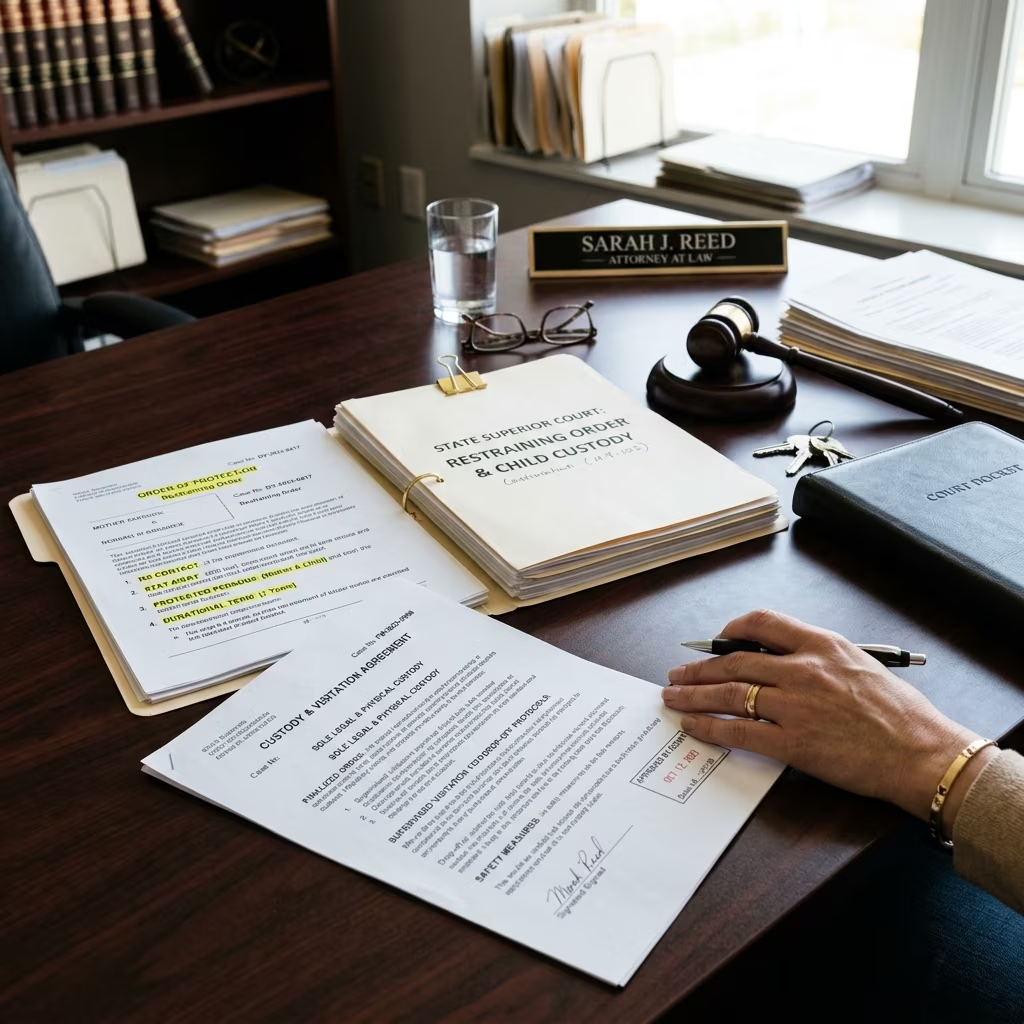
When domestic conflict escalates to the point that a court issues a restraining order, questions about child custody become urgent. Parents often worry about whether they will lose contact with their children, how exchanges will occur safely, and what a judge will look at when deciding custody and visitation. This guide explains, in plain language, how restraining orders and custody orders intersect and what options may still exist to keep children safe while preserving meaningful parent–child relationships where appropriate.
Understanding Restraining Orders and Their Purpose
A restraining order (often called a protective order or abuse prevention order) is a civil court order designed to prevent future harm, harassment, or abuse. These orders typically apply in situations involving:
- Domestic violence or intimate partner abuse
- Stalking or severe harassment
- Threats, intimidation, or patterns of coercive control
Although the details vary by jurisdiction, a restraining order usually does one or more of the following:
- Prohibits the restrained person from contacting the protected person directly or indirectly (phone, text, email, social media, or third‑party messages).
- Requires the restrained person to stay a minimum distance away from the protected person, their home, workplace, or school.
- May limit contact with the protected person’s family, including shared children, at least temporarily.
Restraining orders are enforced by law enforcement in the same way as other court orders. Violating a restraining order can lead to arrest, criminal charges, and future consequences in custody proceedings.
Temporary vs. Long‑Term Orders: Why the Distinction Matters
Most legal systems distinguish between short‑term emergency orders and longer‑term protective orders. This distinction is important because the level of evidence required and the impact on custody can differ.
| Type of Order | Typical Duration | How It Is Issued | Effect on Child Contact |
|---|---|---|---|
| Temporary Restraining Order (TRO) | Days to a few weeks, until a full hearing | Often based on one parent’s sworn statement to address immediate danger | May bar contact or require supervised visits; can temporarily alter parenting time. |
| Final or Long‑Term Order | Months to several years; sometimes renewable or permanent | Granted after a hearing where both sides can present evidence | Can contain ongoing limits on custody, visitation, and communication. |
Some states allow custody and visitation provisions to be included in a protective order itself, while others require a separate family court custody order. For example, many states permit temporary custody to be granted as part of a domestic violence protective order, but some limit what a TRO can cover and instead rely on separate temporary custody orders.
How Restraining Orders Influence Custody Decisions
Family courts must prioritize the best interests of the child, and protection from violence or abuse is a core part of that standard. When there is a restraining order between parents, judges typically consider:
- History of domestic violence and whether the child was exposed to or directly harmed by it.
- Risk of future harm, including threats, substance abuse, and access to weapons.
- Quality of each parent’s relationship with the child before the restraining order was issued.
- Each parent’s capacity to provide a safe, stable home and meet the child’s physical and emotional needs.
In some jurisdictions, if a court finds that a parent committed domestic violence in the recent past, the law creates a presumption that awarding custody to that parent would be harmful. This presumption does not automatically terminate all contact, but it shifts the burden: the abusive parent must prove that giving them custody or unsupervised visitation would not endanger the child and would still serve the child’s best interests.
Judges can respond in several ways depending on the severity of the abuse and the evidence presented:
- Granting sole legal and physical custody to the non‑abusive parent.
- Allowing only supervised visitation for the restrained parent.
- Ordering no visitation where contact poses a serious ongoing risk.
- Permitting limited virtual contact (phone, video calls) if in‑person visits are unsafe.
Common Custody and Visitation Arrangements with a Restraining Order
Even when a restraining order is in place, courts often try to preserve some form of parent–child relationship with the restrained parent where it can be done safely. Typical arrangements include:
Sole Custody with Supervised Visitation
This is a frequent outcome in cases involving substantiated domestic violence. The non‑abusive parent has primary decision‑making authority and the child lives with them full‑time. The restrained parent may be allowed visitation under conditions such as:
- Visits occurring at a supervised visitation center or neutral agency.
- Presence of a professional supervisor or approved third party at all times.
- Short and structured visits, often with rules about topics of conversation and behavior.
The goal is to maintain contact while reducing any risk of harm or intimidation.
Limited or No Contact Orders
In severe cases, especially where the child has suffered direct abuse or serious trauma, judges may decide that any contact with the restrained parent would be too dangerous. In these situations, orders may:
- Fully prohibit visitation until further review by the court.
- Allow only indirect updates (such as the protected parent sharing school or medical information through attorneys), with no interaction between the child and restrained parent.
- Require completion of treatment programs before the court even considers future contact.
Virtual or Non‑In‑Person Contact
To balance safety with the child’s interest in maintaining a relationship, some courts authorize virtual visitation instead of or in addition to in‑person visits. This may include:
- Scheduled video calls (such as weekly or biweekly sessions).
- Phone calls supervised by the custodial parent or a professional.
- Communication through a monitored platform that records messages.
Virtual contact can be particularly useful when the restraining order limits physical proximity but does not forbid communication about the child.
Safe Exchange and Communication When Co‑Parenting Is Required
A restraining order usually bars direct contact between parents, yet custody arrangements often require coordination about schedules, emergencies, and major decisions. Courts and families may adopt structures that allow necessary communication while respecting safety boundaries.
Structured Communication Channels
Judges can carve out narrow exceptions to a no‑contact order so that parents can communicate solely about the children. This communication is often:
- Limited to approved methods (for example, a court‑monitored co‑parenting app, email, or attorney‑to‑attorney messages).
- Restricted to factual, child‑related topics (schedules, health, schooling) rather than personal issues.
- Subject to review by the court or professionals if one parent misuses the channel.
Safe Exchange Protocols
When in‑person visitation is allowed, the restraining order may require that exchanges occur in safe, neutral locations. Courts sometimes order:
- Drop‑offs and pick‑ups at a police station, supervised visitation center, or another neutral site.
- Use of trusted third parties to transport the child between households.
- Staggered scheduling so the parents are never in the same place at the same time.
These arrangements reduce opportunities for confrontation and help ensure compliance with distance and communication restrictions.
Modifying Custody and Visitation After a Restraining Order
Court orders are not necessarily permanent. If circumstances change, either parent can usually ask the court to revisit custody and visitation arrangements. The process and standards differ by jurisdiction, but common themes include:
- Evidence of changed behavior: The restrained parent may need to show completion of required programs, such as batterer intervention, substance abuse treatment, and parenting classes.
- Proof that the child’s safety is protected: Judges look at whether new arrangements would reduce risk or expose the child to renewed harm.
- Best interests of the child: The court will compare the proposed change to the child’s current stability and emotional wellbeing.
In many places, a parent can file a motion to modify temporary orders or long‑term custody orders, explaining why a change is needed and how it will benefit the child. They must usually provide documentation and may need to testify.
Practical Steps for Parents Facing Custody Issues and a Restraining Order
Parents navigating this situation can take specific steps to protect both their children and their legal rights.
- Follow all court orders strictly: Violating a restraining order or custody order can lead to criminal charges and may severely harm future custody chances.
- Document incidents carefully: Keep records of any threats, violations, or concerning behavior, including police reports, text messages, and screenshots.
- Use available legal resources: Many courts have self‑help centers and domestic violence advocates who can explain procedures and help with forms.
- Consider professional support: Lawyers, counselors, and supervised visitation programs can all help create safe, workable arrangements.
- Focus on the child’s wellbeing: Courts respond strongly to evidence that a parent is prioritizing the child’s emotional and physical safety over conflict.
Frequently Asked Questions
Can I get temporary custody as part of a restraining order?
In many states, a parent seeking protection from domestic violence can also ask the court for temporary custody of the children within the same protective order request. Not every jurisdiction permits this, and some limit what a temporary restraining order can cover, so it is important to check local rules or speak with a family law professional.
Does a restraining order automatically terminate my custody rights?
Not necessarily. A restraining order restricts contact with the protected person, but custody rights are determined by the family court based on the child’s best interests. However, a restraining order related to domestic violence is a serious factor that can lead to limited, supervised, or even suspended contact if the court finds ongoing risk.
Can a judge stop all visitation because of a restraining order?
Yes. If the court believes that any contact with the restrained parent would endanger the child, it can order no visitation. In less extreme cases, judges may allow supervised or structured contact rather than eliminating visitation entirely.
What happens if the restrained parent violates the order during exchanges or visits?
Violating a restraining order can result in arrest and criminal charges, such as contempt of court, and may influence future custody decisions. If a violation occurs, it is important to call law enforcement, document what happened, and inform the family court.
Can custody orders change after the restrained parent completes treatment programs?
Often, yes. In some jurisdictions, the law allows an abusive parent to rebut the presumption against custody by completing court‑ordered programs and demonstrating sustained behavioral change. The parent must then convince the court that adjusting custody or visitation serves the child’s best interests and does not compromise safety.
References
- Getting custody with your restraining order — WomensLaw.org. 2023-05-01. https://www.womenslaw.org/laws/general/custody/getting-custody-your-restraining-order
- Sharing Child Custody with a Restraining Order — LegalMatch. 2022-04-10. https://www.legalmatch.com/law-library/article/sharing-child-custody-with-a-restraining-order.html
- Domestic violence and child custody — California Courts Self-Help. 2024-02-15. https://selfhelp.courts.ca.gov/domestic-violence-child-custody
- Restraining Orders – Custody and Visitation — NJ Criminal Defense. 2023-03-20. https://www.njcriminaldefensellc.com/restraining-orders-custody-and-visitation
- Temporary Orders and Temporary Restraining Orders (TROs) — TexasLawHelp.org. 2022-09-30. https://texaslawhelp.org/article/temporary-orders-temporary-restraining-orders-tros
- How a Restraining Order Affects Child Custody Rights in California — West Coast Divorce. 2023-06-05. https://westcoastdivorce.com/blog/restraining-order-and-custody-ca
- Custody and parenting time when there is domestic violence — MassLegalHelp. 2021-11-18. https://www.masslegalhelp.org/domestic-abuse-crime-victims/dv-families/custody-and-parenting-time-when-there-domestic-violence